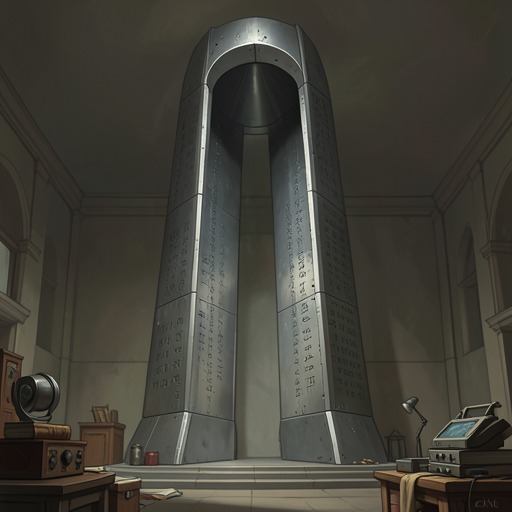
Boundless and bare, the lone and level sands stretch far away
OzymandiasThe narrator’s recollection of Shelley’s line, “Boundless and bare, the lone and level sands stretch far away,” gives the desert a literary voice at the moment the expedition confronts how little remains of the civilization it sought. Gerhardt asks what the words mean; told only “Shelley,” he registers the reference and returns to digging. The exchange sets poetic recognition beside archaeological labor, without changing the emptiness the line describes.
The Quotation in the Excavation
After the group moves half a mile from the first site, its members dig again, hoping to uncover at least one tangible remnant. The narrator instead murmurs the Shelley line. The moment follows the admission that time has erased nearly everything and that the surviving building foundations are a rare piece of evidence. The quotation therefore responds to a concrete failure of the search: the sands stretch beyond the small amount history has left visible.
Gerhardt’s Response
Gerhardt looks up from his digging and demands an explanation. The narrator identifies the source simply as Shelley. Gerhardt recognizes the name—“Oh. Him.”—but does not pursue the allusion; he goes back to work. His return to the excavation keeps the scene grounded in the expedition’s immediate task, while the narrator’s literary reference frames that task as a confrontation with disappearance.
Literary and Archaeological Memory
The line’s image of distance and desolation gives the excavation a scale that its physical finds cannot match. The group has moved only half a mile, but the contrast is between the small, tangible foundations and the vastness of what has vanished. The exchange also distinguishes two ways of meeting the ruins: the narrator reaches for a poetic formulation, while Gerhardt acknowledges the author and resumes digging. Neither response restores the lost civilization; the quotation makes its absence more sharply legible.