Human-scent perfume
PerfumeThe human-scent perfume is the artificial fragrance Jean-Baptiste Grenouille creates in Montpellier to compensate for his own lack of body odor, allowing him to pass as a normal human being for the first time in his life. It is a pivotal invention that marks his transition from an invisible outcast to a manipulator of human perception, and it lays the groundwork for his later, more ambitious perfumes.
Composition and Creation
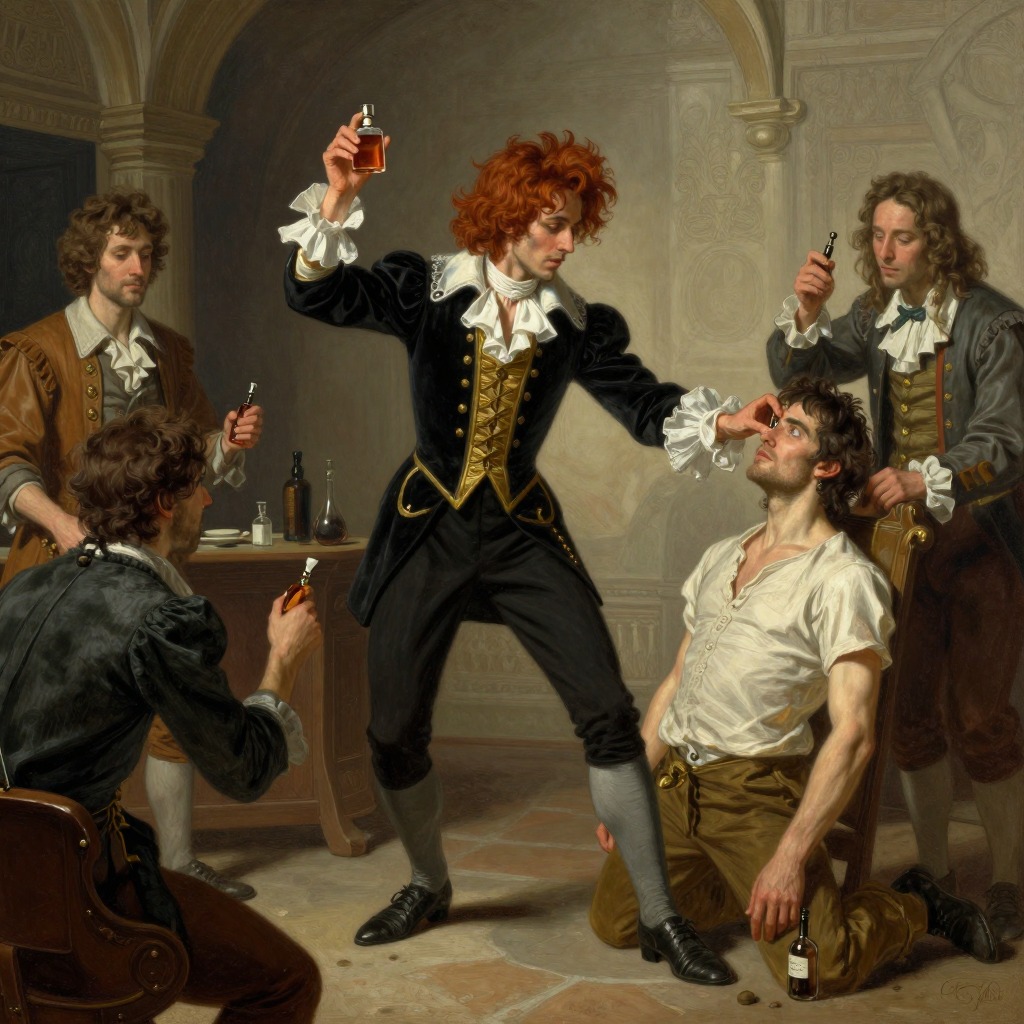
Grenouille concocts the perfume in the laboratory of Runel, a Montpellier perfumer, after faking a fainting spell to convince the Marquis de la Taillade-Espinasse that violet perfume is poisoning him. The base of the scent is a revolting witches' brew: half a teaspoon of fresh cat-shit from behind the laboratory door, a thumbnail-sized piece of old, decomposing cheese found under the worktable, rancid fishy scrapings from a sardine tub lid, rotten egg, castoreum, ammonia, nutmeg, horn shavings, and singed pork rind, all mixed with a relatively large amount of civet and alcohol. The resulting bilge smells putrid, like a sewer, evoking the stench of Paris on a hot summer day at the corner of the rue aux Fers and the rue de la Lingerie. On top of this disgusting base, which smells more like a cadaver than a human being, Grenouille spreads a layer of fresh, oily scents: peppermint, lavender, turpentine, lime, and eucalyptus, which he then simultaneously disguises and tames with the pleasant bouquet of fine floral oils—geranium, rose, orange blossom, and jasmine. After a second dilution with alcohol and a splash of vinegar, nothing of the disgusting basic odor remains; the latent stench lies lost and unnoticeable under the fresh ingredients, and the perfume seems to exhale the robust, vivacious scent of life.
Effect on Others
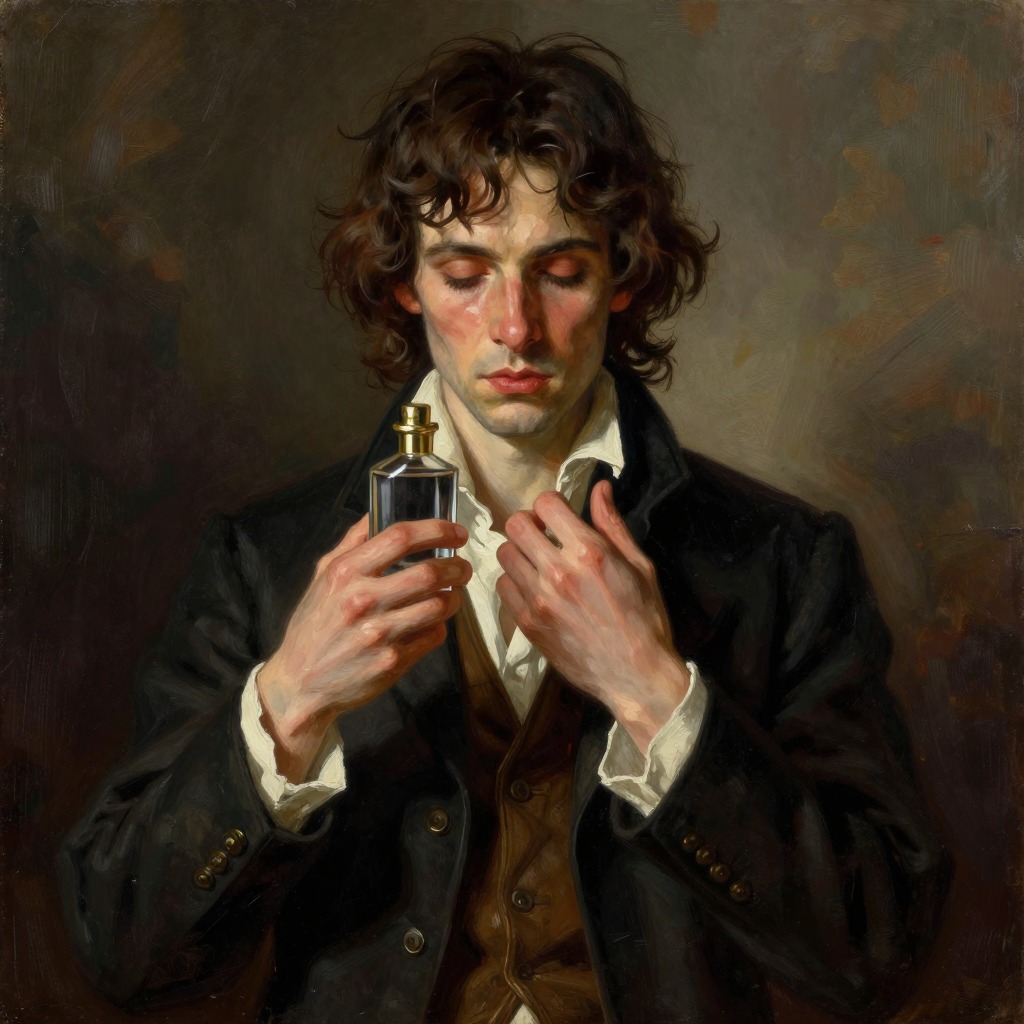
When Grenouille first wears the perfume on the streets of Montpellier, he is suddenly afraid, knowing that for the first time in his life he is giving off a human odor. He finds that he stinks quite disgustingly. As he walks through the tanneries and dyers' workshops, he notices that people no longer ignore him. A woman at a well raises her head to see who is there and then turns back to her bucket, apparently satisfied. A man turns around and gazes after him with curiosity. Children scoot aside not out of fear but to make room for him. He grows more self-assured, deliberately jostling a passer-by, who accepts his apology and even smiles. The ultimate test comes when he mingles with a crowd outside the Cathedral of Saint-Pierre during a wedding. He shoves into the densest part of the crush, spreads his arms and legs, and opens his collar so the odor can flow unimpeded. His joy is boundless when he notices that the others notice nothing—that all these men, women, and children can be so easily duped, inhaling his concoction of cat-shit, cheese, and vinegar as an odor just like their own and accepting him as a human being among human beings. He lifts a little girl onto his arm, and the mother thanks him.
Significance and Legacy
The human-scent perfume is a crude but effective surrogate for the genuine human odor Grenouille lacks. It gives him the confidence to move through society and to understand that he can manipulate people's perceptions at will. This success directly inspires his ambition to create a far more powerful scent—an angel's scent that would make people love him. The perfume also serves as a template for his later, more refined work: the base of cat-shit, cheese, and vinegar is the same olfactory principle he will use to construct the ultimate perfume from the auras of twenty-five murdered virgins. In Montpellier, he creates a second, conventional floral perfume as a decoy for the marquis, while keeping the true human-scent perfume for himself. The human-scent perfume thus represents Grenouille's first successful act of olfactory deception, the moment he learns that he can rule the hearts of men by ruling their sense of smell.