Nuit Napolitaine perfume bottle
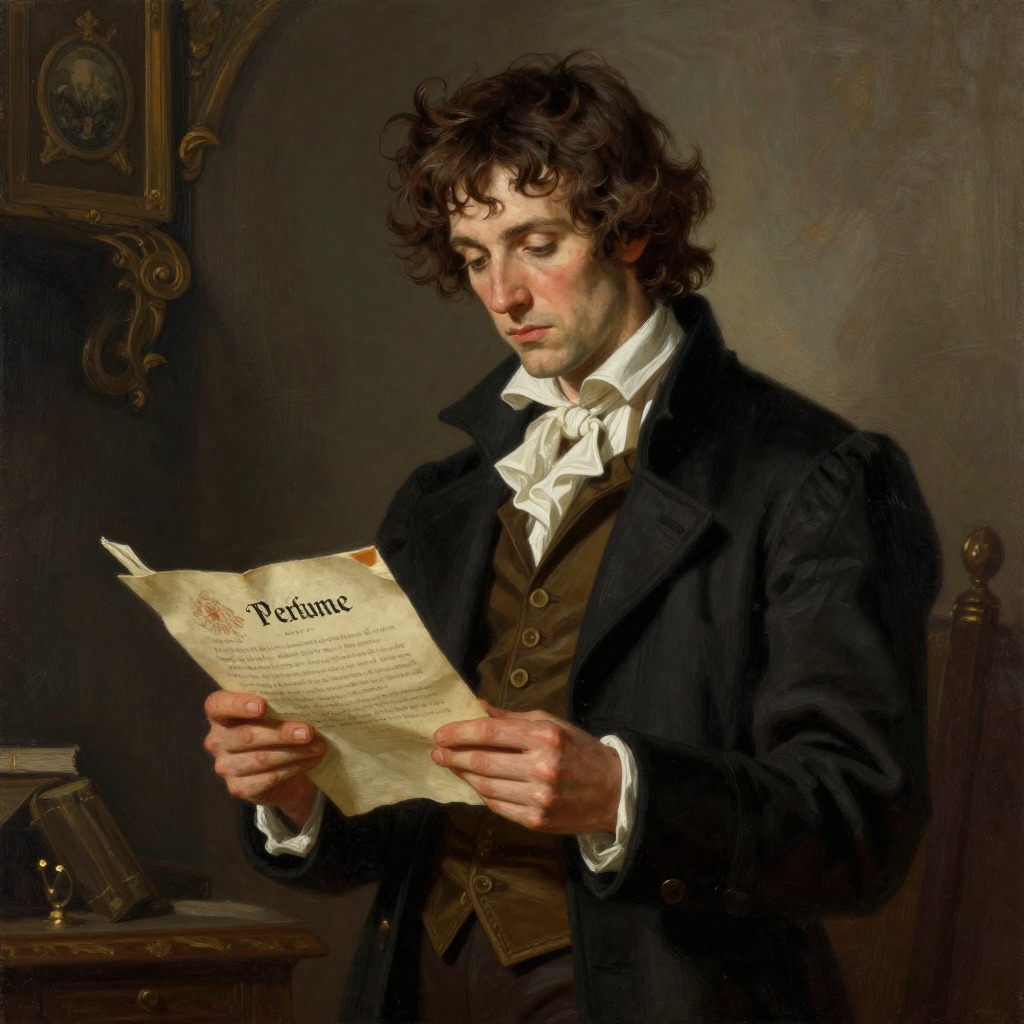
PerfumeNuit Napolitaine is the perfume that launched the second, triumphant phase of Giuseppe Baldini's career and, unbeknownst to anyone but its creator, announced the arrival of the greatest perfumer who ever lived. Concocted in a single improvised session by the apprentice Jean-Baptiste Grenouille in Baldini's laboratory on the Pont au Change, it was not merely a copy of a rival's fashionable scent but a radical improvement so sublime that it made the original seem like a scratch on a lonely violin compared to a symphony. The perfume's name, meaning "Neapolitan Night," evoked the romantic memories Baldini associated with his youth in Italy, but its power was entirely the product of Grenouille's uncanny genius.
Creation and First Appearance
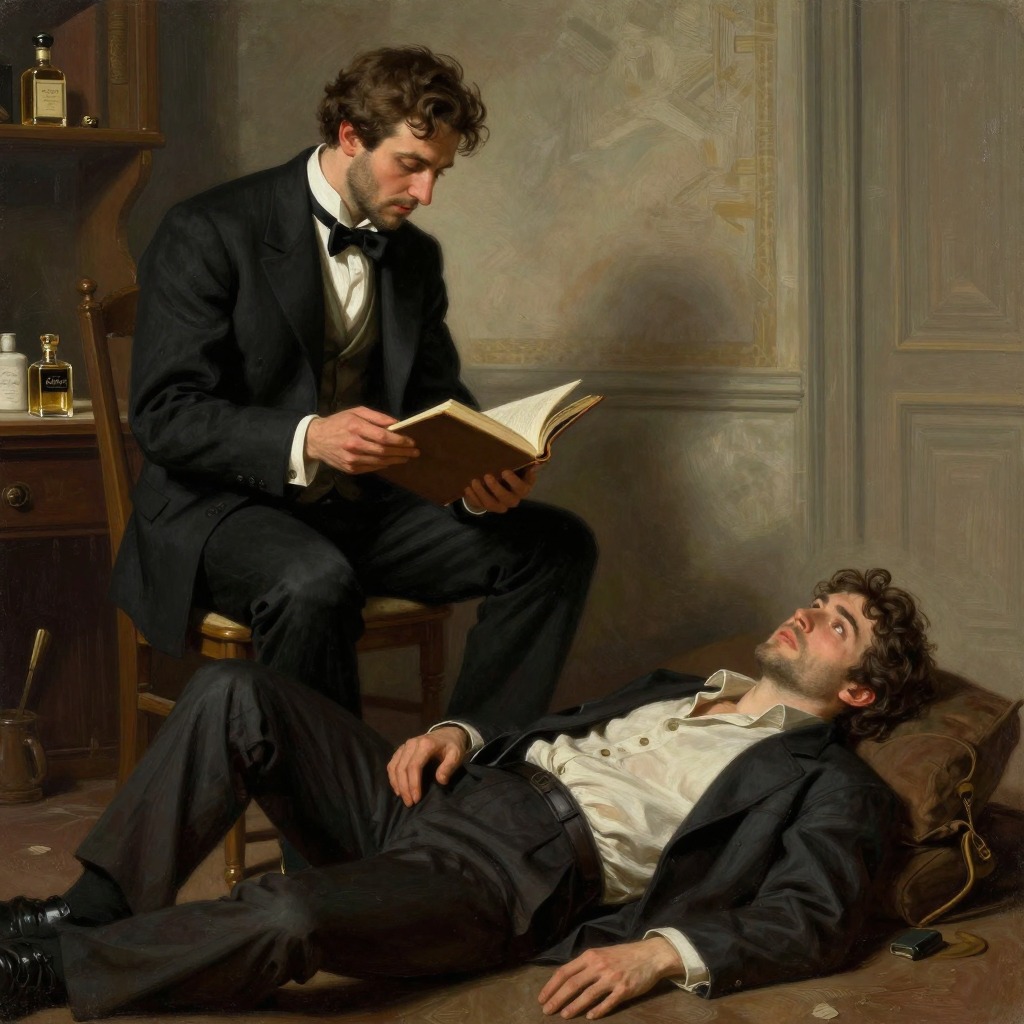
The perfume was born on the evening of 1 September 1753, after Grenouille had delivered goatskins to Baldini's shop. Baldini, having failed all afternoon to decode the formula of Pélissier's popular "Amor and Psyche," was on the verge of despair and had resolved to sell his business. Grenouille, who had smelled the perfume on Baldini's clothes and handkerchief, offered to reproduce it on the spot. Working in near-darkness, he ignored every rule of the perfumer's craft: he poured alcohol into the mixing bottle first, then snatched bottles of essence from the shelves by scent alone, splashing and dribbling their contents into the funnel without using a single measuring glass or pipette. Baldini, watching in horror, expected an explosion or a worthless brew. But when Grenouille shook the bottle and the air filled with the scent of "Amor and Psyche," Baldini was speechless. Then Grenouille, declaring the original "not a good perfume," immediately mixed a second batch, this time swirling the bottle gently rather than shaking it. The result was a scent so heavenly fine that tears welled into Baldini's eyes. He closed his eyes and saw himself as a young man walking through the evening gardens of Naples, lying in the arms of a dark-haired woman, hearing whisperings of love. The perfume was not merely an improvement; it was something completely new, capable of creating a whole world. Baldini named it "Nuit Napolitaine," wrote the name on labels, and poured the remaining perfume into two small bottles.
Commercial Triumph and the Transformation of Baldini's House
The very next day, the fame of "Nuit Napolitaine" spread like wildfire. Over eighty flacons were sold, and the Persian chimes at Baldini's shop never stopped ringing. The footman of Count d'Argenson, the most powerful man in Paris, demanded five bottles. Baldini, who had been on the verge of bankruptcy, now found himself at the center of a commercial revolution. He announced a new strategy: every season, every month if necessary, he would produce a new perfume, drawing fully upon his creative talents. In reality, he drew fully upon Grenouille, who worked behind closed doors in the laboratory while Baldini took credit. The success was so overwhelming that Baldini soon built a factory in the Faubourg Saint-Antoine, received a royal patent, and saw his perfumes sold as far off as St Petersburg, Palermo, and Constantinople. By 1756, he was indisputably Europe's greatest perfumer and one of the richest citizens of Paris.
The Perfume's Role in Grenouille's Education
"Nuit Napolitaine" was also the catalyst for Grenouille's formal training in perfumery. After the demonstration, Baldini insisted that Grenouille learn to use scales, measuring glasses, and the pipette, and to record his formulas. Grenouille complied, and in doing so mastered the language of the craft. He learned to write down his fragrant ideas in drops and drams, and soon could produce a formula straight from his imagination without any intermediate experimentation. This ability to translate his olfactory visions into written recipes allowed him to disguise his genius behind the appearance of conventional craftsmanship, lulling Baldini into the illusion that everything was perfectly normal. The regulations of the craft became a welcome disguise for Grenouille, who used them to secure the cloak of middle-class respectability and the knowledge of production techniques he would need for his true, far more ambitious goals.
Legacy and Disappearance
When Baldini's house on the Pont au Change collapsed into the Seine on the night of Grenouille's departure, the little book containing the formula for "Nuit Napolitaine" — along with six hundred other formulas — was lost forever. The only trace of Giuseppe Baldini, Europe's greatest perfumer, was a motley odour of musk, cinnamon, vinegar, lavender, and a thousand other things that floated above the Seine from Paris to Le Havre for several weeks. "Nuit Napolitaine" itself vanished with him, but its brief existence had already changed the course of the perfume industry and set Grenouille on the path toward his ultimate, terrifying ambition.