Chiaki and Kawashima’s apartment confrontation
PiercingChiaki and Kawashima Masayuki’s apartment confrontation is a violent reversal of the roles each has assigned the other: Sanada Chiaki first incapacitates and attacks him, but Kawashima Masayuki’s returning awareness turns the danger back on her. The encounter culminates not in the planned killing but in his collapse, her escape, and her discovery that the man she had partly imagined as a rescuer had prepared for murder.
Background and Approach
The confrontation is framed by Kawashima Masayuki’s deliberate preparations for an attack on a sex worker. In his notes, he weighs how to select a target, where to carry out the killing, how to restrain the woman, and how to misdirect the police. He rejects public places and considers the practical risks of different kinds of hotel, including the possibility that staff or a client’s agency might notice trouble. For a regular hotel, he tests the registration process at the Akasaka Prince Hotel and reasons that a false name and number could pass without identification if he checks in on time. Later he favors hotels in West Shinjuku with crowded desks and poor service, calculating that inattentive staff would focus less on guests.
At the Keio Plaza Hotel, his arrival initially seems to confirm the usefulness of those calculations. He checks in amid a crowded lobby, where weddings and other events have overwhelmed the front desk; neither the clerk nor a bellboy pays him much attention. His overnight bag contains a change of clothes and weapons, while his notebook records the practical details of the plan. This careful preparation establishes the danger that Sanada Chiaki faces, but the later confrontation shows how little control his elaborate scheme gives him once the people in it act unpredictably.
Drugging and Reversal
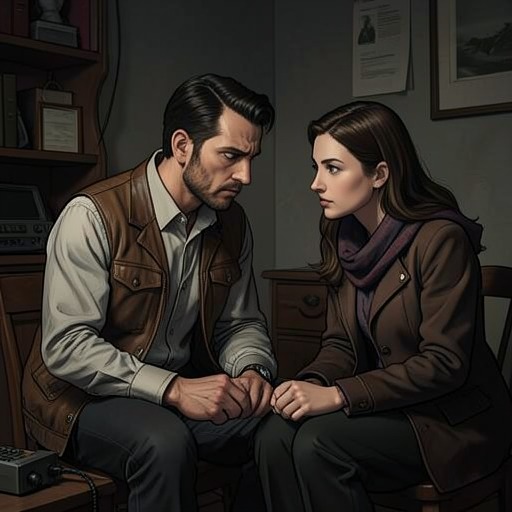
At the apartment, Sanada Chiaki puts crushed Halcion tablets into Kawashima Masayuki’s soup, concealing the powder in a spice bottle whose label says thyme. She adds extra curry powder to disguise the medicine’s bitterness. He eats the soup and two buttered rolls without suspecting that she has drugged him. She expects the dose to make him unconscious, and her reasoning is shaped by her fear that a sexually aroused response might revive earlier traumatic memories. The meal is therefore both an ordinary domestic interlude and the means by which she tries to gain control of a dangerous situation.
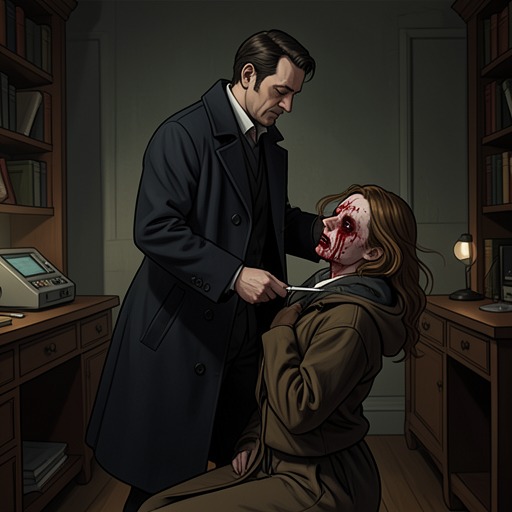
As the drug takes effect, Kawashima Masayuki struggles to remain upright and calls for Yoko. Sanada Chiaki hears the name and reacts with a sudden surge of anger. She takes a can opener from the kitchen drawer and strikes him as he calls for his wife. Her attack breaks through the drugged state enough for him to become acutely aware of danger. The shift is immediate: the man who had seemed helpless is no longer simply asleep, while Sanada Chiaki, having spent her anger in the assault, is left crying and unsure whether he will rise again.
Trauma and Renewed Danger
Kawashima Masayuki’s return to awareness is bound to the childhood strategies he formed under his mother’s beatings. As a boy, he repeatedly told himself that the person being hit was not really him, training himself to separate from pain while remaining close enough, in his own mind, to return. During the confrontation, an inward voice recalls those rules: do not apologize, wait for the attack to end, and meet the other person’s eyes. The voice once helped him endure abuse; now it helps him orient himself after Sanada Chiaki’s blows. The memory does not simply explain his reaction but makes an old survival mechanism active in the present.
That partial recovery does not restore a safe or reliable understanding of the situation. Kawashima Masayuki hears himself calling for Yoko and interprets Sanada Chiaki’s fear through memories of his mother. He remembers striking his mother after she appeared frightened and asked for forgiveness, and the belief that no one could be helped becomes part of his distorted reading of the woman before him. He tells Sanada Chiaki to come closer, grabs her, and uses the cord from an espresso machine to bind her wrists. Her attempt to resist fails, and he brings her into the kitchenette. The power dynamic has reversed again: the person who had drugged and attacked him is now restrained, while his own past is directing his actions.
The Ice Pick and Interruption
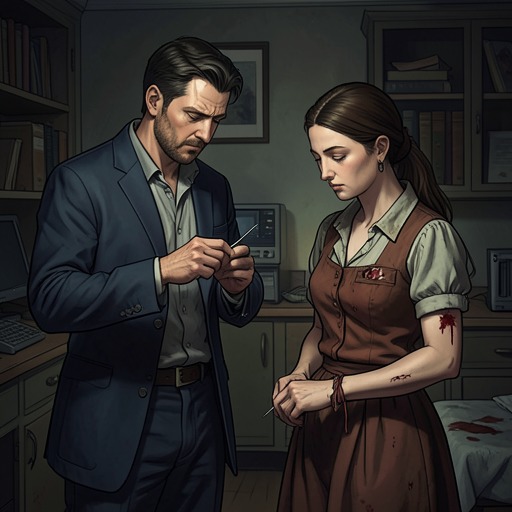
Kawashima Masayuki next turns to a package he has prepared. He expects to find a knife, but when the wrapping opens, he sees an ice pick. Its appearance brings an image of a baby in a crib to mind, linking the present threat to his recurring fear of harming the infant. He nevertheless moves to use the weapon against Sanada Chiaki. Before he can do so, his thoughts are overtaken by the remembered presence of his mother: the sound of a locked door and the sense that she has entered and taken possession of his body. The experience overwhelms him, and he loses consciousness.
This interruption prevents the attack from reaching its intended conclusion, but it does not erase the danger or resolve the confrontation through a clear reconciliation. The ice pick is both a practical instrument in Kawashima Masayuki’s plans and a trigger for memories that disorganize his present awareness. His carefully prepared course of action breaks down at the moment when the weapon becomes real and the past intrudes most forcefully.
Escape and Discovery
Sanada Chiaki cuts the cord binding her wrists with cooking scissors and removes the cloth from her mouth. She watches Kawashima Masayuki, then searches his overnight bag. There she finds his notebook and another wrapped package containing a large knife. She reads the notebook from beginning to end, but cannot determine whether it records a real crime in preparation or the fantasies of a disturbed man. What it does make clear to her is that she was not the object of a distant admirer’s devotion and that he had not come to rescue her. Whether he is a murderer or someone pretending to be one, the notebook recasts their encounter as a transaction in which she was treated as a body to rent.
She does not call the police, anticipating that reporting the incident would require a prolonged time at the station. Instead, exhausted and in pain, she gets into bed beneath the covers. She is not afraid that Kawashima Masayuki will wake soon because the Halcion should keep him unconscious for hours, but she cannot sleep. She also revisits the moment when the ice pick was at her stomach and wonders why she felt no fear: perhaps she had accepted death, was too depleted to react, or had been curious about what the stabbing would be like. The event ends with that uncertainty rather than a settled interpretation. Sanada Chiaki has escaped immediate danger and learned the truth of his plan, but the confrontation leaves both her understanding of him and her own response to the threat unresolved.