The Keio Plaza Hotel encounter
PiercingThe Keio Plaza Hotel encounter is the point at which Kawashima Masayuki’s planned violence is disrupted by Chiaki’s self-harm crisis. What he has organized as a controlled, concealed operation instead becomes an emergency that draws him into caring for the very woman he had intended to kill.
Causes and Setup
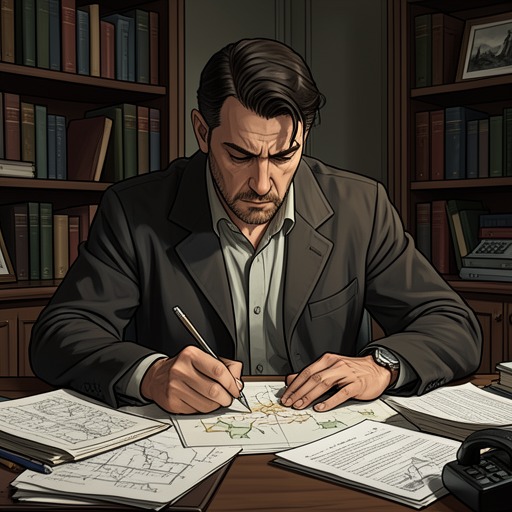
Before the encounter, Kawashima had spent hours turning his plan into a practical scheme. He meant to select a woman working independently, avoid places where staff or associates might check on her, and use a hotel room where he could restrain her. He also considered how to mislead the police, including planting clues that might suggest an irrational offender, and judged that hotels with busy reception desks would attract less attention. His notes show how much he relied on controlling the setting: the victim, the room, the staff, and even the appearance he would present at check-in all became parts of the plan.
He tested that strategy at the Keio Plaza Hotel. On a Friday afternoon, he arrived by hotel bus from the west exit of Shinjuku Station and checked in amid a crowded lobby, where weddings and other gatherings kept the front desk busy. He was assigned a room on the twenty-ninth floor. His overnight bag contained the weapons and a change of clothes; he had also changed into a cheap suit and glasses at Haneda Airport, and acquired a discarded Kansai sports daily as a possible prop for his intended misdirection. The ordinary bustle that helped him pass unnoticed appeared to confirm that his preparations had worked, but the encounter would soon escape the limits he had tried to impose on it.
The Plan Breaks Down
After Chiaki remained in the bathroom for more than fifty minutes without answering, Kawashima opened the unlocked door and found her injuring herself with the scissors of a Swiss Army knife. He moved toward her, but her scream made him stop: she seemed to panic when he approached and to become frightened again when he withdrew. He recognized in this pattern the fear of children he had known at the Home, and understood her actions as an attempt to ask for help when she had no other way to do so.
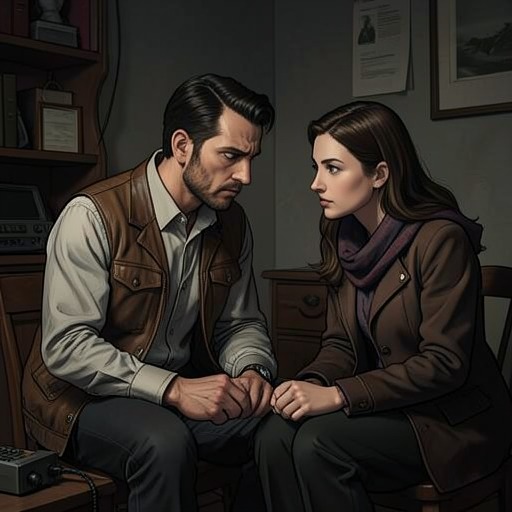
When the telephone rang, Kawashima used the moment Chiaki moved within reach to take the knife from her. She struggled, and when he held her to prevent another scream, she bit his hand. He did not pull away. Instead, he repeatedly reassured her in a gentle voice that she need not be afraid. The words gradually reached her; she recognized that she was both angry and frightened, feelings no one had previously named for her, and relaxed in his arms.
Kawashima carried Chiaki to the sofa, dried her, and assessed her injuries. His original intention had not yet disappeared: he considered whether he could still kill her, with the ice pick and knife nearby. But her vulnerable, withdrawn state made the act seem intolerable to him. He regarded her as a kindred spirit and abandoned the attack. The operation he had planned was now compromised: his hand was injured, his gloves were off, and his fingerprints and other traces could connect him to the room. He concluded that he would have to abandon this attempt and begin again.
Recognition and Aftermath
The crisis did not end when Kawashima abandoned the attack. After a brief nap, Sanada Chiaki came back to her senses, realized she needed medical attention, and searched the room for the man who had stayed beside her. Finding his clothes and overnight bag but not him, she went into the corridor without realizing she was naked. Kawashima, who had been trying to avoid attracting notice from an elderly couple nearby, saw her emerge from the room and hurried to bring her back inside. She recognized him by the wound on his hand: the man who had held her and spoken calmly to her was the same person she had bitten.
Kawashima decided to take Sanada Chiaki to a hospital rather than return to his hotel or resume his plan. For her, the decision confirmed a bond she had already begun to imagine. She recognized him as the recurring, unidentified man who had taken her to a hospital before, and understood his actions that night—not only accompanying her for treatment but waiting outside—as evidence of unusual devotion. Her perception and his circumstances diverged: he was still trying to manage the consequences of a failed plan, while she saw someone who had chosen to remain with her.
After the hospital visit, Sanada Chiaki came through the emergency-room doors and found Kawashima waiting in the cold with two bags and her handbag. He ran toward her, and she moved to him despite the numbness in her treated leg, eager for his support. In the taxi, she invited him to stay at her apartment. He agreed in part because he could not take her back to the Akasaka hotel, where he had registered under his real name. The invitation carried a different weight for Sanada Chiaki: she had recast the encounter with a client as the arrival of the unknown man she believed had repeatedly cared for her. The failed attack thus left them bound by a crisis neither understood in the same way.
Narrative Significance
The encounter turns on the collapse of Kawashima Masayuki’s effort to make violence predictable. His preparation treats the hotel as a system whose staff, entrances, guests, and traces can be managed; once Sanada Chiaki’s crisis begins, each decision instead depends on what she does next and how she responds to him. The practical scheme gives way to immediate obligations: he has to prevent further harm, get her medical care, and decide where they can go without exposing the plan he has abandoned.
The scene’s reversal is sharpened by the difference between what each character knows. Kawashima enters the room intending violence, then interprets Chiaki’s fear through his memory of frightened children at the Home; Chiaki, unaware of his original purpose, recognizes him as the man who has taken her to a hospital before. Her growing trust therefore does not arise from a shared understanding of the night. The encounter binds them through actions that mean different things to each: for Kawashima, an aborted attack and its consequences; for Chiaki, the apparent return of someone who has repeatedly cared for her.