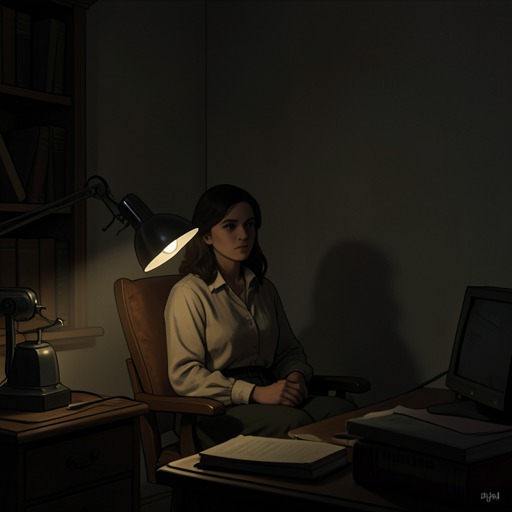
Chiaki is sexually abused by her father
PiercingSanada Chiaki’s sexual abuse by her father is a formative family secret that returns in fragments, first as an association she struggles to name and later as an imagined confession. Her memories expose the gap between her father’s respectable public image and the abuse he concealed at home, while also preserving moments of apparent care that make her recollection emotionally difficult to reduce to a single portrait.
Childhood and the Hidden Abuse
Chiaki recalls that the abuse began when she was in elementary school. It took place when her mother was away or had gone to sleep, leaving her father able to keep the conduct within the household. He presented it to Chiaki as affection, described it as something she should not fear, and instructed her not to tell anyone—not even her mother—claiming that disclosure would separate the family. He also told her not to bathe. The secrecy was therefore part of the abuse: a child was made responsible for protecting the adult and preserving the family’s appearance.
That private reality contradicted the image her father showed others. Chiaki remembers him as a respected head accountant at the largest company in their hometown, a man with few interests outside work and the daily task of feeding the family’s goldfish. His carefully maintained appearance was part of that contrast. He wore a starched white shirt and carried a clean white handkerchief, saying that these made him feel pure. When Chiaki later encounters a man who clings to a handkerchief, the detail brings her father to mind. The association joins cleanliness to concealment: the pristine image she remembers cannot erase what happened in private.
Disclosure and Its Aftermath
Chiaki eventually broke the imposed silence. In middle school, she first told a friend and then told her mother. Her mother confronted her father while he stood listening and twisting his handkerchief. He denied the accusation and shouted at Chiaki, calling her account a lie. She remembers that as the first time she had heard him raise his voice, but not the last. Afterward, she experienced him as changed: increasingly angry and prone to yelling over small matters.
The disclosure altered the household without bringing an uncomplicated resolution. The mother had learned what Chiaki had been told to hide, but the father’s response turned the telling itself into another source of conflict. Chiaki’s later recollection repeats his claims of purity against the evidence of his conduct and his rejection of her account. That return is not simply a report of what happened; it also records how the language he used to secure silence became, for her, inseparable from the hypocrisy she later recognized.
Conflicting Memories of Her Father
In a later passage, Chiaki imagines telling Kawashima Masayuki the full story, including her hatred of her father and her wish that he would die. This is an imagined disclosure, not evidence that she actually tells Kawashima. Within it, she recalls a different scene from middle school: during a serious fever caused by recurring tonsil problems, her family discussed an operation to be performed by the local doctor in their small town outside Nagoya. Her father worried that something might happen to her, threatened the doctor in that event, and burst into tears.
Chiaki identifies his tears as the memory that stayed with her most strongly. The recollection does not undo the abuse or the anger that followed her disclosure. Instead, it places his apparent fear for her life beside the harm he had inflicted and the hostility with which he answered her account. The two memories remain together in her telling, without resolving into a simple judgment of him. Her narrative preserves both the family’s rupture and the moment of emotion that she found startling.
The Story’s Present and the Return of the Secret
The memories surface amid Chiaki’s encounter with Kawashima at the Keio Plaza Hotel. He has selected a hotel in West Shinjuku as part of a planned attack on a sex worker, believing that a crowded, inattentive hotel would draw little scrutiny. After checking in, he waits in his room; when Chiaki appears in the corridor, he sees her in a confused and distressed state. The hotel sequence is a separate episode from the childhood abuse, but it provides the immediate setting for her later imagined account of her father to Kawashima.
As she thinks through what she might tell him, Chiaki also recalls that she deliberately changed her personality after entering junior college at eighteen and that boys began responding to her differently. She frames this as an intentional change, not as a transformation that can be confidently attributed to a single cause. The imagined confession nevertheless gathers her memories of family secrecy, anger, and contradictory attachment into one address. The abuse is thus shown not only as a past event but as a history that re-enters the present through association and the wish to be understood.