Home
PiercingHome is the residential placement for abused children to which Kawashima Masayuki was sent after a middle-school teacher intervened in his childhood. He lived there for a little over two years. His memories make it more than a stopping point between abuse at home and life with his paternal grandmother: it is where drawing began, where he shared a room with Taku-chan, and where his adult understanding of abused children took shape. The account does not describe Home’s administration or formal methods; instead, it presents the institution through the children who lived there and the lasting impressions they left on Kawashima.
Identity and Placement
Home is described as a home for abused children, and Kawashima’s placement followed years of violence and exclusion by his mother. After his father died when Kawashima was four, his mother began beating him while leaving his younger brother untouched. When Kawashima was about five or six, she began locking him inside while taking his brother on outings. After he once followed them, she brought him back and tied him to the bathroom pipes. The remembered episode ends with him waking on the tiled floor after dark, looking out at a narrow, empty road. A middle-school teacher later arranged for his placement at Home, though the account does not explain the teacher’s process or the institution’s intake arrangements.
Kawashima remained at Home for a little over two years. Afterward, he went to live with his paternal grandmother. At his high-school graduation, his mother apologized and asked for forgiveness; he initially nodded, then slapped her. The episode underscores that leaving Home did not itself resolve his relationship with his mother or erase the earlier harm. His placement marks a change in living circumstances, while the memories he carries from both before and during it continue to inform how he understands violence and childhood.
Daily Life and the Children
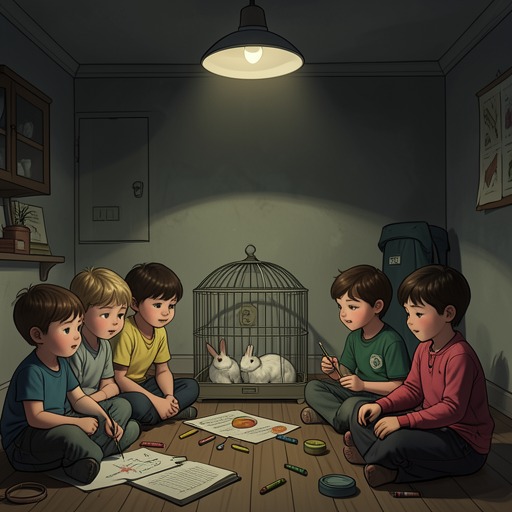
Kawashima remembers a playroom furnished with a sandbox filled with white sand, dolls, stuffed animals, puppets, model tanks and cars, toy telephones, building blocks, a small trampoline, and painting supplies. These details give Home the recognizable materials of a children’s environment, but his recollection also centers the difficulty of living alongside children whose behavior could be alarming to adults. Some ignored greetings or answered angrily; some reacted to reprimands by throwing things or trying to bite. Others withdrew, became distressed when approached, sought adult attention anxiously, or hurt themselves. The memories are presented as Kawashima’s retrospective view of the children, not as a complete account of every resident or of the institution as a whole.
His later interpretation directly challenges the impulse to treat such conduct as proof that a child deserves rejection. Watching the children, he can understand how an adult might regard them as difficult and conclude that their parents’ violence was justified. But he recognizes that this reverses cause and consequence: in his understanding, the children’s behavior is not the reason they were abused but one of the results of abuse. He emphasizes their powerlessness to stop it, and the difficulty of simply rejecting a parent on whom a child remains dependent. Home thus appears in his recollection as a place where the consequences of mistreatment were visible among children, even though the evidence does not specify how staff responded to individual behaviors.
Kawashima and Taku-chan
At Home, Kawashima had a friend his own age, Taku-chan, with whom he shared a room for two years. They rarely spoke at first; they only began having conversations of any length shortly before Kawashima left, and even then they did not discuss deeply personal matters. Their friendship is therefore remembered less through confidences than through repeated proximity and shared drawing.
One incident involving a pet rabbit became a defining memory for Kawashima. Home had acquired two rabbits, and one of their offspring was entrusted to Taku-chan, who cared for it intensely, even sleeping with it in his arms. One day, without any apparent reason, Taku-chan suddenly killed the rabbit. He then went to get another to replace it. Kawashima recalls the abrupt contrast between the boy’s earlier tenderness toward the pet and his sudden violence. The episode does not establish a general pattern or explain Taku-chan’s motives; its force lies in the unexplained reversal that Kawashima witnessed at close range.
Taku-chan’s drawings offered another glimpse of distress without making it a conversation between the boys. He repeatedly covered the page in dark colors and painted a naked boy pierced by arrows. When a counsellor asked who the figure was, Taku-chan identified it as himself, then answered that it did not matter who it was if it was not him. The exchange gives the image an unsettling double meaning: the drawing names Taku-chan as its subject, while his response also suggests a detachment from the suffering it depicts. The account offers no diagnosis or further explanation, leaving the drawing and the brief exchange to stand as fragments of what the boy communicated.
Drawing and Lasting Significance
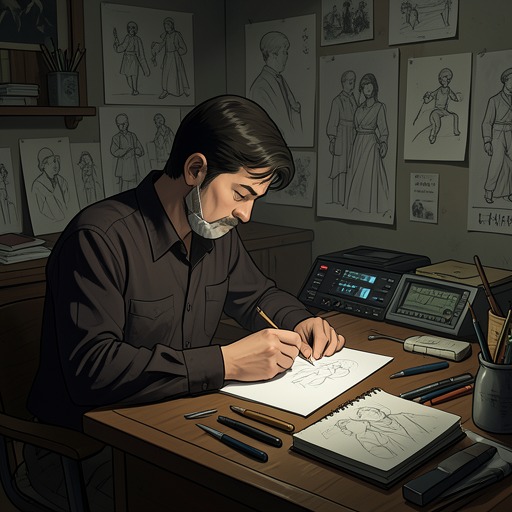
Kawashima says that he began drawing as soon as he entered Home. From the outset, he drew only pictures of narrow roads at night. That recurring subject reaches back to his memory of being left alone after the episode in which his mother tied him up: after waking in darkness, he could see the narrow road outside the window. The road connects a specific childhood scene of isolation with the first sustained artistic practice he recalls. The evidence does not say that drawing was prescribed or formally encouraged at Home; it presents the activity as something Kawashima began there.
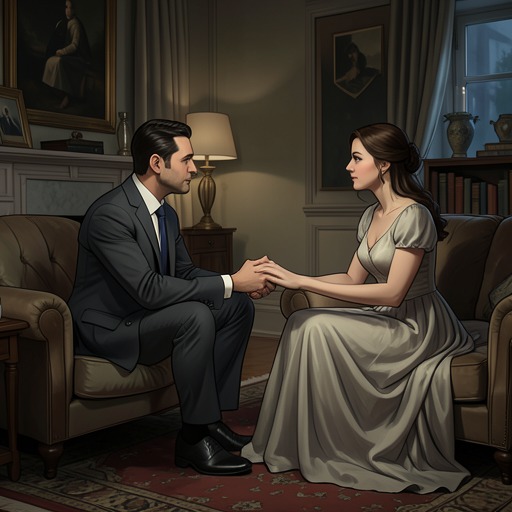
Years later, Kawashima tells Yoko that he has never before spoken about the experience, and she takes his hand. The disclosure makes Home part of a belated act of telling as well as a remembered period of residence. In adulthood, his memories of the children also shape a broader understanding: behaviors that adults might condemn can be consequences of what children have endured, rather than grounds for blaming them. Home’s narrative significance rests in this connection between the children’s visible distress, Kawashima’s own history, and the meaning he eventually draws from both. It is not presented as a cure or a complete account of recovery; it is a formative setting whose people and images remain with him after he leaves.