Kawashima's ice pick
PiercingKawashima's ice pick is a portable steel tool whose whereabouts become decisive during Kawashima Masayuki’s confrontation with Sanada Chiaki. He searches for it because he intends to use it to frighten and harm her; when it reappears, the sight of it also brings the image of a baby in a crib into his mind. He loses consciousness before carrying out the threatened attack, and the ice pick is later found among the objects Chiaki collects. Across these moments, it shifts from missing possession to imminent weapon and finally to evidence of the danger she has faced.
Identity and Custody
The object is identified through Kawashima’s urgent questions about whether it was beneath the bathtub. He asks Chiaki if she looked there when she moved, returning to the question even after she shakes her head. She does not understand why the location matters, but his insistence frightens her. The exchange establishes both that he believes the ice pick may have been hidden in a particular place and that Chiaki cannot confirm whether it was there.
Kawashima considers another possibility: that the police took the ice pick as evidence. He also wonders whether police are watching the apartment, then dismisses the concern and focuses on carrying out his plan elsewhere in the room. His reasoning makes the object’s absence an immediate practical obstacle. He believes he needs it to teach Chiaki a lesson, and his anxiety about finding it is bound up with the pressure he feels to act before he becomes too weak to continue.
The passage does not establish when the ice pick was placed beneath the bathtub, or whether it was ever there. Kawashima’s questions and speculation are not confirmation of its history. Its custody remains uncertain until Chiaki later finds it near the entrance, where he had flung it shortly before passing out.
Search and Threat
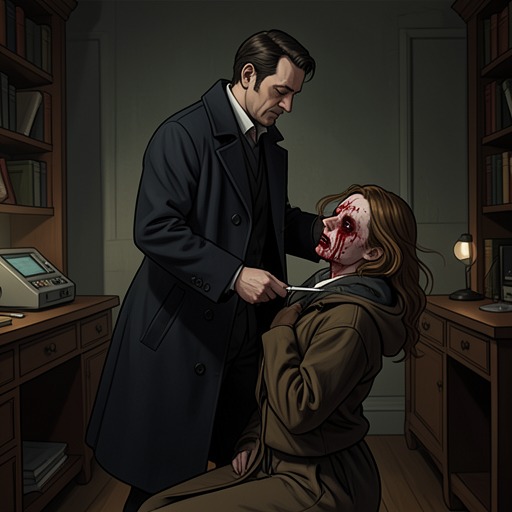
Unable to locate the ice pick, Kawashima tells Chiaki to come closer. When she refuses and steps back, he grabs her and drags her toward the kitchenette, where he uses the espresso machine’s electrical cord to bind her wrists. This turns the missing object into more than a question of possession: Kawashima has already begun to control and threaten her without it. His thoughts frame the intended violence as a lesson designed to make her believe that no one will rescue her.
That rationale recalls his earlier response to his frightened mother. He remembers striking her when she appeared small and asked for help, and treats her fear as something he must answer with force rather than care. The same belief shapes his intentions toward Chiaki. The ice pick is the means he wants for imposing that belief, but the threat is already active before he recovers the tool. Its absence delays his plan; it does not make her safe.
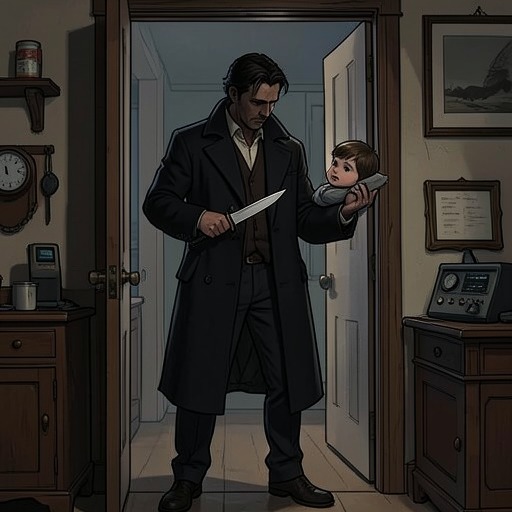
When Kawashima opens a package, he expects to find a knife. Instead, the wrapping reveals the thin, pointed steel rod. The mistaken expectation briefly separates the two objects, but the ice pick’s return immediately changes the stakes. Kawashima sees the image of a baby in a crib and thinks he is about to attack another person. As he prepares to use the ice pick against Chiaki, memories of his mother intrude; the resulting loss of consciousness interrupts the assault.
Recovery and Aftermath
The ice pick is next described as lying on the carpet near the entrance, where Kawashima had flung it shortly before passing out. In the early daylight, Chiaki finds it alongside his wallet, knife, and Kawashima's notes. She places these objects with his overnight bag. Her actions gather the threatening tool into an orderly group of possessions, but do not erase what it had meant moments earlier: Kawashima had sought it as the instrument of the attack he intended to carry out.
When Kawashima wakes, his attention moves to the items beside his bag. He thinks he will throw away the knife and ice pick after leaving, while deciding not to dispose of his notes. He regards the notes as exciting and mysterious, and remembers his fixation on whether Chiaki had read them. This distinction gives the ice pick a different place among his belongings: it is something he intends to discard, unlike the writing he remains attached to. The passage does not say that he actually throws it away.
Chiaki’s handling of the ice pick also contrasts with Kawashima’s intentions. She gathers it with his other property instead of using it or treating it as a source of safety. The immediate danger has passed because he has collapsed, not because the object has become harmless. Its presence near the entrance preserves the physical trace of the confrontation even as both characters turn toward what comes next.
Narrative Significance
The ice pick’s importance lies in the way its physical whereabouts organize the scene. First it is absent, and Kawashima’s repeated questions make the bathtub a focus of uncertainty. Then it appears inside a package he has opened while expecting something else. Finally, it is found on the carpet and placed with his belongings. These changes are concrete and consequential: the search intensifies the threat, the recovery brings his intended use into view, and the later discovery establishes that the tool remains within Chiaki’s surroundings after he loses consciousness.
The object also exposes the limits of Kawashima’s claimed control. He believes that recovering the ice pick will let him impose his lesson on Chiaki, yet its return does not enable him to complete the assault. His memories overwhelm that intention, and he collapses. The ice pick therefore marks both his capacity to threaten and the interruption of his plan. It is not a symbol detached from the scene: its absence, return, and final location shape what Kawashima tries to do and what Chiaki is left to manage.