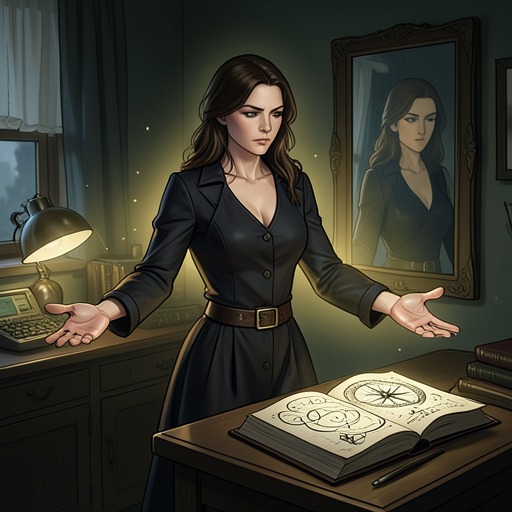
Necromancy’s soul corruption and restoration
PleasureNecromancy’s soul corruption and restoration is presented as a process in which the intent behind magic shapes the user, while sustained misuse can consume the person’s moral identity. Valera’s history makes that principle concrete: she once joined necromancers, recoiled from their cruelty, and spent years recovering from the stain of their practices. Her continued ability to use magic, now for healing and protection, challenges the assumption that every human magic-user is irredeemably evil—and exposes the danger of judging power without examining how it is used.
Corruption and Its Signs
Among Nightwalkers and other supernatural peoples, human magic-users are treated as mortal enemies. Necromancers are hunted and killed, and their corruption is described as perceptible: Sagan recognizes the black magic staining their souls by a foul odor, compared to gasoline and fetid garbage. Their power is dangerous, but the danger is also moral. Sagan understands evil magic as addictive, likening its pull to cocaine or methamphetamines: one taste can begin a downward cascade in which the user’s character is corrupted and wicked choices become easier.
Valera had entered that world about a decade earlier, before she understood how different she was from the people she had mistaken for her own kind. She had initially felt relief at finding others like herself. That relief ended when she saw necromancers capture Demons and maliciously stake out Vampires without proof of wrongdoing, simply to make them suffer. Their conduct revolted her, and she fled once she recognized both their cruelty and the worsening corruption in them. The distinction between her and them was not that she lacked magical power: it was that she could no longer bear what they did with theirs.
Valera’s Recovery
Valera’s recovery was arduous and disproportionate to the period of misuse. Four months of bad magic took five years of effort to cleanse from her soul. The duration matters to her understanding of the danger: restoration is possible, but it does not make the experience trivial or erase the memory of having been corrupted. Even after those years, she remains afraid that a mistake could harm another person or herself.
Her recovery also does not mean that she can simply stop being magical. Penchant has explained that Valera is a natural-born Witch, whose power comes whether or not she calls it. Unlike necromancers, who can be made, Witches are born; yet a Witch can be turned into a necromancer without careful guidance. Valera’s grandmother recognized the family gift and guided her before Valera fell in with necromancers. The distinction therefore concerns both origin and formation: innate power is not itself corruption, but the way it is used—and the guidance surrounding its use—can determine what it becomes.
Intent, Use, and Moral Judgment
The principle Valera arrives at is that magic’s moral character depends on its purpose, while no spell is automatically safe in every circumstance. Healing and protection can be good uses; even those acts can become corrupt when deployed without moral discretion. A stasis spell used to help someone evade justice, or healing given to a serial killer so that the killing can continue, would serve foul ends. In this account, harmful intent does not remain an isolated choice: it stains the user and makes further wickedness easier, until the darkness threatens to overtake the person they once were.
Valera had tried to resist using magic altogether because she feared that blackness would overtake her as it had the necromancers. Cats became an unexpected source of guidance after she heard their thoughts: their accumulated, intermittently offered wisdom helped her understand that not all magic was bad. She gradually learned to judge spells by the ends they served rather than treating the power itself as proof of evil. This gives her recovery an ethical dimension: she is not merely escaping a past identity but learning to exercise power with control and discernment.
That test becomes immediate when Valera uses magic against two people who threaten her. It is the first time in nine years that she has used it against anyone, and their deaths devastate her. She expects the familiar stain of blackness to follow. Instead, she perceives no spiritual backlash: the deaths are treated as unfortunate collateral damage after hostile forces invaded the safety she had made, rather than as evil she had chosen to place into the world. The episode does not remove her fear of making mistakes, but it distinguishes defensive use from the cruelty she once witnessed.
Recognition and Consequences
Sagan’s response supplies a second perspective on restoration. He knows the odor associated with corrupted necromancers, but when he encounters Valera’s memories and recognizes the clean purity he associates with lilies and sunflowers, he finds no sign that her recent magic has tainted her. He understands that she used it to protect herself, her home, and him, and that she had pulled herself away from the addictive force of black magic. What had first seemed to him a familiar category—human magic-user—proves morally inadequate: Valera is not, in his judgment, one of the necromancers his people have fought.
That recognition does not remove the danger surrounding her. Valera fears that Sagan will discover her power and kill her under the Nightwalkers’ assumptions about magic-users. Sagan, in turn, knows that the other supernatural peoples may not welcome her without suspicion. He argues to Magnus that Valera’s recovery deserves consideration and connects the question of magic’s moral use to the question of religious law: if magic can be good, then inherited judgments about sin may also need examination. His argument does not claim that every past crime should be ignored; it asks whether people who were misled, became addicted, and later reclaimed themselves should be condemned without distinction.
Sagan proposes that Valera help show other supernatural peoples that natural Witches and misguided humans may be saved rather than killed. She accepts that responsibility, while asking whether he will remain with her. He promises to share her life. The state’s central consequence is therefore both personal and social: restoration allows Valera to use the power she once feared, but it also makes her living evidence against the indiscriminate persecution of magic-users. Her history holds the two truths together—corruption can be profound, and it need not be the final definition of the person who has suffered it.