Shadowdwellers’ fatal sensitivity to light
PleasureShadowdwellers’ fatal sensitivity to light is not merely a preference for darkness but a severe physical vulnerability: illumination can blister their skin, cause pain, and, with sufficient exposure, burn them to ash. The condition governs Sagan’s immediate survival in Valera’s home and his later passage through Alaska, while exposing how easily human habits and magical power can become lethal in a world shared by beings with radically different bodies.
The Body’s Vulnerability
Sagan’s first response to waking in a strange room is to notice its darkness. The room’s blackened environment is safe for him, but lamps and other lights scattered through it suggest that Valera does not ordinarily live without illumination. Their presence makes the room both refuge and latent danger: he is bound, weakened, and dependent on a human woman who controls the space and its possible sources of light. He understands that even slight contact with light can severely burn a Shadowdweller and eventually reduce one to dust and ash.
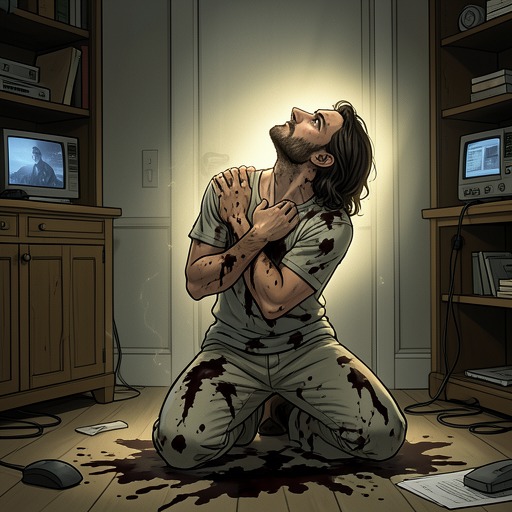
The danger becomes concrete when Valera switches on a light above the kitchen sink out of habit. The soft white glow of a 40-watt bulb reaches Sagan from across the room, and his reaction is immediate: he cries out and tries to roll away. By the time Valera turns the switch off, his exposed hands show harsh sear-like blisters and smoke is rising from the burned skin. He has reflexively shielded his head and face, which leads Valera to realize those areas would have burned too. The smallness of the cause—a familiar household bulb, not a deliberate attack—makes the injury more unsettling. Ordinary human routines are not neutral in a room with a Shadowdweller in it.
Sagan tells Valera that the burns will heal and that the pain is already fading. His reassurance does not make the exposure harmless; it reveals that this particular injury is survivable and that his body is recovering. Earlier, his strength and health had been stolen from him, but both are returning. The scene therefore holds two bodily processes together: recovery from a profound weakening and fresh injury from light. For Valera, seeing the burns also clarifies the fate of other beings she has encountered. She recognizes that the brilliance of stasis fields could have seared captives through if they had not been protected, and that she herself might have killed Sagan while he was wounded and helpless.
Magical Light and Unintended Harm
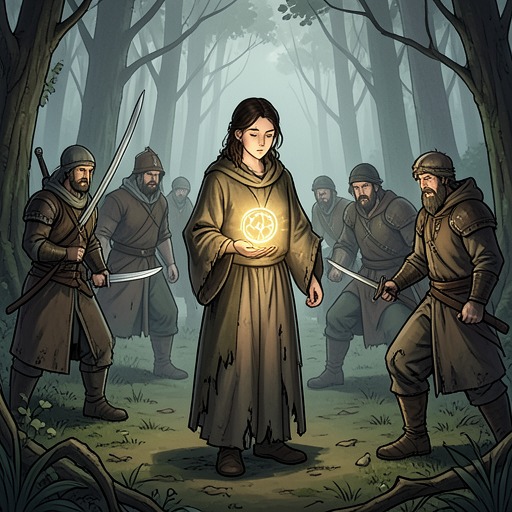
The danger is not confined to lamps or sunlight. Sagan understands that Valera’s magic can emit brilliant blue energy, which would hurt Shadowdwellers much as other light does. He warns her that calling her power can make her radiate light and sear his people almost instantly, whether she intends harm or not. Valera qualifies the danger: the light accompanies certain spells, usually aggressive ones, but not every use of magic. Rather than explain in the abstract, she demonstrates a gentler capacity by sweeping two fingers and making muffins rise from their pan onto a plate in a neat arrangement. The contrast distinguishes the power itself from the dangerous light associated with some of its uses.
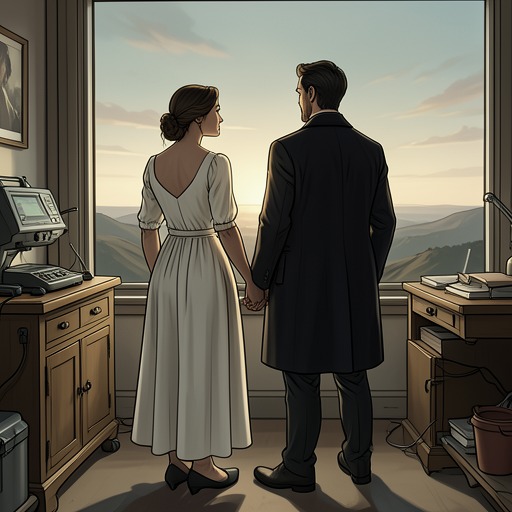
That distinction matters because Sagan’s people have reason to fear magic-users. He has never heard of good magic-users and knows that necromancers have a terrible advantage over Shadowdwellers. Valera, however, does not fit his established understanding. She has used what he regards as a dark art, yet he sees no lasting stain of evil in her; he understands that she pulled herself away from magic’s addictive pull. Her history includes witnessing the torture and transformation of a Demon, an experience that led her to reject the claim that inflicting suffering could be righteous. Sagan’s recognition of her difference does not erase the physical danger her power presents, but it complicates the assumption that danger proves evil intent.
Survival Across Places
Light sensitivity shapes Sagan’s movement beyond Valera’s room. Returning to Elk’s Lake without supplies or proper clothing takes a long time, in part because he must find places that keep him securely out of sunlight during Alaska’s short winter days. A storm further delays him. When he cannot find shelter, he crosses into the Shadowscape, whose landscape is pure darkness except for moonlight and is therefore a safe place for a Shadowdweller—temporarily.
That refuge has its own limits. Sagan can remain in the Shadowscape for two days at most. After that, a euphoria begins that can make Shadowdwellers somewhat crazy. Time also moves very differently there than in the Realscape, so crossing back can leave him hours or days off schedule. The Shadowscape is thus not a simple escape from exposure: safety requires attention to duration and to the disorienting difference between planes. His vulnerability dictates not only where he can travel, but how long he can stay and what uncertainty he must accept in returning.
Social Consequences and Significance
The household injury also exposes the unequal knowledge surrounding Shadowdwellers. Valera recognizes that Sagan is not human, but she has never met a Shadowdweller before. She had seen other people capture and torture a Demon; her horror at that suffering had already made her distrust their claims of righteousness. Her immediate remorse over Sagan’s burns confirms that she did not switch on the light to hurt him. The episode separates physical consequence from intention without minimizing either: he is injured, and her action was accidental, yet the injury reveals the danger she had not understood.
Sagan, meanwhile, knows why human knowledge of the Nightwalkers is kept hidden. Their people fear that human governments and scientific institutions, driven by avarice and curiosity, could systematically destroy their culture. His light sensitivity makes that fear tangible. A vulnerability that can be triggered by a routine switch also helps explain why concealment and control of the environment matter to his survival. Across the scene and the journey to Elk’s Lake, darkness is not simply an atmosphere or emblem: it is a condition of bodily safety, negotiated through rooms, wilderness shelter, and temporary refuge in another plane. The danger remains real even when the person holding the switch—or wielding magic—does not intend harm.