Sagan’s poison-induced near-death and amnesia
PleasureSagan’s poison-induced near-death and amnesia transform a defeat in battle into a crisis of perception, survival, and identity. A toxin on Nicoya’s weapon brings him to the edge of death through excruciating pain and hallucinations; afterward, he survives but cannot remember the events that led to his poisoning or captivity. His ordeal first makes memory a deliberate means of staying alive, then turns its loss into the defining consequence of survival.
Identity and the Battle’s Aftermath
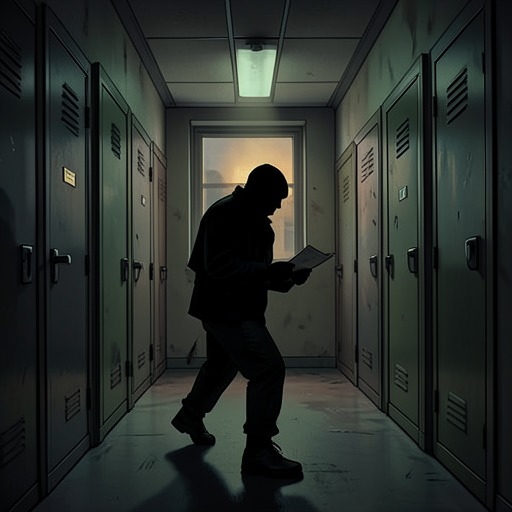
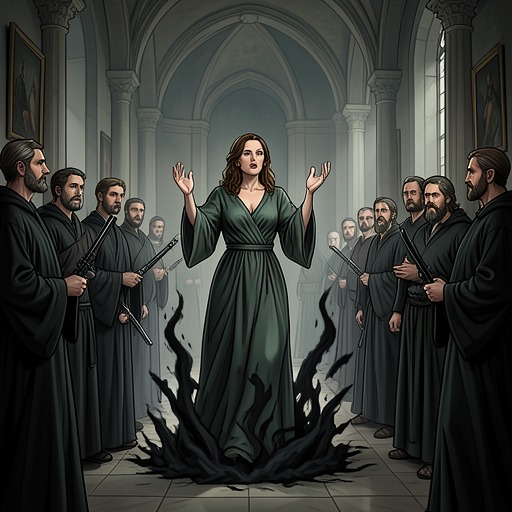
The poison takes hold after Sagan loses a crucial fight against enemies of Sanctuary, the Shadowdwellers’ religious house, and the royal house of the Chancellery. Nicoya has coated her weapons with the toxin, and the smallest scratch is enough to defeat him. Acadian’s lackeys drag him away, leaving his fate in the hands of the woman Sagan imagines will make him her newest toy. He does not know whether he will survive long enough to face what Acadian has done to others. His memory of seeing a scarred, tortured friend gives that possibility a particular horror, even as his faith offers another way to understand what may come: he believes Drenna will welcome him into the Beyond if he dies.
As his symptoms spread, Sagan tries to hold himself to ordinary facts. He recalls being a penance priest, one of five chosen by the gods, and a Shadowdweller and Nightwalker whose world is a nighttime realm. These identities are not incidental details in his delirium. They are anchors he repeats because he believes them to be true, a private discipline against the mind’s accelerating confusion. Yet he can also acknowledge the one fact he cannot resist: he believes he is going to die. At first, certainty itself brings comfort because it remains more reliable than the visions around him.
Poison, Pain, and Hallucination
Sagan’s experience moves violently between physical clarity and mental disorientation. The poison burns through his nerves; for a moment, the pain feels bracing and clarifying, but the respite gives way to a torrent of images. His mind can scarcely distinguish reality from the strange events rushing through it. The visions do not remain in one setting or preserve one role: in Shadowscape, he runs through a lightless dimension as prey escaping a predator; in Dreamscape, he becomes the predator, hunting Sinner prey. The reversal unsettles the boundaries between escape and pursuit, victim and pursuer, just as the poison dissolves the boundary between what is happening and what he imagines.
The crisis culminates not in a stable account of his capture but in systemic collapse. His body’s nerves and his brain go into overload, compared in the narration to an entire electrical grid malfunctioning and shutting down. That abrupt stoppage leaves the episode suspended at the point when his consciousness fails. The narrative’s fragmentation follows his condition: the reader receives feverish images and partial certainties rather than a continuous report of what happens to him. His religious and personal self-descriptions briefly impose order, but they cannot prevent the shutdown or preserve the memory of the events that follow.
Found Injured and Still Poisoned
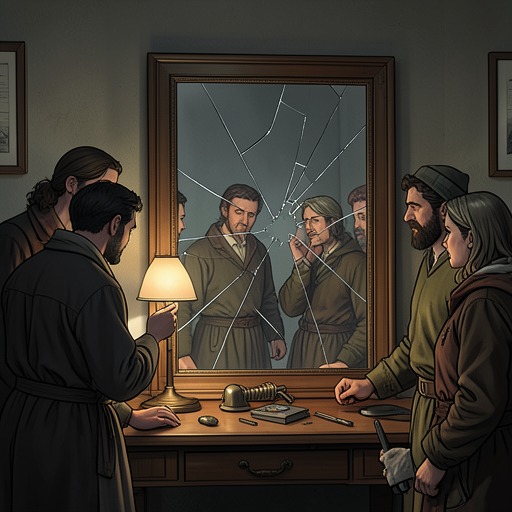
When Valera encounters Sagan, he is bound hand and foot, with a torn sleeve and a cut that appears to be healing. She cannot find a pulse, though she thinks she heard him make a sound, and checks his chest for signs of breathing. Penchant identifies the danger by smell: Sagan has been poisoned, and the substance is severe. Penchant also says that someone has already given him an antidote, but that the damage remains and he needs healing. The distinction matters: the antidote has not undone the bodily harm or made his condition safe.
Valera resists the instruction at first. She has just killed two men who were trying to detain them, and fears that using her magic might turn Sagan into a gerbil. Penchant insists that her magic was not at fault in that earlier incident; the men themselves were wrong. This exchange places Sagan’s survival amid uncertainty rather than easy rescue: he is physically injured, still affected by poison, and dependent on help from people who do not yet know what his body and memory can withstand. Later, when he considers the blood on his priest’s uniform, he cannot remember where the wound came from.
Survival Without Recall
Sagan can remember running to aid Magnus’s handmaiden, Daenaira, and a student at Sanctuary, where children entering adolescence are educated. He recalls running through the halls with Daenaira, then being beaten by two Shadowdweller males before they bound him. The sequence has a gap at its center: he cannot recover the details of the incident that brought him into danger, or connect what he remembers to his later captivity and return. He has been away from Elk's Lake long enough for three or perhaps four days’ growth of beard, but even this ordinary measure only lets him estimate elapsed time; it cannot restore what occurred.
After Sagan reaches Sanctuary, he asks questions about Acadian, Nicoya, and Henry, showing how much of the surrounding conflict is inaccessible to him. A day later, Magnus reports that Sagan remembers none of the events: not fighting Nicoya, not her insurrection, and not how he was poisoned. The healers attribute the loss to the trauma of the poison. Magnus can only suppose that Sagan escaped Acadian somehow and made his way back; neither he nor Sagan can supply a remembered account of that escape. Sagan sits in the clinic bed quieter and more introverted than usual, physically present among his allies but unable to narrate how he returned to them.
The state’s central reversal is therefore survival without continuity. Before the collapse, Sagan uses memory and faith to maintain a coherent sense of himself while expecting death; afterward, he lives but loses the memory that might explain his defeat, captivity, and escape. The poison’s effects extend beyond the immediate violence of Nicoya’s weapon: they leave Sagan’s own past partly unavailable to him and make his recovery dependent on other people’s testimony. His return to Sanctuary closes the physical journey without closing the account of what happened.