Mental-health stigma and cultural stoicism
QueenieMental-health stigma and cultural stoicism are presented as forces that make Queenie Jenkins’s distress harder to name and treatment harder to accept. The conflict is clearest when her grandmother Veronica forbids psychotherapy, treating endurance as a family obligation; it is later recast when Sylvie recognizes Queenie’s counseling as a break with that history. The novel does not frame help-seeking as a simple personal decision: family expectations meet social pressures that already leave Queenie feeling judged, isolated, and responsible for managing pain alone.
An inherited rule of endurance
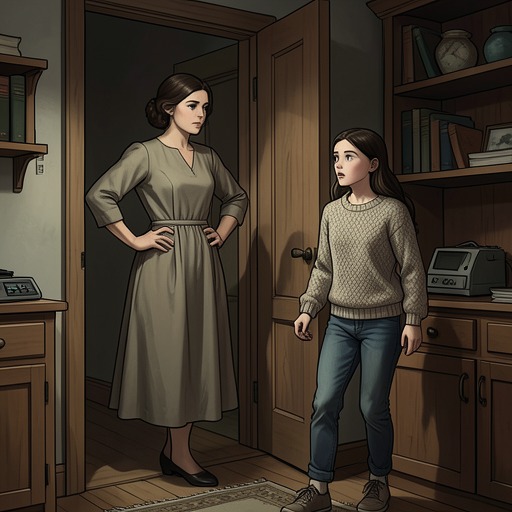
Queenie approaches her family with a letter bearing the National Health Service header and apologizes before she has read it. She explains that a nurse referred her and that, although she knows the family expects people to be strong and get through painful experiences, she needs help. Veronica answers by invoking the suffering she has carried throughout her life and imagining that her own mother would have called psychotherapy madness. Her objection treats private endurance not merely as a personal preference but as the standard by which the family should live.
The dispute becomes material as well as moral. Queenie says she feels ill, describes a weight on her chest, and explains that she has lost her job; Veronica responds that no one in the family is well. She points to Sylvie’s precarious circumstances after Roy abused her and took her money, and to the family’s limited capacity to house Queenie elsewhere. When Queenie recalls being the first in the family to finish school, attend college, earn a degree, and secure full-time work, Veronica answers that she would also be the first to go to psychotherapy. She ends the discussion by insisting that Queenie will not go. The scene shows how an ethic of survival can become a prohibition on seeking care, especially when dependence on family shelter constrains a person’s choices.
Distress under social pressure
The surrounding narrative gives Queenie’s distress a context beyond the family argument. After separating from Tom, she is lonely and reluctant to return to an empty bed, and at a party friends organize an OkCupid profile for her while she is drinking and grieving the relationship. In a later encounter, she tells herself that a casual fling can have boundaries and no personal disclosures; the encounter nevertheless becomes distressing. At a health appointment, a nurse says her injuries are consistent with sexual violence. Queenie rejects the implication that she is concealing an abusive relationship, and later says she found the suggestion that she might be in danger offensive, insisting that the sex was consensual. The exchange depicts a gap between a clinician’s concern and Queenie’s understanding of what happened, alongside her defensiveness when care is framed in terms she does not accept.
Other scenes connect psychological strain to racialized judgment and exclusion. At work, Queenie argues that Black Lives Matter addresses the historical failure to value Black lives; the room’s white colleagues do not support her, and she leaves feeling more alone. In therapy, she describes the burden of being read through stereotypes about Black women, including assumptions that they are angry or confrontational, alongside supposedly complimentary labels such as exotic or sexy. She contrasts how her white friends are approached with how men treat her, describing attention that is sexual rather than an offer of ordinary romantic interest. Her account makes clear that the pressure to cope privately exists alongside repeated experiences that undermine her sense of being valued and safe.
Shame, isolation, and the difficulty of asking
Queenie’s reluctance to accept help also appears in moments when she tries to minimize or explain away what is happening. After a nurse raises concern about sexual violence, she characterizes the episode as a man getting carried away and objects to being judged. Later, after losing contact with Cassandra and feeling reduced to a sexual role by Guy, she concludes that nobody has properly wanted her, naming family members and former partners in the same sweep of rejection. These moments do not establish a diagnosis; they show how painful events and strained relationships feed a broader sense of being unwanted, while the expectation to manage distress herself makes it harder to ask others to recognize its seriousness.
The story also places emotional difficulty against institutional expectations. When Gina tells Queenie that Ted has filed an HR complaint, she explains that Queenie will be suspended while the complaint is investigated. Gina cites an earlier warning, lateness, distraction, missed contributions, and difficulties supervising an intern, rather than treating Queenie’s troubled circumstances as an exemption from work responsibilities. She also describes serious pressures in her own life while telling Queenie to focus and keep going. The exchange is not presented as a psychotherapy dispute, but it echoes the broader demand that distress be contained while ordinary obligations continue. For Queenie, that demand compounds the difficulty of making her need for help legible to other people.
Counseling as a break in the pattern
Despite Veronica’s refusal, Queenie begins discussing her experiences with Janet. At the Brockwell Lido, a public encounter leaves her feeling watched and unwelcome; as the surrounding voices grow louder and intrusive thoughts intensify, she leaves and calls her therapist. In a subsequent conversation, she considers whether her pregnancy and miscarriage brought her difficulties with her mother back to the surface. She begins to see Sylvie not only as the parent who should have protected her, but as a person who endured abuse, isolation, and financial harm. That recognition is emotionally complicated: Queenie compares her own troubled life with her mother’s and blames herself for her situation. Speaking about it with Janet, however, quiets the dark thoughts for a time. Therapy offers neither an instant cure nor a tidy resolution; it gives Queenie a place to connect present distress with earlier experience and to put that connection into words.
Sylvie later identifies the significance of that choice. During a quiet meal with Queenie, she says her daughter has changed family history by becoming the first person to attend counseling without being disowned by her parents, calling that change more consequential than being the first Jenkins to attend university. Her response directly contrasts the older family rule with a new possibility: seeking support need not mean losing one’s place in the family. The novel therefore treats cultural stoicism with both sympathy for the survival it represents and attention to the harm it can cause when endurance is made compulsory. Counseling matters not because it erases the racism, relationships, or material pressures shaping Queenie’s life, but because it begins to loosen the belief that she must face them without help.