Rapunzel (lettuce)
RapunzelRapunzel (lettuce) is the lush, forbidden garden plant that initiates the story’s central bargain. First desired as food by a pregnant woman, it becomes the price through which the Witch claims the couple’s child, linking an ordinary appetite to Rapunzel’s later confinement and separation from her family.
The Plant and the Desire
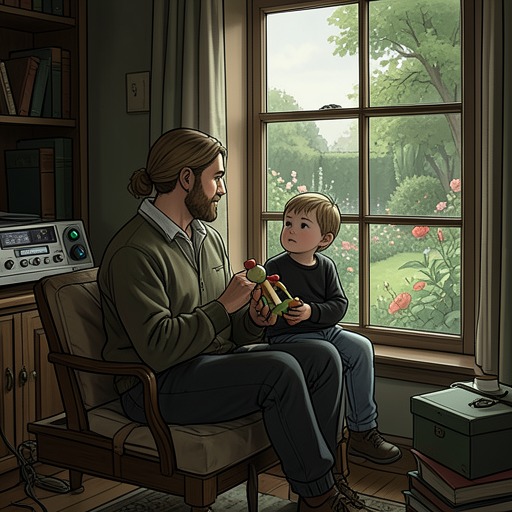
Seen from a small window at the back of the couple’s home, the lettuce grows in a splendid garden enclosed by a high wall. The garden belongs to a powerful Witch whom people nearby fear, and no one dares enter. The woman is drawn to a particularly vigorous bed of Rapunzel (lettuce), whose freshness and greenness intensify her craving until she grows pale and unhappy.
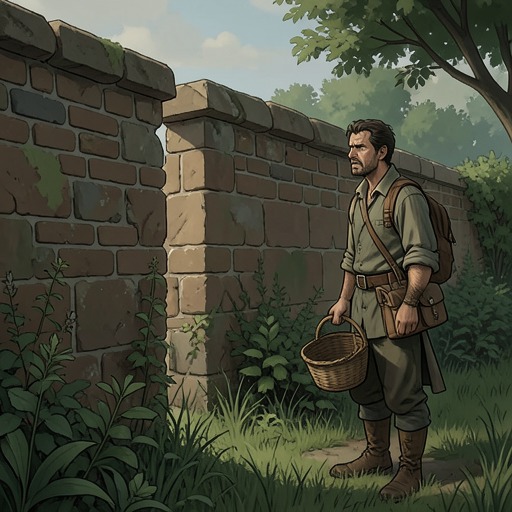
She tells her husband that she will die unless she gets some of the plant. Loving her, he decides that taking it is preferable to letting her die. At night he climbs over the wall, hurries to pull up a handful, and brings it home. His wife immediately makes a salad and eats it voraciously. The taste only magnifies the desire: the next day her appetite for the plant is three times greater, and her husband sees no way to soothe her except by returning to the garden.
Theft and the Bargain
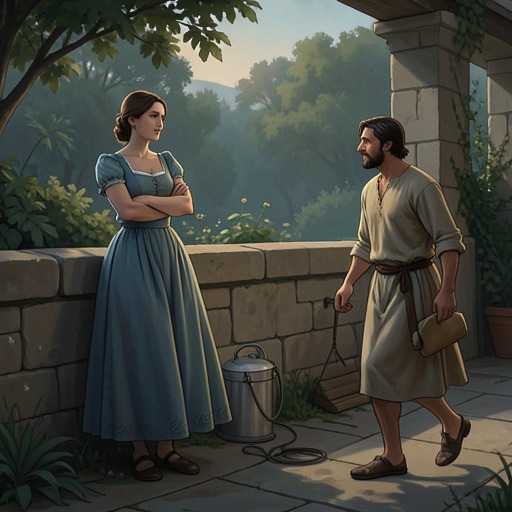
On the second night, the Witch confronts the husband after he has crossed the wall. He explains that his wife saw the plant through the window and wanted it so desperately that she said she would die without it. The Witch’s anger subsides, and she allows him to take as much Rapunzel (lettuce) as he wants, but attaches a condition: when his wife gives birth, he must hand over their child.
The husband is frightened and agrees. The exchange is therefore not an arrangement made with the child, but a promise extracted from her father in the charged circumstances of the Witch’s confrontation. When the time comes, the Witch appears punctually, names the newborn Rapunzel, and takes her away. The garden’s produce has become more than stolen food: it is the means by which the Witch obtains the child.
From Food to Motif
The plant’s role in the plot is concentrated at its beginning. It is first a visible object of craving across a window and a wall, then the reason for the husband’s repeated trespass, and finally the consideration in the Witch’s bargain. Once the child is taken, the narrative turns from the lettuce to the girl named Rapunzel and to her life in the tower; the plant itself is not described as recurring in the later events.
That change in scale gives the lettuce its decisive narrative force. A handful gathered for a salad occasions a promise with consequences extending into Rapunzel’s childhood and beyond. The plant is both an everyday vegetable and the first link in a sequence of unequal exchanges: the husband takes what he wants from the Witch’s garden, then agrees that the Witch may take what belongs to his family.