Senate
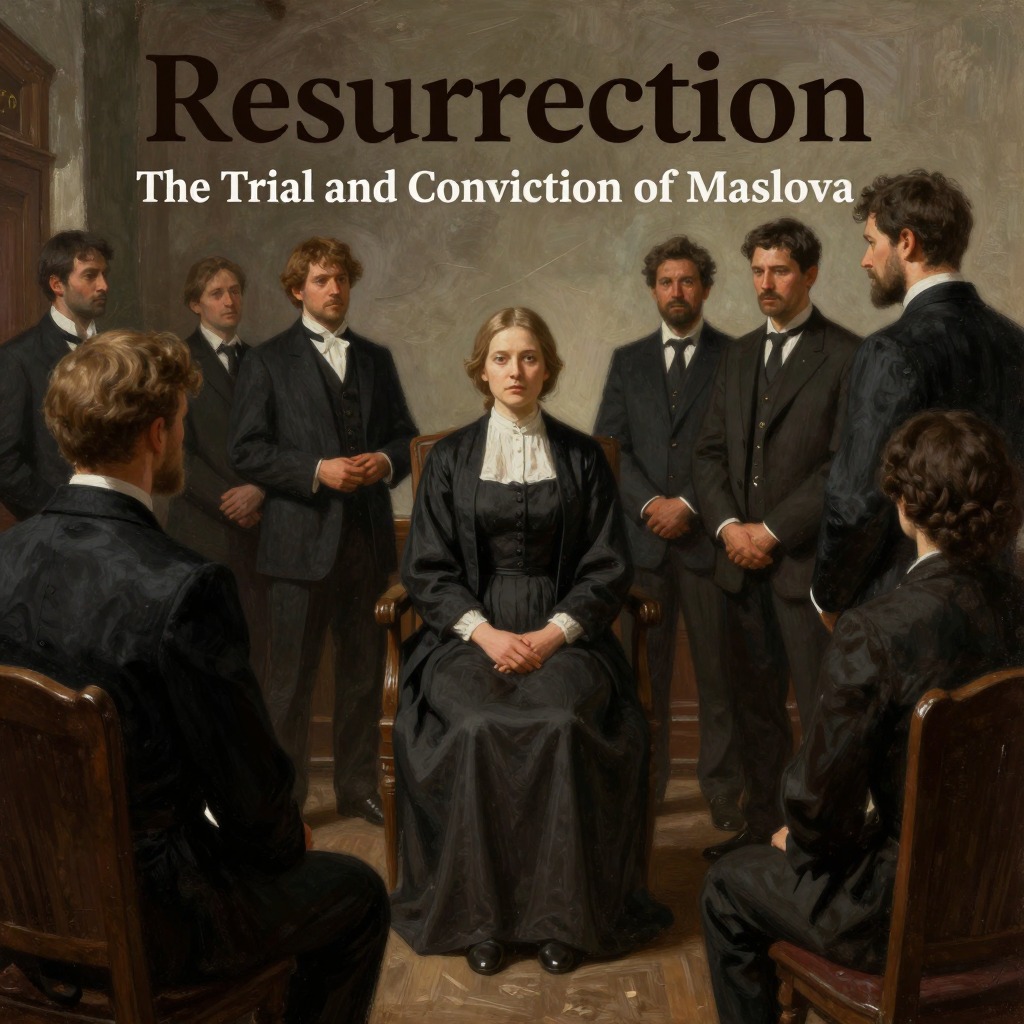
ResurrectionThe Senate is the supreme judicial institution of the Russian Empire, the court of last resort for appeals against decisions of the lower criminal courts. In Resurrection, it is the site where Katerina Maslova's last hope for justice within the existing legal order is extinguished, and where the novel's critique of the law as a tool of class interest and bureaucratic inertia reaches its most concentrated expression.
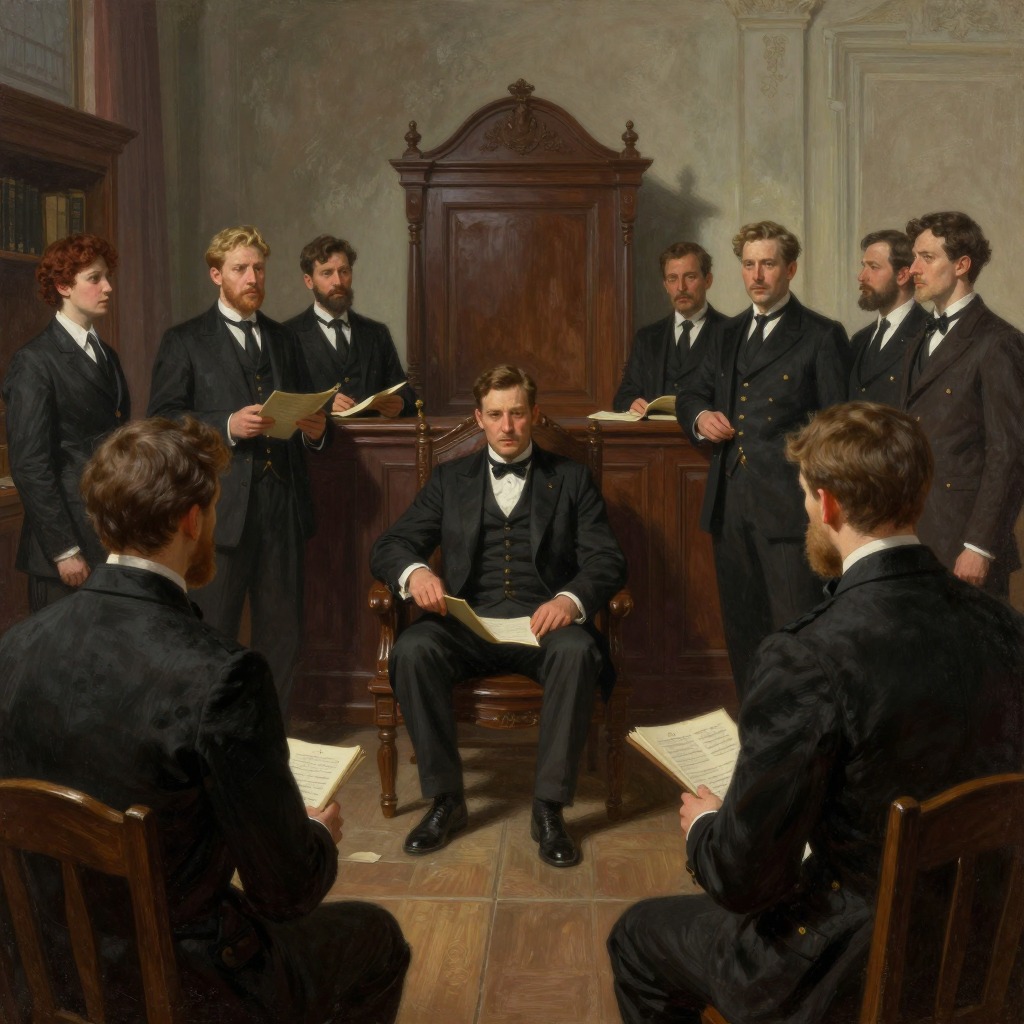
Structure and Personnel
The Senate chamber is less imposing than the Criminal Court, furnished more simply, though it retains the same attributes of judgment: the mirror of justice, the icon, and the Emperor's portrait. The hearing of Maslova's case is conducted by four senators: Nikitin, the chairman, a clean-shaved man with a narrow face and steely eyes; Wolf, with significantly compressed lips and little white hands, who keeps turning over the pages of business papers; Skovorodnikoff, a heavy, fat, pockmarked man who is the learned lawyer; and Bay, a patriarchal-looking man with long white hair who arrives last. The public prosecutor is Selenin, an old friend of Nekhludoff's from his student days, whom Nekhludoff remembers as a pure, honest, and noble man. The advocate Fanarin, in a swallow-tail coat and white tie, represents Maslova.
The Hearing and the Rejection of the Appeal
Fanarin presents the appeal with wonderful exactness and persuasiveness, proving point by point how the Criminal Court had strayed from the exact meaning of the law in six separate instances. He also touches on the merits of the case and the crying injustice of the sentence. His tone is one of apology to the Senators, who, with their penetration and judicial wisdom, must already understand everything better than he can. After his speech, Nekhludoff feels certain that the case is won. However, the Senators and the public prosecutor look like people who are wearied, thinking only that they have heard the like of it before. Selenin then briefly and clearly expresses himself in favour of leaving the decision of the Court unaltered, as he considers all the reasons for appealing inadequate. The Senators retire to the debating-room. Wolf is in favour of altering the decision. Bay, having understood the case, takes up the same side with fervour, vividly presenting the scene at the court. Nikitin, who is always on the side of severity and formality, takes the opposite side. All depends on Skovorodnikoff's vote, and he votes for rejecting the appeal, because Nekhludoff's determination to marry the woman on moral grounds is extremely repugnant to him. Skovorodnikoff is a materialist and a Darwinian who counts every manifestation of abstract morality as a despicable folly and a personal affront. He pretends to know nothing of the case except that the reasons for an appeal are insufficient, and so the sentence remains unrepealed.
Consequences and Significance
The Senate's decision confirms the senseless torments that the innocent Maslova is enduring, and makes it still harder for Nekhludoff to unite his fate with hers. The rejection of the appeal is a pivotal moment in the novel, demonstrating that the highest legal authority is not a guarantor of justice but a mechanism for preserving the status quo. The senators' deliberations are shown to be influenced by personal vanity, political prejudice, and professional rivalry, rather than by any genuine concern for truth or mercy. The Senate's failure to correct the judicial error forces Nekhludoff to abandon any hope of legal remedy and to pursue a path of personal moral transformation, ultimately leading him to the Gospels and a new understanding of the fundamental law of human life: forgiveness and love.