The Miller’s Daughter and Queen
RumplestiltskinThe Miller’s Daughter and Queen is the clever daughter of a miller whose father’s boast that she can spin straw into gold turns her into the object of the King’s demands. Her rise from the miller’s household to queenship brings wealth and status, but its costs accumulate: first she gives away her necklace and ring, then promises her first child to the mysterious helper who makes the gold. The story’s decisive reversal comes when she uses a messenger’s report to identify him by name and preserve her child.
Identity and Background
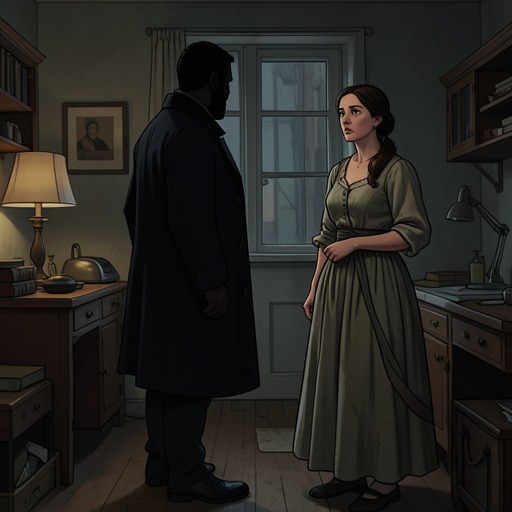
The Miller’s Daughter and Queen lives beside a mill and a stream near a wood. The narration describes her as very beautiful and, more consequentially for the plot, shrewd and clever. Her father, proud of her, tells the King that she can spin gold out of straw. The boast is his, not hers; when summoned, she insists that it was only a foolish claim and that she cannot perform the feat. Her intelligence does not protect her from the consequences of another person’s words: the King treats the boast as a capability to be tested, and her life is made conditional on success.
The King’s Demands and the Helper’s Price
The King takes her to a chamber in his palace, where a great heap of straw and a spinning wheel await. He orders her to turn all the straw into gold before morning, threatening her life if she fails, then locks the door and leaves her alone. Faced with an impossible task, she weeps. A small, odd-looking man enters and offers to do the work in return for payment. She gives him her necklace; he sits at the wheel, sings the “Round about, round about” song, and spins the straw into gold. The transformation is swift, but its immediate success does not release her from danger: the King sees the gold, becomes more avid for gain, and shuts her in again with another task.
For the second heap, the helper returns and asks what she will give him. She offers the ring on her finger. He takes it and again works at the wheel, finishing before morning. The King is delighted by the glittering treasure, yet still dissatisfied. He leads her to a larger heap and promises that if she spins it that night, she will become his queen. The increasing heaps expose the King’s appetite as the force escalating the crisis: each successful performance yields him wealth, but only prompts a greater demand.
By the third task she has nothing left to offer. The helper names a new price: the first little child she may have when she is queen. She thinks the outcome may never occur, but, seeing no other way to complete the task, agrees. The old song accompanies the wheel once more, and the helper turns the final heap into gold. When the King finds the work completed, he keeps his word and marries her. She becomes queen, but the marriage and elevation do not erase the bargain made under pressure; her new rank is bound to a future claim on her child.
Queenship and the Claim on Her Child
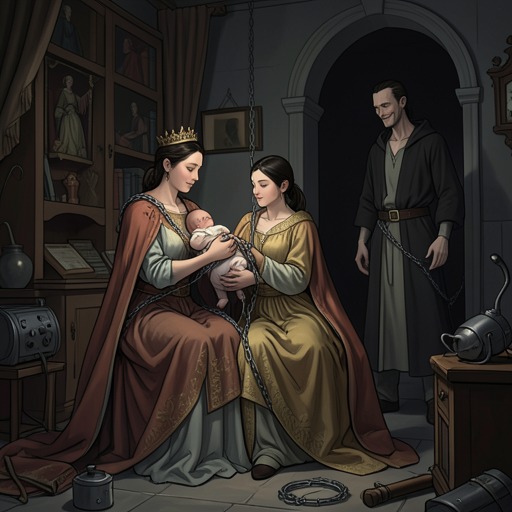
At the birth of her first child, the queen is delighted and forgets the promise. The helper’s later arrival brings the concealed cost of her rise directly into the royal household: he comes into her room while she is playing with the baby and reminds her of the agreement. Her initial response is grief. She offers him all the wealth of the kingdom if he will release the child, but the offer cannot settle the claim. The contrast is stark: earlier, a necklace and a ring bought the helper’s labor; now the queen offers the kingdom’s wealth, yet the demanded payment is not another possession but her firstborn.
Her tears soften the helper, who grants her three days to discover his name. If she succeeds within that period, she may keep the child. The condition changes the problem from producing something impossible to finding information that has so far been withheld. The queen lies awake thinking of unusual names and sends messengers across the land to search for more. She begins with names she can remember, including Timothy, Ichabod, Benjamin, and Jeremiah, but the helper rejects every guess. On the second day she tries comic names such as Bandy-legs, Hunchback, and Crook-shanks. These fail as well. The repeated refusals make clear that merely generating many possibilities will not break the bargain; she needs knowledge tied to the helper himself.
The Name and the Resolution
On the third day, a messenger returns with an account of a little hut among the trees on a high hill, in a forest where the fox and hare bid one another good night. There a dwarf dances on one leg around a fire and sings that he will make a feast, brew that day and bake the next, and that his lady does not dream his name is Rumpelstiltskin. The report supplies the missing fact through observation rather than royal authority or guesswork. The queen has sent messengers throughout the land; one has found the hidden scene that the helper himself did not intend her to know.
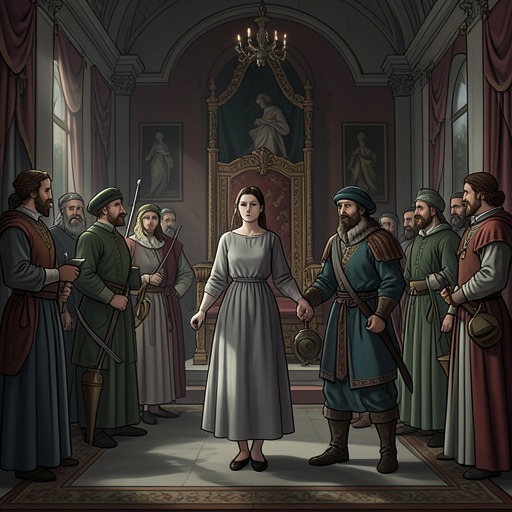
When the helper comes, the queen sits on her throne and gathers her court to witness the encounter. A nurse stands beside her with the baby in her arms, as though the child is ready to be handed over. The helper chuckles at the prospect of taking the child to his hut in the woods and asks the queen to name him. She tries John, Tom, and Jemmy before slyly saying Rumpelstiltskin. He cries that a witch must have told her, then drives his right foot so deep into the floor in rage that he has to seize it with both hands to pull it out. The physical struggle turns his confidence into humiliation and gives the hidden name an immediate, visible consequence.
He makes his way off, while the nurse laughs, the baby crows, and the court jeers at the failure of his claim. The child remains with the queen, and the helper’s departure closes the threat that has shadowed her new family. Her survival depends not on undoing the earlier agreement through wealth, but on the reprieve’s precise condition: learning and speaking the name. The ending reverses the scene of confinement with a public gathering in which the queen controls the decisive answer and the court witnesses the helper’s defeat.
Character and Narrative Significance
The queen’s trajectory is structured by escalating exchanges. Under the King’s threat, she trades personal ornaments for the labor that saves her life; under the helper’s demand, she promises a future child because she has no other payment. The first two bargains transfer objects she owns, while the third converts a relationship and an obligation of care into the price of completing a task. The tale makes that change in value concrete by moving from necklace, to ring, to baby, and then to the offer of the kingdom’s wealth, which still cannot buy the child’s release.
Her cleverness is present from the beginning, but the story gives it different work at different stages. She cannot meet the King’s demand by her own skill, and the helper’s magic repeatedly supplies what she lacks. Later, when the threatened loss concerns her child, she acts through persistence and coordination: she receives a conditional extension, sends messengers, and uses one messenger’s discovery to answer the challenge. The resolution therefore does not deny her earlier helplessness; it marks a change in the means available to her, from desperate payment to information and speech.
The shift from miller’s daughter to queen is both an ascent in status and an increase in what is at stake. The King’s marriage follows the successful production of gold, while the bargain made during that production follows her into motherhood. The throne at the final confrontation signifies a changed position, but the baby in the nurse’s arms preserves the vulnerability underlying the scene. The queen’s decisive act is to make the hidden name public before her court, transforming private knowledge gathered in the forest into the means of keeping her child and ending the helper’s claim.