Rumpelstiltskin
RumplestiltskinRumpelstiltskin is the strange little man who spins straw into gold for the miller’s daughter, first in return for her necklace and then for her ring, before demanding her future first child as payment for a third intervention. His magic makes him indispensable when the King’s greed has trapped her, but the bargains also make him a creditor whose claim follows her into queenship and motherhood. The threat ends not through greater force or wealth, but through the discovery and utterance of his name: exposed, he rages and departs without the child.
Identity and Introduction
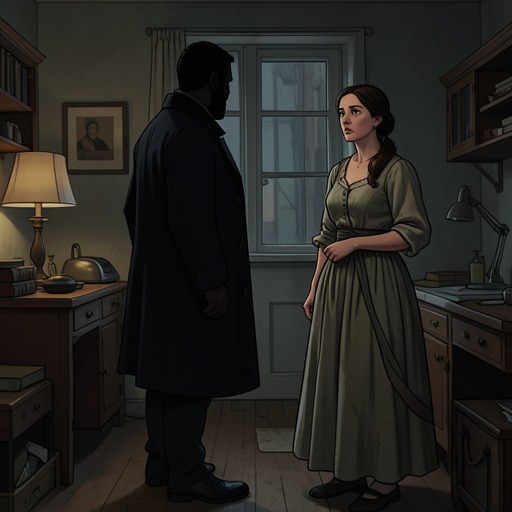
The tale introduces Rumpelstiltskin as a droll-looking little man who hobbles into the locked chamber where the miller’s daughter has been left alone with a heap of straw. She is weeping because the King has ordered her to spin it into gold by morning, on pain of death. The man asks what troubles her and offers to perform the impossible task in exchange for a payment. The text gives no account of his origins or of how he acquired his power; it defines him through his arrival, his uncanny skill, and the bargains by which he makes that skill available.
His appearance is described through several diminutive names: the hobgoblin, the dwarf, the manikin, and the little gentleman. That changing vocabulary gives him a comic, folkloric presence, while his actions carry increasingly serious consequences. He enters as a seemingly helpful answer to a desperate woman’s need. Yet from the outset his assistance is transactional: he asks what she will give, accepts her necklace, and takes control of the spinning wheel.
Magical Labor and Escalating Bargains
At the wheel, Rumpelstiltskin whistles and sings the “Round about, round about” song as the work is quickly completed. The heap of straw becomes gold before morning. This transformation satisfies the King, but it does not end the danger. Astonished and pleased by the result, the King grows greedier and shuts the miller’s daughter away again with a fresh task. Rumpelstiltskin returns when she is once more helpless and asks for payment; this time she gives him the ring on her finger. He works at the wheel again, and the straw is spun into gold long before morning.
The exchanges change in kind as the King’s demands rise. At first, the helper’s labor is paid for with portable adornments: a necklace, then a ring. After the second success, the King takes the daughter to a yet larger heap and promises that, if it is spun that night, she shall become his Queen. Rumpelstiltskin arrives for a third time. When she says she has nothing left, he names a different price: the first little child she may have as Queen. She agrees because she sees no other way to complete the task, thinking that the child may never exist. The manikin spins the heap into gold once again, and the King, finding the work done, keeps his word and marries her.
The King receives the gold that Rumpelstiltskin produces, while the daughter faces the danger and pays the helper. The tale does not describe the magic as a craft she can learn or control: the repeated rescues depend on Rumpelstiltskin taking the wheel and carrying out the work. The bargains therefore do more than set a price on his service. They move the story from the immediate exchange of labor for possessions toward a future obligation that the Queen cannot settle with the wealth she later offers.
Claim on the Queen’s Child
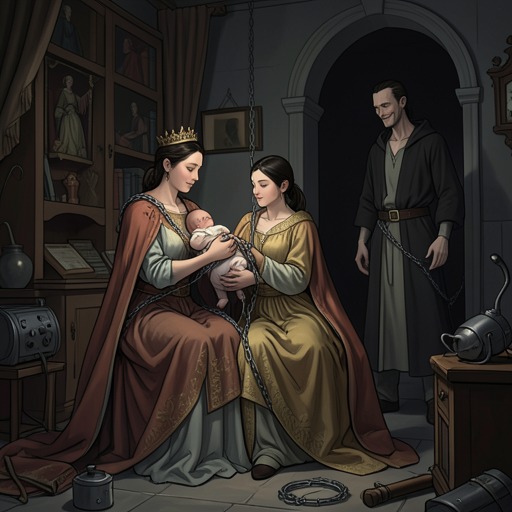
When the Queen’s first child is born, she is happy and forgets the bargain. Rumpelstiltskin returns while she is sitting and playing with the baby, reminding her of what she promised. The cheerful domestic scene is abruptly recast as a moment of collection: the earlier payment, made when the child was only imagined, now concerns a living infant. The Queen grieves and offers him all the wealth of the kingdom if he will release her from the agreement, but he refuses that offer at first.
Her tears eventually soften him, and he grants her three days to discover his name. If she succeeds within that time, she may keep her child. The condition alters the contest: the Queen cannot simply buy her way out, but she can escape the claim through knowledge. Rumpelstiltskin’s power over the child is thus made conditional on his name remaining unknown. The story does not establish a formal law governing their promises; instead, it dramatizes the bargain through the parties’ constrained choices, the threatened loss, and the new condition he sets.
The Name Revealed and the Claim Broken
The Queen stays awake thinking of unusual names and sends messengers throughout the land to find others. On the first day she tries names including Timothy, Ichabod, Benjamin, and Jeremiah; Rumpelstiltskin rejects each. On the second day she offers comic names such as Bandy-legs, Hunchback, and Crook-shanks, but none is his. The repeated refusals stretch the three-day grace into a sequence of failed guesses, keeping the child’s fate tied to whether the Queen can obtain information unavailable to her at court.
On the third day, a messenger returns after two days of travel. While climbing a high hill among the trees of the forest, he had seen a little hut and a fire. Beside it, a funny little dwarf danced on one leg and sang a rhyme that ended by giving his name: Rumpelstiltskin. The messenger’s discovery supplies what the Queen’s lists could not: not another guess, but knowledge of the man speaking beyond her reach. The rhyme also makes the child’s threatened transfer part of the dwarf’s own expectation, since he sings of the feast he will make when a stranger brings what his lady scarcely dreams of.
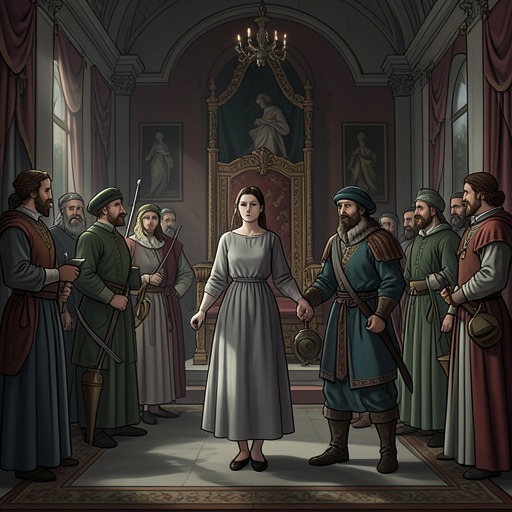
The Queen receives the news with joy. When Rumpelstiltskin comes, she sits on her throne and calls her court to witness the encounter; the nurse stands beside her holding the baby, apparently ready for the child to be given up. Rumpelstiltskin chuckles at the thought of taking the child home to his hut in the woods and asks the Queen for his name. She tests him with John, Tom, and Jemmy before slyly naming Rumpelstiltskin. He cries that a witch must have told her, then stamps his right foot so deeply into the floor that he has to seize it with both hands to pull it out.
Rumpelstiltskin makes the best of his way off. The nurse laughs, the baby crows, and the court jeers at him, wishing him a merry feast. His departure closes both the bargain and the threat: the Queen keeps her child, while the man who repeatedly turned straw into gold loses the prize that had been the price of his final service. His knowledge of magical labor had secured his leverage; the name discovered through the messenger’s report makes that leverage fail.
Narrative Function and Significance
Rumpelstiltskin is at once a helper and an antagonist. His first two interventions save the miller’s daughter from impossible royal demands, but they are not gifts: each creates an exchange, and the third makes the cost a child rather than an object. The plot’s escalation gives his character its defining contradiction. He is the means by which the daughter survives the King’s tests and the figure whose bargain later threatens her family.
The repeated spinning song accompanies the conversion of straw into gold, linking his uncanny ability to a chain of transactions whose stakes keep changing. The first transformations yield wealth to the King; the necklaces and ring pass to Rumpelstiltskin; the final bargain reaches beyond property to kinship. In the ending, another kind of power takes precedence over his productive magic. The Queen’s court can witness his defeat, but the decisive information comes from a messenger who has seen him alone at a hut in the forest. The name turns a private song into public knowledge, and the naming contest brings the helper’s claim to an abrupt end.