The King
RumplestiltskinThe King is the ruler whose appetite for wealth sets the tale’s crisis in motion: after hearing that the miller’s daughter can spin gold from straw, he makes her prove the boast under threat of death. Each successful night enlarges his demand, and his final reward—marriage and the crown—does not undo the coercion that brought her to him. His pursuit of gold thus reshapes a young woman’s life and indirectly makes possible the later claim on her child.
Identity and First Demand
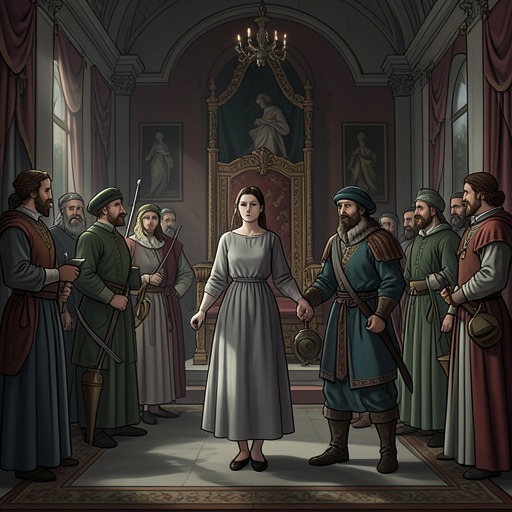
The King rules the country where a mill stands beside a wood and stream, and he often comes to hunt in the wood. The miller, proud of his beautiful, shrewd daughter, tells him that she can spin gold out of straw. The King’s response is immediate: because he is fond of money, the boast awakens his greed, and he sends for the girl. The tale gives no further account of his government or court; his identity is established through the power to summon, command, confine, and reward.
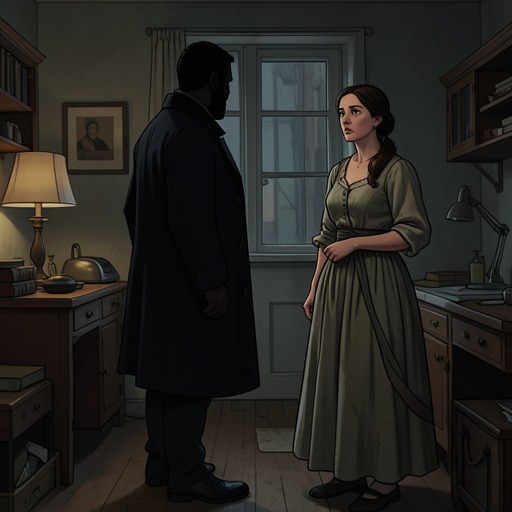
He leads the miller’s daughter to a chamber in his palace, where a great heap of straw and a spinning wheel await her. She must turn all the straw into gold before morning, he says, “as you love your life.” Her explanation that her father’s claim was a foolish boast cannot release her: the chamber is locked, and she is left alone. The scene makes the King’s authority concrete. He converts another person’s boast into a life-threatening order, while the impossible labor and its deadline leave her no ordinary means of compliance.
The Escalating Gold Trials
When the King returns and sees that the straw has become gold, he is astonished and pleased. Instead of treating the result as sufficient, however, he grows still greedier for gain and shuts the miller’s daughter in again with a fresh task. The first success therefore changes nothing about the structure of his demand: it confirms the value of the magical labor and prompts him to require more.
The girl’s necklace pays for the first intervention by the strange little helper, who works at the spinning wheel and sings as the straw becomes gold. In the next chamber, she gives him the ring on her finger in exchange for his help once more. The King sees the glittering treasure when he returns, but remains unsatisfied. These objects mark the rising price of meeting his demands: her possessions pass to the helper, while the gold produced by his labor satisfies the ruler who imposed the trials.
For the third test, the King takes her to a yet larger heap. He sets a task for that night and promises that if it is completed, she will become his queen. At this point she has nothing left to offer the helper, who asks instead for the first child she may have as queen. She agrees because she can see no other way to complete the task. By making marriage the reward for another night of coerced labor, the King enlarges the stakes beyond wealth; the agreement made in the chamber also reaches forward to the future child.
Marriage and the Child’s Claim
The helper spins the third heap into gold, and the King finds in the morning that he has all he wanted. The narration says that he is “forced to keep his word”: he marries the miller’s daughter, who becomes queen. The marriage is presented as the promised consequence of the completed trial, not as an escape from the conditions that produced it. Her elevation from the miller’s household to the throne follows the King’s command and reward, while the child bargain remains concealed in the story’s past events.
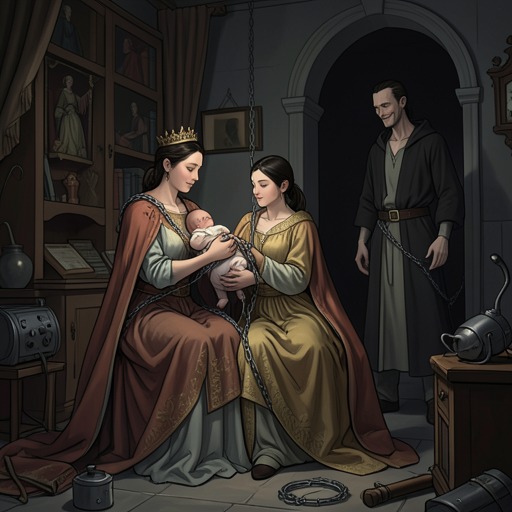
When the queen gives birth to her first child, she is glad and has forgotten both the dwarf and what she promised. The King is not shown making the later claim or intervening in the dispute; the helper himself enters her room while she is sitting with the baby and reminds her of the bargain. She offers all the wealth of the kingdom to be released, but that cannot initially secure the child. The contrast is pointed: the King’s hunger for gold had once seemed answerable by ever greater heaps, yet the wealth of his kingdom cannot simply erase the obligation created during the third trial.
Power, Value, and the Tale’s Resolution
The King’s role depends on a chain of exchanges whose terms grow more consequential. The miller’s boast gives him a reason to command the girl; the gold secures his satisfaction but sharpens his appetite; and the third completed task brings the marriage he promised. Meanwhile, the girl pays the helper first with jewelry and then with a future child. The King does not arrange that bargain, but his escalating demands create the desperate circumstances in which she accepts it. Royal power and the helper’s supernatural leverage operate differently, yet both constrain the queen’s choices.
The story’s final contest is not a decision by the King but the queen’s effort to keep her child. The helper grants her three days to guess his name, and a messenger reports seeing him in a forest hut, dancing on one leg beside a fire and singing the name he has kept secret. When the queen correctly names him, he rages and drives his right foot so deeply into the floor that he must use both hands to pull it free. He then leaves; the nurse laughs, the baby crows, and the court jeers at him. The King is not given an action in this concluding scene. His earlier promise made the queen a royal bride, but the resolution that preserves her child comes instead through the discovery and spoken recognition of the helper’s name.
The King is therefore less a developed portrait than the force that begins and escalates the tale’s material crisis. His greed turns a boast into an ultimatum and a miraculous success into an invitation for still more production. The gold buys the miller’s daughter a crown, but the path to that crown also exposes her to a bargain whose cost is her firstborn. The tale keeps those outcomes side by side: royal advancement is granted by the same ruler whose demands helped make the child’s danger possible.