King’s palace
RumplestiltskinKing’s palace is the decisive setting in which the miller’s daughter’s fortunes are made and imperiled. Within its locked chamber, the King turns her father’s boast into a threat against her life; the gold she produces then becomes the price of escalating demands, marriage, and a later struggle to keep her child. The palace brings together coercive authority and the bargains that the heroine must navigate, while its throne and court become the stage for the final reversal.
The Chamber and the First Trials
The miller’s daughter enters the palace not as a guest but as someone summoned by the King after her father claims she can spin gold out of straw. The King takes her to a chamber containing a great heap of straw, gives her a spinning wheel, and orders her to finish by morning if she values her life. She explains that the boast was her father’s and that she cannot perform the feat; the door is locked, and she is left alone. The room makes the imbalance of power literal: the King has supplied the impossible task and closed off escape, while the daughter bears the danger created by another person’s claim.
In that confinement, a little man enters and offers to do the work in exchange for her necklace. He spins the straw into gold, and when the King sees the result, astonishment and satisfaction give way to intensified greed. Rather than release her after the first marvel, he shuts her up again with a fresh task. The palace chamber thus becomes a repeated testing ground: each successful transformation confirms the King’s appetite instead of ending the coercion.
The second demand raises the scale of the trial. The King is delighted by the glittering treasure but still unsatisfied, so he takes the miller’s daughter to a yet larger heap and promises that, if she spins it that night, she shall be his queen. Alone again, she pays the helper with the ring on her finger, her remaining possession specified in the evidence, and he works at the wheel until the task is done long before morning. The sequence converts straw into gold and personal ornaments into payment, while the King controls both the conditions of the work and the reward attached to it.
From Captive to Queen
The palace is also the setting for the change in the daughter’s social position. After the third heap has been spun into gold, the King finds that he has what he wants and is forced to keep his word: he marries her, and she becomes queen. The marriage follows an ultimatum imposed in the same royal environment as the earlier trials, so her elevation does not erase the coercive circumstances that brought her there. The King’s promise rewards the production of wealth, but the evidence presents no negotiation over the terms beyond the demand and its fulfillment.
Queenship changes the scale of what is at stake. The miller’s daughter’s first bargain concerns a necklace, the second a ring, and the third—when she has nothing left to give—the promise of her first child. At the time, she thinks that the child may never come and agrees because she sees no other way to get the work done. Her ascent to the throne therefore carries an obligation formed under pressure before her marriage; the royal household does not free her from it. The palace links material gain and dynastic status to a personal cost that becomes real only later.
The Child’s Claim and the Three-Day Grace
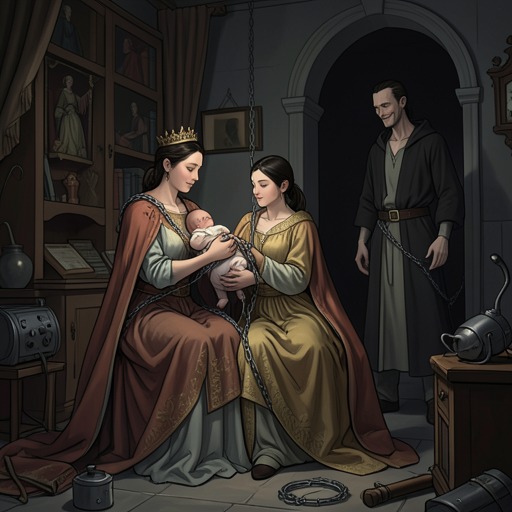
At the birth of her first child, the queen is glad and forgets both the dwarf and her promise. One day, while she is sitting and playing with her baby in her room, the little man appears and reminds her of the agreement. The domestic scene sharply contrasts with the earlier locked chamber: the queen is now with her child in her own royal surroundings, yet the old bargain reaches into that private happiness. She grieves and offers all the wealth of the kingdom if he will let her go, but the offer is refused at first.
Her tears eventually soften him, and he grants her three days to discover his name; if she succeeds, she may keep the child. The palace becomes the center of a new contest, one that turns on information rather than labor. Awake through the night, the queen thinks of names she has heard and sends messengers across the land to find others. On the first day she tests familiar names, and on the second she tries comic ones, but each guess is rejected. The deadline gives the search a precise structure: the queen must find a fact about the claimant before the three days expire, or lose the child to the old promise.
The Throne, the Court, and the Reversal
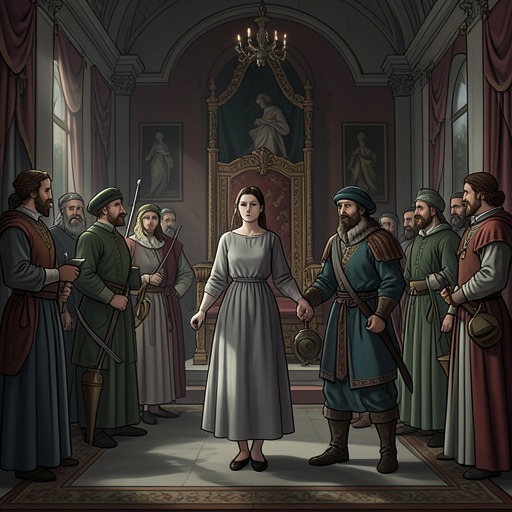
On the third day a messenger returns with a report from the forest: among the trees, beside a hill, he had seen a little hut and a dwarf dancing on one leg by a fire while singing that Rumpelstiltskin was his name. This discovery supplies the knowledge the palace search has lacked. When the queen hears it, she jumps for joy. The setting then changes from the room where she had played with her baby to the public court: she sits on her throne, calls her court to enjoy the fun, and has the nurse stand beside her with the child in her arms, apparently ready for the promised surrender.
The little man arrives chuckling at the thought of taking the child home to his hut in the woods and asks the queen to name him. She tests several names before slyly saying Rumpelstiltskin. He cries that a witch must have told her, then drives his right foot so deep into the floor in his rage that he has to seize it with both hands to pull it free. He makes off; the nurse laughs, the baby crows, and the court jeers at him. The palace that once enclosed the daughter under the King’s threat now holds a gathered audience to the failure of the child-claim. The final scene reverses the earlier isolation: the queen has the crucial knowledge, the court witnesses the confrontation, and the child remains with her.
The Palace’s Narrative Function
The palace organizes the tale’s movement through changing forms of value and power. At first, royal authority confines the miller’s daughter and demands gold by morning. The helper’s magic meets that demand, but each success prompts a larger one: the King’s greed turns a single task into three, and the third task attaches the promise of a future child to the daughter’s ascent to queenship. Gold, ornaments, royal marriage, and the firstborn are not interchangeable in consequence, yet the sequence places them within successive exchanges shaped by unequal power.
The setting also marks a structural reversal. The locked chamber isolates the daughter while the King dictates the terms; later, the throne and assembled court give the queen a public place from which to use the name learned by her messenger. The story does not depict the palace as a refuge from danger: the bargain follows the queen into her royal life and threatens the child there. Its significance lies instead in how it concentrates the tale’s changes of status and leverage—from captive to queen, from threatened mother to the person who can answer the dwarf’s question—and provides a final public setting for the claim to collapse.