French Revolution
SatanThe French Revolution is the decisive historical rupture in the Castelmont family story: it destroys the family’s old order, scatters its surviving heirs, and turns a pair of cameos into objects around which later generations organize memory and suspicion. The novel approaches the period not as a continuous history but through fragments—memoirs, family letters, and press reports—that Loïc pieces together, while leaving some of their contradictions unresolved.
The Revolution in the Family Archive
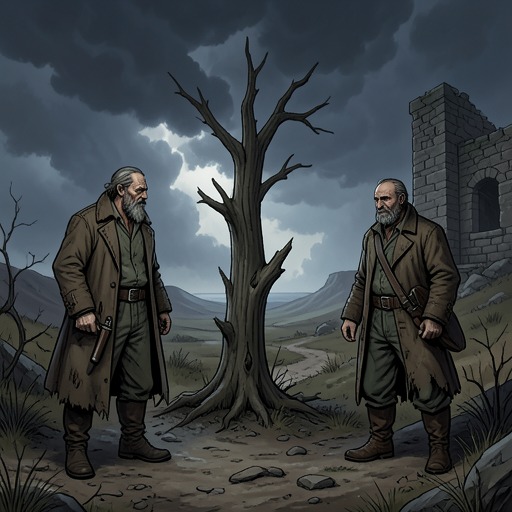
Loïc’s investigation begins with accounts that do not line up neatly. In the memoirs of the Marquise de Créquy, he finds a recollection of the Countess of Castelmont speaking discreetly about her twin sons, who had escaped the destruction of their family in 1793. Letters discovered with Laurence provide another version: Caroline describes the Castelmonts as closely connected to the Albignacs before the Revolution, when the two counts sat together at the Toulouse Capitole. In a later letter, she reports that revolutionaries killed the Count of Castelmont and his children in 1793, while the Countess died under the guillotine the following year. She also says the twins escaped separately, and that one, Charles, was believed to have joined the émigré army on the Rhine.
These records establish the family’s devastation while also exposing the limits of what can be known. The memoir and letters differ in detail and chronology, and neither gives Loïc an unbroken account. He treats them as clues rather than a single authoritative record, assembling a possible history from family testimony written at different moments and for different readers.
The Countess and the Cameos
A separate strand of correspondence connects the family’s crisis to Louis XVI. A letter by Louis-René Chaussegros de Léry, which Loïc had copied during earlier research in Québec, recounts hearsay that the king gave a pair of cameos to a countess who was a childhood friend. The gift was said to celebrate the birth of her twin sons in 1782. The letter itself is uncertain about the family’s name, but Loïc connects it to the Castelmont references in the Albignac papers and to a report by Anatole du Pré-de-Saint-Maur that a countess close to the king had received a finely engraved jewel from him.
In Loïc’s reconstruction, Louis XVI later arranged for the second cameo, Castor, to reach Delphine de Castelmont through the Duke of La Rochefoucauld-Liancourt. Before her arrest, the Countess gave one cameo to each son and had the jewels sewn into their clothes, binding them to a promise never to part with them. Louis received Castor and Charles received Pollux. The cameos therefore pass from royal favor into the brothers’ flight from revolutionary danger; the family’s later history inherits both the objects and the oath attached to them.
Arrest and Execution in Paris
Loïc’s archive work leads him to imagine the Countess’s final day as a scene in Paris. The narrative places her execution on 21 May 1794 at the Place des Victoires, before a crowd gathered around the guillotine. The brief, concentrated scene gives bodily form to what the letters report more obliquely: a woman whose ties to the former king have made her vulnerable to the revolutionary authorities, and whose sons’ survival now depends on their having escaped separately.
The chronology remains layered rather than perfectly settled. One letter places the killing of the Count and his children in 1793 and the Countess’s death in the following year; another account describes the twins’ family being massacred at Château de Barzac in 1794, followed by the Countess’s arrest about a month later. The novel presents Loïc as a researcher trying to reconcile these traces, not as an omniscient historian who can erase their discrepancies. The gaps are part of the family history he is trying to recover.
Exile, Survival, and the Limits of Proof
The Revolution’s consequences extend beyond France in Loïc’s account. Researching a reported attack on the ranch of Louis de Castelmont near Carthage, Missouri, he finds a brief report that assumes the owner and his household were killed. A later Saint Louis newspaper says no bodies were found in the burned buildings; a subsequent correction questions whether the attack occurred as first reported and suggests the ranch may have been empty. Loïc suspects that the conflicting reports conceal an intervention, but the documents do not prove his theory.
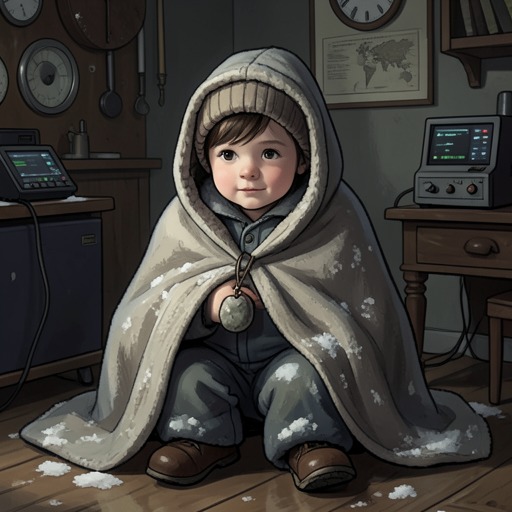
He connects that uncertain American episode to the account of a baby found in the snow at Florissant, Missouri. A dog leads the Sisters of the Sacred Heart to a woman who has died while shielding an infant with the clothes she had taken off to protect it. The child carries a cameo in a small, torn silk pouch, and the religious community arranges for its baptism and adoption. Loïc considers whether the woman and child escaped danger connected to the ranch, and whether the infant could have been a Castelmont heir. His conclusion remains an inference, not a confirmed identification. In this way, the French Revolution’s violence reaches into the novel’s later transatlantic family mystery through survival, exile, uncertain documents, and an heirloom whose meaning cannot be separated from the story of its escape.