Oral rehydration solution
ShantaramOral rehydration solution is a simple but consequential treatment in the cholera epidemic: it addresses dehydration, the immediate danger that can kill people infected with cholera, and gives their bodies time to clear the bacterium. In the slum, its arrival links improvised medical care to a wider response organized by residents, even as limited supplies and the severity of illness expose the limits of what Lin can do alone.
Composition and purpose
Also called Oral Rehydration Therapy, or ORT, the solution was devised by Jon Rohde, a scientist working with local and UNICEF doctors in Bangladesh in the late 1960s and early 1970s. Its carefully proportioned ingredients include distilled water, sugar, common salt, and other minerals. The account explains its purpose through a distinction between infection and its fatal consequence: Vibrio cholerae causes illness, but dehydration is what kills. By supplying water and salts, the mixture can keep a patient alive long enough for the bacterium to pass through the system.
The solution is therefore neither a cure for cholera nor a substitute for every form of medical care. It is a practical response to the fluid loss that makes the disease so dangerous. That distinction matters in the slum, where Lin encounters illnesses beyond his ability to identify or treat and has been referring patients to St. George Hospital and other hospitals. Some return without having seen a doctor or nurse. In that setting, ORT offers a concrete intervention, but not a way around the shortage of trained care.
Arrival in the slum
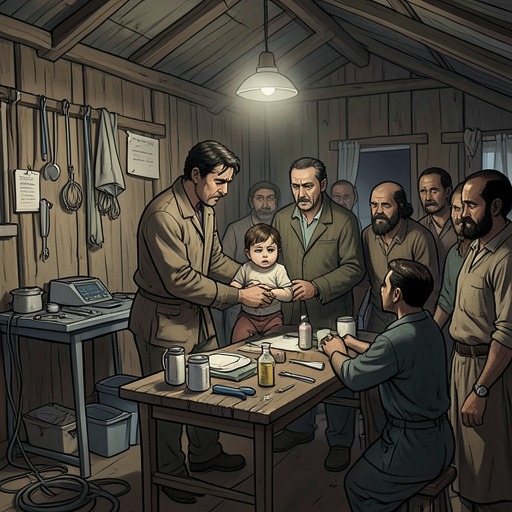
The supplies reach Lin through a chain of help rather than a formal clinic. When he suspects cholera, Abdel Khader Khan brings ORT salts and explains how to use them. The boxes have been supplied illegally by Ranjit’s lepers; Doctor Hamid later explains that he requested them. The episode places a life-preserving treatment inside the informal networks on which the settlement depends, while making clear that its supply is uncertain. Lin does not know how much more will arrive or how much the outbreak will require.
Doctor Hamid responds to Lin’s report by promising trained volunteers and arranging further assistance. Lin admits that administering the solution is difficult: some patients are so ill that they cannot keep it down. His responsibility is not simply to possess the packets but to use them with people whose condition may prevent treatment from working as intended. When Sandeep Jyoti promises a delivery of salts and a volunteer team as soon as the strained city can provide them, the promise offers support without removing the immediate uncertainty.
Use during the cholera outbreak
The response combines treatment with prevention. At a meeting in Qasim Ali Hussein’s home, which he declares a command centre, residents plan to purify water throughout the settlement. Cholera spreads through contaminated water, so the plan begins with holding tanks and extends to the pots and buckets used in each of the seven thousand huts. Qasim Ali gives Johnny Cigar money to purchase purification tablets and other medicines. These measures address the conditions that spread infection; ORT addresses the dehydration threatening people already sick.
Residents also plan shallow trenches filled with disinfectant at strategic points in the lanes, safe disposal bins, antiseptic soap for each household, and soup kitchens serving boiled food and using sterilised cups and bowls. A team is assigned to carry the dead to hospital on a trundle-cart. Within this larger division of work, Lin is responsible for supervising the use of the oral rehydration solution and preparing batches of a homemade mixture when needed. The treatment thus sits within a coordinated effort involving clean water, safer food, hygiene, waste disposal, and direct care, rather than standing alone as a complete answer to the epidemic.
Treatment under pressure
The work is measured in visits and hours. When Lin and his companions tour the slum, more than a hundred people are showing symptoms, and half are serious cases. Even allowing only a few minutes for each patient, the first round takes twenty hours. The caregivers sustain themselves with soup and sugary chai from sterile cups; they do not sit down to a full meal until the evening of the following day, and then return to the most serious cases. Lin’s instructions to prepare more homemade mixture underline the practical strain of administering the treatment across a large settlement while the supply remains uncertain.
The outbreak also makes the emotional burden of that work explicit. Lin learns that his neighbour Radha had been desperately ill for two days before she died, without his knowing. He recognizes that his clinic did not cause the epidemic, yet feels shame and a sense of responsibility for having failed to know about her illness. His role supervising ORT is consequently bound up with a painful awareness of the gap between the help he can offer and the people he cannot reach in time.
Significance in the account
Oral rehydration solution represents medical knowledge translated into an accessible response, but its usefulness depends on more than the mixture itself: supplies must reach the slum, patients must be able to take it, and someone must organize its use alongside clean water and other precautions. The account gives it a precise place in the community’s emergency plan, neither making it a miracle cure nor diminishing the lives it may help preserve. Its movement from scientific development to an irregular delivery and then to Lin’s rounds makes public health visible as both a practical method and a collective undertaking.