Retro Genocide
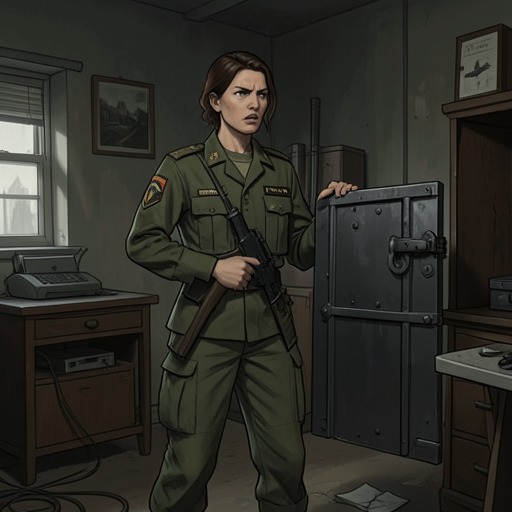
StrikeRetro Genocide is the mass killing carried out by the Retro-controlled Air Force before its invasion of the past, wiping out three-quarters of the world’s population. Its scale gives the Retros’ planned colonization a stated rationale, but the violence also becomes the measure against which the resistance must judge its own methods. The novel ultimately distinguishes this future history from the restored timeline, where the genocide never happens.
Background and Scale
The killings precede the Retro invasion of the past and are part of the catastrophe that makes the future’s population seek another world to inhabit. The Air Force, under Retro control, kills three-quarters of humanity. Tucker’s narration treats the scale as so immense that calling it genocide is not an exaggeration; it is the event’s defining historical fact and the reason the conflict cannot be reduced to a contest over territory or military power.
The Retros justify their actions by claiming that they are protecting the world from an even worse fate. That argument links the killings to their larger project of escaping the future’s crisis, but it does not resolve the moral contradiction at the center of their rationale: the purported defense of humanity is carried out through the systematic destruction of most of it. Tucker finds the claim difficult to credit precisely because the known slaughter already appears catastrophic.
From Mass Killing to Colonization
The genocide belongs to a wider military and governmental undertaking. The colonization mission was planned and prepared for years by the military and the United States Government in 2324, with the aim of replacing the population of the twenty-first century with people from the twenty-fourth. The killings and the invasion are distinct stages of the future regime’s project: one devastates the world, while the other seeks to secure a replacement home by displacing its earlier inhabitants.
The machinery of that project extends beyond battlefield violence. Tucker has seen survivors treated as forced laborers and given Ruby, a drug that provides extraordinary strength and speed, so they can work on the construction effort Captain Granger calls the Gate to Hell. Later, in a Retro lecture hall, a military speaker describes assigning colonists to maintain filtration plants and teaching them to do so without relying on native survivors. These scenes show how the invasion’s plans turn human beings into either disposable obstacles or labor and expertise to be appropriated.
The officers named in the account illustrate different forms of responsibility within the undertaking, without making them interchangeable. Colonel Feit is described as a capable officer who treats the mission as a game; Major Bova is characterized as enjoying punishment and as being insufficiently humane toward native workers. Tucker later identifies Feit to Army interrogators as having played a part in the genocide. The account places individual officers inside a project directed by a much larger military and governmental system.
The Resistance and the Moral Test
The genocide also shapes the resistance’s understanding of its own violence. After the group sabotages the Retro aircraft fleet, Tori Sleeper challenges Tucker’s assumption that the cause makes their actions morally uncomplicated. She recalls that she herself shot people and questions the willingness to condemn the Retros for disregarding human life while accepting deaths when they serve the resistance’s objectives.
Her challenge becomes especially stark when she asks whether Tucker would press a hypothetical button that would end the invasion and save the survivors if doing so would wipe out the entire population of 2324. The question makes the logic of collective destruction impossible to treat as merely an enemy’s crime. The Retros’ genocide is not equated with every act of resistance, but its scale and rationale force the characters to confront what victory would mean if achieved through another population’s annihilation.
Tucker’s own account acknowledges that revenge has helped drive him. He has come to shoot perceived enemies without hesitation and has told himself that the Retros deserve whatever happens to them. Yet, as the group moves toward the decisive action against the invasion, he recognizes the danger of building the future on the same appetite for killing. His decision to act against Feit follows the realization that the killing must stop somewhere, turning the end of the violence into an ethical objective rather than simply a military one.
Historical Consequence and Timeline
After the Bridge disappears and the survivors return to 1952, Tucker and the others are questioned separately by the Army for days. He tells his interrogators what Feit did in the genocide, but the evidence that could establish responsibility in their world is absent: the mass killing belongs to a future that, in this timeline, has not happened. Tucker therefore rejects the suggestion that Feit should be executed for a crime with no proof and no occurrence in their history.
Tucker later reflects that the atrocities preceding the invasion never actually happened in this world. Feit disappears from public view, and Tucker cannot determine whether the Army released or confined him; he finds no evidence that Feit suffered legal consequences for the future crimes. That unresolved outcome preserves the distinction between moral knowledge of a possible future and a provable offense in the present. Retro Genocide remains central to the characters’ understanding of what they prevented, while the restored timeline leaves its would-be perpetrators subject to the limits of evidence and events that actually occurred.