Mr. Walters
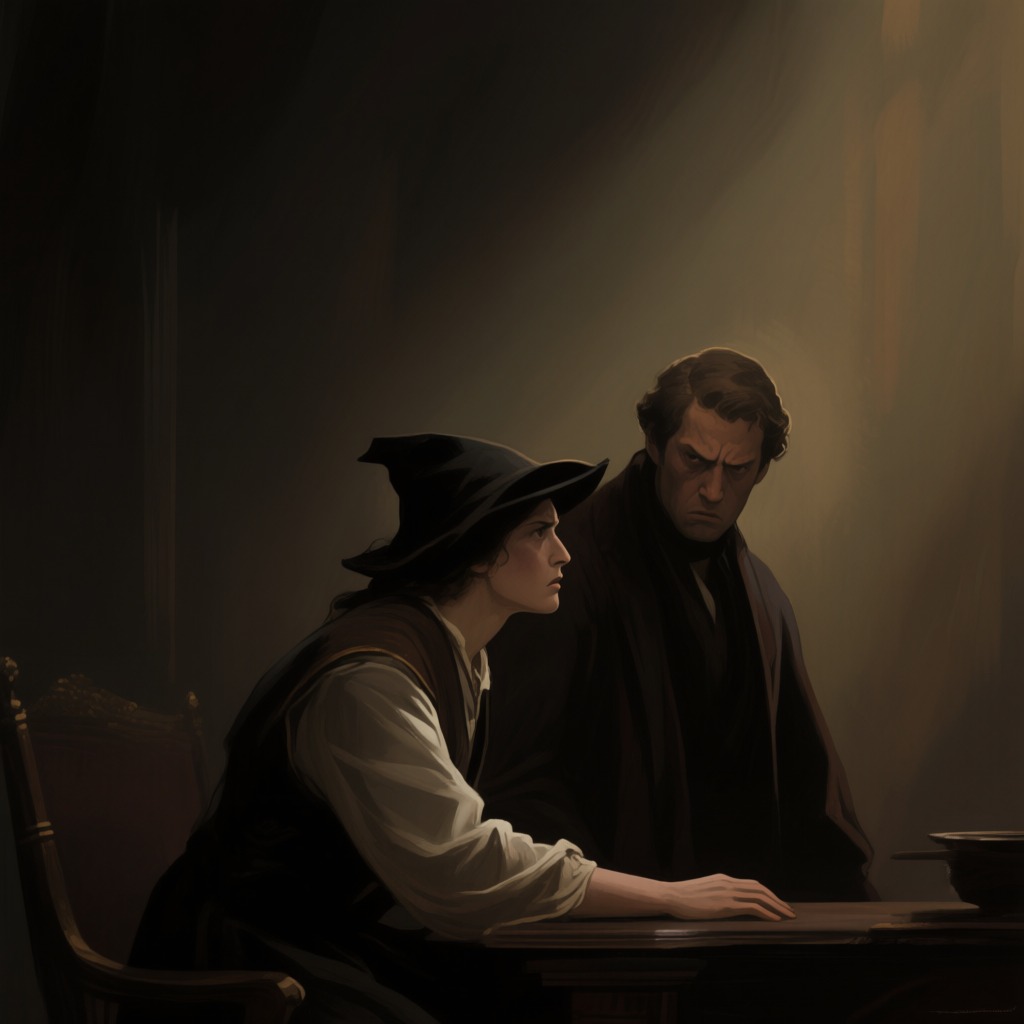
Mr. Walters, the Sunday-school superintendent of St. Petersburg, is a slim creature of thirty-five with a sandy goatee and short sandy hair, whose stiff standing-collar forces him to turn his whole body when he needs a side view. His boot toes are turned sharply up in the fashion of the day, an effect patiently produced by sitting with his toes pressed against a wall for hours. He is very earnest of mien and very sincere and honest at heart, holding sacred things and places in such reverence that unconsciously his Sunday-school voice has acquired a peculiar intonation wholly absent on week-days. His appearance and manner mark him as a man devoted to his role, yet the novel presents him with a mixture of respect and gentle mockery, for his piety is genuine but his methods are transparently theatrical.
Role and Conduct in the Sunday-school
Mr. Walters presides over the Sunday-school with a style that is both solemn and officious. He begins his customary little speech with a hymn-book in hand, though he never refers to it, and commands the children to sit up straight and give him their attention. He tells them how good it makes him feel to see so many bright, clean little faces learning to do right and be good. The latter third of his speech is marred by the resumption of fights and other recreations among the bad boys, and by fidgetings and whisperings that extend far and wide, but every sound ceases suddenly with the subsidence of his voice, and the conclusion is received with a burst of silent gratitude. When visitors arrive—lawyer Thatcher, a feeble aged man, a portly middle-aged gentleman with iron-gray hair, and a dignified lady—Mr. Walters falls to "showing off" with all sorts of official bustlings and activities, giving orders, delivering judgments, discharging directions here, there, everywhere that he can find a target. He is desperate for a chance to deliver a Bible-prize and exhibit a prodigy, and has been around among the star pupils inquiring about their tickets. When Tom Sawyer comes forward with nine yellow tickets, nine red tickets, and ten blue ones and demands a Bible, it is a thunderbolt out of a clear sky; Walters was not expecting an application from this source for the next ten years. He delivers the prize with as much effusion as he can pump up under the circumstances, but it lacks somewhat of the true gush, for his instinct teaches him that there is a mystery here that cannot well bear the light.
Relationship with Tom Sawyer and the School
Mr. Walters is a figure of authority who is both respected and subtly undermined by the boys. When Tom is introduced to Judge Thatcher, Walters prompts him to tell the gentleman his other name and say "sir," insisting on manners. When the Judge asks Tom to name the first two disciples and Tom answers "David and Goliath!," Walters' heart sinks within him, and he feels obliged to speak up and say, "Answer the gentleman, Thomas—don't be afraid." The scene ends with the narrator drawing "the curtain of charity over the rest," implying Walters' embarrassment at the boy's ignorance. Despite his earnestness, Walters is not immune to the social dynamics of the town; he is part of the adult world that Tom and his friends both manipulate and defy. His role as superintendent places him at the center of the Sunday-school's ticket system, where blue tickets are pay for two verses of recitation, ten blue tickets equal a red one, ten red tickets equal a yellow one, and ten yellow tickets earn a Bible. This system, which Tom exploits through trading, is a mechanism of discipline and reward that Walters administers with solemnity, though it is ultimately a hollow structure that Tom's cleverness exposes.
Theatricality and Self-Importance
Mr. Walters is a master of theatrical self-presentation, a quality that aligns him with the broader theme of performance in the novel. His "showing off" when visitors arrive—bustling about, giving orders, and making a deal of splutter and fuss—mirrors the behavior of the librarian, the young lady teachers, and even the great Judge Thatcher, who also "shows off" by beaming a majestic judicial smile upon the house. Walters' earnestness is genuine, but his methods are transparently designed to impress. He is a man who takes his role seriously, yet his seriousness is often undercut by the reality of the children's behavior and his own limitations. The novel does not condemn him; rather, it presents him as a well-meaning but slightly ridiculous figure, a product of the small-town piety and social hierarchy that shape St. Petersburg. His character serves as a foil to Tom's rebelliousness and ingenuity, highlighting the contrast between the official world of adult authority and the unofficial world of boyish adventure and trickery.