Welshman
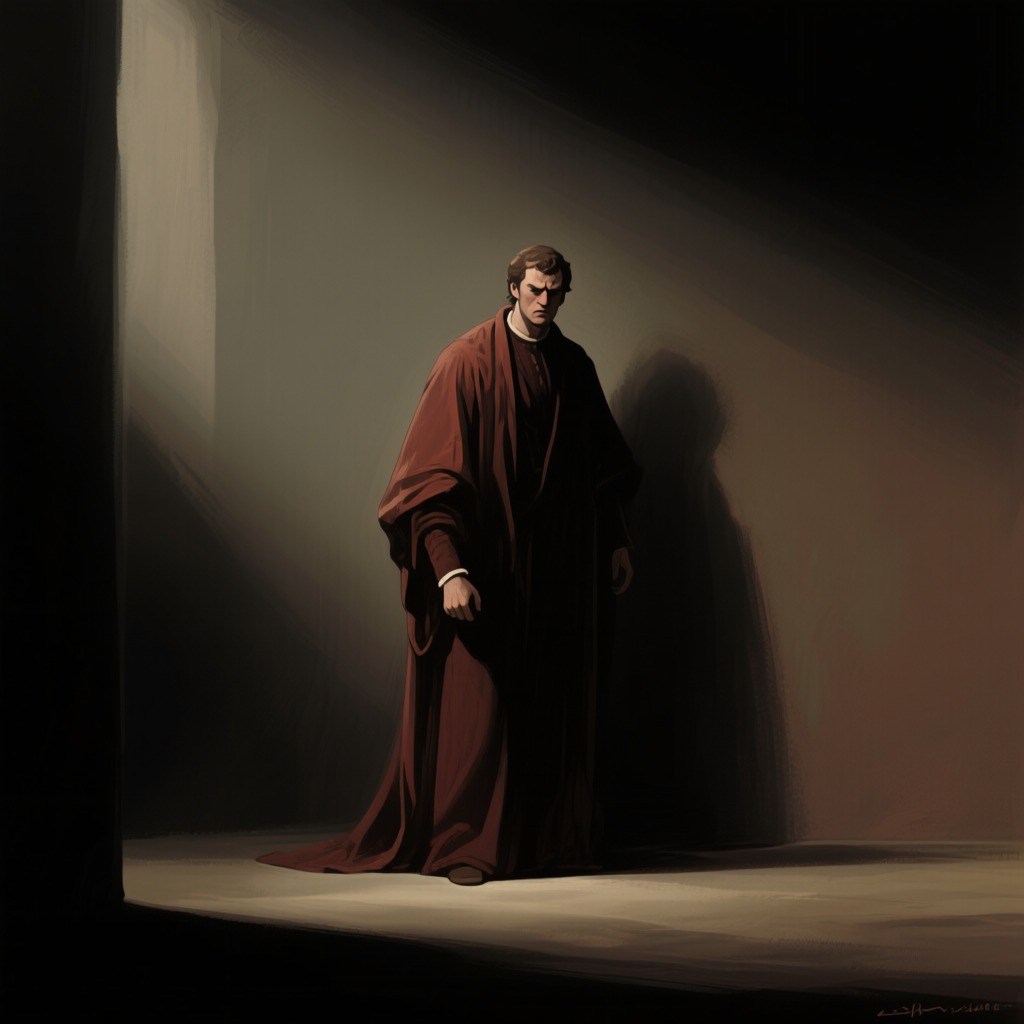
The Welshman, also called Mr. Jones, is a plain, good-hearted, and physically robust resident of St. Petersburg who lives with his two tall, stalwart sons in a house halfway up Cardiff Hill. He is a man of immediate action and honest speech, whose home becomes a sanctuary for Huckleberry Finn and a stage for the town's most dramatic revelations. His decisive role in foiling Injun Joe's revenge plot and his subsequent kindness to Huck mark him as a pillar of frontier decency and a crucial agent of the story's moral resolution.
Identity and Character
The Welshman is defined by his straightforward integrity and physical courage. When Huck Finn, terrified and breathless, bangs on his door late at night, the Welshman does not hesitate. He calls out from his window, "What's the row there? Who's banging? What do you want?" and upon hearing Huck's plea, he immediately instructs his sons, "let him in, lads, and let's see what's the trouble." He is a man who judges character by action, not reputation. When Huck, a boy universally shunned by the town's mothers, asks for entry, the Welshman grants it without prejudice. Later, he tells Huck, "It's a name that can open this door night or day, lad! -- and welcome!" -- words that Huck, a vagabond accustomed to rejection, finds to be the pleasantest he has ever heard. The Welshman is also perceptive; he quickly deduces that Huck knows more about the "Spaniard" than he is letting on, and he gently but persistently draws the truth from him, promising, "I wouldn't hurt a hair of your head for all the world. No -- I'd protect you."
Role in the Rescue of Widow Douglas
The Welshman's most dramatic action occurs on the night he and his sons, armed and guided by Huck's information, creep up the sumach path toward the Widow Douglas's house to intercept Injun Joe and his accomplice. The mission is nearly compromised when the Welshman is seized by an uncontrollable sneeze, alerting the villains. He instantly shouts, "Fire, boys!" and blazes away at the sound of their retreat. Though the men escape, the Welshman's intervention saves the widow from a horrific attack. He then organizes the pursuit, sending his sons to rouse the sheriff and a posse to guard the riverbank. His account of the night is both modest and precise; he admits to Huck that he is sorry the villains are not dead, and he expresses regret that he had no description of them, not yet knowing that Huck can provide one. This event establishes him as the town's de facto protector and a man of reliable, forceful action.
Relationship with Huckleberry Finn
The Welshman becomes Huck's first true adult benefactor. After the night's ordeal, he insists Huck stay for a piping hot breakfast and offers him a bed. When Huck falls ill with a fever, the Welshman is the one who brings the Widow Douglas to nurse him, noting that Huck "has good spots in him." He also becomes the keeper of Huck's secret, promising not to reveal that Huck was the one who "blowed on" the robbers. His home is the site of the story's final social triumph: he is the one who stumbles upon Tom and Huck with their wagon of "old metal" and drags them to the Widow Douglas's party, where he intends to spring his "grand secret" about Huck's heroism. Though his surprise is somewhat undercut by Sid's gossiping and the later revelation of the treasure, his gesture solidifies Huck's entry into respectable society.
Narrative Significance and Thematic Role
The Welshman functions as a bridge between the boys' world of adventure and the adult world of justice and community. He is the first adult to take Huck seriously, to offer him unconditional welcome, and to protect his confidences. His home on Cardiff Hill is a place of safety and revelation, where the truth about Injun Joe is finally spoken aloud and where the boys' treasure is brought to light. He represents the honest, unpretentious decency of the village, a counterweight to the hypocrisy of the Sunday-school superintendent and the cruelty of Injun Joe. In the story's moral economy, the Welshman is the figure who ensures that courage and good-heartedness, even in a social outcast like Huck, are recognized and rewarded.