
The Bluest Eye
Overview
Toni Morrison’s The Bluest Eye, published in 1970 by Holt, Rinehart and Winston, was her first novel. Set in Lorain, Ohio, the industrial city where Morrison grew up, it looks back to the years around 1940 and 1941, in the aftermath of the Great Depression. The book is a work of American fiction and is often read as a story of Black girlhood and coming of age. Its central question is not simply what happens to one child, but how a society’s ideas about beauty, worth, and belonging can enter a child’s understanding of herself.
Story
The novel is framed by Claudia MacTeer’s recollections. Claudia and her older sister, Frieda, live with their parents in a poor but loving household. They know Pecola Breedlove, whose family life is marked by poverty, conflict, and neglect. Her father, Cholly, drinks and behaves violently; her mother, Pauline, is emotionally distant. Other people treat Pecola as ugly and insignificant, and she gradually accepts their judgment as a truth about herself. Above all, she longs for blue eyes, imagining that they would make her beautiful and bring her the affection and acceptance she lacks. Her ideal is shaped by a culture that repeatedly presents white features as the measure of beauty, including through the popular image of Shirley Temple.
Claudia and Frieda feel concern for Pecola, though they do not respond to beauty and popular ideals in the same way. Claudia remembers resisting the white dolls adults gave her, while the girls’ wider community often fails to see Pecola as a child deserving protection. The family’s violence culminates when Cholly rapes his daughter. Pecola becomes pregnant, and the baby does not survive. Instead of protecting her, many people around her blame or shun her. She retreats into a delusion in which she believes she has finally acquired the blue eyes she wanted. Morrison presents this outcome not as an isolated misfortune or a simple consequence of individual choices, but as the result of abuse, poverty, racist standards, and communal cruelty converging on a vulnerable child.
Composition and themes
Morrison wrote the novel while working as an editor at Random House and raising two young children as a single mother. She was nearly forty when her debut appeared. Her familiarity with Lorain gives the setting the texture of a particular Midwestern community rather than that of an abstract backdrop. The book also reflects a deliberate effort to center the interior life of a Black girl whose experience is easily dismissed by those around her. Morrison later described her wish not to join in the demonization of Pecola or to make the people who harmed her into less than human. That difficult balance deepens the book’s criticism: it condemns cruelty while asking readers to examine the assumptions and judgments through which cruelty becomes ordinary.
Claudia’s retrospective voice is joined by other perspectives, family histories, and fragments that echo the language of a children’s primer. The seasonal organization and the recurring image of marigold seeds link the possibilities of growth to the conditions that make growth possible; the seeds’ failure to flourish mirrors the failure of Pecola’s community to nurture her. The novel explores race, gender, class, girlhood, domestic violence, sexual violence, trauma, and the social construction of beauty. Morrison’s prose combines speech rhythms, lyric intensity, and irony, while its shifts in voice and time resist a simple, distant reading of the tragedy.
Reception and legacy
Initially, Morrison was a relatively unknown author, and the first hardcover print run was small. The novel nevertheless became a lasting work of American and African American literature, and it remains one of her most influential books. Frequently taught and discussed, it has shaped conversations about racialized beauty standards, the representation of trauma, and the responsibilities involved in reading painful stories. Its frank treatment of sexual violence and abuse has also made it a target of challenges in schools and public reading contexts. As Morrison’s first novel, The Bluest Eye establishes concerns that run throughout her writing: whose lives are granted attention, how social power shapes private experience, and what it means to see people whom a community has learned to disregard.
About the Author
Early life and education
Toni Morrison was born Chloe Anthony Wofford on February 18, 1931, in Lorain, Ohio. The second of four children in a working-class family, she grew up reading widely. Stories her father told from African American oral tradition later became one element of her literary inheritance. Morrison came of age in a society where racial discrimination shaped everyday life, and her writing would return often to Black families, community memory, and the structures of racial power. She studied English at Howard University, earning a bachelor’s degree in 1953, and continued her education at Cornell University, where she received a master’s degree in 1955. She later taught at Texas Southern University and Howard.
Editing and writing
In 1958, Wofford married Jamaican architect Harold Morrison; they had two sons and later divorced. From the mid-1960s, she worked in publishing, eventually becoming an editor at Random House. Her editorial work helped bring greater attention to Black authors and cultural writing, while her own fiction developed a distinctive account of African American experience. Nearly forty when her first novel appeared, she published The Bluest Eye in 1970. Set in her hometown, it examines the damage done to a Black girl by racist ideals of beauty, family violence, and communal neglect.
Morrison followed it with Sula (1973), Song of Solomon (1977), and Tar Baby (1981). Song of Solomon received the National Book Critics Circle Award. Her novel Beloved (1987), a powerful work about slavery and its lasting trauma, won the Pulitzer Prize for Fiction in 1988. Later novels include Jazz (1992), Paradise (1997), Love (2003), A Mercy (2008), Home (2012), and God Help the Child (2015). She also wrote essays, criticism, and children’s books; in Playing in the Dark (1992), she examined racial imagination in American literature. Alongside her writing and editorial work, Morrison taught at several universities and became a professor at Princeton University in 1989. Her fiction is celebrated for lyrical precision, shifting voices, and its ability to join intimate lives to histories of race, gender, and power.
Recognition and legacy
In 1993, Morrison became the first African American woman to receive the Nobel Prize in Literature. The Nobel citation praised the visionary force and poetic import of her novels and their engagement with essential aspects of American reality. Her honors also included the Pulitzer Prize, the National Book Award, and the Presidential Medal of Freedom, awarded in 2012. Her work has had a lasting influence on American literature, African American writing, and feminist literary study, and has encouraged later writers to broaden who can tell history and how it can be told. Morrison’s reputation rests not only on representing a particular community, but also on the reach of her questions about memory, love, responsibility, and power. She died in New York City on August 5, 2019, at the age of 88. Her novels and essays remain central to the study of American writing and the histories it confronts.
StoryFlow
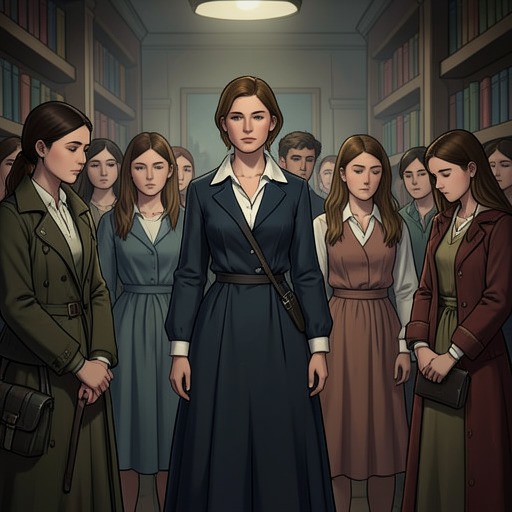
Maureen Peal’s Brief Alliance and Rejection
This thread follows how Maureen Peal’s apparent solidarity with the MacTeer sisters and Pecola gives way to a cruel assertion of social and racial superiority.
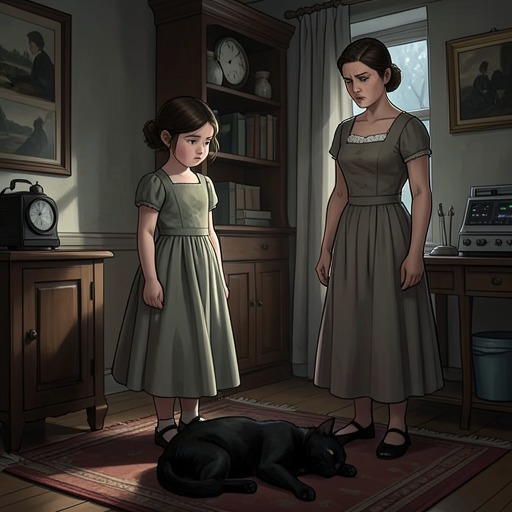
Junior, Pecola, and Geraldine’s House
This thread traces Junior’s invitation and cruelty, the black cat’s death, and Geraldine’s decision to expel Pecola from a home whose order excludes her.
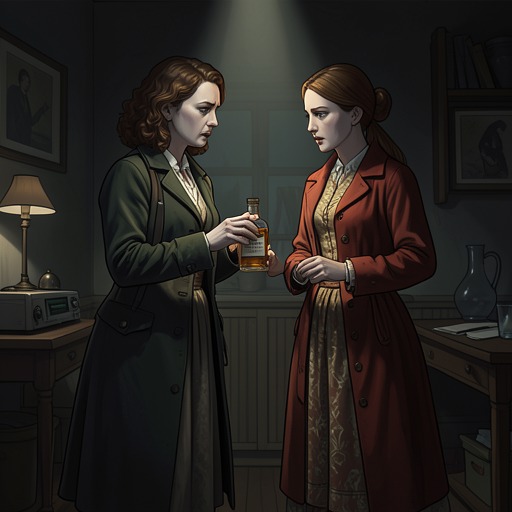
The Search for Whiskey
This thread follows Claudia and Frieda’s improvised attempt to find whiskey after Frieda fears that Mr. Henry’s touch has made her “ruined.”
