Event 1
Car crash that killed David Hunter’s family
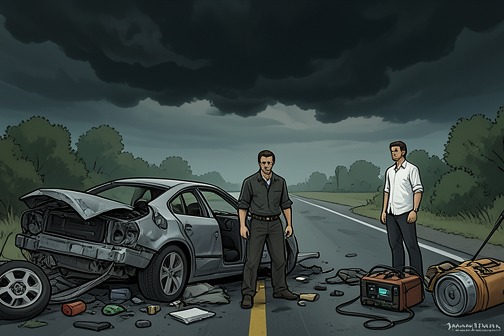
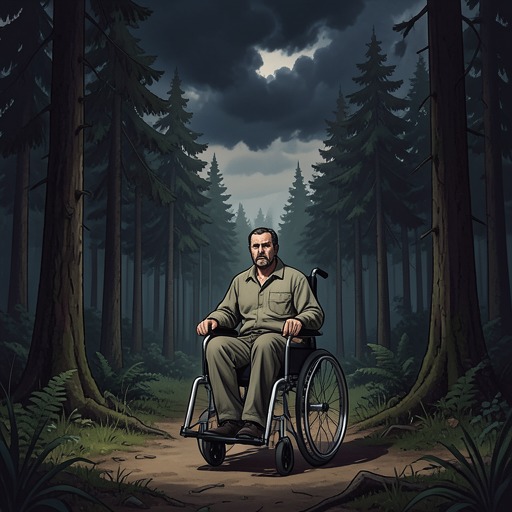
The [Car crash that killed David Hunter’s family](entity:event-recall-event-car-crash-that-killed-d-08fd9cb8dc15) is known through its aftermath rather than a dramatized account of the collision. A drunk driver in the other car survived unhurt, while [David Hunter](entity:character-recall-character-david-hunter-1e6ec194b0c2)’s wife, [Kara](entity:character-recall-character-kara-fb2f3d3c2326), and daughter, [Alice](entity:character-recall-character-alice-c37947fad76f), were killed. The event broke the continuity between his former life as a forensic anthropologist and the rural medical career he later built, but it did not give him the explanation he most needed: what happens to the life that death takes away.
## The Crash and Its Unequal Outcome
[Mackenzie](entity:character-recall-character-mackenzie-0df4cdda3308) tells David that the crash killed Kara and Alice, while the drink-driver responsible survived without injury. That stark imbalance is among the few concrete circumstances the account supplies, and it establishes the loss not as an abstract bereavement but as the sudden death of the two people David cherished most. The collision is described as taking them in an instant; no fuller sequence of the crash is recounted.
The difference between the dead and the unhurt survivor shadows David’s later understanding of the event. He can identify what happened to his family physically, but the account offers no resolution, punishment, or further information about the driver. The crash therefore enters the narrative through its irreparable consequence for David, not through an investigation of its mechanics.
## A Forensic Expert Confronts Death at Home
Before the crash, David had made a professional study of death. He understood the chemistry of decomposition and could chart its progress according to weather, soil, and season. Forensic work had taught him to identify when and how a person died, and to establish who that person was. He regarded such knowledge as necessary, and took satisfaction in solving the physical questions that a body could answer. The dead were individuals, but he knew them through death rather than through their lives.
Kara and Alice made that professional distance impossible. David knew the physical transformation their bodies would undergo, almost hour by hour, yet this expertise could not tell him where they were in any larger sense, or how the animation and spirit he had known could simply cease. His knowledge could describe bodily change without explaining the loss of the people themselves. The crash thus turns his former competence into a source of painful contrast: he can understand the process of dying, but not what death means for those he loves.
## Retreat into a Different Career
David’s inability to answer those questions becomes intolerable. Friends and colleagues understood his grief, but he scarcely registered their concern. Nor could he immerse himself in forensic work: its daily subject matter continually recalled what he had lost. He responds by turning away from the life he had known, relearning his earlier medical training and beginning a new career focused on living patients.
His move to [Manham](entity:location-recall-location-manham-5f2ce02aebdb) and work as a general practitioner give that retreat a practical form. Instead of examining the dead, he tries to delay death by caring for the living. The change does not bring him closer to an answer about the fate of Kara and Alice; it gives him another kind of work to do while leaving that question unresolved. Mackenzie later summarizes the transition as David having practised as a general practitioner for only three years after leaving forensic anthropology and coming to the village following the crash. David’s stillness in response shows how abruptly a biographical fact can reopen the loss beneath his new professional identity.
## The Past Re-enters the Present
When Mackenzie asks for help with a murder investigation, David initially resists the return to forensic work. The request presses on the same division the crash created: the specialist who once interpreted death and the bereaved man who found that such interpretation could not restore meaning. David describes his former self as almost another person, one who could treat the body’s transformations as familiar professional knowledge. His present life had been built partly by leaving that expertise behind.
The investigation nevertheless draws him back. After Mackenzie has raised his past, David delays opening the photographs, tries to continue with his patients, and finds the envelope’s presence difficult to ignore. He eventually takes the photographs out, still telling himself that looking does not commit him to helping. The shift recalls how the crash made his former occupation unbearable, while showing that the knowledge he abandoned remains available and consequential. His return to forensic attention does not undo the family’s death or answer his deepest question; it marks the point at which the past he fled again becomes part of his present.
## Significance
The crash is the hidden hinge of David’s story. It explains why he left forensic anthropology, why he chose work with the living, and why a request to examine death carries a personal weight beyond professional duty. The contrast is not between knowledge and ignorance in general, but between two kinds of knowledge: David can measure bodily decay with precision, while the loss of Kara and Alice leaves him unable to know what became of the lives he loved.
The narrative keeps that distinction unresolved. David’s new career has worked as a way to live after the crash, but it has not settled the questions the crash forced upon him. When forensic work returns through Mackenzie’s investigation, the event’s consequences return with it: not as a recovered scene of impact, but as a continuing division between the facts death can yield and the meaning David still cannot recover.
Event 2
Sally Palmer’s murder
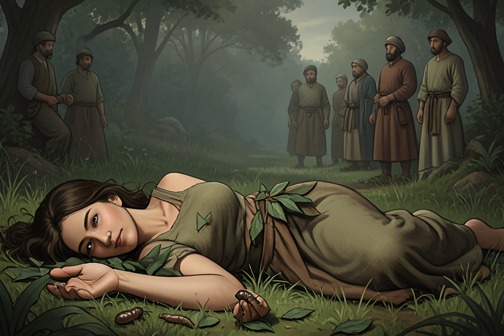
[Sally Palmer’s murder](entity:event-recall-event-sally-palmer-s-murder-1e4d47afb30d) turns a missing villager into the first confirmed victim of a deliberate killing and gives the investigation its defining combination of forensic evidence and staged animal imagery. Reconstructed mainly through [David Hunter](entity:character-recall-character-david-hunter-1e6ec194b0c2)’s examination of the aftermath, the case also reveals how easily Sally’s absence passed unnoticed in [Manham](entity:location-recall-location-manham-5f2ce02aebdb)—and how much the murder’s meaning depends on distinguishing what the evidence establishes from what it can only suggest.
## Disappearance and discovery
Sally had last been seen at the pub barbecue. She did not collect a grocery order she was due to pick up the following day, and she stopped making her customary morning visit to the newsagent for her newspaper. Yet no one reported her missing. People assumed she had gone away or was occupied with writing; the newsagent did not regard her as a local. [Mackenzie](entity:character-recall-character-mackenzie-0df4cdda3308)’s account of these missed routines makes the silence around her disappearance part of the case: the village’s reputation for closeness did not ensure that anyone noticed when she was gone.
When the police first showed David photographs of the body, its condition made identification difficult. The images showed a person lying face down, and the body’s sex could not be determined from them. David nevertheless recognized that the arrangement was not simply a consequence of death or decomposition. White swan wings had been placed against the body, creating a deliberate display. The posture and the wings turned the discovery into an image the killer had composed, rather than an ordinary concealed body.
The staging did not displace the basic finding: Sally had been murdered. The extent of decomposition limited what could be established about possible sexual abuse, which remained an assumption rather than a confirmed fact. The distinction matters because the case repeatedly asks investigators to work from incomplete remains without mistaking suspicion for proof.
## Reading the remains
David treats the body and its surroundings as evidence of elapsed time, not as a source of an exact answer. Open wounds would have attracted insects quickly; in daylight, flies could begin laying eggs within about an hour. The larvae present were mainly blowfly, and one specimen appeared close to pupation. David estimated it to be seven or eight days old. The absence of empty pupal cases suggested that the next stage of the insects’ development had not yet occurred.
He also examined adipocere, a substance formed as the body’s fats break down. Its brittle, crumbly appearance was consistent with relatively rapid decomposition, while the hot weather and exposure to bacteria through open wounds helped explain that speed. The amount present remained limited. Taken together, these signs supported a preliminary estimate of less than two weeks outdoors, with David’s best estimate at the scene around nine or ten days. He stressed that heat, humidity, insects, and other variables prevented a precise calculation.
Later tests substantially supported that estimate: Sally had been dead for about nine days when her body was found. This result gave the inquiry a firmer timeline, but not a complete account of her final days. David connected the interval to the possibility that Sally had not been killed immediately after disappearing. If the emerging pattern applied to this case, she may have been killed around three days after she went missing. That remained an inference, but it carried an urgent consequence for the search for [Lyn Metcalf](entity:character-recall-character-lyn-metcalf-6bc6a8c838dc): the same delay could mean that another missing woman was still alive.
## Where she was killed
The discovery site was not necessarily the place of death. David challenged the initial emphasis on head injuries by pointing to the body’s unusually rapid drying. In his assessment, the degree of desiccation during the heat required substantial blood loss while Sally was still alive; blood loss of that scale would not occur after death merely because the throat had been cut. The head injuries might have been fatal, he allowed, but they could also have occurred after death.
Soil samples from where the body was found had low iron content. If the substantial blood loss indicated by the body had happened there, David reasoned, the soil should have contained more iron. He therefore concluded that Sally had been killed elsewhere and her body moved to the discovery site. His conclusion linked two kinds of evidence—the body’s condition and the soil—while preserving uncertainty about the sequence and role of the head injuries.
This distinction between death and disposal shaped the investigation. The place where the body was found recorded some of its history, but not all of it; the remains had undergone changes that pointed beyond the immediate scene. David’s approach is forensic reconstruction rather than certainty by appearance: each observation narrows the possibilities, but none independently supplies the whole story.
## Staging, links, and significance
The swan wings became significant not only as a feature of the body but as a possible message. Mackenzie learned that someone had left a dead stoat on Sally’s doorstep before her disappearance. Sally had regarded it as a sick joke, and the witness account did not prove that the killer was responsible. David nevertheless considered it alongside the wings on the body and a mallard tied to a standing stone on the morning Lyn Metcalf vanished. Mackenzie acknowledged that animals might serve as markers or warnings, while keeping open the possibility that the earlier incident had another explanation.
A village newsletter supplied another possible connection. It had reported Sally describing life in Manham as a stimulus to her imagination and linking that imagination to the image of wings. David wondered whether the words and the swan wings were related; Mackenzie judged the item too slight to settle the question. The evidence therefore supports a possible personal or symbolic meaning for the staging, not a proven motive. The display is certain; its intended explanation is not.
The murder also joined Sally’s case to the investigation’s wider pattern of violence. The throat wound recalled the cut to the throat of Sally’s dog, Bess, while the dead stoat and the staged birds prompted attention to animal remains as possible signatures. A separate comparison of bone cuts raised a further complication: a rough cut differed from the smooth cut on the woman’s vertebra, so investigators could not simply assume that every similar feature had the same source. The case advances through such comparisons—and through the need to revise them when the details do not match.
Later suspicions about James Mason gave the idea of a killer hiding in plain sight a concrete direction, but the available clues did not make the identity certain by themselves. A newsletter, an animal left at a doorstep, the body’s staging, and forensic traces each had to be weighed against alternatives. Sally’s murder is thus both a death investigation and the opening model for the inquiry’s method: read the body, the environment, and the community together, while separating an established finding from a compelling but unproven interpretation.
Event 3
Discovery of Sally Palmer’s body
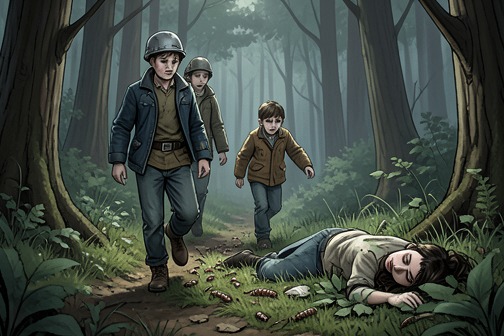
The discovery of [Sally Palmer](entity:character-recall-character-sally-palmer-d7ce3f43a1d6)’s body is the opening rupture in [Manham](entity:location-recall-location-manham-5f2ce02aebdb)’s seemingly familiar summer: [Neil Yates](entity:character-recall-character-neil-yates-084c86fdcfec) and [Sam Yates](entity:character-recall-character-sam-yates-9371cb9bc84a) follow a trail of larvae through the heat and find a dead woman where they expected an ordinary afternoon. The event begins the investigation, draws [David Hunter](entity:character-recall-character-david-hunter-1e6ec194b0c2) back toward a past he has tried to keep at a distance, and makes the village confront how little it knew about what was happening among its residents.
## The trail to the body
The discovery takes place in the second week of July, during a heatwave that has made the ground hard and the vegetation appear drained of colour. Neil, eleven, and his younger brother Sam are walking toward Willow Hole, where they plan to meet friends and swim. Their route takes them along the edge of [Farnham Wood](entity:location-recall-location-farnham-wood-91db1ef06196), beside the marsh. The oppressive heat and the boys’ impatience make the outing feel routine; neither sets out to find a crime scene.
Sam notices the larvae first. He tends to walk behind Neil, head down, and his hay fever leaves him sniffing through the summer. He stops to examine the line and calls his brother back. The brothers follow it toward the marsh grass from which it emerges. The book explains the trail as part of decomposition: larvae move away from a body, and, in hot, dry conditions, their passage can leave a visible mark on the vegetation. Here, an ordinary biological process becomes the route by which the boys reach the dead.
At the trail’s end they find Sally Palmer’s remains. The condition of the body is so severe that the boys cannot confidently identify the person or even agree afterward on what they saw. The discovery overwhelms their ability to describe it, but they know that the remains are human and that the person is dead. The narrative does not treat their uncertainty as a failure of observation: it shows how shock and the effects of decomposition make an already disturbing encounter difficult to retain as a stable memory.
## The boys and the first response
The brothers run home and then make their way to the police station. Neil breaks first, and Sam follows his older brother, as he often does. By the time they reach home, their recollections have already become uncertain. Their mother, [Linda Yates](entity:character-recall-character-linda-yates-7d658b0df913), calls David, who is serving as Manham’s doctor. He gives Sam a mild sedative and antihistamine for his hay fever, while Neil, still shaken but beginning to recover his composure, recounts what happened.
Two police officers arrive, but their initial response is unhurried. When one asks which boy will lead them back, Sam buries his head against his mother and Neil pales. David objects to making either child return to the site. The officer instead tells David to guide them, turning the doctor’s local knowledge into a practical obligation. The remains are about three miles away, reached by parking and crossing the marsh toward the woods.
The boys’ discovery thus passes quickly from private shock to official inquiry, but David’s role does not end with escorting the police. After leaving the site, he tries to contain the thoughts it has stirred. At the road back to the village, he changes course and drives to Sally’s farm. That decision, made before he has fully explained it even to himself, begins a chain of choices that affects his own life as well as the case.
## Establishing a forensic timeline
At the scene, David uses insect development and the condition of the surrounding ground to estimate how long the body has been there. [Blowflies](entity:creature-recall-creature-blowflies-cba15e05b378) are among the first insects attracted to open wounds; their eggs can be laid within about an hour in daylight. The age and stage of the larvae, together with the absence of hatched pupal cases, initially support a broad estimate of one to two weeks. David narrows his preliminary best guess to roughly nine or ten days, while emphasizing the uncertainty of making an estimate from a brief examination.
The soil and vegetation provide a second line of evidence. David identifies adipocere, a substance formed as body fat breaks down, and explains that it can make the soil alkaline enough to kill grass. Its brittle, crumbly state is consistent with rapid decomposition in hot weather, while the relatively small amount present also supports a time since death of less than two weeks. These observations turn the scene into a record of the body’s exposure to its surroundings, but they do not, by themselves, establish exactly when or where Sally died.
Later examinations add complications to that first estimate. David argues that the body’s premature drying is consistent with substantial blood loss before death, not merely the post-mortem effect of a cut throat. The soil at the discovery site has low iron content, although a large loss of blood there should have left more. Together, these details support the possibility that Sally was killed elsewhere and brought to Farnham Wood. The place where the boys found her is therefore not necessarily the place where the fatal violence occurred.
## Sally’s disappearance and the wider case
The investigation reveals that Sally had not been seen since the pub barbecue. She was expected to collect a grocery order the following day and ordinarily stopped each morning at the newsagent’s for her Guardian, but she did neither. No one reported her missing; people assumed she had gone away or was occupied with writing. The discovery therefore exposes not only a murder but a gap in the village’s attention: Sally could disappear without her absence promptly becoming a communal concern.
The body also becomes part of a developing pattern. Swan wings are found with Sally, and David later connects them with a dead stoat reportedly left on her doorstep and a mallard tied to a stone on the morning [Lyn Metcalf](entity:character-recall-character-lyn-metcalf-6bc6a8c838dc) disappeared. [Mackenzie](entity:character-recall-character-mackenzie-0df4cdda3308) considers whether the animal remains might be a warning or marker, while recognizing that the evidence does not settle who left them. The discovery consequently marks the first major point at which the investigation can connect a murder scene with recurring signs of deliberate staging.
The book gives the event a double significance. In the immediate sequence, the larvae lead two boys to a body and summon the doctor and police. In retrospect, the scene also reveals a threat that had been present in Manham before anyone knew to look for it. Neil later continues telling the story as the boy whose discovery started the summer’s events, but David’s narration corrects that neat beginning: the discovery did not create the danger. It made visible what had already been living among them.
Event 4
Abduction of Lyn Metcalf
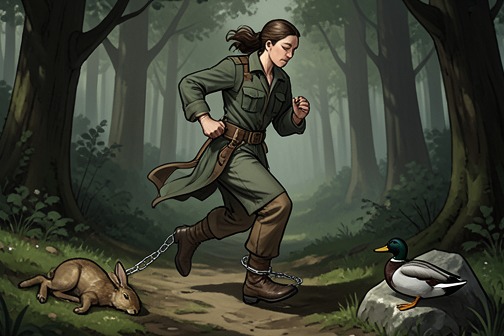
The [Abduction of Lyn Metcalf](entity:event-recall-event-abduction-of-lyn-metcal-8cfea6c9b6fb) turns an ordinary morning run into a carefully prepared ambush and makes her disappearance the second suspected attack in the [Manham](entity:location-recall-location-manham-5f2ce02aebdb) investigation. Its warning signs emerge over two mornings: first a dead hare laid across a woodland path, then a live mallard bound to a stone. Lyn recognizes that the bird has been placed for her to find, but the realization comes only as she tries to escape. A wire snare brings her down, and an attacker makes her lose consciousness. She vanishes without leaving the searchers a clear trail to her captor.
## The first run and its warning
At thirty-one, Lyn is a disciplined runner who enjoys testing her endurance. On a Monday morning, she leaves home while mist still rolls off the marshes, runs along a narrow lane, and turns onto an overgrown track leading across marshland toward the lake. Her routine gives the opening a sense of ease and self-direction: she is recovering from a calf-muscle strain, so begins gently, settling into a relaxed pace before the day’s work and obligations claim her attention.
The path takes her into the woods, where she pauses at a clearing and then starts running again. Ahead, she sees a hare lying in the middle of the track, its fur matted with blood. It seems arranged rather than accidentally dropped. Lyn looks around but sees no explanation; she considers a fox as a possible cause, then recognizes that this does not quite account for how the animal has been left. The thought that the placement is deliberate briefly takes shape, but she dismisses it as foolish and continues toward the open landscape. Sunlight and the lake help the unease fade. At this point, the warning has been visible to her, yet it has not altered her ordinary understanding of the run.
## The second morning and the ambush
The following morning, the memory of the hare returns as Lyn approaches the woods through mist. She is reluctant to enter, but criticizes herself for being nervous and carries on. Once inside, the previous day’s foreboding does not immediately return. The path seems empty, and she assumes the hare has become part of the natural food chain. She checks her stopwatch, notices that she has lost a minute or two, and increases her pace.
Near the clearing, Lyn sees something wrong at the standing stone. A mallard has been tied there with wire around its neck and feet. At first it appears dead; when it opens its eyes and struggles against its bindings, Lyn recoils. She does not approach it. The bird’s condition forces a new interpretation of the scene: someone has acted recently, and the hare on the path may also have been arranged. More alarming still, Lyn understands that whoever placed the mallard knew she would find it. The story does not identify that person at this moment, but the paired animal scenes make the woods feel less like a neutral setting and more like a route on which someone has anticipated her movements.
Lyn runs back toward the open ground, abandoning the pace she had been monitoring only moments earlier. Branches strike her as she races along the path, watching the trees for anyone who might emerge. Near the final bend, a thin wire catches her foot and she falls. The wire is part of a snare, with a wooden stake later found hammered into the ground nearby. Before Lyn can get up, someone presses a chemical-smelling material over her face. She struggles, loses strength, and slips out of consciousness. The sequence is abrupt: recognition gives way to flight, flight to the hidden trap, and the hoped-for safety of the open landscape remains just beyond reach.
## Discovery and the village search
When Lyn does not return from her run, her disappearance is alarming in part because another woman, [Sally Palmer](entity:character-recall-character-sally-palmer-d7ce3f43a1d6), has recently been murdered. [Mackenzie](entity:character-recall-character-mackenzie-0df4cdda3308) tells [David Hunter](entity:character-recall-character-david-hunter-1e6ec194b0c2) that Lyn left to run that morning and had not come back. He cautions that it could be a false alarm, but says that, if the same man is responsible, Lyn may already be dead or may be held somewhere. Neither possibility is confirmed in that conversation; his warning conveys the stakes as the investigation understands them at the time.
A searcher entering the woods finds the mallard tied to the stone and initially reacts with anger at the cruelty. Fear grows when calls for Lyn go unanswered. On the way back toward the lake, the searcher discovers her stopwatch half-hidden by a tree root. Its strap is broken and its face cracked. Nearby, a thick wooden stake has been driven into the ground, though its significance is not immediately recognized. Forensic examination later identifies it as part of a snare and finds traces of Lyn’s blood on the path. Those discoveries establish that something happened there, but they do not locate Lyn: there is no trace of her at the scene.
The village turns out to help search. In other circumstances, some might have thought Lyn had simply left of her own accord, even though she and Marcus seemed happy to those around them. The recent murder changes how her absence is read. The police concentrate on the woods and the area where she had been running, while fit villagers join the effort. Her missing stopwatch and the physical traces in the woods give the search a location and a line of inquiry, but neither supplies an immediate answer about where she has been taken.
## Animal signs and the investigation
The dead hare and bound mallard acquire wider significance as the investigation compares them with other animal clues. Mackenzie reports that a witness remembers Sally Palmer being annoyed by a dead stoat left on her doorstep before her murder. Hunter connects that account with the swan wings found with Sally’s body and the mallard discovered on the morning Lyn disappeared. Mackenzie considers that the stoat could have been a prank or could have served as a marker or warning, while noting that the killer is already associated with birds. The evidence supports a pattern worth investigating, not a settled explanation for every animal’s placement.
That uncertainty is central to the event’s place in the story. The hare initially allows Lyn to preserve the ordinary explanation that she has encountered wildlife; the mallard, still alive and bound, makes the possibility of deliberate staging harder to dismiss. The snare and stake then turn suspicion into physical evidence of a prepared capture. Even so, none of these clues reveals the abductor’s identity in the scenes surrounding the disappearance. The event therefore raises the danger to the village while leaving the key question unresolved: Lyn has been taken from a familiar morning route, and the search begins with evidence of planning but no knowledge of her whereabouts.
Event 5
Public search for Lyn Metcalf
The public search for [Lyn Metcalf](entity:character-recall-character-lyn-metcalf-6bc6a8c838dc) is the moment when [Manham](entity:location-recall-location-manham-5f2ce02aebdb)’s response to her disappearance became a village-wide effort—and when cooperation began to coexist with suspicion. Coordinated by the police and joined by residents, the search gave people practical work to do, but could not make the countryside yield Lyn or restore the community’s sense of safety.
## Background and urgency
The search followed the disappearance of Lyn Metcalf, whose stopwatch had been found by her husband, [Marcus Metcalf](entity:character-recall-character-marcus-metcalf-f22e951d4698), near the woods where she had gone running. The timing made the disappearance especially alarming: [Sally Palmer](entity:character-recall-character-sally-palmer-d7ce3f43a1d6) had recently been murdered, and residents could no longer readily treat Lyn’s absence as an ordinary decision to leave. Although people had previously agreed that Lyn and Marcus seemed happy, the earlier killing changed how they understood the new case. A woman from their own village had vanished in circumstances that seemed connected to a murder; the possibility of another attack shaped the search from its outset.
The contrast with Sally’s disappearance sharpened that unease. [Mackenzie](entity:character-recall-character-mackenzie-0df4cdda3308) reported that no one he had spoken to had seen Sally since the pub barbecue. She had failed to collect a grocery order the next day and had stopped her usual morning visits to the newsagent for the Guardian. Yet nobody had reported her missing: neighbours supposed she had gone away or was occupied with writing. Sally lived alone on a small farm outside Manham and, as a writer who had moved to the village, remained somewhat apart from its social centre. Her absence had gone unnoticed until the investigation gave it meaning. Lyn’s disappearance, by contrast, immediately drew a crowd.
## Organization and participation
The police established a mobile incident room near the woods, as close as the road allowed to the place where Marcus had found the stopwatch. Cars filled the hedgerows for roughly a quarter of a mile on either side. Some volunteers set out independently, while most gathered at the police base, where a table was used to coordinate the public search. The arrangement both organized residents and kept them from interfering with professional teams. It also served a public-relations purpose, giving the community a role even though the police recognized that volunteer effort could not cover all the surrounding terrain.
[David Hunter](entity:character-recall-character-david-hunter-1e6ec194b0c2) joined after finishing evening surgery and went to the table for an assignment rather than approaching Marcus. Marcus stood with a group of men, apart from them, visibly changed by worry. [Scarsdale](entity:character-recall-character-scarsdale-ff082aac2b05) was with him. David hesitated to offer condolences, uncertain that anything from a near-stranger would help, and chose to join the search instead. He later regretted that decision, though at the time the table offered a clear way to contribute.
David spent several unproductive hours crossing a boggy field with a group that included Rupert Sutton. Uneven ground and wet patches slowed the volunteers; Rupert slipped to his knees, and David helped him up. Conversation was sparse. As dusk made the work impractical, the group abandoned the search and returned. The effort had produced no trace of Lyn, and its end left the participants with little to do but seek company. Many were expected to stop at the Black Lamb; David went there rather than spend the evening alone.
## Solidarity and suspicion
For a time, the scale of participation suggested a rare unity. On a fine summer evening, residents searched together, kicking through long grass and looking under bushes. Yet the shared task had a darker implication: the killer was increasingly thought to be someone from Manham, or at least someone with a reason to attack women from the village. The possibility that a familiar neighbour could be responsible altered the meaning of the volunteers’ presence. A person searching for Lyn might be acting from concern—or might be performing concern while concealing knowledge of the crime.
That suspicion did not immediately prevent people from helping. Instead, it began to work beneath the display of cooperation, changing the distance between neighbours even as they followed the same search effort. David’s account presents the gathering as both practical and unsettling: the police could direct people across particular ground, but could not determine what each volunteer knew or how others should interpret their willingness to take part. The search could therefore demonstrate communal resolve without proving communal trust.
## Danger and consequences
The terrain itself limited what the search could accomplish. Mackenzie eventually called a temporary halt to the search for Lyn and established a first-aid station outside the mobile incident room. He also warned residents to stay out of the woods and fields around Manham. The warning changed the public understanding of the countryside: it was no longer merely difficult ground through which a missing person might be found, but a place where searchers themselves could be at risk. Some residents resisted the instruction, including a man who had objected after drinking at the Lamb; when he stepped into a concealed hole and broke his ankle, the danger became harder to dismiss.
The halt could not resolve the uncertainty or satisfy those who wanted to help. More police arrived, and national media began coming to the village with cameras and microphones. Manham’s relative anonymity gave way to the feeling of being under siege. Later, after Lyn’s body had been found, Scarsdale used the two women’s deaths to argue publicly that the police had failed and that villagers should protect themselves. His call helped prompt groups of residents, including [Carl Brenner](entity:character-recall-character-carl-brenner-7902f5c7f288) and [Dale Brenner](entity:character-recall-character-dale-brenner-ace8cbde85c4), to patrol the village. Those patrols were a later response rather than part of the organized search, but they grew from the same fear the search had exposed: that the threat might be among people the community already knew.
The search’s investigative meaning also remained unsettled. Mackenzie later reported a witness’s account that Sally had been upset by a dead stoat left on her doorstep. In light of the birds associated with the cases, he considered whether the animal might have been a marker or warning, while acknowledging that other explanations were possible. The detail did not establish who was responsible; it showed how the investigation was beginning to connect separate signs without treating an interpretation as proof. The public search likewise produced no answer about Lyn’s whereabouts, but it transformed the village’s understanding of the danger: the searchers were looking not only across the countryside, but increasingly at one another.
Event 6
Booby-trap attacks during the Manham investigation
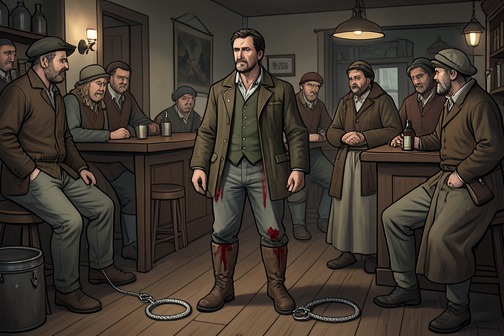
[Booby-trap attacks during the Manham investigation](entity:event-recall-event-booby-trap-attacks-duri-3ca99c229cc6) turn the search for [Lyn Metcalf](entity:character-recall-character-lyn-metcalf-6bc6a8c838dc) into a danger to the searchers themselves. Concealed snares and sharpened stakes injure [Scott Brenner](entity:character-recall-character-scott-brenner-d03043c20361), police officers, and other people around [Manham](entity:location-recall-location-manham-5f2ce02aebdb); [Mackenzie](entity:character-recall-character-mackenzie-0df4cdda3308) suspends the search and warns the public away from the countryside. The attacks make a practical obstacle into a wider crisis of safety and trust, while leaving open whether their purpose is to disrupt the investigation or to threaten anyone who enters the area.
## First Attacks and the Warning Signs
The danger becomes concrete when Scott Brenner is brought into a pub with his boot and trouser leg soaked in blood. His brother Carl explains that Scott stepped into a snare while they were heading to [David Hunter](entity:character-recall-character-david-hunter-1e6ec194b0c2)’s surgery. David treats Scott there rather than moving him again, and asks what kind of device caught him. Carl identifies a wire noose designed to tighten around whatever enters it. Scott adds that it was concealed beneath grass beside a path and was too large to be intended for a rabbit or deer.
The setting and scale of the device make the incident more than an ordinary poaching mishap. Those present have already heard about a remnant of tripwire found in the woods where Lyn disappeared. Scott’s account therefore connects his injury to the danger surrounding the search, even though it does not establish who set the trap or precisely what it was intended to catch. Carl’s sharp interruption when Scott says the snare was not one of theirs also exposes the Brenners’ sensitivity to suspicion, but the scene supplies no proof that the family laid it.
David worries that Carl may not let Scott speak to the police about the snare. Later that night, he contacts Mackenzie to make sure the report reaches him. Mackenzie says that two officers have also been injured: one caught by a wire snare, the other by a concealed hole fitted with a sharpened stake. He believes the person who took Lyn expected the police to search for her. That assessment raises the stakes: the traps may be intended not only to harm individuals but also to anticipate and impede the investigation.
## Search Suspended
The following morning brings two more separate incidents, neither near the previous night’s traps. David treats both injured people at the surgery because it has no permanent nurse. A policewoman has caught her calf on a sharpened stake in a concealed hole and needs hospital treatment; Dan Marsden, a local farmhand, has been caught by a wire snare, but his heavy boot has limited the injury. The different locations and repeated use of the same two kinds of device suggest a hazard spread across the search area rather than a single isolated accident.
Mackenzie calls a temporary halt to the search for Lyn and establishes a first-aid station outside the mobile incident room. He also warns people to stay out of the woods and fields around Manham. The decision reflects a hard limit on the investigation: continuing to search without knowing where more traps have been placed could expose searchers to increasingly serious harm. Mackenzie says the snares are large enough to catch an adult’s foot, while the stake traps could have been set by someone with military or survivalist experience—or by someone with a particularly malicious imagination. He stresses that the devices found so far have caused injuries, not deaths, but warns that the next encounter could be fatal.
His caution is met with resistance from people unwilling to be frightened away from land they have known all their lives. That defiance does not last for everyone. A vocal objector, after drinking at [The Lamb](entity:location-recall-location-the-lamb-0c226f522664), steps into a concealed hole and breaks his ankle. His injury makes the warning immediate in a way official statements had not. As additional police arrive and national press coverage descends on the village, Manham begins to feel under siege: the landscape that had seemed familiar is now difficult to enter safely, and the search itself has become a source of danger.
## Effects on the Village
The attacks change the emotional climate as well as police procedure. Before news of the traps, the village’s response to Lyn’s disappearance had been marked largely by numb shock; learning that the surrounding countryside was unsafe brings a more direct fear. The danger is difficult to contain because the traps are concealed and their locations are not limited to one known site. Mackenzie notes that their maker appears to have planned carefully and that the discovered devices may not be the only ones. The uncertainty forces the authorities to treat every further search as a potential exposure.
That fear enters a community already vulnerable to suspicion. As the investigation continues, [Scarsdale](entity:character-recall-character-scarsdale-ff082aac2b05) becomes a prominent public voice, criticizing the police and urging the village to protect itself. At a meeting after Lyn’s body is found, he argues that someone from Manham is probably responsible and calls on residents to root out the killer if the police cannot protect them. The traps do not prove that his proposed response is justified, but they give force to the sense that ordinary movement and ordinary safeguards have failed. His appeal helps turn anxiety into collective action: [Carl Brenner](entity:character-recall-character-carl-brenner-7902f5c7f288) and [Dale Brenner](entity:character-recall-character-dale-brenner-ace8cbde85c4) later recruit volunteers for day-and-night patrols, explicitly echoing Scarsdale’s call to take matters into their own hands.
## Significance
The attacks function as both physical hazards and a tactical pressure on the investigation. Mackenzie’s belief that Lyn’s abductor anticipated the search gives the traps a possible strategic purpose, but the evidence does not identify their maker or confirm that every trap was intended for police. Their demonstrated effects are clearer: multiple people are injured, the organized search is suspended, residents are warned away from the countryside, and the village’s fear becomes easier for self-appointed patrols to mobilize.
The contrast is central to the episode. A search meant to find a missing woman becomes an activity that may injure or kill those undertaking it, while familiar paths and fields lose their reassuring character. The resulting gap between public need and what the police can safely do feeds the village’s distrust. The traps thus obstruct the search in two ways: directly, by making the countryside dangerous, and indirectly, by helping create the conditions in which fear, accusation, and vigilantism can flourish.
Event 7
Abduction and murder of Lyn Metcalf
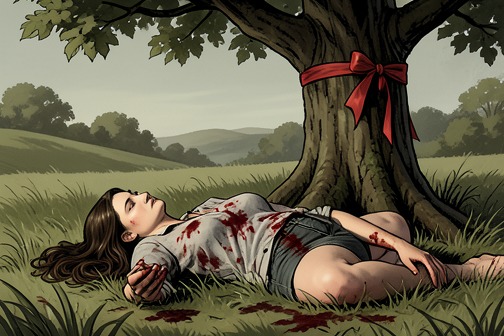
The abduction and murder of [Lyn Metcalf](entity:character-recall-character-lyn-metcalf-6bc6a8c838dc) turns a disappearance into the clearest confirmation that the violence surrounding [Manham](entity:location-recall-location-manham-5f2ce02aebdb) is part of a continuing pattern. Her body’s condition gives [David Hunter](entity:character-recall-character-david-hunter-1e6ec194b0c2) a provisional account of when she died and suggests it was moved after death; its distinctive treatment leads [Mackenzie](entity:character-recall-character-mackenzie-0df4cdda3308) to conclude that the same killer murdered [Sally Palmer](entity:character-recall-character-sally-palmer-d7ce3f43a1d6). The discovery also indicates that Lyn remained alive for at least part of the time she was missing, sharpening the personal and investigative stakes of the case.
## Disappearance and warning signs
Lyn had been missing for nine days when the police found her. The investigation into [Sally Palmer’s murder](entity:event-recall-event-sally-palmer-s-murder-1e4d47afb30d) had already revealed how easily an absence could go unremarked in the village: Sally had not been seen since a pub barbecue, failed to collect a grocery order, and stopped her usual visits to the newsagent for a newspaper. No one had reported her missing. That earlier failure to notice Sally’s absence offers a bleak contrast to the urgency of the search for Lyn, but it also shows how long a disappearance could remain indistinct from an ordinary interruption to village life.
There were possible signs of threat before Lyn vanished, though their meaning remained uncertain. A witness told Mackenzie that Sally had been annoyed when someone left a dead stoat on her doorstep, which she took for a sick joke. Hunter connected the report with the swan wings found with Sally’s body and the mallard tied to a stone on the morning Lyn disappeared. Mackenzie considered whether the dead animal might have been a marker or warning, but allowed that children could have left it. The evidence makes the stoat part of a developing pattern of animal signs, not proof of who left it or why.
The investigation had also encountered a misleading discovery: an excavation produced a skeleton that Hunter identified as someone who had been dead long before Lyn went missing. With no soft tissue remaining, it could not be Lyn’s recently missing body. Its identification as a long-dead student briefly offered a reprieve from the possibility that the grave contained Lyn, but it did not resolve her disappearance. Mackenzie’s urgent call to Hunter came while the doctor was about to begin afternoon surgery. Hunter initially assumed it concerned the student; Mackenzie’s brief announcement that the police had found her ended that hope.
## Discovery and examination
The body lay face down and partly concealed among hummocks of marsh grass. Lyn was unrecognizable, and a single running shoe remained on one foot. Hunter had encountered her only the week before, and deliberately set that memory aside to examine the body. The contrast between the missing young woman and the forensic evidence before him marks the scene as both a professional task and a personal shock; he nevertheless proceeded with the examination.
The body had been dead for several days. Hunter noted that soft tissue remained and that skin slippage was only beginning. Larvae were active in the wounds, and their development, considered alongside the steady hot weather, supported an estimate of six to eight days since death. When Mackenzie pressed for a narrower estimate, Hunter qualified it: assuming the body had not been moved and the weather had remained constant, six or seven days was his best preliminary assessment. The estimate was not a formal identification or an exact time of death, but it could be compared with the known period of Lyn’s disappearance.
Hunter found a throat wound and several other injuries, fewer than on Sally Palmer’s body. The body was desiccated, though not to the same extent as Sally’s, consistent with Lyn having been dead for less time. Hunter’s initial interpretation was that she had bled out. The surrounding vegetation was blackened by alkaline products associated with decomposition; he proposed that Lyn had been killed elsewhere and brought to the discovery site. He treated this as a preliminary inference, noting that soil testing would be needed to check it.
## Evidence linking the murders
The examination changed markedly when crime-scene officers turned the body over. Lyn’s abdomen had been cut open, and objects became visible as the body was moved. An officer identified them as baby rabbits. The discovery was outside Hunter’s experience; Mackenzie, normally ruddy-faced, was visibly shocked. Unlike Sally’s body, Lyn’s had no swan wings. That absence does not erase the similarities between the cases, but it is a concrete difference in how the two bodies were treated.
After seeing the rabbits, Mackenzie concluded that the same man had killed both women. Hunter had already compared the two bodies: both had throat wounds and showed marked desiccation, and he considered Lyn’s injuries similar to Sally’s, though fewer. These observations support a connection within the investigation, while Hunter’s caution about what an examination alone could establish remains important. The conclusion is presented through the accumulating physical evidence and Mackenzie’s assessment, not through a confession or a fully known account of the killer’s actions.
## The time Lyn remained captive
The dates give the disappearance a further, disturbing dimension. Lyn had been missing for nine days, while Hunter estimated that she had been dead for six or seven. Mackenzie drew the implication: if the estimate was broadly right, Lyn had been kept alive for at least two days after her disappearance. The calculation is necessarily approximate, since Hunter’s time-since-death assessment depends on the weather and on the assumption that the body had not been moved. Even with those qualifications, the gap makes the case more than a murder followed immediately by concealment: it points to a period in which Lyn was alive in the killer’s control.
The evidence does not disclose where she was held, what happened during that interval, or why the killer prolonged it. The narrative preserves that uncertainty rather than filling it with an invented explanation. Later, while captive, [Jenny Hammond](entity:character-recall-character-jenny-hammond-4e846281bcb6) fears that she will die before her captor returns; her situation echoes the terror of being held beyond the moment of abduction, but does not establish that Lyn and Jenny experienced the same treatment. Lyn’s case supplies the earlier evidence that the killer may keep a victim alive after taking her.
## Consequences and significance
The discovery strengthens the connection between Lyn’s disappearance and Sally Palmer’s murder, while giving the investigation a more precise chronology to work with. Insects, remaining tissue, weather, desiccation and the condition of the vegetation are not merely signs of decay: read together, they help Hunter estimate the interval since death and distinguish the likely discovery site from the place of killing. His conclusions remain provisional, but their limits are part of their value. The body offers evidence, not certainty on demand.
For Manham, Lyn’s death removes the possibility that her disappearance will end in a safe return and confirms that the village is confronting a serial pattern rather than an isolated loss. For the investigation, the baby rabbits and the similarities to Sally’s injuries provide a strong link between the murders. For Hunter, the examination brings professional observation into direct contact with the memory of a woman he had recently seen alive. The case’s defining reversal is therefore both evidentiary and human: the search finds Lyn, but what it establishes is how long she may have been missing, how she died, and how closely her fate is bound to the earlier murder.
Event 8
Scarsdale’s call for a village manhunt
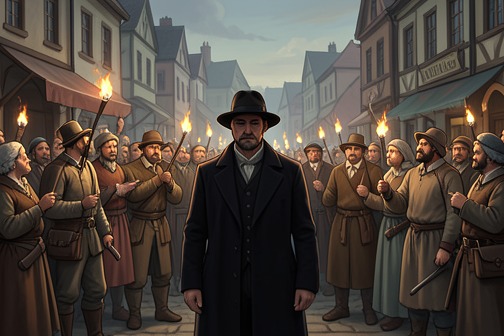
[Scarsdale’s call for a village manhunt](entity:event-recall-event-bca167743aa7) is the moment when [Manham](entity:location-recall-location-manham-5f2ce02aebdb)’s fear is turned into a public demand for self-directed action. At a meeting held after [Lyn Metcalf](entity:character-recall-character-lyn-metcalf-6bc6a8c838dc)’s death, [Scarsdale](entity:character-recall-character-scarsdale-ff082aac2b05) presents the police as unable to protect the village, invokes the danger to local women, and urges residents to root out the killer themselves. [Marcus Metcalf](entity:character-recall-character-marcus-metcalf-f22e951d4698)’s grief gives the appeal a personal face; the crowd’s approval gives it force. The meeting marks a shift from suspicion spreading through the community to organized patrols undertaken in the name of protecting it.
## Causes and Background
By the time Scarsdale called the meeting, the investigation had already exposed how little the village had known about the people around it. [Police](entity:organization-recall-organization-police-ff49ac86d5d5) inquiries into [Sally Palmer](entity:character-recall-character-sally-palmer-d7ce3f43a1d6)’s disappearance established that she had missed a grocery order and stopped collecting her newspaper, yet no one had reported her absence. People assumed she had gone away or was occupied with her writing. That earlier failure to notice her disappearance made the idea of a hidden killer among familiar villagers especially unsettling, while also showing how fragile the community’s confidence in its own closeness had been.
The investigation had also raised questions about whether the killer used animals as warnings or markers. A witness recalled that Sally had been annoyed by a dead stoat left on her doorstep. [Mackenzie](entity:character-recall-character-mackenzie-0df4cdda3308) considered that it might have been a joke, but also raised the possibility that it was connected to the dead birds associated with the murders. The theory remained uncertain. At the meeting, however, Scarsdale spoke as though the essential danger was plain: two known women had been killed, and the perpetrator was likely from the village. The contrast between unresolved clues and his certainty helps explain how fear could become a demand for action before the evidence had settled who was responsible.
Scarsdale’s growing public prominence formed another part of the background. While others in Manham avoided the media, he spoke to cameras and microphones, criticizing the police, condemning what he described as the village’s moral complacency, and accusing the press of exploiting the tragedy. The account presents a tension in that stance: he denounced publicity even as he repeatedly placed himself before the public. His denunciations nevertheless found an audience because their intensity echoed the community’s anger. He then announced a meeting in the village hall, extending his influence from media appearances into a gathering organized specifically around the crisis.
## The Meeting and Its Participants
The meeting took place on the Monday after Lyn’s body had been found. A memorial service had been held in the church the previous day; Scarsdale had not allowed the media inside. [David Hunter](entity:character-recall-character-david-hunter-1e6ec194b0c2) had wondered whether this exclusion reflected consideration for the bereaved family or a desire to make the press feel shut out. Approaching the village hall, he saw Scarsdale directing [Tom Mason](entity:character-recall-character-tom-mason-c9a187dcfeb0) in its garden. The grounds had been carefully tended, and the village square was freshly mown around the horse chestnut and the Martyr’s Stone. These details frame the gathering as a prepared public occasion, rather than an impromptu exchange.
The meeting did not begin with Scarsdale taking the stage alone. Marcus Metcalf appeared first, and the room fell quiet. He looked diminished by grief, moved slowly, and seemed dazed. Scarsdale followed him onto the stage and placed a hand on his shoulder. David read the gesture as both supportive and proprietorial, recognizing that the presence of Lyn’s husband would lend greater credibility to whatever Scarsdale intended to propose. Marcus’s condition mattered to the meeting’s emotional structure: his loss was not an abstraction but the visible consequence of the murders.
Scarsdale addressed the room as a matter affecting every household. He said that two women known to the village had been killed and argued that someone from Manham was probably responsible. He accused the police of being unable, or perhaps unwilling, to take the necessary steps, and presented continued inaction as unacceptable while women remained at risk of abduction and murder. He then pointed to Marcus and widened the stakes from one family’s bereavement to the possibility that any resident’s wife, daughter, or sister might be next. The appeal made collective fear the basis for a collective response.
## The Call to Action
Scarsdale invited Marcus to speak. At first Marcus appeared distant, staring down at the table; when prompted and given the microphone, he seemed to gather himself. He said that the killer had taken Lyn and that the killer had to be stopped, but his voice faltered and he began to cry. His plea for the killer to be found expressed grief and a desire for the danger to end. It did not, by itself, specify what villagers should do. Scarsdale took the microphone back and supplied that next step.
He described the village’s previous inaction as weakness and complacency that had allowed the killer to hide and act without restraint. He then urged Manham to show strength, declaring that if the police could not protect the community, residents should protect themselves and root out the perpetrator. The speech turned a complaint about police failure into a proposed alternative: action by the village. Its language also cast the unknown killer as an enemy concealed among neighbors, sharpening the division between the threatened community and the person it was being encouraged to find.
The appeal produced an immediate response in the hall. As Scarsdale sat back, people stood, applauded, and shouted their approval while cameras flashed and journalists called out questions. David, watching Scarsdale survey the crowd, understood the reverend’s expression as triumph as well as fervour. He left without joining the commotion and later objected that Scarsdale seemed to be stirring people up rather than calming them. The difference between the crowd’s enthusiasm and David’s alarm makes the scene’s central uncertainty plain: the meeting offered a feeling of decisive action, but did not establish that the people moved by it would identify the killer correctly.
## Consequences and Significance
The meeting’s call did not remain confined to speeches. The following night, [Carl Brenner](entity:character-recall-character-carl-brenner-7902f5c7f288) arrived at [The Lamb](entity:location-recall-location-the-lamb-0c226f522664) with [Dale Brenner](entity:character-recall-character-dale-brenner-ace8cbde85c4) and tried to recruit volunteers. The two men belonged to a larger group that, encouraged by Scarsdale, had taken it upon itself to patrol Manham day and night. Carl framed the patrols as necessary because the police were not doing enough. Thus the meeting’s broad appeal was translated into an organized practice: villagers would watch the community and search for the person they believed was responsible.
That development gives the event its double significance. Scarsdale’s appeal answers a genuine crisis and draws force from Marcus’s bereavement, but it also magnifies suspicion by declaring that the killer is probably local and that ordinary safeguards have failed. The earlier investigation had shown both that people could overlook a neighbor’s absence and that apparently significant clues still admitted competing explanations. The manhunt therefore begins in an atmosphere where uncertainty remains, even as public rhetoric presses for certainty and action. The meeting exposes how quickly communal fear can be given a leader, a target, and a method—and how those things can feel like protection without guaranteeing that the search will be just or effective.
Event 9
David Hunter and Jenny Hammond begin a relationship
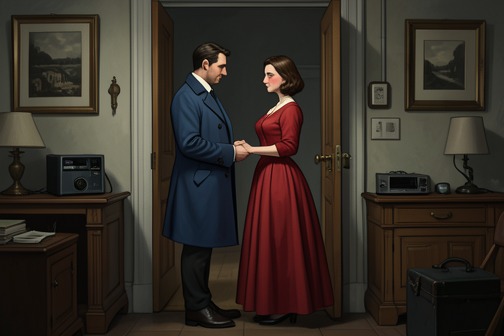
[David Hunter and Jenny Hammond begin a relationship](entity:event-recall-event-5a4110f5b620) through a gradual movement from unspoken attraction to chosen intimacy. Its decisive turn is not a declaration but a sequence of small, qualified gestures: David’s sudden nervousness, Jenny’s request not to hurry, a fleeting kiss, and, later, her decision to see his home. Their closeness develops alongside grief and fear rather than replacing them; at its most intimate, David’s tears become part of the encounter, and Jenny’s response allows him to remain present instead of retreating into memory.
## Attraction Before It Is Named
The possibility of a relationship first reaches David through [Tina](entity:character-recall-character-tina-19081254867c), who tells him that Jenny likes him. Alone after Tina has gone, he questions both what her remark means and what he feels in return. He tries to dismiss Tina’s words as the product of drink and tells himself not to read too much into them, yet his sudden nervousness unsettles that explanation. The episode establishes an emotional change before David can comfortably give it a name: attraction is registered first as agitation, then resisted in thought.
Over the following days, David and Jenny see each other regularly. One evening they drive to a restaurant in Horning, where linen tablecloths, candles, and a substantial wine list contrast with the limited choices David associates with local dining. The evening also marks a shift from tentative interest toward personal trust. They seem to have known each other for years, though they have only recently met, and David links that sense of familiarity to what each has endured. Their common knowledge of how abruptly ordinary life can become tragic works like a private language, present even when neither needs to explain it.
David tells Jenny about [Kara](entity:character-recall-character-kara-fb2f3d3c2326) and [Alice](entity:character-recall-character-alice-c37947fad76f), and about the forensic work he has been doing for [Mackenzie](entity:character-recall-character-mackenzie-0df4cdda3308). Jenny listens without interrupting. When he has finished, she briefly touches his hand and tells him she thinks he is doing the right thing; she lets the contact linger before withdrawing it. The gesture makes support tangible without turning the conversation into a confession or demanding a response. They move on to another subject without awkwardness, showing an ease in which serious disclosure and ordinary conversation can coexist.
## A Boundary, and a First Kiss
The ease of the dinner does not carry unchanged into the drive back. As they approach [Manham](entity:location-recall-location-manham-5f2ce02aebdb), Jenny withdraws into herself; conversation first becomes stilted and then stops. When David asks whether everything is all right, she answers too quickly and begins to leave, but hesitates. She apologizes and says she does not want to hurry into anything. David can only nod, numb with uncertainty. Jenny immediately clarifies that she is not saying she does not want a relationship; she asks for time, repeating that it is not yet.
The boundary is accompanied by a counter-gesture: before David can answer, Jenny leans into the car and gives him a brief kiss, then hurries inside. For him the moment is both exhilarating and uncomfortable. He feels breathless and buoyed, but guilty as well. The kiss confirms mutual desire without erasing her request to move slowly, so the scene’s forward movement depends on restraint as much as attraction.
The words not yet also echo for David beyond their relationship. He remembers [Linda Yates](entity:character-recall-character-linda-yates-7d658b0df913) using the same answer when he asked whether she had dreamed about Lyn. The repetition briefly binds the developing intimacy to the wider uncertainty surrounding the village, but David does not treat the two answers as equivalent explanations. The phrase stays with him because it has acquired more than one context: a boundary between Jenny and himself, and a reminder of an unresolved question elsewhere in Manham.
## From Tension to Chosen Intimacy
A later drive back to Manham is marked by silence and David’s self-reproach. He curses himself for making such a fuss about [Scarsdale](entity:character-recall-character-scarsdale-ff082aac2b05) and assumes that Jenny has had enough. As he turns toward her road, however, Jenny asks him not to stop there; she wants him to show her where he lives. Her request changes the direction of the evening. The earlier withdrawal had left David uncertain whether she wished to continue, while this choice brings her into his private space on her own initiative.
At his home they stand awkwardly in the half-light, looking at one another without moving. Jenny’s voice is unsteady when she asks where the bedroom is. The hesitation that preceded their first kiss has not disappeared, but neither does it prevent her from choosing what happens next. In the bedroom she is initially tense and trembling, and David is hesitant too. The scene does not present intimacy as an effortless escape from the past: at first, memory tries to impose its own pattern of shape, texture, and scent. Gradually, the present takes over.
Afterward Jenny lies curled against David, her breath soft against his chest, and puts her hands to his face, tracing the wetness on his cheeks. When he tries to dismiss it, she tells him she understands and that it is all right. David laughs and hugs her; he lifts her chin, and they kiss slowly before moving together again. His tears do not vanish as a condition of closeness. Instead, Jenny’s quiet acknowledgment lets him remain with her, and he finds that the moment is all right.
## Significance Within the Story
The relationship begins not with a clean break from bereavement but with David allowing new attachment to occupy the same emotional space as old loss. At dinner he speaks openly about Kara and Alice; later, memory intrudes into intimacy, and his tears remain visible to Jenny. Her response is not to explain or correct his grief, but to accept it. The progression from disclosure and a lingering touch to a requested pause, a kiss, and a shared night gives their relationship a pattern of approach that makes room for uncertainty.
The contrast between Jenny’s two departures and returns is especially important. After the first evening she hurries into her house while leaving David with a kiss and a limit: not yet. Later, after a silent drive in which David believes he has damaged the connection, she asks to see his home and initiates the move toward the bedroom. The shift does not cancel her earlier boundary; it shows that waiting has not meant refusal. Their intimacy is therefore established through repeated acts of choosing, with Jenny’s timing and David’s vulnerability both shaping its beginning. That tenderness develops while a killer remains at large in Manham, placing their private closeness against a continuing atmosphere of danger rather than outside it.
Event 10
Someone breaks into Henry’s surgery and steals chloroform
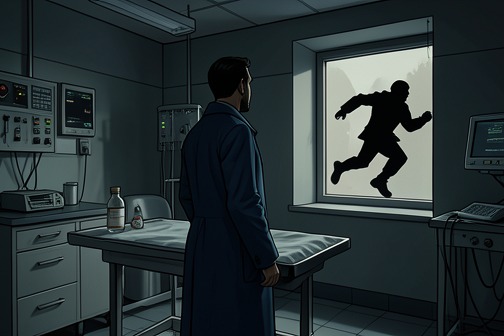
Someone breaks into [Henry Maitland](entity:character-recall-character-henry-maitland-b1bff99fd927)’s surgery and steals chloroform in an episode that makes an apparently secure medical workplace part of the danger surrounding [Manham](entity:location-recall-location-manham-5f2ce02aebdb). [David Hunter](entity:character-recall-character-david-hunter-1e6ec194b0c2) surprises the intruder, who escapes after knocking him aside; the locked drug cabinet remains untouched, but a bottle from [Henry](entity:character-recall-character-henry-c166031952d6)’s display of medicinal relics is gone. In the aftermath, Henry’s uncertain recollections suggest that access may have been gained before, while the intruder’s identity and purpose remain unconfirmed.
## Circumstances
David Hunter goes to Manham to collect his phone from the surgery, not expecting an emergency. He still considers himself the village doctor, despite the reservations some villagers have about him, and does not want to lose contact with the community. On the way through the square, he sees men from [Scarsdale](entity:character-recall-character-scarsdale-ff082aac2b05)’s vigilante patrol watching him under the streetlights. He then drives up to Henry Maitland’s house, where the dark windows seem consistent with Henry’s habit of going to bed early.
Rather than use the front entrance and risk waking Henry, David goes around to let himself into the surgery through the back. He notices that the kitchen door is open. The room appears undisturbed, and he hesitates to call the [Police](entity:organization-recall-organization-police-ff49ac86d5d5): he cannot tell whether anything is wrong, and worries that a needless alarm would further damage his standing in the village. Instead, he calls for Henry and proceeds towards the study, where a light is on and the door is ajar. The ordinary purpose of the visit has thus brought David into the building just as an intrusion is under way.
## The intrusion
As David begins to push open the study door, it is suddenly pulled from his hand. A bulky figure bursts out, knocks him aside, and escapes through the kitchen. David catches at coarse, greasy cloth but cannot stop the intruder. He starts after the fleeing figure, then remembers that Henry is inside and turns back. After briefly securing the garden door, he returns to the study; Henry comes into the hallway from his bedroom, startled by the commotion.
The break-in has not left the surgery wholly ransacked. David sees that the steel cabinet is still locked, so the intruder has not reached the drug store. But the glass case where Henry keeps medicinal relics has been opened, and its contents have been scattered. Henry is unsure what might be missing. David spots the absence of an old bottle that had long sat on the upper shelf: its green glass was ribbed in the outdated warning pattern used for poison. The missing container held chloroform. David had initially considered the possibility of a search for drugs, but doubts that an ordinary drug-seeker would have taken that particular bottle.
The interruption also exposes how close the encounter came to becoming worse. David realizes that his shirt has been slashed open during the struggle. The intruder has escaped, and the evidence of the attack is not a captured suspect but a disturbed display, a missing bottle, and damage to David’s clothing. Nothing in the scene identifies who entered or establishes what they intended to do with the chloroform.
## Earlier access and uncertainty
The break-in takes on a different significance when Henry later admits that this may not have been the first time someone had entered. He recalls a couple of recent occasions when he found a door open, though he had generally reminded himself to lock up. He also says that on a couple of occasions the cabinet seemed rearranged. He had not been certain that anything was missing and had wondered whether his memory was playing tricks on him; embarrassed, he had hoped that simply making more effort would solve the problem.
These recollections do not prove that the same person was responsible for the earlier disturbances, or even that every apparent irregularity was an intrusion. Their uncertainty is precisely what makes them consequential: before David surprises the intruder, signs of possible access could be dismissed as Henry’s forgetfulness. The new theft gives those small lapses a more troubling possible explanation, without making them conclusive. David, who works with Henry, feels culpable for not noticing that something might be happening to him sooner.
## Significance in the investigation
The contrast between the untouched steel drug cabinet and the opened relic case leaves the object taken, rather than a general theft of drugs, at the center of the episode. David asks why an intruder who had supposedly been inside before would not have taken the entire bottle. [Mackenzie](entity:character-recall-character-mackenzie-0df4cdda3308) considers the possibility that the person wanted to avoid drawing attention to what had been taken; had the intruder not been interrupted, the theft might not have been discovered that night. This remains an explanation, not a confirmed motive.
The episode therefore supplies the investigation with both a concrete clue and a limit on what can be inferred from it. [Chloroform](entity:object-recall-object-b829dc15ea8f) has been removed from a medical setting, and an intruder has shown a willingness to confront David to escape. Henry’s memories raise the possibility of previous access, but cannot settle its timing or purpose. The break-in transforms the surgery from a familiar workplace into a vulnerable point in the investigation, while leaving the central questions—the intruder’s identity and intended use of the chloroform—unanswered.
Event 11
Manham serial murders
The [Manham serial murders](entity:event-recall-event-manham-serial-murders-e3ed392d223d) are the killings of [Sally Palmer](entity:character-recall-character-sally-palmer-d7ce3f43a1d6) and [Lyn Metcalf](entity:character-recall-character-lyn-metcalf-6bc6a8c838dc) by [Tom Mason](entity:character-recall-character-tom-mason-c9a187dcfeb0), a quiet village gardener whose apparent ordinariness allowed him to remain unnoticed. Their cases are linked by a pattern of abduction, a three-day interval, and ritualized staging; the eventual explanation also reveals [Henry Maitland](entity:character-recall-character-henry-maitland-b1bff99fd927)’s complicity. The investigation turns on clues that are initially easy to misread, from a missing grocery collection to bitumen around a sealed bedroom door.
## Background and the First Signs
After the pub barbecue, Sally Palmer failed to collect a grocery order she was due to pick up the next day and stopped calling at the newsagent for her Guardian. [Mackenzie](entity:character-recall-character-mackenzie-0df4cdda3308) found that no one had reported her missing. People assumed she had gone away or was occupied with writing, while the newsagent considered her not truly local. Her disappearance exposed a gap between [Manham](entity:location-recall-location-manham-5f2ce02aebdb)’s reputation as a close community and the practical failure to notice that one of its residents had vanished.
A witness later recalled that Sally had been annoyed by a dead stoat left on her doorstep, which she took for a sick joke. Mackenzie considered whether it might instead be a warning or marker. The possibility gained force beside the animal remains associated with the murders: swan wings found with Sally’s body and a mallard tied to a stone on the morning Lyn Metcalf disappeared. The clues suggested a recurring signature, but at first they did not establish who had left them or why.
## Clues and Changing Suspicions
The physical evidence did not immediately resolve into a single explanation. A cut in bone had rough ridges, unlike the smooth cut in a woman’s vertebra, prompting questions about whether the same kind of blade had been used. The discrepancy complicated the investigators’ effort to connect the crimes rather than offering a simple answer.
Later, while examining the house where Tom Mason’s grandfather had died, [David Hunter](entity:character-recall-character-david-hunter-1e6ec194b0c2) found thick black smears around a bedroom door and a strip of newspaper coated with the same substance. The material proved to be bitumen. David recalled a faint trace of it in the churchyard and recognized its significance: Tom Mason had used it in an attempt to seal his grandfather’s bedroom, while the same material had been embedded in a dead woman’s neck. Tom Mason’s unobtrusive work in the churchyard and on the village green had made him easy to overlook; this domestic evidence abruptly brought him into focus. David had previously suspected [Carl Brenner](entity:character-recall-character-carl-brenner-7902f5c7f288), and his recognition of the bitumen was an inference that redirected suspicion, not yet the full proof of the murders.
## Tom Mason and Henry Maitland’s Account
Henry Maitland later described Tom Mason’s history with Sally. Tom Mason had become interested in her after she hired him and his grandfather; after his tranquillizers wore off, he began stalking her. When Sally’s dog raised an alarm one night, Tom Mason killed the dog, struck Sally, and took her away. [Henry](entity:character-recall-character-henry-c166031952d6)’s account transformed the earlier animal clue from an isolated act into part of the circumstances surrounding Sally’s abduction.
Henry also explained the ritual’s repetition. The birds and other animal remains, as well as the wedding dress, belonged to Tom Mason’s established pattern of staging. The roughly three-day period during which the women were kept alive was not a carefully calculated rule: it repeated the interval before the first killing, and Henry said that the pattern could have lasted longer had the captive not tried to escape. The difference in how Sally and Lyn were treated likewise did not indicate an effort to conceal one victim’s identity; Henry attributed it to Tom Mason losing his temper during one attack.
The account exposed Henry Maitland as more than a doctor who had failed to recognize danger. He had known about Tom Mason’s animal mutilations, supplied his grandfather with tranquillizers, and lost interest in the matter until Tom Mason told him he had Sally imprisoned in the old workshop. The journal found in a locked drawer in Henry’s desk later confirmed the depth of the relationship: it recorded Henry’s patronage of Tom Mason as an unofficial case study, from the animal mutilations Tom Mason committed as an adolescent to their final partnership. The journal served as a posthumous confession and corroborated Henry’s account of the crimes.
## Consequences and Significance
The murders’ pattern becomes legible only retrospectively. The missed grocery order, the uncollected newspaper, the dead stoat, the animal staging, and the bitumen each acquire a different weight as the inquiry moves from uncertainty to explanation. The evidence also shows how the killer’s apparent inconspicuousness was reinforced by a community that had not noticed Sally’s absence and by Henry Maitland’s decision to treat Tom Mason’s conduct as an object of private interest rather than a danger requiring intervention.
The crimes therefore implicate more than the person who carried them out. Tom Mason’s ability to blend into village routines concealed his actions, while Henry Maitland’s knowledge and documentation reveal a second, less visible form of participation. The journal closes the evidentiary chain: what began as scattered signs of absence and animal cruelty is confirmed as a connected series of murders and a concealed partnership.
Event 12
Jenny Hammond’s abduction and rescue
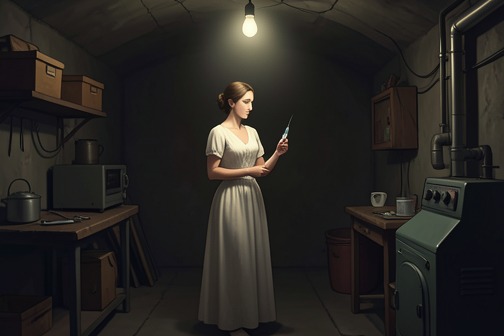
[Jenny Hammond’s abduction and rescue](entity:event-recall-event-jenny-hammond-s-abducti-fd4cc0b2b83c) brings the investigation’s scattered signs of danger into the confined reality of her captivity. While clues gradually point toward a killer who has gone unnoticed in [Manham](entity:location-recall-location-manham-5f2ce02aebdb), Jenny is held in a cellar without the insulin her type 1 diabetes requires. [David Hunter](entity:character-recall-character-david-hunter-1e6ec194b0c2) eventually finds her, but reaching her does not end the danger: her survival depends on urgent medical help and a narrow margin of time.
## Investigative Context and the Beginning of Captivity
The search for a pattern begins amid absences that the village has been slow to recognize. [Mackenzie](entity:character-recall-character-mackenzie-0df4cdda3308) tells David Hunter that [Sally Palmer](entity:character-recall-character-sally-palmer-d7ce3f43a1d6) has not been seen since the pub barbecue: she missed a grocery order and stopped collecting her daily newspaper, yet nobody had reported her missing. That neglect exposes the limits of Manham’s reputation as a close-knit community. Sally’s disappearance is not itself the abduction of Jenny, but it establishes an investigation in which the killer’s victims can vanish from ordinary view before their absence is understood.
A witness adds another possible warning sign: someone had left a dead stoat at Sally’s doorstep, an act she regarded as a cruel joke. Mackenzie considers whether it might have been a marker, while keeping open the possibility that children were responsible. David connects it with the birds found alongside Sally’s body and the mallard tied to a stone on the morning [Lyn Metcalf](entity:character-recall-character-lyn-metcalf-6bc6a8c838dc) disappeared. The animal clues suggest a recurring signature, but do not yet identify who is responsible or what the signs mean. Their uncertainty matters: the investigation has patterns to test, not a settled explanation.
When Jenny wakes in the cellar, she cannot at first place herself. She is tied and has no clear memory of how she came to be there. Trying to manage her immediate needs, she searches the floor and uses her clothing to collect small amounts of water that have seeped through the walls and floor. The effort does little to relieve her thirst. She recognizes that her growing lethargy and thirst may indicate insulin deficiency, but has no insulin available. The danger of captivity is therefore not only the threat posed by whoever holds her; the conditions are aggravating a serious medical vulnerability.
A noise from the cellar beyond wooden planks makes Jenny realize that someone else is nearby. More light appears through the gaps, but the sound does not bring rescue or reassurance. She approaches the opening cautiously to see what is happening, still restrained and unable to know the visitor’s purpose. The scene sharply narrows the investigation’s wider uncertainty: the killer’s presence, previously inferred from clues and suspected patterns, is now an immediate threat to Jenny, while her physical weakness makes waiting for help increasingly perilous.
## Escalation and the Captor’s Control
The danger intensifies as Jenny’s captor keeps her alive while steadily weakening her. He invokes a children’s rhyme during an attack that leaves her gravely injured, turning a familiar refrain into a deliberate instrument of intimidation. By then, thirst and the effects of insulin deficiency have already eroded her strength; she has little ability to resist or seek help. Her captor’s control is not only physical: he determines when the ordeal will continue and when she is allowed to hope for its end.
As her condition worsens, Jenny drifts between awareness and delirium. Memories of a childhood day at a cove briefly offer an inward refuge, but they cannot alter the facts of her confinement. She understands that insulin deficiency may lead to a coma and believes she will die there, hoping only that death will come before her captor returns. Anger remains clearer than fear: she resents the man who treats her life as something he can dispose of at will.
When Jenny is close to losing consciousness, her captor abruptly revives her with cold water, unties her, and carries her to another part of the cellar. The move does not signal release. A drain in the floor makes her realize that he has brought her to the place where he intends to kill her; he then brings an owl and leaves it beside her. The change from restraint to relocation sharpens the immediate stakes: Jenny is still alive, but her captor is preparing the final stage of his plan.
## Discovery, Rescue, and Survival
David’s suspicion turns toward [Tom Mason](entity:character-recall-character-tom-mason-c9a187dcfeb0) when he finds that Mason has concealed his grandfather’s death and tried to seal the bedroom with bitumen, the same material associated with a clue from the murder investigation. Yet suspicion does not immediately locate Jenny: David searches the house and finds no sign of her, and his phone has no reception. In the cellar, a bloodstained wedding dress and the preparations around it make the danger unmistakable. When David calls out to Jenny, Tom Mason emerges from the shadows.
During the confrontation, Jenny manages to stab Mason, but the effort leaves her unable to remain on her feet. David uses a socket spanner to stop Mason, then turns to Jenny and finds her alive but gravely weakened. The sweet chemical smell on her breath tells him she is suffering from diabetic ketoacidosis. He has no insulin with him, and her pulse is failing; finding her has become a race to keep her alive until medical help can reach her.
By chance, the ambulances and paramedics dispatched after the failed raid on the old windmill have not yet been stood down. David’s call from [Henry](entity:character-recall-character-henry-c166031952d6)’s brings them back, and his resuscitation keeps Jenny alive until they arrive. Her heart stops again after she reaches hospital and once more an hour later, but doctors restart it each time. She regains consciousness after three days and leaves intensive care a week later. The feared brain and organ damage, including blindness, does not occur. The rescue thus ends the captivity, but its narrow margin is measured in minutes: another delay would have been fatal.
## Recovery and Significance
Jenny’s recovery extends the rescue beyond the cellar: after her physical condition improves, the fears that had brought her to Manham no longer define her. She has faced the nightmare she feared and survived it; David, too, understands himself as having survived a different kind of ordeal. Their second chance gives the episode a double outcome: Jenny is brought back from the brink of death, while both begin to live beyond the fear that had confined them.
Event 13
Ben Anders’s arrest and release
[Ben Anders’s arrest and release](entity:event-recall-event-ben-anders-s-arrest-and-6bf02ba9a551) mark a consequential false turn in the investigation into [Jenny Hammond](entity:character-recall-character-jenny-hammond-4e846281bcb6)’s disappearance: clues that appear to connect him to the abduction give the police a suspect, but do not establish his guilt. The episode’s reversal is double-edged. Ben is cleared, yet the investigation loses a lead without finding Jenny, and the anonymous accusation against him points toward an unresolved personal conflict.
## Background: A village already looking for a culprit
The suspicions around Ben emerge in a community frightened by violence against women. When [Sally Palmer](entity:character-recall-character-sally-palmer-d7ce3f43a1d6) vanished, the signs of her ordinary routine stopping went unreported for a time: she failed to collect a grocery order and stopped calling at the newsagent for her daily Guardian. People assumed she had gone away or was busy writing. As [Mackenzie](entity:character-recall-character-mackenzie-0df4cdda3308) tells [David Hunter](entity:character-recall-character-david-hunter-1e6ec194b0c2), it seemed that nobody had missed her. The delay gives the investigation a troubling social backdrop: familiarity within [Manham](entity:location-recall-location-manham-5f2ce02aebdb) has not necessarily meant attention or care.
After [Lyn Metcalf](entity:character-recall-character-lyn-metcalf-6bc6a8c838dc) disappears, the response is more immediate. Most of the village turns out to help search, while police concentrate on the woods and the area where Lyn had gone running. But the search’s appearance of unity is strained by a new conclusion: after two women connected to Manham have been targeted, the killer may be someone local. Suspicion can therefore attach itself to people already considered outsiders or dangerous, whether or not the available evidence supports the accusation.
The investigators are also trying to interpret uncertain clues. A witness recalls that Sally was annoyed by a dead stoat left at her doorstep, and Mackenzie considers whether it might have been a marker or warning. He relates it to the birds associated with the attacks, while acknowledging that the stoat could have been left by children. The possibilities remain open; the clue gives the police a line of inquiry, not an identification of the killer.
## The case against Ben
Mackenzie informs David, confidentially, that Ben’s car was seen near Jenny’s home in the early hours before she went missing. The police have also found equipment for making traps in the car: wire, wire cutters, and wood for stakes. Together, the reported sighting and the equipment make Ben appear relevant to an investigation in which traps are part of the danger. But the objects are not conclusive. David points out that Ben works as a nature reserve warden and could have a work-related reason to possess them. Mackenzie’s question about why the car was outside Jenny’s house remains a legitimate unresolved concern at that stage, rather than proof of an abduction.
David’s confidence in Ben leads him to offer another explanation for how the police came to focus on him. He believes [Carl Brenner](entity:character-recall-character-carl-brenner-7902f5c7f288) supplied an anonymous tip. Ben, he reminds Mackenzie, had accused Brenner of poaching, and the two men had fought a few nights earlier, with Brenner losing. David urges the police to ask Brenner what he knows. Mackenzie resists the inference: the dispute does not, by itself, establish that Brenner made the tip or that Ben is innocent. The episode thus sets competing explanations against one another without initially resolving either: the evidence found in Ben’s car, his work, and the possibility that a hostile neighbour has directed suspicion toward him.
## Release and the changed meaning of the clues
The police release Ben later that same day. Mackenzie tells David that investigators are satisfied Ben could not have been at Jenny’s house on the afternoon she went missing. The account makes an important distinction between the earlier report of his car near her home and the time at which the police now say he could not have been there. The initial sighting and the trap-making equipment helped justify attention to Ben; neither survives as sufficient grounds to keep him in custody once his whereabouts are checked.
Ben had not supplied his alibi at the outset. Mackenzie explains that Ben initially would not tell the police where he had been, but that he subsequently did, and the account checked out. The reason for his initial silence is left unexplained in this exchange. It had prolonged suspicion, but it does not overturn the verified alibi. Mackenzie tells David that Ben is in the clear, a practical conclusion about the evidence rather than an explanation of Ben’s earlier reluctance.
David is pleased that Ben has been released, but the news brings no uncomplicated relief. He had not truly believed Ben was the killer, yet recognizes that some doubt had remained. More painfully, while the police questioned a suspect, David could still entertain a small hope that the investigation might lead to Jenny. With Ben cleared and Mackenzie saying there are no other suspects yet, that hope diminishes. The release resolves one question—whether the evidence justifies holding Ben—but does not answer the urgent question of where Jenny is.
## Consequences and narrative significance
David continues to press Mackenzie to investigate Carl, convinced that Brenner was behind the tip. Mackenzie says Brenner has an alibi and that the police may address the false lead later, but insists that other matters take priority. David has deliberately withheld seeing Brenner that morning when raising the issue. The exchange shows the limits of David’s influence: he can propose a connection between the men and challenge the police interpretation, but Mackenzie controls the investigation and does not accept David’s conclusion as established fact.
The episode’s misdirection is built from details that each admit more than one reading. A car near Jenny’s home can look incriminating; equipment for making traps can seem to reinforce the connection, yet Ben’s occupation supplies a plausible alternative. His silence appears suspicious until a checked alibi changes the balance. Meanwhile, David’s account of Brenner’s motive suggests another source of the accusation, but Mackenzie’s response leaves that allegation unconfirmed. The investigation advances not by treating any one clue as decisive, but by revising its interpretation when new information arrives.
Most consequentially, Ben’s release does not bring Jenny back or produce another suspect. At a later point in her captivity, Jenny believes she is going to die and thinks it would be better if that happened before her captor returned. That grim contrast clarifies what the procedural reversal cannot do: clearing an innocent suspect matters, but it offers no protection to the missing woman while the actual perpetrator remains unidentified. Ben’s false-suspect episode therefore exposes both the risk of premature accusation and the cost of mistaking investigative movement for progress.
Event 14
Failed raid on the old windmill
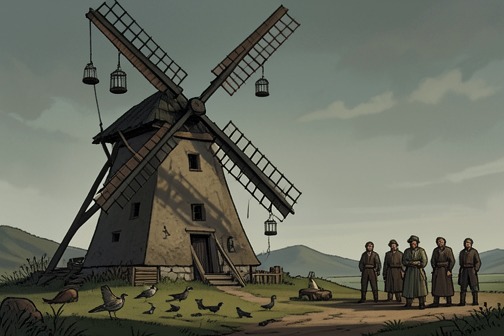
The failed raid on [Old windmill](entity:object-recall-object-old-windmill-1320c7795bfd) was the most urgent part of a coordinated attempt to recover [Jenny Hammond](entity:character-recall-character-jenny-hammond-4e846281bcb6): police approached the windmill at dusk expecting to find her, but discovered only cages of birds and animals. Its failure left her whereabouts unknown and, as [David Hunter](entity:character-recall-character-david-hunter-1e6ec194b0c2) pursued clues elsewhere, helped turn suspicion away from [Carl Brenner](entity:character-recall-character-carl-brenner-7902f5c7f288) and toward [Tom Mason](entity:character-recall-character-tom-mason-c9a187dcfeb0).
## Causes and Stakes
By the time the police prepared the raid, Jenny was being held captive and had become so weak that she feared she would not survive. She hoped her life would end before her captor returned. The operation’s central objective was therefore not simply to arrest suspects, but to find her while there was still a chance to bring her out alive.
The plan called for simultaneous raids on Old windmill, [The Brenner house](entity:location-recall-location-f4c5ac4a2b4c) and the cottage where [Dale Brenner](entity:character-recall-character-dale-brenner-ace8cbde85c4) lived. [Police](entity:organization-recall-organization-police-ff49ac86d5d5) intended to take both men without giving either them or their families an opportunity to warn one another. The simultaneous approach would take longer to arrange, but [Mackenzie](entity:character-recall-character-mackenzie-0df4cdda3308) and the other officers judged it the best prospect of recovering Jenny alive. The plan depended on every team reaching its target as intended; its carefully controlled timing could not guarantee what they would find once they got there.
The broader investigation had already produced unsettling signs that [Sally Palmer](entity:character-recall-character-sally-palmer-d7ce3f43a1d6)’s disappearance had gone largely unnoticed. After the pub barbecue, she failed to collect a grocery order and stopped picking up her daily Guardian, yet no one reported her missing. A witness also recalled that she had been annoyed by a dead stoat left on her doorstep. Mackenzie considered whether it might be a warning or marker, while allowing that it could have been a prank. These details lent weight to the possibility that animals formed part of the killer’s pattern, but did not establish who had placed them or where Jenny was being held.
## The Approach and Raid
Mackenzie joined the tactical teams assigned to Old windmill. As dusk settled, police cars and vans carried officers in body armour toward the target. An armed response unit accompanied them, along with paramedics and an ambulance prepared to take Jenny or anyone else to hospital. Because the only way to reach the windmill was by a narrow, overgrown track, the vehicles stopped at the edge of the woods and the officers continued on foot.
At the site, the teams waited among the trees while officers moved to cover the doors and windows at the rear. Mackenzie watched the ruined building as the operation formed around it. Once the radio confirmed that everyone was in position, he looked to the officer in charge of the tactical teams, received a brief nod, and gave the signal to begin. The sequence is presented through David’s later reconstruction of what Mackenzie told him, while David himself was not at the windmill and knew nothing of the raid as it unfolded.
## Failure and Immediate Consequences
David was left waiting, unable to take part in the operation. He understood why the police needed to plan carefully, having seen operations go wrong, but that knowledge did not ease the frustration of being unable to act. He was not welcome at the police trailer and could not bear to remain there trying to read the officers’ expressions for news. He returned to his Land Rover and called Ben, who was waiting to hear what had happened.
Elsewhere, Mackenzie stood among cages holding frightened birds and animals as a sergeant reported that the teams had checked everywhere and found no one. The result was stark: the police had reached the target, but neither Jenny nor the people they hoped to seize were there. The animals connected the empty building to the investigation’s recurring suspicions about animal markers, without resolving the identity of whoever had placed them there. The failed raid thus produced an absence where the operation had most urgently expected an answer.
## The Search Shifts
The raid’s failure did not end David’s search. As a storm approached, he recognized the familiar sound of flies near a house and investigated it. Inside, black, sticky material marked the edges of a bedroom door; David identified it as bitumen and remembered the same substance associated with a dead woman’s neck. The discovery gave the unsuccessful operation a consequential aftermath: the next lead came not from the windmill but from a different location.
David had been convinced that Carl Brenner was the killer, but the evidence at the house made Tom Mason fit the profile as well. Mason had kept his dead grandfather’s body inside and tried to seal the bedroom, while the bitumen offered a possible connection to the earlier crime. This was a change in David’s working suspicion, not proof that Mason was responsible. In the sequence of the investigation, the raid’s empty rooms and cages mark a reversal: a major police effort fails to recover Jenny, while the clues that begin to redirect David are found elsewhere.
Event 15
Henry Maitland’s exposure and death
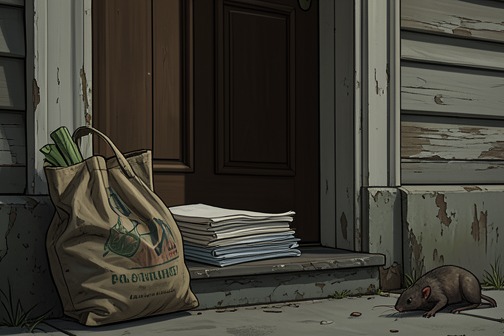
[Henry Maitland’s exposure and death](entity:event-recall-event-henry-maitland-s-exposu-f16857bda2c8) reveal that the trusted village doctor had enabled [Tom Mason](entity:character-recall-character-tom-mason-c9a187dcfeb0)’s crimes and turned their staging into an instrument of personal revenge. The discovery of a wedding dress in Mason’s cellar breaks [David Hunter](entity:character-recall-character-david-hunter-1e6ec194b0c2)’s remaining trust in [Henry](entity:character-recall-character-henry-c166031952d6); a confession exposes the partnership, while Henry’s death leaves unresolved whether his final overdose was accidental or self-inflicted.
## Clues and the narrowing investigation
The revelation arrives after an investigation shaped by absences and indications that are initially easy to misread. [Sally Palmer](entity:character-recall-character-sally-palmer-d7ce3f43a1d6) had vanished after the pub barbecue, yet no one had reported her missing. Her uncollected grocery order and the newspapers she normally picked up each morning show how thoroughly the village had failed to notice her disappearance. That neglect frames the investigation: the killer could remain hidden not only by seeming ordinary, but also because the community paid so little attention to one of its own.
A witness later tells [Mackenzie](entity:character-recall-character-mackenzie-0df4cdda3308) that Sally had been upset by a dead stoat left on her doorstep. David connects this report to the swan wings found with Sally’s body and a mallard tied to a stone on the morning [Lyn Metcalf](entity:character-recall-character-lyn-metcalf-6bc6a8c838dc) disappeared. The animal incidents make a possible signature or warning, but at this stage the meaning remains uncertain. The investigation also encounters a discrepancy between a rough cut that left ridges in bone and a smooth cut on a woman’s vertebra. These details complicate rather than immediately settle the search, preserving the difference between noticing a pattern and knowing who made it.
The decisive turn comes at Mason’s house. David finds his grandfather’s body and notices thick black smears along a bedroom doorframe, with bitumen-coated newspaper still lodged at the bottom. The material recalls a faint smell David had registered in the churchyard and connects Mason’s attempt to seal the room with material embedded in a dead woman’s neck. The clue makes Mason fit the killer’s profile, but David knows he has already mistaken [Carl Brenner](entity:character-recall-character-carl-brenner-7902f5c7f288) for the murderer. Suspicion has shifted; proof has not yet arrived.
## The dress and Henry’s betrayal
That proof presents itself in the clinic, in the form of an object David has seen before. As he reaches for syringes, a photograph draws his attention to the wedding dress worn by Henry’s wife. Its distinctive lace fleurs-de-lis match the dress David saw in Mason’s cellar. The recognition changes the meaning of the dress: it is not merely a costume associated with the crimes, but Henry’s own wife’s dress, deliberately transferred into the setting of the murders.
Before David can make sense of the discovery, Henry injects him with Diamorphine. David understands that the drug can cause hallucinations and coma, and realizes Henry has put him in danger. His attempt to name the connection between Henry and Mason is met not with a denial but with Henry’s admission that Mason committed the killings and that Henry had let him act. David is impaired, but his fear for [Jenny Hammond](entity:character-recall-character-jenny-hammond-4e846281bcb6) keeps his attention fixed on what Henry may have done and on the possibility of learning where she is.
## The partnership and its motives
Henry explains that he had previously supplied [George Mason](entity:character-recall-character-george-mason-09a823ba3762) with tranquillizers, though he says he had stopped treating Tom Mason professionally years earlier. After George’s death, no one remained to ensure Tom took his medication. Henry recounts that Tom later came to him and disclosed that Sally was being held in the old workshop. In Henry’s account, Tom had become fixated on Sally after she employed him and his grandfather; the fixation escalated into stalking and then abduction. Henry’s story places him neither as the person who physically carried out the attacks nor as an uninvolved observer: he had knowledge of Tom’s actions and chose to enable him.
Henry describes his own motive as a desire to strike back at [Manham](entity:location-recall-location-manham-5f2ce02aebdb) and to use the crimes to exorcise the memory of his wife, [Diana](entity:character-recall-character-diana-baf651a1725a). He gave Tom Diana’s wedding dress and a music box from their honeymoon, then directed him to make Sally wear the dress while Henry watched. The ritual drew on Diana’s dancing and on Henry’s resentment of the music box, turning objects associated with their marriage into tools for humiliating another woman. Henry’s confession therefore explains the crimes’ staging as an expression of his grievance and his hunger to feel powerful, not simply as Tom’s private fixation.
The revelation also recasts Henry’s earlier place in David’s life. He had been David’s clinical partner and friend, a figure whose apparent ordinariness made the hidden arrangement harder to see. His confession makes clear that the partnership with Tom depended on Henry’s own decisions: he could describe Tom as clay and himself as the person who shaped him, but that account does not remove Henry’s responsibility for what followed. David’s fear for Jenny gives the explanation an immediate stake; it is not merely an account of past crimes while she remains in danger.
## Death and unresolved evidence
When Henry learns that Tom may not be dead, his composure gives way to frustration. He says that if David had ensured Tom was dead, he might have taken his chances, even with Jenny. The remark exposes the practical calculation beneath his earlier account: Tom’s survival has changed Henry’s options, and he now sees no way forward except to finish what he has started. Henry’s stated intention to end matters follows his attempt to drug David and make him vulnerable.
David eventually manages to move the Land Rover. Wedged between the seats, he pushes the automatic transmission out of park and into drive. The vehicle rolls down the sloping driveway and strikes Henry, who appears unable to get out of its path quickly enough. David survives the immediate danger and gets out of the vehicle, but the collision does not settle the question of how Henry dies.
At the post-mortem, Henry’s cause of death is found to be a massive Diamorphine overdose; the collision injuries would probably have been fatal as well, but were not the cause recorded. An empty syringe is found in his pocket, with its needle embedded in his flesh. David cannot determine whether the overdose happened by accident when the Land Rover struck Henry or whether Henry injected himself while suffering. The inquest supplies another unsettling detail: a rubber pipe had been pushed through the Land Rover’s window, but its other end was not connected to the exhaust. The evidence leaves the apparent attempt to stage David’s death—and Henry’s own final intentions—less conclusive than the confession that exposed his crimes.
Event 16
Henry Maitland’s fatal car crash with Diana
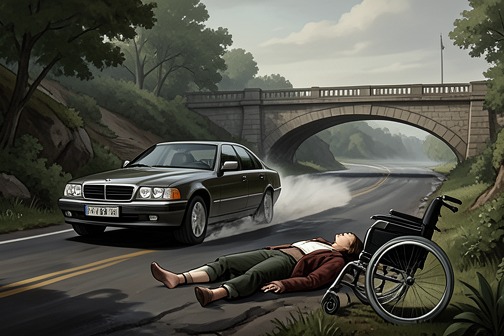
[Henry Maitland’s fatal car crash with Diana](entity:event-recall-event-henry-maitland-s-fatal-b82acb312ced) was not the accident others believed it to be: [Henry](entity:character-recall-character-henry-c166031952d6) later disclosed to [David Hunter](entity:character-recall-character-david-hunter-1e6ec194b0c2) that he had accelerated toward a stone bridge intending to kill his wife, then tried to change course too late. The confession recasts [Diana](entity:character-recall-character-diana-baf651a1725a)’s death as the outcome of a deliberate act that Henry himself described as a failed attempt to control his humiliation and despair.
## Causes and Background
Henry linked his decision to his resentment over his marriage. He blamed himself for Diana’s miscarriage and her inability to have more children, while also resenting her relationships with other men. Before the fatal drive, he had confronted one of Diana’s student lovers at the man’s campsite, offering him money to leave. When the student refused, Henry told him that Diana did not regard their relationship as serious; an argument followed.
Henry said the student’s disappearance was taken for a voluntary departure, even by Diana. To Henry, however, the affair had deepened his sense of being mocked and publicly diminished. He presented the drive home from a dinner party as the point at which that accumulated resentment turned toward violence.
## The Drive and the Crash
On the drive back from the dinner party, Henry approached a stone bridge. Instead of turning onto it, he accelerated, intending to cause a fatal crash. He then lost his nerve and tried to turn away at the last second, but could not avoid the collision. Diana was killed outright; Henry survived.
The reversal came too late to undo the decision. Henry called the crash another failure, but his account makes clear that the fatal outcome began with his own attempt to kill Diana, not with an unintended loss of control alone.
## Confession and Consequences
Henry’s account emerges during his confrontation with David, as Henry explains the bitterness he associated with life in [Manham](entity:location-recall-location-manham-5f2ce02aebdb). After describing the crash, he struck his leg and contrasted Diana’s immediate death with his own continuing condition. His confession exposes the truth behind the event while showing how he interpreted survival: not as a reprieve, but as another source of resentment.
He also described feeling loathing toward the villagers, whom he imagined as intact and quietly contemptuous of him. That grievance forms part of his explanation for his state of mind, but does not lessen his responsibility for the crash. The disclosure changes the meaning of Diana’s death from an apparently tragic accident into a concealed act of attempted murder whose intended victim was his wife.
Event 17
Henry Maitland’s killing of Diana’s student lover
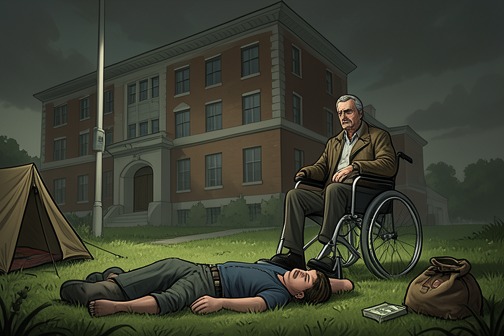
[Henry Maitland](entity:character-recall-character-henry-maitland-b1bff99fd927)’s killing of [Diana Maitland](entity:character-recall-character-diana-maitland-d94fcd33953b)’s student lover is a buried crime from his past, disclosed years later when the grave in the woods is raised during an interrogation. [Henry](entity:character-recall-character-henry-c166031952d6) describes a confrontation that began with an offer of money and ended in the student’s death; his account exposes both the violence behind the apparent disappearance and the resentment that shaped his view of Diana Maitland’s relationships.
## Background and Confrontation
Henry presents the killing against the deterioration of his marriage. He blamed himself for Diana Maitland’s miscarriage and her inability to have more children, but also resented her affairs and the humiliation he felt as her husband. The student stood out from the men Henry dismissed as Diana Maitland’s usual lovers: he considered him intelligent, good-looking, and very young, with an entire career ahead of him. Henry’s comparison between the student’s future and his own reveals how the encounter sharpened his sense of loss and grievance.
Henry went to the place where the student was camping and offered him money to leave. The student refused, apparently believing his relationship with Diana Maitland was genuine. Henry then tried to disabuse him of that belief by insulting Diana Maitland. The exchange became an argument, and Henry described what followed as a chain of events rather than a deliberate killing. His account does not clarify precisely how the student died, so the circumstances beyond the confrontation remain uncertain.
## Concealment and Discovery
The student’s death was hidden in a grave in the woods. People assumed that he had simply left, and Diana Maitland shared that assumption. The disappearance therefore passed without revealing what Henry had done, while the grave preserved the truth until it was discovered years later. The contrast between the community’s ordinary explanation and the concealed death gives the revelation its force: what had seemed like an unexplained departure was a crime Henry had kept out of sight.
## Revelation and Significance
The grave is brought up during a later exchange with Henry, prompting him to acknowledge that the dead student had been one of Diana Maitland’s lovers. Henry’s response confirms his involvement, but his description of the killing also shows his attempt to distance himself from intentional responsibility. He recounts offering money, the refusal, and the argument, then characterizes the fatal outcome as unintended without giving a fuller account of the act itself.
The disclosure links the student’s long-hidden death to Henry’s accumulated anger and humiliation, while distinguishing his own explanation from the facts the grave establishes. It also changes the meaning of the student’s disappearance: the young man did not choose to abandon his life and future, as others believed. Henry’s confession turns the grave from a remnant of an old mystery into evidence of a concealed crime and exposes how effectively the false assumption endured.