Passeur
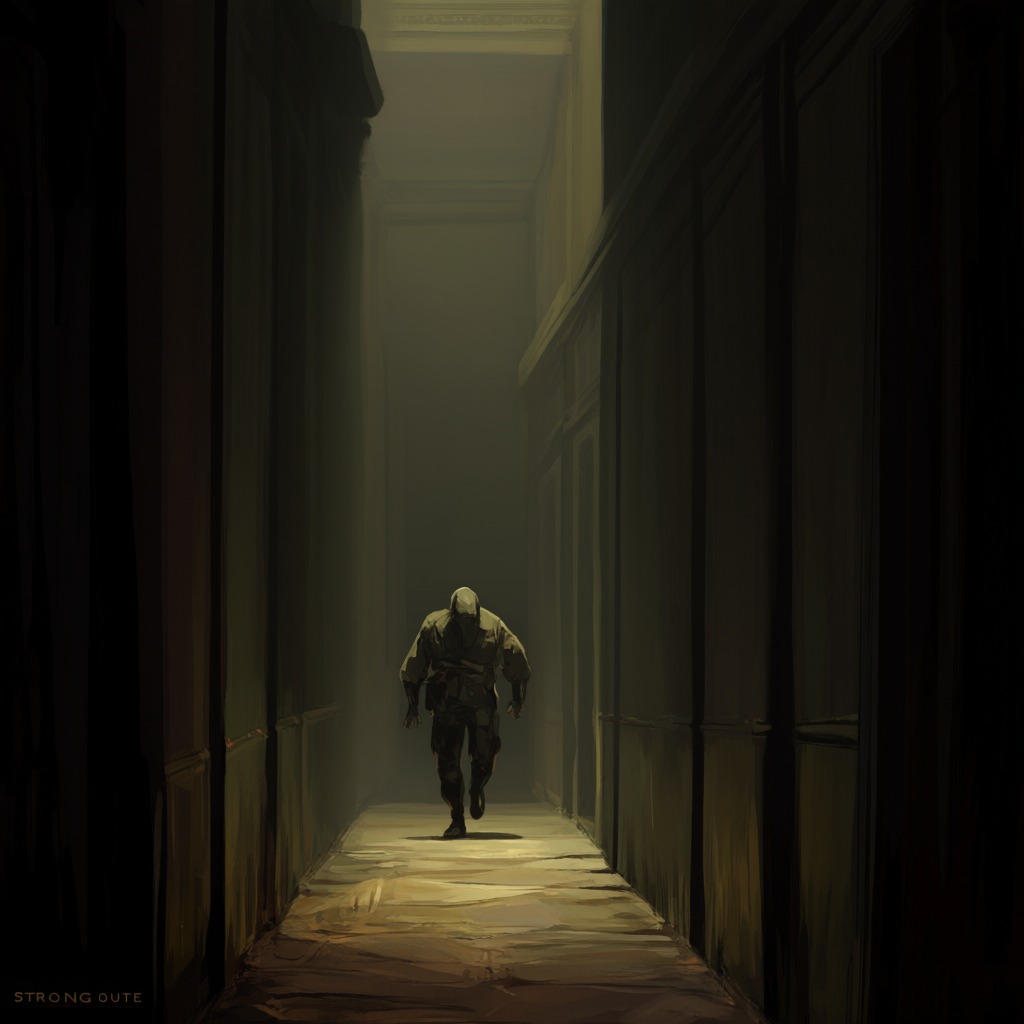
The Passeur, a French word meaning "ferryman," is the novel's defining term for the men and women who secretly transported fugitives out of Nazi-occupied France. In the context of the story, a passeur is not a professional smuggler but an ordinary citizen who, at tremendous personal risk, guides downed Allied airmen, Jewish families, and other hunted people across the heavily guarded border into neutral Spain. The role demands not only physical courage and endurance but also a profound capacity for deception, improvisation, and silence. The passeur operates in a world where a single mistake—a misplaced word, a forged document that fails inspection, a moment of visible fear—means arrest, torture, and almost certain death. The novel elevates the passeur from a historical footnote into a figure of almost mythic moral clarity, a person who chooses action over acquiescence when the cost of action is everything.
The Nightingale Escape Route
The most fully realized expression of the passeur concept in the novel is the escape route known as the Nightingale line. Isabelle Rossignol, after delivering her first secret message for the Free French network in Paris, quickly graduates from distributing tracts to a far more dangerous mission: leading downed airmen across the Pyrenees. Her first crossing, in October 1941, establishes the template for the work. With four airmen—two Brits and two Canadians—she travels by train to Saint-Jean-de-Luz, then walks through the night to the remote farmhouse of Micheline Babineau, a Basque woman who provides a guide named Eduardo. The crossing itself is a harrowing ordeal of freezing rain, snow, exhaustion, and the constant threat of German and Spanish patrols. They cross the Bidassoa River on a rickety suspension bridge, timing their passage between searchlights. When Isabelle delivers the four men to the British consulate in San Sebastián, she formally establishes the route, telling the consul, "I can do it again, too." From that point, she becomes the primary contact for MI9, code-named the Nightingale, and over the next two years she makes twenty-seven crossings, personally escorting more than a hundred airmen to safety. The route depends on a network of safe houses, sympathetic locals, and the financial support of British intelligence, but the essential act—the actual guiding of men over the mountains—is the work of the passeur.
The Passeur's Transformation
Isabelle's evolution into a passeur is the novel's central arc of transformation. Before the war, she is described as impetuous, undisciplined, and reckless—a girl who has been expelled from multiple schools and who her father dismisses as a "foolish girl." Her first encounter with the reality of war, the bombing of the refugee column near Tours, strips away her romantic notions of heroism. But it is her encounter with Gaëtan Dubois, a communist and former prisoner, that first gives her a concrete purpose: to fight. When she later joins the underground network in Paris, she is initially a courier, delivering tracts and messages. The decision to become a passeur comes when she finds a downed RAF pilot, Lieutenant Torrance MacLeish, hiding in the bushes near her apartment. She hides him in her secret room, then brings him to her resistance contacts, and when they discuss the impossibility of getting airmen out of France, she volunteers: "I will do it. Or try it, anyway. I'll take this airman." The novel marks this as a threshold moment. Anouk warns her, "If they catch you, they'll imprison you … or kill you." Isabelle's response is to acknowledge the fear but refuse to let it stop her. The passeur is not someone who is unafraid; she is someone who acts despite fear.
The Cost of Passage
The novel does not romanticize the passeur's work. Each crossing exacts a physical and psychological toll. Isabelle's body is marked by the mountains: blisters, chilblains, exhaustion, and eventually a bullet wound when she is shot by Captain Beck in the barn at Le Jardin. The work also isolates her. She cannot stay in one place for more than a few nights, cannot maintain contact with her family, and must live under a false identity—Juliette Gervaise—for years. The constant danger erodes her sense of a normal life. When she and Gaëtan finally acknowledge their love, it is always shadowed by the knowledge that they may never see each other again. "Every time we kiss, it's good-bye," Gaëtan says. The passeur's life is one of perpetual farewell. The ultimate cost is paid by Isabelle's father, Julien Rossignol, who, when Isabelle is captured and tortured by the Gestapo, confesses to being the Nightingale himself, a lie that leads to his immediate execution by firing squad. The passeur's work is not only dangerous for the passeur; it endangers everyone connected to them.
The Legacy of the Passeur
In the novel's present-day frame, set in 1995, the elderly Vianne receives an invitation to a "passeurs' reunion" in Paris, honoring those who ran the Nightingale escape route. The term has become a badge of honor, a recognition of the quiet courage of ordinary people who became ferrymen of the desperate. Vianne, who spent the war hiding a Jewish child and forging documents, initially resists the label, but at the reunion she speaks publicly about her sister's work, acknowledging that Isabelle "saved some of the men in this room." The concept of the passeur thus extends beyond Isabelle to encompass all those who, in Vianne's words, "did what we had to during the war." The novel's final image of the passeur is not of a single heroic figure but of a network of ordinary people—farmers, innkeepers, nuns, schoolteachers—who, when faced with evil, chose to act. The passeur is not a professional; she is a neighbor who, when the knock comes at the door, opens it.