
The Vegetarian
Overview
Han Kang’s The Vegetarian is a Korean novel first published in South Korea in 2007. A work of contemporary literary fiction with the intensity of psychological fiction and the compression of a parable, it is divided into three linked sections: “The Vegetarian,” “Mongolian Mark,” and “Flaming Trees.” Each section shifts the narrative perspective, so that the central character, Yeong-hye, is often seen through the eyes of people around her rather than given an uninterrupted account of her own inner life. Deborah Smith’s English translation appeared in the United Kingdom in 2015. In 2016, Han and Smith jointly received the International Booker Prize for the novel.
The story begins when Yeong-hye, a quiet and conventionally regarded housewife, has a disturbing dream and abruptly stops eating meat. She clears meat from the household and refuses to prepare it for her husband. In the opening section, her husband describes the change largely as an affront to ordinary domestic life. When her family gathers and tries to make her eat meat, their coercion turns a private decision into a violent confrontation. Yeong-hye’s refusal continues to deepen: it is no longer only a change of diet but a rejection of the roles and expectations imposed upon her.
The second section follows her brother-in-law, an artist whose fascination with Yeong-hye’s birthmark and body becomes entangled with desire and an artistic project. His actions unsettle the distinction between looking, creating, possessing, and harming. In the final section, the focus shifts to Yeong-hye’s sister, In-hye, who cares for her while confronting the consequences of her family’s attempts to contain her. Yeong-hye’s wish to become plant-like—to live on sunlight and water—grows into the story’s starkest image of escape. The novel presents this transformation neither as a simple miracle nor as an easy metaphor, but as something at once defiant, desperate, and tragic.
Themes and form
Food gives the novel its deceptively ordinary point of entry. Yeong-hye’s refusal of meat can be read as a refusal to participate in a world she experiences as violent, yet her choice is quickly treated as a problem that others have the right to correct. Her body becomes the site on which family authority, social convention, and personal will collide. The novel asks who can claim ownership of a person’s body and decisions, and shows how a woman’s expected compliance can be enforced as though it were a natural part of family life.
The book also probes the boundaries between sanity and madness, violence and innocence, and sympathy and genuine understanding. Because Yeong-hye is filtered through other people’s accounts, her silence is never merely an absence: it exposes how readily others explain, judge, or use her. The changing perspectives make the reader experience both the urge to understand her and the limits of understanding. Images of food, flesh, plants, light, and bodily vulnerability carry the story’s moral questions without reducing it to a single diagnosis or message.
Han has said that she began writing the stories that became the novel around 2000. The three-part, linked-story form has precedents in Korean publishing, where connected pieces may be written and published separately before being gathered into a book. Accounts of the novel’s composition also describe Han working by hand after extended computer use injured her fingers and wrists, repeatedly writing, having the manuscript entered, and revising printed pages. That demanding process resonates with the book’s attention to physical vulnerability, though the novel is not simply an autobiographical account.
Reception and significance
The International Booker Prize helped bring The Vegetarian to a broad international readership, and the novel became a major point of entry to Han’s writing for many English-language readers. Its unsettling treatment of gender, bodily autonomy, family violence, desire, and trauma has sustained discussion across literary and cultural contexts. Han’s 2024 Nobel Prize in Literature further expanded the novel’s readership and standing. Its enduring force comes from its refusal to make Yeong-hye’s fate comfortable or wholly legible: the book leaves readers with the pressure of her resistance, the harm done in the name of care, and the question of whether escape from a violent human world is imaginable at all.
About the Author
Origins and education
Han Kang was born in Gwangju, South Korea, on 27 November 1970. When she was nine, she moved with her family to Seoul. She grew up in a literary household: her father, Han Seung-won, is a novelist, and books and writing were part of her surroundings from an early age. Han studied Korean literature at Yonsei University. Her connection to Gwangju and her later literary engagement with historical trauma provide important context for her work, although her fiction is not simply autobiographical. Across different subjects and forms, she explores how violence enters private life, how memory persists, and how people try to approach another person’s suffering.
Literary career and major works
Han began her literary career in 1993, publishing poems in the magazine Literature and Society. She moved into fiction the following year with the short story “Red Anchor.” Her first prose collection, Love of Yeosu, appeared in 1995. She continued to write both novels and short fiction; Your Cold Hands, a novel published in 2002, already showed her sustained interest in the body and in the relations between people and art.
Her internationally best-known novel, The Vegetarian, was published in Korea in 2007. Its three linked sections follow the consequences of a woman’s refusal to eat meat, as that refusal becomes an increasingly radical rejection of the roles and expectations imposed upon her. The novel brings together questions of family authority, gender, violence, desire, and bodily autonomy. Other major works include Wind Blows, Go (2010), Greek Lessons (2011), Human Acts (2014), The White Book (2016), and We Do Not Part (2021). Human Acts confronts the 1980 Gwangju events and their aftermath; The White Book meditates on white objects, mourning, and life. These books differ in subject and form, yet share a concern with the fragility of human life and with the ways individual experience is shaped by violence, history, and memory. Han has also maintained an interest in poetry, art, and music, sensibilities that are reflected in the imagery and rhythm of her prose.
Awards and reputation
Deborah Smith’s English translation of The Vegetarian was published in the United Kingdom in 2015. In 2016, Han and Smith jointly received the International Booker Prize, making Han the first South Korean writer to win the award and introducing her work to a much wider international readership. Han’s recognition continued to grow: Human Acts received the Manhae Literary Prize in 2014, The White Book was shortlisted for the International Booker Prize in 2018, and We Do Not Part received France’s Prix Médicis étranger in 2023. In 2024, Han was awarded the Nobel Prize in Literature. The Nobel citation recognized her intense, poetic prose for confronting historical traumas and exposing the fragility of human life. She became the first South Korean writer to receive the Nobel Prize in Literature.
Han is known for a restrained yet lyrical style, and for narratives shaped by dreams, memory, interior monologue, and recurring contrasts of light and darkness, plants and animals. Her writing often makes the body the point where private feeling meets social power, while resisting easy explanations of pain or violence. Translations of her books have brought contemporary Korean literature to readers around the world, and The Vegetarian and Human Acts remain especially influential points of encounter with her work. Han is living and continues to be recognized as one of the most significant contemporary Korean writers; her standing rests not only on major awards but on a distinctive body of work that repeatedly asks how literature can enter another person’s inner life without claiming to master it.
StoryFlow

Yeong-hye and In-hye’s Sisterhood
This flow traces how In-hye’s protective bond with Yeong-hye shifts from childhood responsibility to guilt-ridden caretaking and an anguished, unresolved closeness.
In-hye and Ji-woo’s Bond
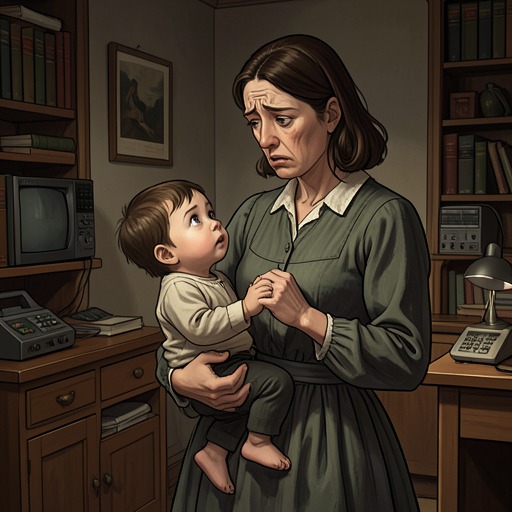
This flow follows In-hye’s devotion to Ji-woo, whose dependence sustains her through family rupture while also revealing the cost of her relentless responsibility.
In-hye and Her Husband’s Marriage
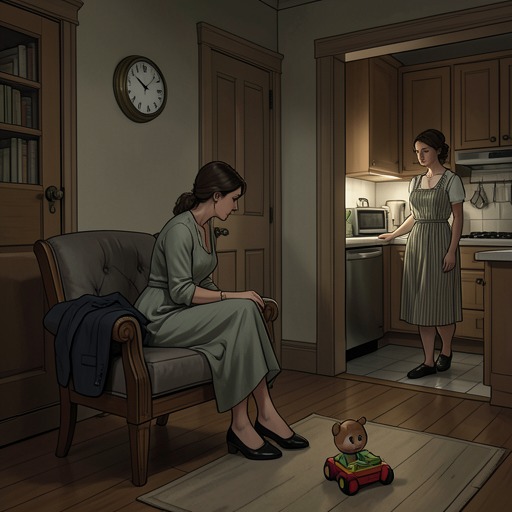
This flow follows In-hye’s attempt to build a caring partnership with Mr. Cheong, and the growing distance that culminates in betrayal, separation, and an uneasy refusal to resume the relationship.
