Around 1960 on Memorial Day weekend
The Auctioned Pugilist
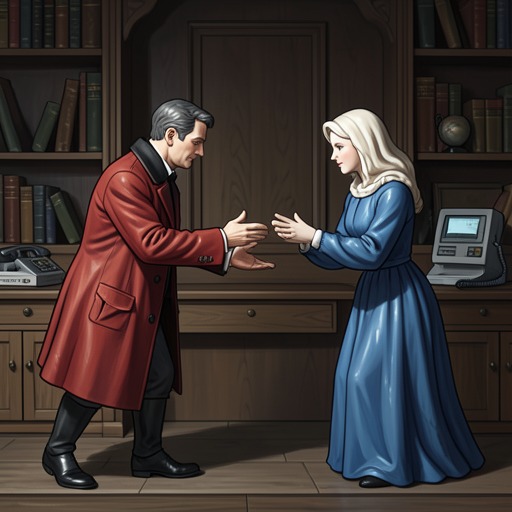
At a rain-soaked antiques auction in [Chatham, Massachusetts](entity:location-recall-location-chatham-massachusett-f727c10bdd46), [Oliver Rose](entity:character-recall-character-oliver-rose-1438625297ae) bids for a Staffordshire figure of the English boxer Cribb. He knows Cribb belongs with Molineaux, the Black former slave who fought him, and fears the auctioneer will separate the pair.
Minutes after Oliver buys Cribb
A Rival Bidder
[Barbara](entity:character-recall-character-barbara-d5f53d2adcbd) Knowles outbids [Oliver](entity:character-recall-character-oliver-7f3681a0eb8d) for Molineaux, spending money she had meant to use as a tip for a hotel maid whose brother boxed in the Golden Gloves. Oliver confronts her about splitting the pair, but their irritation turns into flirtation as they shelter together from the rain.
After the Chatham auction and before their marriage
A Shared Beginning
[Oliver](entity:character-recall-character-oliver-7f3681a0eb8d) and [Barbara](entity:character-recall-character-barbara-d5f53d2adcbd) discover that they are both young students with modest means and a taste for old things. Their talk beneath a shared umbrella becomes the beginning of a courtship, with the two pugilists serving as a keepsake of their meeting.
1961
Marriage Against Advice
While [Oliver](entity:character-recall-character-oliver-7f3681a0eb8d) still has two years left at [Harvard Law School](entity:location-recall-location-harvard-law-school-745904bb9c45), he and [Barbara](entity:character-recall-character-barbara-d5f53d2adcbd) marry despite objections from both families. Oliver insists that he will work his way through school, and Barbara leaves college believing that their love and shared effort will carry them forward.
Christmas during Oliver's final year at law school
The First Child
[Oliver](entity:character-recall-character-oliver-7f3681a0eb8d) surprises [Barbara](entity:character-recall-character-barbara-d5f53d2adcbd) with news that he has secured a [Washington](entity:location-recall-location-e23f665bea45) job with the [Federal Trade Commission](entity:organization-recall-organization-federal-trade-co-d2893c229839), conditional on passing the bar. Barbara answers his announcement by revealing that she is pregnant with [Eve](entity:character-recall-character-eve-09bb1968b5f4); their surprise gives way to joy and a shared conviction that a family will complete their future.
The years after their marriage
A Life Built Together
[Oliver](entity:character-recall-character-oliver-7f3681a0eb8d) establishes a legal career while [Barbara](entity:character-recall-character-barbara-d5f53d2adcbd) raises [Eve](entity:character-recall-character-eve-09bb1968b5f4) and, later, [Josh](entity:character-recall-character-josh-7784b47d315f). The couple moves through successive homes and projects, collecting antiques, cultivating plants, and building a domestic life organized around shared plans and Oliver's growing success.
About a decade before the divorce
The Kalorama House
The Roses buy a neglected chateau-style house in [Kalorama](entity:location-recall-location-kalorama-06cfd8467f0b), [Washington, D.C.](entity:location-recall-location-washington-d-c-2a63ac520a1d), overlooking the [Calvert Street Bridge](entity:location-recall-location-calvert-street-bridg-84bd399e4e52). They restore it together, furnishing it with antiques and creating a large, elaborate kitchen that [Barbara](entity:character-recall-character-barbara-d5f53d2adcbd) hopes will one day support a catering business.
As the children grow older
Barbara's Kitchen Ambition
[Barbara](entity:character-recall-character-barbara-d5f53d2adcbd) turns her longstanding interest in cooking into a serious commercial ambition, while [Oliver](entity:character-recall-character-oliver-7f3681a0eb8d) helps design and build a professional-scale kitchen. Her wish to become more than a wife and mother develops inside a household whose successes and identity have largely been shaped around Oliver's career.
Before the separation
Ann Joins the Household
[Ann](entity:character-recall-character-ann-1162d7c1082b) arrives from [Johnstown, Pennsylvania](entity:location-recall-location-johnstown-pennsylvan-19bb4329a9d6), as a live-in helper while pursuing a history master's degree at [Georgetown University](entity:location-recall-location-georgetown-universit-b482b1f1ad5c). [Barbara](entity:character-recall-character-barbara-d5f53d2adcbd) welcomes her warmly, gives her a tour of the antiques and kitchen, and explains that the family needs a little help with the children while her catering work grows.
During Ann's first months with the Roses
Ann Earns Eve's Trust
[Eve](entity:character-recall-character-eve-09bb1968b5f4) tests [Ann](entity:character-recall-character-ann-1162d7c1082b)'s discretion by revealing that she uses marijuana and takes birth-control pills. Ann does not condemn her, and later helps Eve face the consequences of failing advanced algebra by arranging a summer-school plan with her parents.
During Ann's first year in the household
Ann Reaches Josh
After [Josh](entity:character-recall-character-josh-7784b47d315f) fails to make the school basketball team, [Ann](entity:character-recall-character-ann-1162d7c1082b) encourages him to practice with Black players at a nearby schoolyard. He follows her advice and finds a new confidence, helping Ann become a trusted presence for both children.
A summer evening before the marital rupture
Three Family Celebrations
A dinner celebrates [Eve](entity:character-recall-character-eve-09bb1968b5f4)'s improved algebra grade, [Josh](entity:character-recall-character-josh-7784b47d315f)'s place on the basketball team, [Barbara](entity:character-recall-character-barbara-d5f53d2adcbd)'s first substantial catering order, and [Oliver](entity:character-recall-character-oliver-7f3681a0eb8d)'s new corporate client. Oliver gives Eve a Honda, and the family's conspicuous comfort deepens [Ann](entity:character-recall-character-ann-1162d7c1082b)'s sense of how different her own childhood in Johnstown was.
During the Roses' apparently happy years
Ann's Private Longing
[Ann](entity:character-recall-character-ann-1162d7c1082b) develops an unspoken infatuation with [Oliver](entity:character-recall-character-oliver-7f3681a0eb8d), watching him work in the garden and feeling drawn to his competence and warmth. She keeps the feeling to herself because she depends on the household for room, board, and the chance to continue her studies.
During Oliver's New York business trip
The Apparent Heart Attack
In [Manhattan](entity:location-recall-location-manhattan-5036578184bd), [Oliver](entity:character-recall-character-oliver-7f3681a0eb8d) suffers severe chest pain during a meeting and fears that he is dying. As colleagues summon an ambulance, he pleads for someone to call [Barbara](entity:character-recall-character-barbara-d5f53d2adcbd) and imagines his family gathered at his bedside.
The same day as Oliver's collapse
A Diagnosis of Gas Pain
At [Washington Hospital Center](entity:organization-recall-organization-washington-hospi-b8d04768c10e), doctors discover that [Oliver](entity:character-recall-character-oliver-7f3681a0eb8d)'s emergency was a painful hiatus hernia rather than a heart attack. He learns that [Barbara](entity:character-recall-character-barbara-d5f53d2adcbd) has been occupied with a catering order and did not come to the hospital, an absence that unsettles him even after his immediate fear subsides.
The evening Oliver returns from New York
The Missing Reassurance
[Oliver](entity:character-recall-character-oliver-7f3681a0eb8d) comes home expecting comfort, but [Barbara](entity:character-recall-character-barbara-d5f53d2adcbd) greets him with restrained concern and returns her attention to her work. When he asks why she did not visit, her cool explanations leave him feeling that her indifference may reflect a deeper break in their marriage.
That evening
Barbara Names the Break
[Barbara](entity:character-recall-character-barbara-d5f53d2adcbd) tells [Oliver](entity:character-recall-character-oliver-7f3681a0eb8d) that she did not go to the hospital because she no longer cares whether he lives or dies. She says she has felt this way for a long time, does not want to continue the marriage, and intends to divorce while remaining responsible for the children.
The morning after Barbara's announcement
The Children Hear
[Barbara](entity:character-recall-character-barbara-d5f53d2adcbd) tells [Eve](entity:character-recall-character-eve-09bb1968b5f4) and [Josh](entity:character-recall-character-josh-7784b47d315f) that the marriage is ending and describes her desire to live for herself rather than remain an appendage to [Oliver](entity:character-recall-character-oliver-7f3681a0eb8d). Eve is shocked, and [Ann](entity:character-recall-character-ann-1162d7c1082b) tries to comfort her while hiding both her knowledge of the breakup and her own feelings for Oliver.
Within days of the announcement
Lawyers Enter the Dispute
[Barbara](entity:character-recall-character-barbara-d5f53d2adcbd) retains [Harry Thurmont](entity:character-recall-character-harry-thurmont-93fc68a2d7ed), while [Oliver](entity:character-recall-character-oliver-7f3681a0eb8d) consults [Murray Goldstein](entity:character-recall-character-murray-goldstein-5209268b2b16). Oliver initially says he wants a civilized settlement, is willing to support the children, and assumes the house and its contents can be divided fairly; [Goldstein](entity:character-recall-character-goldstein-fd6ad043a9fd) warns him that divorce can turn even reasonable people into combatants.
Early in the divorce proceedings
Barbara Claims the House
[Barbara](entity:character-recall-character-barbara-d5f53d2adcbd) argues that a cash settlement cannot replace the home and lifestyle she helped create after sacrificing her education and years of work for [Oliver](entity:character-recall-character-oliver-7f3681a0eb8d)'s career. She decides she wants the house and its contents rather than half their value, turning an emotional separation into a contest over ownership.
Early in the divorce proceedings
Oliver Chooses to Stay
After [Barbara](entity:character-recall-character-barbara-d5f53d2adcbd) rejects his offer, [Goldstein](entity:character-recall-character-goldstein-fd6ad043a9fd) explains that [Washington](entity:location-recall-location-e23f665bea45) law allows the couple to live separately under one roof while the no-fault divorce proceeds. [Oliver](entity:character-recall-character-oliver-7f3681a0eb8d) decides to remain in the house, hoping his continued presence will protect his claim and perhaps eventually force Barbara to leave.
The first weeks of cohabitation under the separation agreement
A House Divided
[Oliver](entity:character-recall-character-oliver-7f3681a0eb8d) and [Barbara](entity:character-recall-character-barbara-d5f53d2adcbd) establish separate rooms, locks, and telephone lines. Oliver gives up the kitchen and meals at home, keeps his dog and orchids, and confines himself to his workroom and the bedroom he has claimed as his territory.
During the early months of separation
The Battle Over Household Costs
The spouses quarrel over utility bills, food, and whether [Barbara](entity:character-recall-character-barbara-d5f53d2adcbd)'s catering work should be paid for with household funds. A court injunction requires her to keep business expenses separate, but the ruling only adds to the legal costs and entrenches their hostility.
After the first household injunction
The Maalox Intrusion
When [Oliver](entity:character-recall-character-oliver-7f3681a0eb8d) runs out of Maalox during a hernia attack, he enters [Barbara](entity:character-recall-character-barbara-d5f53d2adcbd)'s locked bedroom to retrieve a bottle. Barbara calls the police over the intrusion, and a further injunction forbids him from breaking into her room, frightening the children with the possibility of their father being jailed.
Christmas Eve during the first year of separation
The Christmas Eve Kiss
With the children at parties and [Barbara](entity:character-recall-character-barbara-d5f53d2adcbd) working, [Ann](entity:character-recall-character-ann-1162d7c1082b) and [Oliver](entity:character-recall-character-oliver-7f3681a0eb8d) share drinks beside the family [Christmas](entity:time-recall-time-christmas-a573265d0167) tree. Oliver's loneliness and gratitude turn into a kiss and a sexual encounter before Barbara returns; they conceal what happened, but the moment draws Ann into the marriage's conflict.
Christmas morning
The Christmas Tree Burns
A short circuit in the tree lights starts a fire, and [Oliver](entity:character-recall-character-oliver-7f3681a0eb8d) rushes in with an extinguisher to save the house and family. The gifts are ruined, but [Barbara](entity:character-recall-character-barbara-d5f53d2adcbd) blames him for failing to repair the lights, and the children experience another holiday defined by their parents' antagonism.
Christmas Day
The Pastry Loaves Are Ruined
After discovering that [Barbara](entity:character-recall-character-barbara-d5f53d2adcbd) has damaged his orchids, [Oliver](entity:character-recall-character-oliver-7f3681a0eb8d) retaliates by loading the pastry meat loaves intended for a Greek Embassy order with incompatible spices and sugar. Barbara serves the sabotaged food, guests become ill, and the failure threatens her new catering business.
After the Christmas sabotage
A Confidante's Uneasy Position
[Barbara](entity:character-recall-character-barbara-d5f53d2adcbd) confides in [Ann](entity:character-recall-character-ann-1162d7c1082b) that she hates the pain the divorce is causing but believes she must keep pursuing the house. Ann sympathizes with Barbara while privately viewing [Oliver](entity:character-recall-character-oliver-7f3681a0eb8d) as a man worth loving, leaving her caught between loyalty to the family and desire for him.
After the pastry-loaf incident
Barbara Sets a Trap
[Barbara](entity:character-recall-character-barbara-d5f53d2adcbd) uses questions about [Oliver](entity:character-recall-character-oliver-7f3681a0eb8d)'s possible sexual encounters to probe [Ann](entity:character-recall-character-ann-1162d7c1082b)'s feelings and to hint that an affair could help drive him from the house. She then arranges a weekend trip with the children, leaving Ann and Oliver alone and revealing that she is willing to exploit their proximity.
The weekend Barbara takes the children away
The Affair Deepens
Alone with [Oliver](entity:character-recall-character-oliver-7f3681a0eb8d), [Ann](entity:character-recall-character-ann-1162d7c1082b) offers him comfort as he speaks of his humiliation and anger. Their relationship becomes sexual, then intimate again, even as Oliver remains consumed by the belief that the house represents his entire life and must not be surrendered.
After the affair is discovered by a private investigator
Ann Considers Leaving
A surveillance investigator's equipment is installed to catch [Oliver](entity:character-recall-character-oliver-7f3681a0eb8d) and [Ann](entity:character-recall-character-ann-1162d7c1082b) together, but Oliver discovers the operation and forces the investigator out of the garage. The investigator's van accidentally runs over Mercedes during its hurried escape, and Ann, horrified by Oliver's rage and the dead cat, considers leaving the household.
Immediately after the surveillance operation
A Negotiated Stay
[Goldstein](entity:character-recall-character-goldstein-fd6ad043a9fd) advises [Oliver](entity:character-recall-character-oliver-7f3681a0eb8d) not to publicize the affair or involve the children, since doing so could strengthen [Barbara](entity:character-recall-character-barbara-d5f53d2adcbd)'s case for removing him. Oliver persuades [Ann](entity:character-recall-character-ann-1162d7c1082b) to stay temporarily, appealing to the children's need for her and to her own financial circumstances, though she remains troubled by the household's descent into violence.
Several months into the shared-house separation
The Sauna Trap
[Barbara](entity:character-recall-character-barbara-d5f53d2adcbd) confronts [Oliver](entity:character-recall-character-oliver-7f3681a0eb8d) about Mercedes, and the argument escalates as he blames her for the cat's death and accuses her of using [Ann](entity:character-recall-character-ann-1162d7c1082b) as a weapon. When Oliver goes into his basement sauna, Barbara wedges the door shut, leaving him trapped in extreme heat.
After Oliver escapes the sauna
Plants Boiled in Revenge
[Oliver](entity:character-recall-character-oliver-7f3681a0eb8d) survives by forcing the sauna door open and, in a rage, destroys [Barbara](entity:character-recall-character-barbara-d5f53d2adcbd)'s plants by cutting them up and boiling them. He recognizes that he had wanted to kill her but redirected the impulse toward her possessions, while the spouses' retaliation becomes increasingly dangerous.
After the sauna and plant attacks
The Wine Turns to Vinegar
[Barbara](entity:character-recall-character-barbara-d5f53d2adcbd) ruins some of [Oliver](entity:character-recall-character-oliver-7f3681a0eb8d)'s prized wine with vinegar after she discovers what has happened to her plants. Oliver is devastated by the loss and is further provoked by the realization that their fight now reaches into nearly every cherished object in the house.
Near the end of the school year
A False Medication
[Oliver](entity:character-recall-character-oliver-7f3681a0eb8d) secretly makes a key to [Barbara](entity:character-recall-character-barbara-d5f53d2adcbd)'s room and replaces her Valium with Dexedrine, causing her to become agitated and sleepless. Barbara realizes that someone has tampered with the pills and identifies Oliver as the likely culprit, warning him that he will not escape consequences.
The beginning of summer
The Children Leave for Camp
[Eve](entity:character-recall-character-eve-09bb1968b5f4) and [Josh](entity:character-recall-character-josh-7784b47d315f) depart for camp despite Eve's fear that their parents will harm each other if left alone. [Ann](entity:character-recall-character-ann-1162d7c1082b) has already left the household, and [Oliver](entity:character-recall-character-oliver-7f3681a0eb8d) watches the children go while struggling with the realization that separation has not made him independent of his family.
Soon after the children leave
Benny Takes an Acid Trip
[Oliver](entity:character-recall-character-oliver-7f3681a0eb8d) returns to find [Benny](entity:character-recall-character-benny-7d5c08e6ee81) distressed and covered in luminous paint after drinking from a doctored orange-juice carton. The veterinarian identifies the substance as LSD, and Oliver concludes that [Barbara](entity:character-recall-character-barbara-d5f53d2adcbd) is retaliating against him through the dog, though he has no proof he can take to court.
After Oliver discovers the LSD prank
The Missing Little Red Riding Hood
[Oliver](entity:character-recall-character-oliver-7f3681a0eb8d) notices that a Staffordshire figure, Little Red Riding Hood, has disappeared and suspects [Barbara](entity:character-recall-character-barbara-d5f53d2adcbd) sold it to finance a dinner party. He calls [Goldstein](entity:character-recall-character-goldstein-fd6ad043a9fd), but his lawyer is leaving on vacation and refuses to treat the missing figure as an urgent legal crisis.
The weeks before her dinner party
Barbara Plans a Showcase Dinner
[Barbara](entity:character-recall-character-barbara-d5f53d2adcbd) prepares an ambitious dinner for diplomats, a newspaper food editor, and other influential guests, hoping to establish herself as a prominent [Washington](entity:location-recall-location-e23f665bea45) caterer. She treats the party as a demonstration of her talent and of the house's social value, even though she is under financial pressure.
The night before the dinner party
The Kitchen Turns Against Barbara
[Oliver](entity:character-recall-character-oliver-7f3681a0eb8d) sabotages the kitchen appliances, making the machinery start unpredictably as [Barbara](entity:character-recall-character-barbara-d5f53d2adcbd) works. She is cut by knives, scalded, and battered in the resulting chaos, but she shuts off the power, repairs what she can, and continues preparing the dinner by hand.
The night of Barbara's dinner party
The Dinner Party Collapse
[Barbara](entity:character-recall-character-barbara-d5f53d2adcbd)'s carefully staged dinner initially succeeds, and her guests praise both her cooking and her elegant home. [Oliver](entity:character-recall-character-oliver-7f3681a0eb8d) has secretly put laxatives in the dessert; the guests rush to find bathrooms, the party disintegrates in humiliation, and Barbara is left with the wreckage of her professional hopes.
Later that night
The Ferrari Is Crushed
After the guests leave, [Barbara](entity:character-recall-character-barbara-d5f53d2adcbd) enters the garage and uses the remote-controlled door to crush [Oliver's Ferrari](entity:object-recall-object-17bdf67efb17) repeatedly. The car, one of his most cherished possessions, is reduced to a battered wreck, making unmistakable that their struggle is no longer confined to legal arguments.
During the hot summer after the dinner party
The Armoire Falls
When [Oliver](entity:character-recall-character-oliver-7f3681a0eb8d) tries to reach the liquor cabinet in the darkened house, the library armoire tips toward him. He braces it with his body until he can escape, but the falling cabinet traps and twists his ankle; the injury convinces him that the attacks on his possessions and safety are deliberate.
The morning after the armoire incident
Barbara's Room Is Defiled
[Barbara](entity:character-recall-character-barbara-d5f53d2adcbd) finds that [Oliver](entity:character-recall-character-oliver-7f3681a0eb8d) has emptied her stored food into the sink, bathtub, and toilet and cemented the bedroom windows shut. She breaks the glass to escape the stench, then retaliates by wrecking his workshop, cutting power-tool wires, scattering hardware, and flooding tools with oil.
The following night and dawn
The House Becomes a Weapon
[Oliver](entity:character-recall-character-oliver-7f3681a0eb8d) slips on the scattered hardware and falls in the wrecked workshop, then spends the night trapped in the sauna until daylight. He responds by slicking the stairs with silicone and oil, loosening fittings, and setting heavy objects and furniture so that the house itself can punish anyone who moves through it.
During the summer siege
Ann Enters the House
After weeks without word from either parent, [Ann](entity:character-recall-character-ann-1162d7c1082b) breaks into the apparently deserted house to find out what has happened. She trips the suspended pots, slips across the treated floors, narrowly escapes a falling refrigerator, and struggles out of the workshop before fleeing into the garden.
After Ann's escape
The Children's Alarm
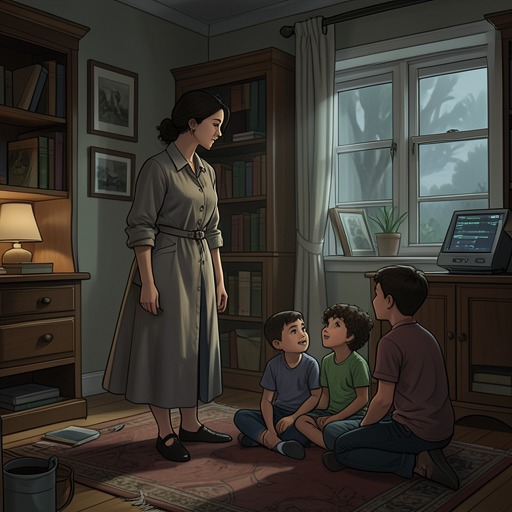
[Ann](entity:character-recall-character-ann-1162d7c1082b) discovers that [Eve](entity:character-recall-character-eve-09bb1968b5f4) and [Josh](entity:character-recall-character-josh-7784b47d315f) have received no letters or calls for weeks and that the house telephone has been disconnected. She lies to reassure them while trying to learn whether their parents are inside, then finally sees the gaunt, silent figures of [Oliver](entity:character-recall-character-oliver-7f3681a0eb8d) and [Barbara](entity:character-recall-character-barbara-d5f53d2adcbd) at the windows.
After Ann's visit to the house
The Siege Tightens
[Oliver](entity:character-recall-character-oliver-7f3681a0eb8d) and [Barbara](entity:character-recall-character-barbara-d5f53d2adcbd) continue living within the wrecked house, each turning familiar furniture, fixtures, and passages into potential threats. Their memories of love and family surface only in fragments, while the home they once built together increasingly functions as prison, territory, and weapon.
Near the end of the siege
A Truce at the Dining Table
[Barbara](entity:character-recall-character-barbara-d5f53d2adcbd) summons [Oliver](entity:character-recall-character-oliver-7f3681a0eb8d) to the dining room and offers him half the household possessions if he will leave, while insisting on keeping the house. They share wine and her pâté, but neither will yield the property that has come to embody their whole identity and history.
During the dining-room confrontation
The Final Threat
The conversation turns from negotiation to mutual accusation, and [Oliver](entity:character-recall-character-oliver-7f3681a0eb8d) declares that he will never leave. He drinks heavily, grabs a crowbar, and begins smashing the dining table; [Barbara](entity:character-recall-character-barbara-d5f53d2adcbd) takes up a cleaver and withdraws into the house as the last possibility of a peaceful settlement vanishes.
During the final night
A Last Attempt at Survival
[Oliver](entity:character-recall-character-oliver-7f3681a0eb8d) searches the house for [Barbara](entity:character-recall-character-barbara-d5f53d2adcbd) and rigs doors, furniture, the clock, the stairs, and kitchen fixtures to fall or strike at the slightest disturbance. Barbara hides in the attic, steals Staffordshire figures, and weakens the support holding the chandelier, each spouse imagining the house as an ally in the fight.
The following evening
Eve and Josh Return
[Eve](entity:character-recall-character-eve-09bb1968b5f4) and [Josh](entity:character-recall-character-josh-7784b47d315f) come home after [Ann](entity:character-recall-character-ann-1162d7c1082b) has failed to obtain a reassuring explanation from their parents. They enter the trap-laden house calling for them, setting off the loosened carpet, falling pots, clanging clock, and collapsing pictures as they struggle to reach their family.
Moments after the children enter
Oliver Reaches for Barbara
As the house begins to fail around them, [Barbara](entity:character-recall-character-barbara-d5f53d2adcbd) hangs over the open chandelier well. She begs [Oliver](entity:character-recall-character-oliver-7f3681a0eb8d) to save the children, and he finally sees the vulnerable woman he once loved rather than only his enemy; he sends [Eve](entity:character-recall-character-eve-09bb1968b5f4) and [Josh](entity:character-recall-character-josh-7784b47d315f) outside and leaps onto the chandelier chain to reach her.
The final moments
The House Comes Down
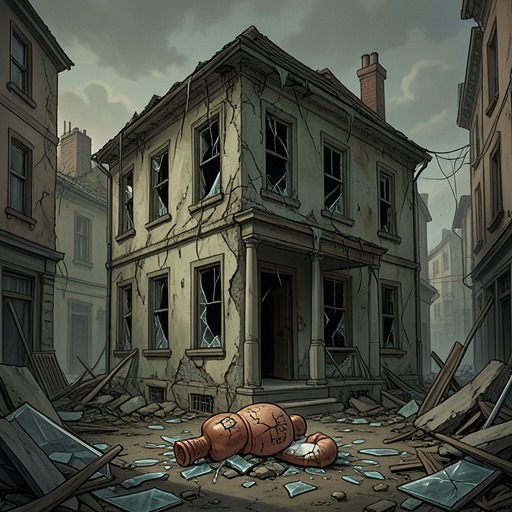
[Oliver](entity:character-recall-character-oliver-7f3681a0eb8d) reaches [Barbara](entity:character-recall-character-barbara-d5f53d2adcbd), but the chandelier gives way under their combined weight as the ceiling and the house's damaged structure collapse. They fall together into the wreckage, their long fight over the home ending in the deaths of both spouses.
Immediately after the collapse
The Broken Pugilists
[Ann](entity:character-recall-character-ann-1162d7c1082b) restrains [Eve](entity:character-recall-character-eve-09bb1968b5f4) and [Josh](entity:character-recall-character-josh-7784b47d315f) from rushing into the falling debris, then enters the ruined house with them once the noise subsides. The children find the two Staffordshire fighters intact, each claims one, and their tug of war snaps both figures apart, ending the novel with the couple's original symbol of conflict destroyed in the next generation's hands.