Event 1
珍妮·菲尔兹在电影院刺伤士兵并被捕

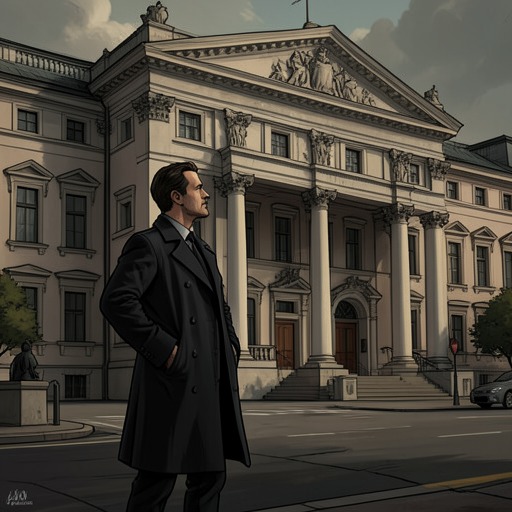
[Jenny Fields](entity:character-recall-character-jenny-fields-641cf7c9f582)’s 1942 arrest in Boston followed an encounter in a movie theater in which she defended herself against a soldier who had ignored her attempts to keep distance and then touched her without permission. The incident established a pattern central to Jenny’s life: she acted decisively to protect herself, while the authorities and people around her initially treated her resistance as suspicious. Her release without charges did not restore the scalpel they had taken from her, and the episode anticipated the public scrutiny surrounding her later independence.
## Background and Setting
At twenty-two, Jenny had left college but completed nursing school at the top of her class. She enjoyed nursing and was already working as a nurse when the theater incident occurred. She had also rejected the purpose her family seemed to assign to her education: her brothers had recommended Wellesley because its students were thought to be desirable marriage prospects. Jenny understood that plan as a way of preparing her for marriage rather than giving her an education on her own terms.
The arrest took place in 1942, shortly after the bombing of Pearl Harbor, when the public was disposed to be tolerant of soldiers. Jenny, however, was firmly opposed to men’s behavior generally and to soldiers in particular. In the theater, she moved three times as the soldier moved closer each time. When he approached again, she decided not to move once more. The arrest therefore arose from a specific confrontation, but the scene also places her refusal within a wider atmosphere in which a soldier’s conduct received presumptive understanding.
## The Theater Encounter
Jenny carried a scalpel in her purse. It was a discarded instrument with a nick in its point, not one she had stolen from the hospital; she had fitted it with part of an old thermometer container to cover the blade. When the soldier sat beside her and put his arm along the shared armrest, she kept a hand on the scalpel inside her purse. Her resistance became explicit when he touched her knee. Jenny told him to take his hand off her, but he continued and put his hand under her uniform. She used the scalpel to stop him.
The soldier cried out and made his way toward the theater lobby. Jenny put the scalpel away and followed, responding to the manager’s call for medical help. Her conduct shifted at once from self-defense to nursing: she offered assistance to the injured man, but the theater staff would not let her approach him, and someone took her purse. The episode’s reversal was stark. The nurse who had intervened against an unwanted advance was treated as a threat, while her attempt to provide care was blocked.
## Arrest and Release
The police did not initially accept Jenny’s account without suspicion. One officer asked whether she had been dating the soldier; another later asked how she could know he intended to attack her, since the soldier claimed he had only been trying to introduce himself. A third criticized her for carrying the scalpel. These questions recast her defense as possible misconduct and placed the burden on her to justify recognizing the danger.
The matter changed when police discovered that the soldier was from New York and had a wife and child. He feared that his conduct would become known to his family, and those around him treated that exposure as a serious consequence. Jenny was released without charges. She objected that the police had not returned her scalpel, but her brother dismissed the loss by telling her she could obtain another. Jenny answered that she had not stolen it. The resolution thus cleared her legally without undoing the assumptions that had shaped her treatment or the loss of an object she considered hers.
## Afterlife and Significance
The arrest forms part of the background to Jenny’s later reputation as an independent woman whose choices other women found encouraging. After the success of her book, women sought her advice, and she became a public figure associated with strength and practical judgment. In her son [T. S. Garp](entity:character-recall-character-t-s-garp-24798a61a34d)’s view, she never stopped being a nurse: her care extended from her work and family to women who came to her for help. The theater incident offers an early instance of the same combination of self-possession and practical action, while showing the resistance she faced when she refused to accommodate male behavior.
The episode also illuminates the difference between Jenny’s own account of her life and the interpretations imposed on her. In the theater, her refusal to move and her response to the soldier were treated as grounds for suspicion; later, her decisions became material for public debate about women’s lives. The arrest is therefore more than an isolated confrontation: it establishes an early conflict over who has the authority to define a woman’s conduct, and it anticipates the tension between Jenny’s lived choices and their political use by others.
Event 2
技术军士加普在法国上空受伤
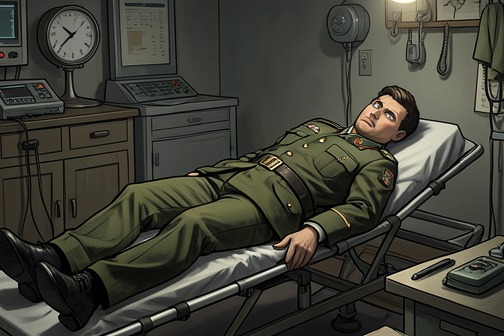
[Technical Sergeant Garp](entity:character-recall-character-technical-sergeant-ef5a237897dd)’s injury over France is the event that transforms a serviceman into a profoundly brain-damaged patient and, later, a person whose care becomes central to [Jenny Fields](entity:character-recall-character-jenny-fields-641cf7c9f582)’s life. The damage alters his speech, vision, memory, and behavior; its consequences reach beyond the battlefield into the hospital ward and the family relationships formed around care.
## The Injury Over France
On his thirty-fifth flight over France, the ball-turret gunner stopped firing. The pilot, noticing the silence from the turret, feared Garp had been hit, although he had not felt an impact in the aircraft. When the plane landed, the pilot arranged for him to be carried in a medic’s motorcycle sidecar because the ambulances were already in use. Damage to the turret’s machine-gun housing and loosened trigger handles showed that flak had struck the guns, but there was no visible injury to Garp’s hands.
The injury was not apparent from an ordinary examination. Blood was dried across Garp’s forehead, and his flight hat was stuck to his head, but the pilot could see no obvious wound. The medic, however, noticed that Garp’s eyes moved independently. The narrative later explains that slender fragments from the flak blast had damaged an oculomotor nerve and other parts of his brain. It compares the additional brain damage to the effects of a prefrontal lobotomy, while stressing that the injury was caused by the blast rather than a medical procedure.
## Immediate Effects
Garp’s ability to communicate had been drastically reduced: he repeated his own name when others addressed him, as if it were the only word he could retain. He seemed not to understand what people expected of him, and his expression could appear peacefully detached even as the pilot and medic tried to keep him still. His eyes initially rolled out of coordination; after partial restoration of the damaged nerve, they leapt rather than rolled. The physical evidence of the injury thus accompanied a more fundamental change in how he could perceive and respond to the world.
The damage also left him vulnerable to further harm. On the transport ship carrying him home, he reached toward an accidental fire, worsening his injuries and singeing his eyebrows. By the time he arrived at [Boston Mercy Hospital](entity:location-recall-location-boston-mercy-hospita-d1120677aad8), his hands were wrapped in gauze mittens. The injury therefore appears not as a single wound with a contained aftermath, but as the beginning of an ongoing need for supervision and care.
## Hospitalization and Jenny Fields’s Care
At Boston Mercy Hospital, Jenny Fields found that the injured sergeant resisted easy classification. He was clearly an Absentee in her private system for categorizing patients, yet she could not tell at first how much else was wrong. His one-word vocabulary made his needs legible mainly through repetition: he used his name when hungry or pleased, as a question when puzzled or addressing strangers, and as recognition when he saw someone familiar. He was docile and often obedient, but his memory was unreliable, and his behavior could shift between childlike compliance and unthinking curiosity.
His transport records documented episodes of depression that coincided with erections. When these episodes distressed him, Jenny sat with him, rubbed his back, and spoke in a lively, changing voice. She understood that he was bored as well as injured, and tried to distract him rather than simply quiet him. Radio programs sometimes upset him and sometimes intensified the cycle of arousal and depression; one program once produced a wet dream, but she could not find it again. Jenny eventually stopped trying to teach him another word and instead responded to his immediate needs, making care a matter of attention and companionship rather than an expectation that he recover ordinary speech.
The account of the injury therefore continues in the ward through small, repeated acts of care. Jenny’s nursing attends to Garp’s altered memory and communication as lived conditions, not merely as symptoms to be corrected. In Garp’s later view, his mother never stopped being a nurse: she cared for him through his years at [Steering](entity:location-recall-location-steering-9ec894147b9a) School and later became a source of counsel for women facing difficult choices.
## Return to Boston and the Meaning of Care
The injury also shaped how Technical Sergeant Garp came home. In England, little could be done for him, but an American senator’s effort to rebut claims that only wealthy servicemen were repatriated led to Garp’s return to Boston. The senator had promised that even an orphan among the severely wounded could make the journey; Garp, himself an orphan and unable to complain to the press, became the proof. Photographs showed him smiling, a public image that concealed the depth of his impairment.
At Boston Mercy Hospital, Jenny Fields saw a patient whose condition exceeded the categories she usually assigned. She recognized him as an Absentee but remained uncertain about the extent of his damage. The contrast between the senator’s convenient example and Jenny’s daily encounter is sharp: in public, Garp could serve as evidence in an argument about fairness; in the ward, he required patient attention to the changing, immediate meanings of his one retained word and to needs he could not explain.
Jenny’s care became part of a larger pattern in her life. In Garp’s later account, she never stopped being a nurse: she cared for him through his years at Steering School, and, after the success of her book, women sought her advice as they faced choices about how to live. She did not regard herself as a political author, but her example encouraged women who were making unpopular decisions. The care first practiced at the bedside thus extended outward, from attending to one injured man to offering practical support to women who needed help.
## Later Echoes and Narrative Significance
The injury’s consequences reappear in the family’s life long after the battlefield and hospital ward. When a later car accident left Garp’s mouth wired shut, he communicated with Jenny Fields by typing pages of messages; she read them aloud to [Duncan Garp](entity:character-recall-character-duncan-garp-0161b2a343bb), whose injured eye was not to be strained unnecessarily. Garp protested when he sensed that Jenny was editing what he had written, and she moved him to a private room. The episode echoes his earlier dependence on others to interpret needs he could not express in ordinary speech, while showing how writing had become a practical means of communication.
During the family’s recovery at [Dog’s Head Harbor](entity:location-recall-location-dog-s-head-harbor-e2368581f23a), [Helen Holm](entity:character-recall-character-helen-holm-eb61f51fe38c) spent much of her time reading to Duncan, while Jenny cared for Garp. Helen hoped Jenny could nurse him, and Jenny observed that the family needed a year to care for one another. Garp responded to that year with unusual gentleness toward Helen and Duncan. His own injury therefore belongs to a wider history of care: it first made him dependent on Jenny, and later helped shape a household in which its members tended to one another through distinct losses and limitations.
The narrative also connects Garp’s early neurological damage with the later life of his family without treating the injury as an isolated medical episode. After Duncan lost an eye, he described the difficulty of judging distance in wrestling; Garp understood the problem partly through his own experience and his concern for his son. Jenny’s nursing, Helen’s attention to Duncan, and Garp’s altered ability to speak and perceive all become part of the family’s response to vulnerability. The injury’s significance lies not only in what it changed in Garp, but in how the need for care became a recurring structure in the lives around him.
Event 3
珍妮·菲尔兹怀上T. S.加普
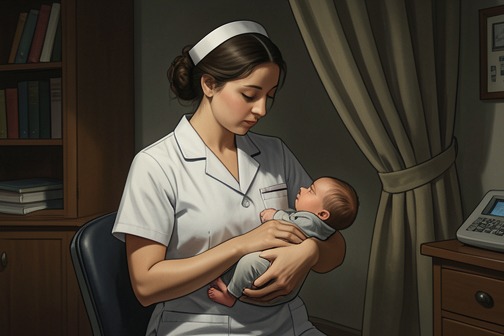
[Jenny Fields](entity:character-recall-character-jenny-fields-641cf7c9f582)’s conception of [T. S. Garp](entity:character-recall-character-t-s-garp-24798a61a34d) occurs at the intersection of wartime injury, nursing, and a deliberate claim to reproductive choice. While caring for the dying [Technical Sergeant Garp](entity:character-recall-character-technical-sergeant-ef5a237897dd) at [Boston Mercy Hospital](entity:location-recall-location-boston-mercy-hospita-d1120677aad8), Jenny becomes both his nurse and the person through whom he will have a child; she later describes the conception as a decision about her own life and body, even as others judge it immoral. The episode gives the novel’s central family its unusual beginning: a son is conceived by a woman who does not want a conventional marriage or a conventional account of motherhood.
## Background: Wartime nursing
During the war, Jenny is reassigned from obstetrics to intensive care after hospital staff decide that she is too emotionally affected by the babies and mothers in her former ward. She resents their assumption that her wish to have a child means she lacks self-control. Jenny considers pregnancy part of an eventual plan, not an immediate necessity, and is not in a hurry. The reassignment nevertheless places her among the soldiers sent to Boston Mercy, whose injuries are not accidents of ordinary life but consequences of war.
Jenny organizes the soldiers’ conditions into her own categories. When Technical Sergeant Garp arrives, she has difficulty classifying him: he is an Absentee, profoundly docile, and also an External because of burns sustained in a fire aboard his transport ship. His brain has already been damaged by a crude lobotomy, and fragments lodged in his head may cause further deterioration. Medical uncertainty shadows his care; Jenny understands that his condition may continue to worsen, but she also sees him as a gentle, dependent person rather than only a set of injuries and prognoses.
## A relationship formed through care
Garp’s speech has contracted to a single word, his hands are bandaged, and he depends on others for ordinary needs. His records describe recurring depression, and Jenny observes that he needs company and distraction more than sleep. She sits with him, rubs his back, speaks in an animated voice, and tries different radio programs to keep him engaged. When he is distressed, her attention is personal and patient rather than merely clinical.
As Garp’s condition regresses, Jenny interprets his sleeping movements and feeding behavior through her experience with babies. She comforts him and lets him suck her finger; eventually she offers him her breast, although she has no milk. The episode blurs, without erasing, the distinction between nursing and sexual intimacy. Jenny’s response is not presented simply as an impulsive bedside act: after the first sexual encounter, she gives the matter twenty-four hours of thought before deciding to proceed again. Her choice joins a longstanding wish for a child to the intimacy that has developed through daily care.
## Conception and its immediate aftermath
On the night Jenny acts on that decision, the hospital ward remains a place of other patients’ suffering. A badly burned soldier lies nearby, and another patient is gravely ill. Their presence places Jenny and Garp’s private encounter inside the ward’s public reality: the scene does not suspend the hospital or Garp’s decline, but unfolds amid them.
Afterward, Jenny washes herself and Garp, and she decides against a procedure that might prevent pregnancy. She believes conception has occurred. She does not repeat the sexual encounter, but she continues to care for Garp, sometimes helping him in other ways and comforting him when he seeks to nurse. His physical regression continues; he eventually stops eating and must be fed intravenously. When Jenny is off duty, he dies. In her own later account, she acknowledges feeling his death while insisting that what mattered most of him was already within her, and that this was the way she wanted to have a child.
## Pregnancy, birth, and Jenny’s account
In 1943, when Jenny’s pregnancy becomes apparent, she loses her job. Her family is not surprised, and Jenny has stopped trying to persuade them of her sexual purity. She remains composed at the family estate, privately happy about the child she expects. Yet she has not chosen a name. After giving birth to a nine-pound boy, she is asked by her mother what he should be called; Jenny answers with the only name she has: Garp.
The conception becomes a defining example of Jenny’s insistence on individual choice. In her autobiography, she argues that public condemnation of her conduct reflects a failure to respect individual rights. The novel does not make that conviction a simple escape from consequence: pregnancy costs Jenny her hospital position, exposes her to her family’s judgment, and gives her a son whose father dies before the birth. The episode’s significance lies in holding these facts together—the vulnerability of the dying soldier, the intimacy of nursing, Jenny’s desire for motherhood, and her refusal to let conventional ideas of sexual propriety determine her decision. Later, she continues to be understood through nursing: she cares for Garp as a boy, and, after her book brings women seeking advice to her, she becomes a source of practical counsel while remaining, in her son’s view, a nurse at heart.
Event 4
技术军士加普之死
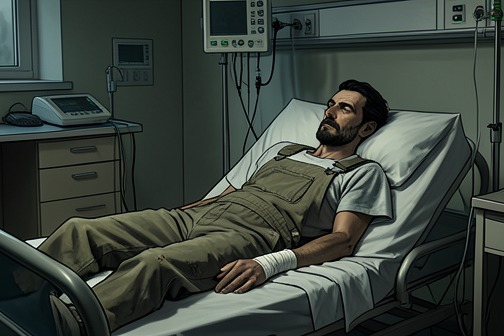
[Technical Sergeant Garp](entity:character-recall-character-technical-sergeant-ef5a237897dd)’s death is the quiet end of a life already gravely altered by war injuries—and the turning point through which [Jenny Fields](entity:character-recall-character-jenny-fields-641cf7c9f582)’s nursing relationship with him becomes the beginning of her family. The narrative makes his absence inseparable from the child Jenny carries and from her insistence that her choice was her own.
## Background and Decline
During the war, Jenny worked in intensive care at [Boston Mercy Hospital](entity:location-recall-location-boston-mercy-hospita-d1120677aad8), where many of the patients sent from service hospitals were soldiers. She developed her own categories for their injuries. When the severely impaired sergeant arrived, she found him difficult to classify: he was an Absentee, profoundly docile, but his condition might involve more than the damage already apparent.
He could communicate only through the word “Garp.” His brain had been injured, and fragments remained in places too delicate to remove. Jenny and the other caregivers feared that the internal damage could continue to progress. His hands were also heavily bandaged after he reached toward a fire aboard his transport ship, leaving him unable to resume an activity that had been an important pleasure to him. At times his distress coincided with erections; Jenny would sit with him, rub his back, and talk to him rather than leave him alone with his confusion.
## Jenny’s Care and His Death
Jenny treated the sergeant as someone in need of company as well as medical attention. She tried the radio as a distraction, although its programs sometimes upset him or agitated him further. She gave up trying to teach him new words and instead responded to what he could express, meeting his repeated call with attention and practical care.
As his condition worsened, he stopped kicking and would not eat; hospital staff had to feed him intravenously. Jenny imagined his decline as a return toward fetal dependence, but she was not present for its end. The sergeant died one day while she was off duty. His death came after the earlier loss of his capacity for ordinary adult life, but the account gives no final conversation or bedside farewell.
## Death, Pregnancy, and Meaning
[T. S. Garp](entity:character-recall-character-t-s-garp-24798a61a34d) later made Jenny’s absence at the moment of death part of the event’s meaning: “When else could he have died?” Garp has written. “With my mother off duty was the only way he could escape.” The line turns a scheduling circumstance into a reflection on Jenny’s intense presence as his caregiver, while also acknowledging that death released him from a condition he could not control.
Jenny’s own retrospective account joins his death to her decision to become a mother. “Of course I felt something when he died,” Jenny Fields wrote in her famous autobiography. “But the best of him was inside me. That was the best thing for both of us, the only way he could go on living, the only way I wanted to have a child. That the rest of the world finds this an immoral act only shows me that the rest of the world doesn’t respect the rights of an individual.” Her words present the pregnancy not as a conventional romance or an act she regretted, but as a choice grounded in her understanding of individual rights and of what she wished to carry forward.
The death therefore has consequences beyond the hospital ward. In 1943, when Jenny’s pregnancy became apparent, she lost her job. Her family had expected her to become pregnant, and she moved through the family estate composed and privately happy. When she gave birth to a nine-pound boy, she had not chosen a name for him. The sergeant’s death stands at the threshold of this new life: the wounded patient Jenny cared for is gone, but his name and the child she bears connect his story to the family that follows.
## Narrative Significance
The episode links nursing, bodily vulnerability, and narrative inheritance. Jenny’s care is rendered through repeated daily acts—sitting with the sergeant, speaking to him, and trying to relieve his boredom—while the account also makes clear that care cannot reverse his brain damage or prevent his death. His fate is not presented as a triumphant recovery; its meaning emerges through the distinct accounts Jenny and her son later give it.
The event also establishes a lasting pattern in Jenny’s life. She continues to understand herself through nursing, later caring for her son and becoming a source of counsel to women who seek her help. The sergeant’s death is thus both an ending and a beginning: the loss of the patient Jenny accompanied, and the origin Jenny identifies for the child she chose to have.
Event 5
T. S. 加普出生
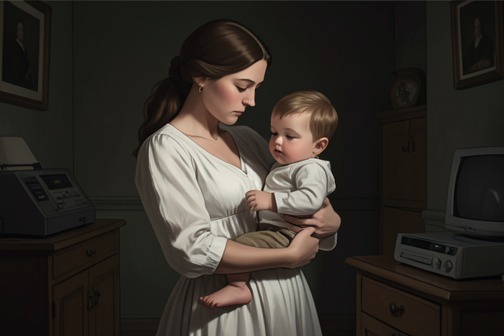
[T. S. Garp](entity:character-recall-character-t-s-garp-24798a61a34d)’s birth in 1943 turns [Jenny Fields](entity:character-recall-character-jenny-fields-641cf7c9f582)’s private, deliberately uncompromising pregnancy into a family event—and gives her son a name that embodies both the mystery of his father and Jenny’s insistence on individual rights. Jenny has no name prepared when she gives birth to a nine-pound boy. Asked for one, she answers “Garp”; only afterward does she identify the child’s father as [Technical Sergeant Garp](entity:character-recall-character-technical-sergeant-ef5a237897dd). The name is at once the trace of a man Jenny barely knew and, as she later insists, entirely her son’s own.
## Background and circumstances
When Jenny’s pregnancy became apparent in 1943, she lost her job. Her parents and brothers had expected the news, and Jenny had long since stopped trying to persuade them of her purity. At the family estate, [Dog’s Head Harbor](entity:location-recall-location-dog-s-head-harbor-e2368581f23a), she moved through its large corridors with a composure that unsettled her family; they left her alone. The narration says that Jenny was secretly happy, though it also notes that she had given so much thought to the expected child that it is striking she never considered names.
That combination of private happiness and public judgment frames the birth. Jenny’s family sees the pregnancy through the assumptions they had already made about her, while Jenny’s settled composure suggests that her choice does not depend on their approval. Her lost employment establishes a concrete cost of that choice; the baby’s arrival makes its consequence undeniable.
## The birth and the name
Jenny gives birth to a nine-pound boy. She has just delivered and received a sedative when her mother asks what she wants to call him, and she is not cooperative. Her answer is simply “Garp.” The exchange makes the name a response in the moment, not the result of a long-prepared plan.
Jenny’s father initially thinks she has burped. Her mother corrects him in a whisper: the name is Garp. The adults then try to determine whether it is a first or last name, reasoning that it might help identify the child’s father. Jenny has admitted nothing about him. Her father tells her mother to find out whether “Garp” is the man’s first or last name; her mother puts the question to Jenny, who replies, “Technical Sergeant Garp.”
That answer gives the family a rank and surname, but not the father’s first name. Jenny’s father concludes that the father is a soldier, and her mother asks about the military rank. Jenny reduces it to initials and states the full name she has chosen for the baby: “T. S. Garp. That’s my baby’s name.” She then falls asleep. The scene’s revelation is therefore limited but decisive: the child’s father was a technical sergeant, while the identity Jenny gives her son does not disclose his first name.
## Family response and later meaning
Jenny’s father reacts angrily to the name, demanding to know what kind of name it is for a baby. Jenny later answers that it is “All his own,” emphasizing that the name belongs to her son rather than to the approval of his family. The clash is brief, but it makes the naming an assertion of ownership and individuality amid relatives who regard the name as a problem to solve.
The name continues to shape Garp’s experience at school. In his later account, teachers ask what the initials stand for. At first he tells them they are merely initials, but they do not believe him; he then tells them to ask his mother. Jenny responds by giving the teachers a forceful piece of her mind. The birth’s naming exchange thus recurs as a small public confrontation: the question that first arose among Jenny’s relatives follows her son into school, and Jenny remains ready to defend the name she gave him.
## Narrative and thematic significance
The birth brings together two facts that the novel keeps in productive tension: Jenny does not disclose the father’s first name, yet the boy receives a name that appears to preserve a connection to him. The narrator identifies the father as a ball turret gunner and describes the child as born from a nurse with a will of her own and the gunner’s seed—his last shot. The birth is presented as both an arrival and the consequence of a man whose life has ended.
Jenny’s account of the father’s death, quoted in her autobiography, gives her own interpretation of that connection: she says the best of him was inside her and that this was the way she wanted to have a child. The novel places this claim alongside the world’s condemnation of her act, which Jenny regards as evidence that society does not respect individual rights. Garp’s birth is therefore not only a family origin story. It establishes the conflict between Jenny’s chosen account of her life and the moral judgment imposed on it, while the name “T. S. Garp” carries that conflict forward into her son’s identity.
Event 6
Garp’s school rooftop peril
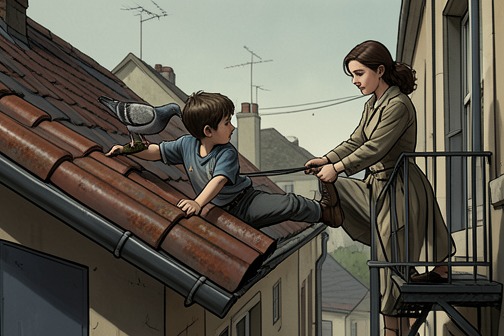
[Garp’s school rooftop peril](entity:event-recall-event-934cd1f04a45) is the childhood accident in which five-year-old Garp, pursuing a pigeon with a lacrosse stick, becomes trapped in a rotten rain gutter above the [Steering](entity:location-recall-location-steering-9ec894147b9a) School grounds. [Jenny Fields](entity:character-recall-character-jenny-fields-641cf7c9f582) reaches him from the fire escape and keeps hold of his leg as the gutter breaks. The rescue is real, but its story acquires a comic distortion: [Dean Bodger](entity:character-recall-character-dean-bodger-9d37e873c9e3) believes that he caught Garp, when the falling body he actually tackled was a pigeon. The episode joins physical danger to the novel’s interest in mistaken perception, memory, and the stories people tell themselves about the world.
## The Search
At five, Garp is small but notably coordinated, watchful, and capable of climbing to places other children cannot reach. He is allowed to wander through the infirmary and its annex, where he talks with patients, runs errands, and is especially interested in athletic injuries and the stories behind them. Jenny normally calls him home over the intercom. One night, when he does not answer, she understands that he may be in trouble or outside the buildings and organizes a search among the healthier patients.
The search takes place on a foggy early-spring night. Jenny checks dangers inside the school, including the laundry chute, boiler room, and stairwells, while patients search the rooms and grounds. The crisis has begun not with a deliberate act of disobedience announced to the reader, but with Garp’s absence: the familiar call of “GARP HOME” goes unanswered, and the places where Jenny expects him to be become a series of possible hazards.
Garp has gone after a pigeon with a lacrosse stick. Hathaway, a patient with casts, remembers Garp asking how one might trap pigeons; Hathaway demonstrates by lowering the net of his stick over the child’s head. Later, seeing that it is dark and not raining, Hathaway realizes where Garp must be and repeatedly presses his buzzer. When Jenny reaches his room, Hathaway has the lacrosse ball in hand and tells her, “He’s on the roof.”
## Trapped Above the Fire Escape
The old rain gutter is too high for Jenny to see over from the fourth-floor fire escape. In the darkness and fog, she cannot initially see Garp either. He answers her quiet call from very close by, and the basket of the lacrosse stick appears above the gutter. Reaching up, Jenny finds his leg: he has broken through the corroded trough, torn his trousers, and become wedged with one leg caught through it up to his hip. He lies on his belly along the edge of the steep slate roof, with his other leg behind him.
Garp has been too frightened to call out. He believes that even his voice might bring the fragile gutter down, and watches the searchers from a small rusted hole. The pigeon he had caught has been released but remains in the gutter, making small sounds. Jenny realizes that he could not have reached the gutter from the fire escape; he must have climbed the ivy with the lacrosse stick in one hand. His wound appears slight, but she knows that the rusty edge may require medical attention. While she works out how to get him down, she holds his leg tightly.
When Garp pleads, “Don’t let go,” Jenny answers, “Okay.” The reassurance cannot make the gutter safe: as she speaks, another part gives way. Down below, Dean Bodger has ordered mattresses placed under the fire escape, preparing the boys and the grounds for a fall. Jenny widens her stance for balance as debris reaches her eye. The gutter then tears loose, throwing her onto the landing with Garp and a substantial piece of the trough still around him. She releases his leg only when she knows they are both safe.
## The Pigeon and the Misidentified Rescue
From the ground, the sudden movement above is difficult to read. Bodger sees Jenny fall, hears the gutter rip, and watches a bird dart through the spotlight. The pigeon hits the iron edge of the fire escape, breaks its neck, and drops beyond the mattresses. Bodger mistakes the fast-falling bird for the child and runs to catch it, calling, “I’ve got you, son!” The pigeon strikes his chest, knocks him onto his back, and ends up cradled in his arms. Once a boy directs the spotlight onto him, Bodger sees that he is holding a pigeon and throws the dead bird into the parking lot.
Garp and Jenny are treated in the infirmary. Dr. Pell cleans the ragged but superficial wound on Garp’s leg; it needs trimming and cleaning, but no stitches. Nurse Creen gives him a tetanus shot. Dr. Pell also removes a small rusty particle from Jenny’s eye. Jenny has strained her back supporting Garp and the gutter, but is otherwise unharmed. In the admittance room, Garp is treated as a heroic survivor, although he appears anxious about how Jenny will respond once they are alone.
Bodger, who has made himself useful during the emergency, offers to reprimand Garp if his authority might make a stronger impression. Jenny accepts the offer, and they agree on a threat intended to make the boy behave. The moment also establishes a bond of respect between Jenny and Bodger: she recognizes his concern for safety, while he recognizes her competence and care for her son.
## Memory and the Story of the Fall
The danger does not end with the physical rescue. Bodger tells Garp to be good for his mother and warns him that otherwise he may have to move somewhere strange and far away. Garp is frightened, and Bodger insists that disappointing Jenny could make him feel bad for the rest of his life. The scene leaves the boy with a threat framed as a lesson about trust and maternal care, but the older Garp later questions Bodger’s confidence about what the incident means.
In his later account, Garp says that Bodger meant well, but that he did disappoint his mother and felt bad through much of his life. He also describes Bodger’s understanding of reality as suspect. In old age, Bodger embraces the illusion that the child he caught falling was Garp, not the pigeon. The error is more than a mistaken glimpse in a confused emergency: Bodger’s heroic self-image supplies him with a memory of a rescue he did not perform. The actual rescue belongs to Jenny, whose grip on her son keeps him safe as the gutter collapses.
The episode’s comedy grows from the mismatch between danger and perception. A child is trapped above the ground; a mother risks her balance and strains her back to hold him; the dean’s preparations are directed at the wrong falling body. The dead pigeon, first captured by Garp and finally caught by Bodger, links the two men’s versions of the incident while exposing their difference: Garp survives because Jenny sees and holds him, whereas Bodger’s later recollection turns his collision with the bird into a story about saving the boy. The scene therefore makes the roof peril both a literal childhood crisis and an early example of how vividly remembered events can be reshaped by fear, pride, and imperfect sight.
Event 7
Bonkers attacks Garp
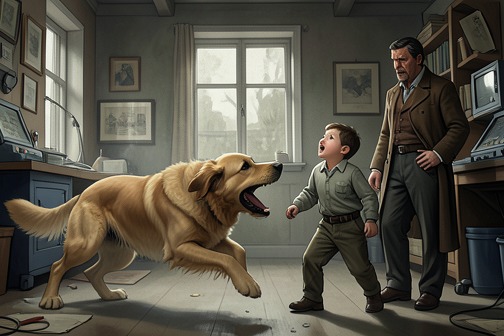
[Bonkers attacks Garp](entity:event-recall-event-5482562d38dc)
Bonkers’s attack on five-year-old [T. S. Garp](entity:character-recall-character-t-s-garp-24798a61a34d) becomes more than a dangerous encounter with a family pet: it exposes the Percys’ assumption that their dog may roam freely, even when others bear the risk. [Jenny Fields](entity:character-recall-character-jenny-fields-641cf7c9f582) sees the dispute that follows as a class conflict, while Garp remembers its simpler lesson—he must watch out for Bonkers and for the Percys.
## Background
The Percy family dog lived amid the children playing on the [Steering](entity:location-recall-location-steering-9ec894147b9a) campus and around the family’s grounds. Jenny had already objected to the dog running loose in defiance of the town leash law, connecting the Percy family’s casual disregard for the rule to their privileged position. Bonkers had once been a puppy that knocked over garbage cans and took baseballs; as he grew, Jenny came to regard him as mean.
The danger was not entirely new. On an earlier occasion, Bonkers damaged a volleyball and bit the boy who tried to take it from him. The bite left deep puncture wounds, and a nurse rejected the family’s explanation that the dog had merely become excited while playing with the children. [Midge Percy](entity:character-recall-character-midge-percy-a17eb1437739) had named the Newfoundland Bonkers after describing herself as “bonkers” about her husband, [Stewart Percy](entity:character-recall-character-stewart-percy-58887684fe05). The name’s affectionate origin sat uneasily beside the growing evidence that the dog could hurt people.
## The attack
During a touch-football game on the Percy lawn, Bonkers charged into the five-year-old Garp and bit his ear. The other children scattered. Garp, bloodied and injured, later made his way to the Percy house, where he stood in the doorway as the adults learned that Bonkers had bitten him. Midge prepared to take him to the infirmary, and Stewart Percy’s first response was to direct that he be brought there rather than summon Garp’s mother.
Stewart then examined Garp and focused on the boy’s brown eyes, not the injury. He decided that Garp’s father must have been Japanese, drawing on his own experience in the Pacific. The speculation about Garp’s unknown father thus intruded into the immediate aftermath of the attack, while Garp, too young to understand Stewart’s meaning, misinterpreted the word “Jap” as referring to his damaged ear.
## The Percy War and Its Consequences
At the infirmary, Jenny Fields carefully cleaned the area around what remained of Garp’s ear. She then proposed that Midge bring Bonkers to her, explaining that she meant to give the dog an injection that would kill him, not make him less likely to bite. Her response treated the earlier bite and the attack on Garp as evidence that the danger could not be dismissed as innocent play. It also turned the question from how to treat Garp’s injury into whether Bonkers should be allowed to remain at large.
Stewart Percy objected in a memo written on stationery identifying him as Secretary of the Steering School. Jenny answered his protest by phone, insisting that the dog be put down or, at minimum, tied up permanently. Stewart maintained that there was no point in having a dog if it could not run free. Their disagreement made the practical dispute over Bonkers a conflict over who was entitled to freedom and who had to bear its consequences.
Garp later named the conflict the Percy War. He understood his mother’s position as a class war, consistent with her later view that all wars were class wars; his own immediate conclusion was less political and more personal: he needed to watch out for Bonkers and for the Percys. The episode thus establishes both the danger posed by the family’s roaming dog and the broader antagonism between Jenny and the Percys, while preserving the difference between her structural interpretation and her son’s childhood caution.
## Significance
The episode’s importance lies in the unequal meanings attached to the same act of freedom. Stewart Percy treats Bonkers’s ability to roam as essential to owning a dog; Jenny sees that liberty as a privilege protected by the Percys, whose animal can endanger other children without the family accepting responsibility. Garp’s injury makes that conflict concrete, but his later account keeps his mother’s political interpretation distinct from his own childhood response: she sees class struggle, while he learns to beware of the dog and its owners.
## Aftermath and Meaning
At the infirmary, Jenny Fields carefully cleaned the area around what remained of T. S. Garp’s ear. She then told Midge Percy to bring Bonkers to her, clarifying that the injection she proposed would kill the dog rather than prevent him from biting. The earlier attack on a boy and now the attack on Garp had made the risk impossible to dismiss as harmless play. Jenny’s proposal shifted the question from treating the child’s injury to whether Bonkers should be allowed to remain loose.
Stewart Percy protested in a memo on stationery bearing his title as Secretary of the Steering School. Jenny answered by telephone, demanding that Bonkers be put down or, at least, tied up permanently. Stewart insisted that a dog had no purpose if it could not run free. Their dispute made the practical question of controlling a dangerous animal a contest over whose freedom counted—and who would bear its cost.
Garp later called this conflict the Percy War. He understood his mother’s response as a class war, consistent with her later claim that all wars were class wars. His own immediate lesson was narrower: he had to watch out for Bonkers and for the Percys. The episode holds those perspectives apart: Jenny interprets the attack through privilege and unequal responsibility, while her son remembers a personal warning. The dog’s freedom, defended by Stewart as a principle of ownership, had already come at the expense of children who did not control it.
Event 8
Jenny Fields meets Helen Holm
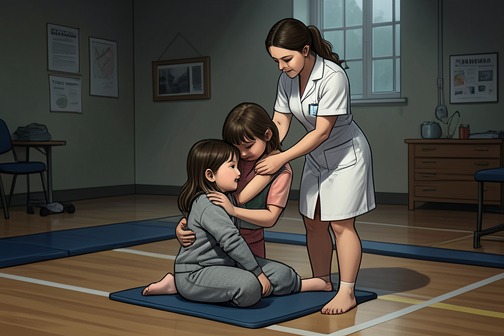
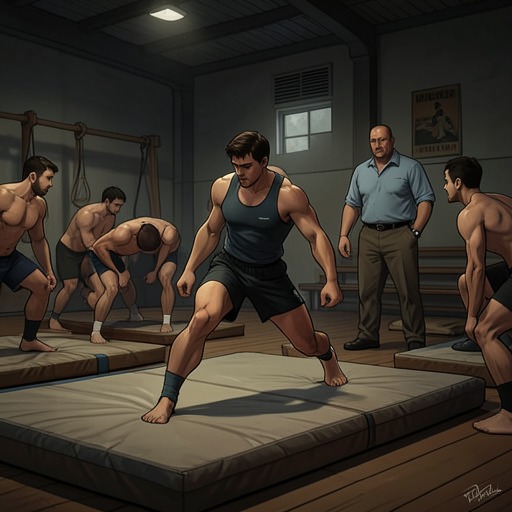
[Jenny Fields meets Helen Holm](entity:event-recall-event-a7ec9c745ba0) in the [Steering](entity:location-recall-location-steering-9ec894147b9a) School wrestling room in a scene where a child’s longing briefly turns a stranger into a mother. Helen’s mistaken embrace does not erase Jenny’s boundaries or replace Helen’s absent mother, but it creates a durable closeness: from that day, Jenny becomes more of a mother to Helen than Helen had ever known.
## Background and Setting
Helen had been watching for nurses because she was also watching for her mother, who had disappeared from her life. Her father, [Ernie Holm](entity:character-recall-character-ernie-holm-b46ad94066e2), had made no attempt to search for his wife. When Helen was little, however, he had given her a speculative story: perhaps one day she would encounter a pretty nurse who seemed lost, and who might look at Helen with curiosity. The story joined Helen’s hope of finding her mother to the figure of a nurse.
That imagined meeting takes place in the wrestling room at Steering School. Helen is fifteen, wearing an anonymous gray sweatsuit, and has been reading there when Jenny appears in her white nurse’s uniform. Against the room’s crimson mats and padded walls, Jenny seems conspicuously out of place. Helen recognizes the scene through the expectation her father’s story has fostered: she thinks the nurse before her may be her mother.
## The Encounter
Helen rises from her book and waits for her father to recognize Jenny. Instead, she addresses Jenny as her mother, identifies herself as Helen, and throws her arms around her. The embrace is spontaneous and tearful, an expression of feelings Helen has reserved for a mother rather than a considered judgment about Jenny’s identity.
Jenny is uncomfortable with being touched and immediately understands that Helen is mistaken. She does not pretend to be the girl’s mother, nor does she push Helen away. Responding as a nurse to Helen’s evident need, she coolly pats her back and looks toward Ernie, who has just found his glasses. Jenny also tells him politely that she is not his mother either; Ernie has looked at her with the same momentary relief as his daughter.
Ernie explains that Helen thought Jenny was her mother and has not seen her mother for quite some time. The explanation makes the mistaken embrace intelligible without making it less consequential. Jenny is moved by Helen: it has been years since [T. S. Garp](entity:character-recall-character-t-s-garp-24798a61a34d) hugged her that way, and she recognizes in the moment something she remembers missing as a selective mother.
## A Bond Begins
After the embrace, Helen crouches in a corner and watches Jenny fiercely, as if Jenny were responsible for the embarrassment. The initial intensity does not vanish with the correction. Helen knows Jenny’s name and knows her as another mystery reader around the school; though she has never before given anyone the feelings she reserves for a mother, she finds it difficult to withdraw them entirely. She looks at Jenny gratefully and feels an impulse to hug her again, but restrains herself.
The setting helps make the sudden closeness possible: the warm room, soft mats, and padded walls hold a meeting that neither woman planned. The narrative presents the bond as emerging through a physical gesture before either person can explain or define it. Helen will remember the first hug throughout her life. Her feelings for Jenny may change and change again, but Jenny remains more of a mother to her from that December day than Helen had ever had.
## Later Significance
The encounter also changes Jenny’s understanding of maternal affection. She later records in her autobiography that a daughter’s hug differs from a son’s, drawing on the embrace in the wrestling room. The observation is pointedly grounded in this one unexpected experience, in a gymnasium built in memory of Miles Seabrook. What begins as Helen’s mistaken recognition thus enters Jenny’s own account of motherhood and becomes part of the history the two women share.
Their later life gives the meeting continuing significance. Jenny becomes a figure of strength to women seeking advice, while Helen is among those closest to her family. After the family’s later crisis, Helen and Jenny participate in caring for one another and for others at [Dog’s Head Harbor](entity:location-recall-location-dog-s-head-harbor-e2368581f23a): Helen spends much of her recovery reading to Duncan, and hopes Jenny can nurse Garp. The novel’s later caregiving echoes the first scene, where Jenny does not claim to be Helen’s mother but answers the need that the embrace reveals. The encounter is therefore both a mistaken reunion and the beginning of a real, enduring form of kinship.
Event 9
Mr. Tinch's death
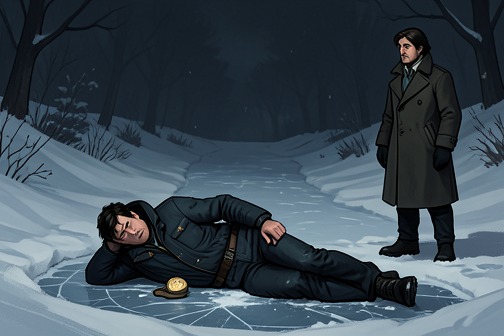
[Mr. Tinch](entity:character-recall-character-mr-tinch-c7a87b7cb6e4)’s death is an accidental freezing in the [Steering](entity:location-recall-location-steering-9ec894147b9a) quadrangle, where a fall on an icy path leaves him unconscious through the night. Its force in the narrative lies in the collision between his earlier jokes about dying and the ordinary, preventable circumstances of his end—and in the callousness with which [Benny Potter](entity:character-recall-character-benny-potter-245d40e60453) turns that end into a punch line, drawing an angry response from [T. S. Garp](entity:character-recall-character-t-s-garp-24798a61a34d).
## Background and Foreshadowing
Years earlier, Mr. Tinch and Garp had been alone, talking about Garp’s latest story, when Tinch asked whether Garp knew what he thought. Tinch then explained that nothing could be done about his bad breath and joked that he thought it was because he was dying, rotting from the inside out. The line was delivered with a twinkle, but Garp was not amused. He continued to watch for news of Tinch for years after graduating, relieved that the older man did not seem to have anything terminal.
That exchange places a comic image of internal decay beside the literal cold that will eventually kill Tinch. The joke is not a prediction of the cause of death: the narrator makes clear that the eventual causes have nothing to do with his breath. Instead, the earlier conversation gives the later news a bitter echo. Garp had treated Tinch’s joke seriously enough to keep track of him, while Tinch himself had framed mortality as a wisecrack.
## The Accident
Tinch died one winter night in the Steering quadrangle while returning from a faculty party. It was acknowledged that he may have had too much to drink. On the frozen footpath he slipped and struck his head, knocking himself unconscious. The night watchman did not find him until almost dawn; by then, Tinch had frozen to death.
The event’s sequence is stark: a walk home, a fall, an unnoticed body, and a discovery too late to help. The specific setting matters. Tinch does not die in an extraordinary catastrophe but on a familiar campus path, exposed to the winter cold while the people around him remain unaware. The story supplies no further medical detail or account of anyone attempting to rescue him; its emphasis falls on the delay between the fall and the morning discovery.
## Potter Delivers the News
Garp learned of the death not through a close colleague but from Benny Potter, whom he encountered in New York. Potter worked for a magazine, a profession Garp already regarded poorly, and Garp also believed that Potter envied his greater output as a writer. Garp had described Potter as someone with a dozen novels hidden in his drawers who would not dare show them to anyone. These existing resentments shape the encounter, but they do not make Potter’s manner any less offensive.
Potter began by asking whether Garp had heard, then called the dead man “Old Stench” and said that he had frozen to death. Garp immediately challenged the nickname, asking what Potter had said. Potter repeated it and reduced the accident to a crude account of Tinch getting drunk, wobbling across the quadrangle, falling, and never waking in the morning. His account conveys the basic facts, but its mocking language turns a death Garp had worried about for years into an occasion for ridicule.
## Garp’s Response and Narrative Significance
Garp called Potter an asshole. When Potter insisted that it was the truth and added that it had been fifteen below, he followed the fact with another insult, joking that Tinch’s furnace-like mouth should have kept him warm. The cold temperature makes the circumstances more concrete even as Potter uses them to extend the joke. Garp’s anger is directed not at the factual report but at the contempt with which Potter delivers it.
The encounter escalates physically. The two men are in the bar of a hotel somewhere in the Fifties, between Park Avenue and Third Avenue; Garp does not know where he is in New York. He picks Potter up by the armpits and sits him on the bar, calling him a little gnat. The response does not undo the humiliation of the report or change the fact of Tinch’s death. It gives Garp’s rejection of Potter’s mockery a bodily form, shifting the scene from verbal insult to comic confrontation.
The event joins three registers without resolving them into a single tone: Tinch’s earlier joke about rotting from within, the plain physical facts of a fall and exposure, and Potter’s deliberately cruel humor. Garp’s own reaction marks the boundary between humor and disrespect in this episode. Tinch’s death is both an accidental campus tragedy and a moment that exposes how a person’s vulnerability can be made into a joke by someone who has brought older resentments into the conversation.
Event 10
Procrastination is published
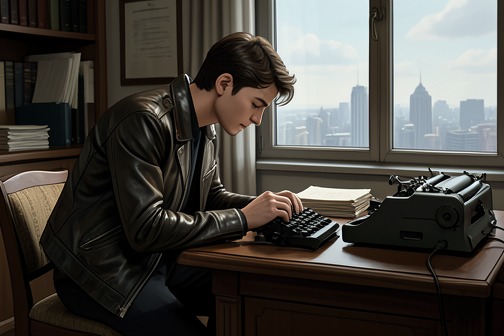
Procrastination is the first novel by [T. S. Garp](entity:character-recall-character-t-s-garp-24798a61a34d), a serious, historically researched work whose publication established him as a striking young writer without making him a popular one. Its bleak fable of delayed resistance and failed liberation was received through competing frames: as an ambitious literary debut, as a story about bears, and as the work of [Jenny Fields](entity:character-recall-character-jenny-fields-641cf7c9f582)’s famous son. For Garp, the reception made the distance between a book’s artistic life and its public identity impossible to ignore.
## Composition and Story
Garp joked that he named the novel Procrastination because it had taken him so long to write, but the work had in fact been written steadily and carefully. He was rarely a procrastinator. The novel was described as historical and set in [Vienna](entity:location-recall-location-vienna-bce4fdda6904) from 1938 to 1945, continuing through the period of Russian occupation. Its young anarchist protagonist waits for the right opportunity to strike against the Nazis after the [Anschluss](entity:time-recall-time-anschluss-f389b3affec4), but waits too long: he is too young to understand the danger as it unfolds and cannot be certain what to do. His widowed mother, meanwhile, protects her private life, remains unconcerned with politics, and hoards her dead husband’s money.
During the war, the anarchist works as a zookeeper at [Schönbrunn Zoo](entity:location-recall-location-sch-nbrunn-zoo-23ec2cad183d). As Vienna starves and people raid the zoo for food, he frees the remaining animals, which are innocent of their country’s political inaction. But they are starving too, and eat him. The novel calls this only natural. A starving mob then easily slaughters the animals while roaming Vienna ahead of the Russian forces; that outcome, too, is presented as only natural. The repeated fatalism turns liberation into another stage of the catastrophe: delayed resistance cannot undo what has already happened, and good intentions do not alter the material conditions of hunger.
After her son’s death, the mother tries to awaken the complacent city by imitating his gesture and releasing the zoo animals. The circumstances have changed: now they are well fed, few leave their cages, and those that do are contained along the paths and gardens before being returned unharmed. An elderly bear suffers violent diarrhea. The mother’s attempt at liberation is well meant but meaningless and unrealized. Arrested, she is examined by a police doctor, who discovers that she has cancer and is terminally ill. Her hoarded wealth finally serves her: she dies in luxury at Vienna’s only private hospital, the [Rudolfinerhaus](entity:location-recall-location-rudolfinerhaus-27be2d299e5a).
In a death dream, the mother imagines two young Asiatic black bears escaping, surviving, and multiplying until they become a famous new species in the Danube valley. The novel marks this as her imagination, not an event in the story’s material world. After her death, it ends instead with the diarrhetic bear dying in Schönbrunn Zoo. That deliberately deflationary ending lends the novel’s revolutionary hopes no consoling afterlife: the imagined future of flourishing bears yields to the death of an actual animal.
## Debut and Critical Reception
The novel’s historical research was praised, though Garp had little interest in that aspect of its reputation. Critics also cited its originality and unusual scope for a first novel by so young an author. [John Wolf](entity:character-recall-character-27a1f0511f5f), Garp’s publisher, had agreed with him not to advertise on the jacket flap that this was the first novel by Jenny Fields’s son. Nonetheless, few reviewers avoided mentioning Garp’s relation to his mother. One praised the famous feminist’s son for becoming what he had said he wanted to be when he grew up. To Garp, such remarks diverted attention from the book’s faults and merits; Wolf countered that readers were often more interested in the writer’s identity than in what he had written.
The reviews could also reduce the novel to its recurring animal imagery. One wit, having dug up Garp’s earlier Grillparzer story from an obscure publication, chided him for still writing about bears and suggested he might write about people when he grew up. Yet the debut was more astonishing and more noticed than most. It was never a popular book and did not turn Garp into a household name like his mother. Wolf’s judgment was that it was not that kind of book and Garp was not that kind of writer.
Wolf urged Garp to distinguish serious publication from commercial success. If he wanted to be rich and famous, Wolf wrote, he should choose another line of work; if he was serious about writing, he should not complain that a serious book had been published seriously. Garp was only twenty-four, Wolf reminded him, and would write more books. The advice acknowledged both the real achievement and the limits of the debut: its publication was a beginning, not a promise of wealth or fame.
## Artistic Reputation and Public Identity
The publicity problem had begun even before the novel appeared. Nearly fifteen years earlier, when Garp’s Grillparzer story had been submitted to a magazine favored by [Mr. Tinch](entity:character-recall-character-mr-tinch-c7a87b7cb6e4), its editor dismissed it as only mildly interesting. After Garp’s third novel came out, that same editor wrote a flattering letter inviting new work. Garp retrieved the old rejection note, still crusted with coffee stains and torn at its repeatedly folded creases, and enclosed it with a reply that turned the editor’s old assessment back on the magazine. The episode shows how long Garp retained a slight and how sharply he resisted retrospective praise that ignored its earlier rejection.
A more consequential version of the same conflict followed Procrastination’s reception. Although Garp had earned some money and Helen now had a salary, he remained dissatisfied. He no longer needed Jenny’s financial help, though he felt able to accept money she freely gave. Wolf’s account of the book’s reception did not resolve Garp’s unease, but the debut marked a change in his circumstances: it had earned him an independent place as a published writer, if not the popular recognition he resented seeing attached to his mother instead.
The novel’s afterlife also demonstrated how easily readers could treat fiction as evidence about its author. A later university course paired Jenny’s autobiography with Garp’s three novels and [Stewart Percy](entity:character-recall-character-stewart-percy-58887684fe05)’s A History of [Everett Steering](entity:character-recall-character-everett-steering-6a7da9aa8daf)’s Academy, inviting students to search the books for details that appeared to be true and thereby reconstruct Garp’s life. That method directly contradicted the separation between a novel’s artistic design and the biographical facts readers hoped to extract from it. Garp never knew about the course, but its existence extended the same pattern that had marked his debut: the public’s curiosity about the person threatened to displace attention to the work.
## Consequences and Significance
Procrastination did not make Garp a household product, nor was it a popular book. Its importance lies instead in the combination of an unusually ambitious first novel and a reception that made his family identity part of its public meaning. Reviewers praised the research and originality while repeatedly invoking Jenny; other commentators seized on the bears as a shorthand for his subject. These judgments did not simply describe the book. They exposed the competing expectations brought to it and the difficulty of making the work legible apart from its author’s biography.
The novel’s ending and its publication history sharpen that contrast. Within the fiction, the mother’s imagined bears suggest a future beyond immediate defeat, but the last concrete event is the death of the bear in the zoo. Outside the fiction, the book began Garp’s literary career without delivering commercial triumph. Its serious publication gave him reason to continue, as Wolf recognized, while leaving intact his anger at being read through Jenny Fields or reduced to a familiar motif. Procrastination thus matters both as Garp’s first sustained artistic statement and as the first clear instance of the public struggle over how that art would be understood.
Event 11
Walt's birth
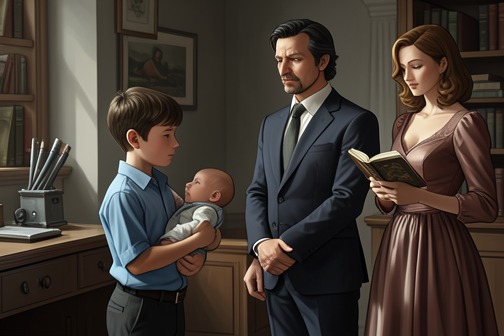
Walt’s birth makes him the second son of [T. S. Garp and Helen Holm](entity:relation-recall-relation-t-s-garp-and-helen-h-00e67e000ba9) and Duncan’s younger brother. His arrival changes the family from a household with one boy to one with two, while the novel’s account of this period links the growing family to Garp’s second novel and Helen’s expanding professional life.
## Birth and Name
Walt is introduced simply and emphatically as a boy and the Garps’ second son. The narration insists on the exact form of his name: he is Walt, never Walter and never the German Valt. Its playful comparisons give the name a brisk, percussive quality, likening it to a beaver’s tail striking water and a well-hit squash ball.
His birth is presented as an arrival that completes a new family arrangement: Duncan now has a brother, and the Garps have two boys. The change is concise but consequential, establishing Walt as part of a household whose routines and responsibilities have grown.
## The Family After His Arrival
The account places Walt’s birth alongside the changes in his parents’ work. Garp tries to write a second novel, while Helen takes a second job and becomes an associate professor of English at the state university in the town next to the women’s college. The two developments frame the birth within a period when both parents are building lives beyond the home as well as raising their children.
The family’s daily world also takes shape around the boys: Garp and his sons have a boys’ gym in which to play. Helen, meanwhile, gains a brighter graduate student and more interesting colleagues. Walt’s arrival therefore belongs to a broader reorganization of family life, in which the boys’ shared world and their parents’ separate professional pursuits develop at the same time.
## Narrative Significance
The chapter heading, “SECOND CHILDREN, SECOND NOVELS, SECOND LOVE,” sets Walt’s birth within a pattern of second beginnings. His place as the second child parallels Garp’s attempt at a second novel and Helen’s second job, giving the family’s growth a structural echo in the adults’ work and changing circumstances.
The narration’s attention to the precise sound and spelling of Walt’s name makes his introduction unusually vivid without separating him from that pattern. He arrives not as an abstract addition to the family but as a distinctly named child, at the moment the Garps’ household becomes a family of two boys.
Event 12
The Garps and Fletchers' affair
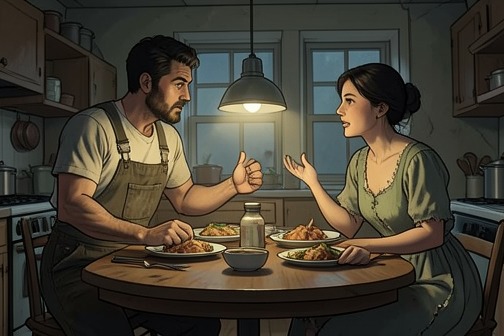
[The Garps and Fletchers' affair](entity:event-recall-event-the-garps-and-fletchers-11b8540f9308) is a six-month entanglement among [T. S. Garp](entity:character-recall-character-t-s-garp-24798a61a34d), [Helen Holm](entity:character-recall-character-helen-holm-eb61f51fe38c), [Harrison Fletcher](entity:character-recall-character-harrison-fletcher-c3536245a49a), and [Alice Fletcher](entity:character-recall-character-alice-fletcher-3d4f9524052d), set in motion by Harrison’s involvement with Alice, his student. What begins as Helen’s furious attempt to confront her husband becomes a reciprocal arrangement in which Garp and Alice develop a private intimacy of their own. The episode’s defining contradiction is that all four participate, but not on equal emotional terms: Helen ends the arrangement, while Garp is already dreading the loss of Alice.
## Background and the Confrontation
The immediate conflict is Harrison’s description of Alice as special, which Garp points out to Helen. Helen answers with anger at men who take care of one woman while pursuing another, and announces that she will show Harrison what special means. Her response turns a dispute over his treatment of Alice into a confrontation over the insult to both wives: she objects not simply to the affair, but to Harrison’s flattering language for his student and the injury it does to their marriage and to Garp.
One evening, after Garp has cooked an elaborate dinner of Paprika Chicken and spätzle, Helen proposes that she and Harrison do the dishes while Garp takes Alice home. Garp’s surprise at the instruction—he asks whether Helen means immediately—shows how abruptly the evening changes direction. Helen tells Alice to show Harrison her novel and everything she wants, while she intends to make Harrison understand what an asshole he is. Harrison tries to recast the gathering as a friendly arrangement in which everyone wants to remain friends; Helen rejects that smoothing-over, directly accusing him of insulting both her and his wife.
## Alice and Garp
Helen insists that Garp go with Alice and let Alice drive her own baby-sitter home. Harrison protests, but Alice herself answers him: she tells him to shut up, takes Garp’s hand, and stands. The gesture places Alice beside Garp rather than under Harrison’s authority. Garp is speechless as they leave; when he offers to take her home, Alice says she can drive, and he urges her to get back fast.
At home, Alice makes a request that draws their closeness into her work. Because she cannot speak her own words, she asks Garp to read the first chapter of her novel aloud; he hears that its writing is fluent and careful, and that the sentences sound beautiful in his voice. The scene gives Alice’s authorship a presence independent of her speech impairment: Garp is not merely comforting her, but responding to the craft of the writing itself. When he tells her she has a lovely voice, she cries. They then make love, and Garp acknowledges that, despite what people assume about such arrangements, the moment was special. Alice later asks whether it was, and he says yes.
## The Four-Person Arrangement and Its End
Garp recognizes that his defense of Alice’s talent has become personal. He says that Harrison does not appreciate how talented she is, and Helen remarks that this is the last time she will try to save anyone’s marriage except her own. The four-person arrangement lasts for six months while Helen lets Harrison down gently. During that period Garp sees as much of Alice as he can, even as he tries to warn her that their shared situation cannot last. He also tries to prepare himself for giving her up, a prospect he dreads.
The relationship does not carry the same meaning for all four. Garp tells Alice that it cannot continue and will have to stop soon; she points out that it has not stopped yet. He also warns Harrison while they play squash. Harrison acknowledges that the affair cannot last, but takes pleasure in the present. Alice presses Garp to confirm that it is special, and his answer is affirmative, though the narration qualifies his certainty: he thinks he loves her. That qualification leaves the attachment real but not fully settled, even as Garp’s fear of losing her has become plain.
Helen, who enjoys the arrangement least, suffers it most. When she finally ends it, her visible euphoria contrasts with the gloom of the other three. Their resentment is sharpened by the disparity: Helen appears uplifted just as Garp, Harrison, and Alice are cast into sadness. Without a formal agreement, the couples observe a six-month moratorium on seeing one another except by chance, extending the separation beyond Helen’s decision to end the affair.
## Aftermath and Significance
The moratorium proves difficult to maintain. Helen and Harrison run into each other in the English Department, while Garp encounters Alice in a supermarket. Alice deliberately crashes her shopping cart into his. The collision jars little Walt among the produce and juice cans, and alarms Alice’s daughter as well. The encounter turns an attempt at accidental contact into a physical interruption of ordinary family space: the attachment has not vanished, but its reappearance now affects the children around them.
Alice explains that she needed some contact. Later, she phones the Garps very late, after Garp and Helen have gone to bed, and asks Helen whether Harrison is there. The question reaches across the old arrangement through Helen rather than Garp, showing that the four-person entanglement still shapes their communication after its formal end. The episode thus moves from Helen’s attempt to expose and punish Harrison’s behavior to an intimacy that none of the participants can simply dismiss. Its resolution is not reconciliation among all four, but a severance chosen by Helen and resisted in feeling by the others.
Event 13
The publication and failure of Second Wind of the Cuckold
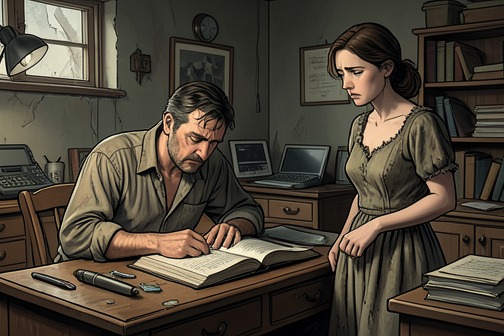
[The publication and failure of Second Wind of the Cuckold](entity:event-recall-event-the-publication-and-fai-5fb3cf29d841) is a turning point in [T. S. Garp](entity:character-recall-character-t-s-garp-24798a61a34d)’s writing life: his second novel receives baffled and sometimes hostile reviews, sells less well than Procrastination, and leaves him feeling, for the first time, that he has failed. Its mixture of marriage, sex, pain, guilt, and comedy proves difficult for readers to classify, while the people closest to Garp offer little encouragement.
## The Novel and Its Critical Reception
Second Wind of the Cuckold centers on two married couples who have an affair. Its treatment of intimacy was deliberately uncomfortable: the novel’s sexual relationships leave the partners hurt and guilty, yet often still wanting more. Reviewers noticed this paradox but did not agree on its value. Some called the effect brilliant; others called it dumb. One described the novel as bitterly truthful, then argued that its bitterness prevented it from becoming more than a minor classic. The same reviewer speculated that refining away some of that bitterness would have allowed a purer truth to emerge.
The critical debate also struggled to pin down a thesis. One reviewer found the book’s apparent proposition contradictory: sexual relationships seemed to reveal people profoundly, even as sex seemed to diminish the profundity they possessed. Garp rejected the expectation that his novel should advance a thesis. He described it to an interviewer as a serious comedy about marriage but a sexual farce, and later wrote that human sexuality makes farcical the most serious intentions. The novel’s unsettled combination of seriousness and absurdity was therefore not an accidental feature of its reception; it was central to what Garp said he had tried to do.
## Plot, Comedy, and Intended Meaning
The novel’s ending gives its comedy a conciliatory shape. Friendship finally persuades the couples to end their affair. The childless couple later separates, disillusioned with each other, although the separation is not necessarily caused by their experiment. The couple with a child stays together, and the child grows up without a detectable flaw. This outcome offers a qualified optimism rather than a simple punishment or catastrophe.
In the final scene, the two women happen to meet on escalators in a department store at Christmastime, carrying packages as they travel in opposite directions. One woman’s uncontrollable flatulence and the other’s involuntary movement of her right arm set off a chain of mishaps on the crowded escalator; an old man is knocked down, and people topple after him. The store is packed and noisy, but no one is hurt. In the holiday setting, the incident is forgivable, and the women exchange grim smiles as they move apart, apparently recognizing each other’s burdens. Garp repeatedly insisted, “It’s a comedy!” and imagined the novel as a film. Yet no one bought the paperback rights, a particularly stark measure of the gap between his comic intention and the book’s commercial prospects.
## Sales, Rejection, and Personal Consequences
Whatever Garp or the reviewers made of the novel’s meaning, it was not a success. Second Wind of the Cuckold sold a few thousand copies fewer than Procrastination. [John Wolf](entity:character-recall-character-27a1f0511f5f), Garp’s editor, tried to put the result in perspective by assuring him that second novels often performed this way. The reassurance did not prevent Garp from feeling that, for the first time in his life, he had failed.
Wolf also tried to shield Garp from a particularly hostile West Coast newspaper review. He eventually sent the clipping when he worried Garp might encounter it by accident, attaching a note that the reviewer had reportedly suffered a hormone imbalance. The review dismissed the book as sordid and pathetic, attacking Garp both as the son of [Jenny Fields](entity:character-recall-character-jenny-fields-641cf7c9f582) and as the author of a novel it characterized as sexist and preoccupied with sex. Its insult joined the wider critical confusion: the book’s subject and tone were reduced to accusations rather than engaged as a difficult comic design.
The disappointment was not confined to the press. Helen disliked the novel, and even [Alice Fletcher](entity:character-recall-character-alice-fletcher-3d4f9524052d), despite her affectionate letters to Garp, never mentioned it. Helen’s colleagues in the English Department had discussed Procrastination with her, however tentatively, but no one spoke to her about the new book. She regarded it as an invasion of her privacy and hoped Garp would soon leave the project behind. The novel’s subject—an affair between two couples—thus reached beyond its fictional plot, leaving Helen feeling exposed and its failure all the more intimate for Garp.
## Significance
The episode establishes a contrast between Garp’s confidence in the novel’s comic purpose and the reception that meets it. He sees a story whose sexual farce, injuries, and holiday mishaps can culminate in forgiveness; reviewers instead find bitterness, contradiction, or a dubious sexual thesis, while the market supplies no paperback readership. The failure is not simply a lower sales figure: it is the first time Garp interprets a book’s reception as evidence that he has failed.
At the same time, the novel’s unresolved mixture of bitterness and comedy complicates any easy verdict. Its ending makes room for embarrassment and disorder without injury, and its couples reach different outcomes without the narrator assigning every consequence to the affair. The reviewers’ competing labels reproduce that instability: the book can look both serious and farcical, but its intended humor does not ensure that readers will recognize it as comedy. Garp’s repeated defense of the novel therefore becomes part of the event itself, a measure of the distance between an author’s design and the response his book can command.
Event 14
Harrison Fletcher's denial of tenure
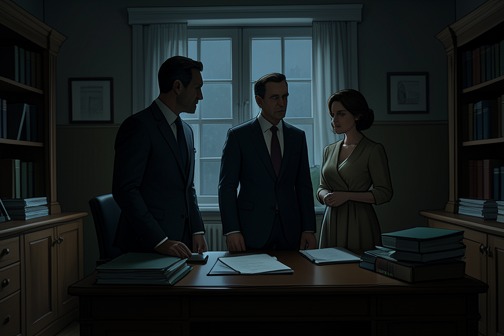
[Harrison Fletcher](entity:character-recall-character-harrison-fletcher-c3536245a49a)’s denial of tenure turns a private relationship with a student into a professional and social reckoning. His colleagues learn of the relationship after the student complains to the English Department, and Helen’s support for his case is discounted once her own connection to him becomes known. Harrison loses the university post, but finds another job; distance then helps preserve what remains of the friendship between the Fletchers and the Garps.
## Causes and Departmental Response
Harrison’s case is compromised when a student he had been involved with complains to the English Department after he ends the relationship. Her account raises eyebrows among his colleagues. The narrative notes that the grievance arose from her being jilted, but the complaint still makes Harrison’s conduct visible within the department and weakens his standing.
Helen supports Harrison’s case for tenure, but that support is quietly disregarded once her relationship with him is also known. Her advocacy therefore cannot separate the tenure decision from the personal entanglements surrounding it. [Jenny Fields](entity:character-recall-character-jenny-fields-641cf7c9f582), despite her public advocacy for women, agrees with Garp that Helen’s own tenure had been granted as a token gesture: the department had likely wanted a woman at associate-professor level, and Helen’s appointment had coincided with that need. Helen herself knows her qualifications, yet also recognizes that her quality was not what secured her tenure.
## The Denial and Its Contrast with Helen’s Career
The university denies Harrison tenure, a bitter loss for Helen because she genuinely values him as a friend. The account distinguishes their circumstances: Helen has not slept with students, while Harrison has allowed his sex life to take precedence over his job. He is not left without employment, however; he obtains another position. The episode thus places the professional consequences of his conduct beside Helen’s uneasy awareness that her own advancement may have been shaped by institutional tokenism.
## Aftermath and the Garps’ Friendship
The Fletchers’ move away helps preserve the friendship between the two couples. Instead of facing one another frequently amid possible resentment, they see each other about twice a year. The reduced contact diffuses hard feelings and changes the friendship into a more intermittent bond: they are close when they correspond or meet, but do not remain constantly present in one another’s lives.
Distance also changes the form of Alice’s connection with Garp. She can send him her polished prose in letters, while the everyday proximity—and the temptation to touch or even bump shopping carts—falls away. The tenure denial therefore has consequences beyond Harrison’s career: it helps turn an intimate, entangled friendship into one sustained by occasional correspondence and visits.
Event 15
Roberta Muldoon's sex reassignment surgery
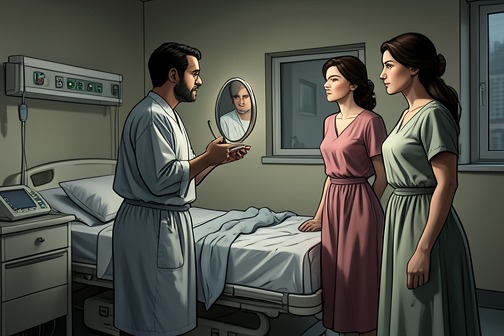
[Roberta Muldoon](entity:character-recall-character-roberta-muldoon-a89d3285f960)’s sex reassignment surgery was the culmination of a long process of preparation and a turning point in her life. Formerly Robert Muldoon, a [Philadelphia Eagles](entity:organization-recall-organization-philadelphia-eag-cd81a097bb92) tight end, Roberta was encouraged by [Jenny Fields](entity:character-recall-character-jenny-fields-641cf7c9f582)’s book, A [Sexual Suspect](entity:expression-recall-expression-sexual-suspect-9fa68f68e443), to pursue the operation; afterward she built a life as a woman, faced public resistance, and became one of Jenny’s closest companions and a leading figure in the [Fields Foundation](entity:organization-recall-organization-fields-foundatio-39c1ab9e576f).
## Background and Decision
While recovering from knee surgery in a Philadelphia hospital, Robert Muldoon read Jenny Fields’s book, A Sexual Suspect. The book gave him the courage to seek sex reassignment surgery. His decision followed a period of preparation rather than a single public announcement: before the operation, he spent several months dressing as a woman and shopping for women’s clothes. He paid for the surgery with fees from speaking engagements at boys’ and men’s clubs.
At first, Robert continued to go out in the morning dressed as himself, then modeled his new clothes for Jenny and the women living at [Dog’s Head Harbor](entity:location-recall-location-dog-s-head-harbor-e2368581f23a) in the evenings. As estrogen changed his body, he stopped the speaking circuit and began going out in women’s suits and conservative wigs. He tried living as Roberta before the operation, making the transition a gradual change in everyday presentation as well as a surgical event.
## The Operation and Its Effects
After the operation, Roberta’s weight fell from 235 to 180 pounds. Estrogen reduced some of her former strength and endurance, although her knowledge and understanding of football remained intact. The narrative also describes her as clinically having the same genitalia and urological anatomy as most women, while Roberta tells Garp that she cannot conceive, ovulate, or menstruate. Jenny reassures her that many other women do not ovulate or menstruate either.
The account distinguishes the operation from the broader course of Roberta’s transition: she had already begun presenting as a woman, and the surgery did not remove every difference in her body or experience. Her later life includes her own recognition that the perspective she gained from having lived as a man and as a woman could be advantageous. The event is therefore presented as a decisive personal choice, not as the entirety of her identity or subsequent life.
## Public Dispute and Jenny’s Support
After the transition, Jenny supported Roberta’s case against television networks that, Roberta claimed, had secretly agreed not to hire her as a football commentator. Jenny argued that Roberta’s knowledge of the sport had not diminished and that she would improve on the usual commentators. Support from college campuses made Roberta a conspicuous and controversial public figure.
Roberta’s account of the advice she received before surgery exposes the pressure surrounding her decision. People urged her to remain a gay man rather than become a woman, warning that as a woman she would be taken advantage of. She rejected their advice as cowardly. Garp nevertheless knew that Roberta had in fact been taken advantage of repeatedly, a painful complication that sits beside her refusal to let others decide how she should live.
## Relationships and Later Life
Roberta became a formidable companion to Jenny, whom she deeply admired. Garp liked her; the two talked about football and played squash. Roberta usually won their early games through her greater strength and athletic ability, though Garp’s greater stamina eventually wore her down. She also spent hours throwing a football with Duncan and promised to take him to see the Eagles. Garp worried about the risks attached to Roberta’s public visibility and about Duncan’s safety in a crowded stadium.
Roberta’s bond with Jenny carried into the family’s later life. When Garp and Duncan departed, Roberta offered to look after Jenny, but Garp replied that Jenny was the one who looked after everyone else. At Jenny’s memorial, Roberta dressed Garp in a turquoise jumpsuit with false breasts, a deliberately humiliating gesture connected to their prior conflict over his presence and his remark about her chromosomes. The episode shows their familiarity and antagonism without undoing the closeness between them.
Roberta outlived [John Wolf](entity:character-recall-character-27a1f0511f5f) and most of her lovers, though not Helen. As she approached fifty, she told Helen that she carried what she called the vanity of a middle-aged man and the anxieties of a middle-aged woman, while also finding advantages in her perspective. She later became responsible for the Fields Foundation, which she ran vigorously. Her life after surgery thus extends well beyond the medical decision: it includes friendship, public advocacy, family ties, and sustained work for Jenny’s organization.
## Significance
The surgery is both a personal turning point and the start of a continuing negotiation with social institutions and other people’s expectations. Roberta’s football expertise remains unchanged, yet television networks allegedly exclude her from commentary; Jenny’s public support challenges that exclusion by insisting on Roberta’s qualifications. The novel also gives space to Roberta’s practical preparations, her changing public presentation, and her own account of the risks and consequences of transition.
Roberta’s story resists reducing her to either her former identity as an athlete or the operation itself. Her transition shapes her relationships and public life, but the later portrait emphasizes her agency, humor, endurance, and responsibility. The surgery opens a new stage of her life; it does not contain the whole of it.
Event 16
Garp retrieves Duncan from Ralph's house

[T. S. Garp](entity:character-recall-character-t-s-garp-24798a61a34d)’s midnight visit to Ralph’s house turns his wish to make the world safe into an uneasy comic episode of parental vigilance, sexual confusion, and mistaken suspicion. He sets out after making love to [Helen Holm](entity:character-recall-character-helen-holm-eb61f51fe38c), intending to check on Duncan, and ends the night carrying his sleeping son through the suburbs under a police flashlight. The rescue is real, but the dangers he anticipates are mixed with hazards and misunderstandings he cannot foresee.
## Background and Motivation
The episode begins with a defining wish: if Garp could have one vast, naïve wish, it would be to make the world safe for children and adults alike. He considers the world unnecessarily perilous, and that broad anxiety gives a private late-night errand the force of an emergency. After Helen falls asleep, he dresses and ties his running shoes; when he accidentally wakes her by sitting on her leg, she asks where he is going. He says he is going to check on Duncan, who is spending the night at Ralph’s house.
Garp’s concern is not simply abstract. He believes he is coming to Duncan’s aid and rescuing him from [Mrs. Ralph](entity:character-recall-character-mrs-ralph-b3ed0ec2744a), whom he imagines as a sexual threat. The narration places this fear beside his own recent intimacy with Helen, creating a contrast between Garp’s marital life and the danger he projects onto another household. His conviction sends him into the sleeping neighborhood without a shirt or identification, dressed in running shorts and loosely laced shoes despite having no plan to run.
## The House and the Sleeping Boys
The trip through the spring suburbs is shaped by Garp’s alert, suspicious attention. A young woman on a bicycle nearly collides with him and speeds away; he wonders whether she has mistaken him for an exhibitionist, while he himself imagines that she may be heading toward trouble. The encounter foreshadows the police report that will later complicate his journey home: in the dark, Garp’s appearance can look threatening even when his purpose is protective.
At Ralph’s house, the lights are on, the front door stands open, and the television is blaring. The lawn is littered with dog messes and damaged sports equipment. Inside, Garp finds Duncan and Ralph asleep in their sleeping bags beside a sagging couch, their faces washed pale by the television’s light. The house gives him reason to worry for the boys’ immediate safety: ashtrays are scattered about, and he wonders whether anything has been left burning. He checks the kitchen window and finds dirty dishes, gin, and a cat resting on the stove. The unattended, untidy scene looks less like the party he first suspects than a home whose adult supervision is uncertain.
Mrs. Ralph appears and jokes that both boys are dead, then asks whether Garp wants to see the bodies. The joke does not reassure him; she finds him humorless on this subject. She and Garp lift the boys onto the couch, arrange them foot to foot, tuck in their sleeping bags, and put pillows under their heads. Garp switches off the television while Mrs. Ralph turns out the lights and gathers ashtrays. Their efficient cooperation briefly resembles a married couple cleaning up after a party, a comic reversal that complicates Garp’s assumption that he has arrived to save Duncan from her.
## The Young Man in the Bedroom
Mrs. Ralph tells Garp she needs help getting someone out of the house: a young man is in her bedroom and will not leave. Garp follows her upstairs and finds the youth asleep. When Garp tries to wake him, the boy warns him not to touch him. Mrs. Ralph says this is what the boy said to her, too, and shrugs. Garp responds by taking hold of the boy’s ponytail and restraining him, then tells him to get his clothes. The intervention turns Garp’s protective aggression away from the person he had expected to confront and toward a young man who is refusing to leave.
Garp leads the young man down the back staircase, through the kitchen, and out the front door. The youth says Mrs. Ralph invited him in; Garp answers that she also asked him to leave. This exchange leaves the encounter’s circumstances sharply defined without resolving every ambiguity between invitation and refusal. Garp acts on the immediate fact that Mrs. Ralph wants the visitor gone, but his physical authority is what makes the departure happen.
Before Garp leaves, Mrs. Ralph makes a personal, sexually charged remark about his appearance and suggests he will return. Garp says little. He admits to himself that he has mistaken her for a slob and feels he deserves a few punches; he also answers one of her insults about his marriage with a weak verbal jab of his own. The scene punctures his confident division between a safe home and a dangerous woman: Mrs. Ralph is neither the simple threat he imagined nor someone whose household he can easily interpret.
## The Police Encounter and Aftermath
Garp carries Duncan away from the house, the child bundled into his sleeping bag over Garp’s shoulder. Before they have gone two blocks, a squad car pulls alongside them and its blue light falls on the half-dressed adult carrying a sleeping child. To the officers, the sight can resemble a kidnapping. Garp explains that Duncan is his son and that he is taking him home after the overnight visit did not work out, but he has no identification to show them.
The officers have been searching the neighborhood after a young woman reported being approached by a possible streaker, perhaps in connection with an attempted assault. That report recalls the cyclist Garp encountered on his way to Ralph’s. The young man from Mrs. Ralph’s bedroom is also in the back of the police car: the officers picked him up while looking for the reported exhibitionist, and he could not provide an address because he had nowhere to live. When asked whether he knows Garp, he calls him a tough guy. Duncan wakes enough to recognize both his father and Ralph, and one officer asks whether Garp is his father.
The police eventually decide to give Garp and Duncan a ride home, although they still require Garp to establish his identity. Garp tells them he can show them something if they drive him home; one officer explains that he failed to recognize Garp from photographs without his beard. The detail turns an already awkward stop into a small recognition puzzle: the father carrying his child is not immediately identifiable to police who remember an earlier image of him.
When they arrive, Duncan calls to Helen that they were arrested. Garp corrects him sharply: they were given a ride, and everything is fine. Helen asks whether that is how Garp went out, while Duncan says the police thought his father was kidnapping him. The ending restores the family to its home but not to Garp’s preferred account of events. His attempt to protect Duncan has led him through a scene of household disorder, a dispute over who should leave, and a police suspicion prompted by his own appearance and the neighborhood report.
## Narrative Significance
The episode makes [Garp’s parental anxiety](entity:state-recall-state-garp-s-parental-anxiety-164c77cfafec) concrete through a sequence of competing interpretations. He sees himself as a rescuer, Mrs. Ralph’s home as a possible danger, and the sleeping boys as vulnerable; the police see a half-dressed stranger carrying a child. The same vigilance that moves Garp to act also leaves him exposed to suspicion, because his intentions are invisible to observers who encounter only the scene.
The comedy does not cancel the concern. Garp’s wish for safety is sincere, and the household’s open door, unattended boys, and uncertain adult presence give his unease a practical basis. Yet each attempted solution produces another complication: he goes to retrieve Duncan, helps Mrs. Ralph remove her guest, carries his son through the street, and must then establish that the child is his. The night’s final correction—that they were not arrested—marks the gap between Garp’s urgency and the more ordinary, awkward outcome. His protective role is affirmed, but the episode refuses the fantasy that vigilance can make the world entirely safe.
Event 17
Garp发现Helen的婚外情
Garp’s discovery of Helen’s affair with [Michael Milton](entity:character-recall-character-michael-milton-c3ae1e50e5ea) is the moment when suspicion becomes an irreversible fact inside the family home. A perfumed note left by [Margie Tallworth](entity:character-recall-character-margie-tallworth-7fef05b860ec) gives Garp the name he has been circling without consciously fixing on it; the revelation brings private betrayal into the same domestic space as the children’s routines, and turns his effort to shield them into an effort to contain his rage.
## The Note and the Name
Margie acts on her mistaken idea of how a cuckold ought to receive devastating news. She waits until Garp has run out of the house, then goes onto the porch with a note she intends to leave in his mail. She calculates that he will have time to read it and recover before the children return. The timing is deliberate, but her assumptions about Garp and his family are not: she imagines that the discovery can be absorbed as a private shock followed by a period of composure.
The note is perfumed because Margie’s papers are always perfumed, not because she has selected the scent for this message. Its smell and the tears wetting it make the message unmistakable even before Garp reads it. When he finds it among the household’s ordinary letters, he puts down the antiseptic bottle and bandages he has been handling. He does not look for Margie. Instead, he holds the crumpled note, already suspecting what it concerns.
Garp opens the paper slowly so it will not tear. Around him, the cold [March](entity:time-recall-time-march-482fe93815ad) ground is thawing into mud; the note snaps as he unfolds it, and the escaping perfume brings back, in his imagination, a sharp little cry of surprise. The scene makes the letter’s physical presence part of the revelation: it is not an abstract report but a fragile, scented object that Garp tries to preserve long enough to learn what it says.
## Suspicion Becomes Knowledge
Garp knows the subject of the note, but not the name. He recognizes that the identity has occurred to him before and then slipped away. The note supplies it: Michael Milton. The name strikes him as so repellent that he imagines it as a disagreeable new ice-cream flavor. He crumples the vile-smelling note, takes it to the storm sewer, and pushes its pieces through the grate. Then he goes back inside and repeatedly looks up Michael Milton in the phone book.
That sequence gives the discovery two distinct stages. The note exposes the affair’s identity, while the directory lets Garp fix the name in front of himself, reading it again and again. He remembers that he has already met Michael at a party and dismissed him to Helen as a wimp; they had even discussed his mustache. In retrospect, the signs of Helen’s involvement seem to have been present for some time. Yet the name makes what had been an indistinct apprehension newly concrete, and Garp remains absorbed in the phone book until Duncan comes home from school and mistakes his father’s search for another hunt for imaginary people.
## Anger in the Family Home
The discovery does not occur apart from family life. As the children move through the house, Garp’s concentration on Michael’s name competes with ordinary obligations: he has forgotten to collect Walt, who has a cold. Helen, meanwhile, tries to keep the confrontation from unfolding in front of the boys. When she asks whether Garp has had a bad day, he slips underwater in the bath, using the gesture to control the hatred he feels so Walt will not see or hear it. Helen grips Duncan’s shoulder for support and fears that the argument will become visible to the children.
Later, with the boys out of the bathroom, Helen apologizes and tells Garp that she loves him and never wanted to hurt him. She asks how he found out, suggesting that it might have been Margie’s note. Garp does not meet her gaze; he continues drying between his toes. Helen insists that Michael means nothing and that the relationship is over, but Garp’s silence makes clear that the disclosure has not simply restored the marriage to its previous state. Her effort to reassure him and his refusal to look up occupy the same intimate room without bringing them back into agreement.
## The Telephone, the Promise, and the Broken Drawer
Garp responds by taking the children out rather than staying in the house with Helen. He tells her to call Michael and say goodbye, insisting that the ending happen over the telephone, not in a final private meeting. Helen says Michael will want to see her, but agrees to do as Garp asks. When Garp asks whether she will see Michael again, she promises, “No, not once,” and, “Not ever again.” He then turns immediately to Walt’s cold, making sure that the boy is dressed warmly enough for the movie. His attention to the children persists even as his marriage is in crisis.
The promise settles the practical question of whether Helen will meet Michael, but it does not undo Garp’s injury. After Helen leaves to check on Walt, Garp opens her lingerie drawer and presses his face into the silk and scent of her clothes. The narration compares him to a bear losing itself in a trough of food. When Helen catches him, the moment becomes humiliatingly exposed; he brings the drawer down across his knee, cracks it, and then smashes it against the dresser until it breaks. The underwear flies about, and Helen runs from the room while Garp finishes dressing.
The episode’s decisive turn is not merely that Garp learns the lover’s name. The affair, previously something he only half-recognized, becomes knowledge that demands an immediate response: a forced telephone farewell, a promise of no further meetings, and an eruption of physical anger. Yet the cold March setting, the phone book, the children’s return, and the care taken over Walt’s clothing keep the crisis tied to the ordinary household. Discovery does not suspend family life; it makes its routine objects and duties bear the weight of what has changed.
Event 18
Oren Rath绑架并袭击Hope Standish
[Oren Rath](entity:character-recall-character-oren-rath-497b976d8ea5)’s abduction and assault of [Hope Standish](entity:character-recall-character-hope-standish-ab5909ed58a2) turns a domestic morning into a crisis in which the safety of her young son, Nicky, becomes both Rath’s means of control and Hope’s overriding concern. The episode moves from an invasion of the Standish home to Hope’s forced removal in Rath’s pickup, tracing her change from appeasement and fear toward a deliberate effort to survive and resist.
## The Threat Enters the Home
Hope is drying dishes in the kitchen while Nicky, not yet three, eats breakfast in his high chair when Rath walks in carrying a fisherman’s knife. Its specialized disgorger-scaler edge makes the weapon unmistakable to her. Rath first places the knife at Nicky’s throat, then cuts the child’s cheek when Nicky reaches toward him. The cut is superficial, but it establishes that Rath is willing to hurt a child to control Hope.
Hope asks what Rath wants and offers to give him anything. When he orders her to set aside the dishes, she complies. She also gives Nicky a zwieback after Rath says the crying child wants a cookie, because she fears he might choke. Rath uses that small exchange to assert control: he threatens further violence if Hope argues, then carries Nicky in his high chair toward the bedroom and directs Hope to go first.
## Separation and Coercion
The Standishes had chosen a ranch house because, with a new baby, they thought it would be safer in case of fire. In the immediate crisis, however, the house’s layout gives Rath a way to leave Nicky outside the bedroom while he confines Hope inside. He wipes the blood from the child’s cheek, sets the chair near the door, and enters the room with Hope. When she pleads that Nicky dislikes being alone and might escape or tip the chair, Rath cuts the telephone cord, removing her means of calling for help.
Hope cries as Rath forces her to undress. Her attention remains divided between her own danger and Nicky’s distress outside the door. The child’s presence is not incidental to the assault: Rath has used him to threaten Hope, and then separated him from her while keeping the threat of harm in view. The episode makes that leverage central to the scene’s stakes without treating Hope’s compliance as consent.
## A Chance to Save Nicky
An interruption comes when Margot arrives and calls out to Nicky. Rath threatens to kill everyone, but Hope responds by trapping him in an embrace and shouting for Margot to take the child and run. Her action redirects the immediate danger away from Nicky: Margot carries him out of the house, and does not stop to remove him from the damaged high chair until she is half a block away. Hope then urges Rath to leave before the police arrive.
Nicky’s escape changes the immediate balance, but it does not end Hope’s danger. Rath takes her behind the barn, where corn has spilled from the silo and piglets scatter as he starts the black pickup. When Hope asks whether he will let her go, he says that he has not yet had her. The scene shifts from an assault inside her home to captivity in a vehicle, while Nicky is no longer within Rath’s reach.
## Captivity and a Change in Purpose
Rath drives slowly along a grid of county roads, avoiding towns. Hope recognizes only the signposts for Coldwater, Hills, Fields, and Plainview, and cannot tell whether these are actual towns or merely names attached to the countryside. When she tells Rath he has no right to treat her this way, he brakes abruptly and then accelerates, using the truck to punish her for speaking up. Her resistance does not stop his violence, but the encounter sharpens her understanding of the immediate problem.
Hope concludes that the assault is going to happen and that what matters now is living: she must outlast Rath, get him caught or killed, or kill him. That shift in purpose is a decisive turn in the episode. Rath’s comment that Nicky has escaped confirms both the child’s immediate safety and the threat he had posed to him. Yet Hope becomes panicked again as the assault continues, unable for a time to sort out what to do next.
## The Knife and the Reversal
During the assault, Rath tells Hope not to speak and orders her to move. She concentrates on what her hands can find rather than on the situation as a whole. Her fingers locate the sheath on his clothing, then its hook and clasp, and finally the handle of the fisherman’s knife—the weapon with which he had threatened and cut Nicky. The discovery gives the scene a concrete reversal: Rath’s weapon, previously an instrument of intimidation and control, is within Hope’s reach.
The episode’s ending preserves the distinction between immediate injury and lasting danger. Nicky’s cut is not serious and has already closed by the time others try to understand how he got it; he is not yet talking and looks at the narrow, half-moon mark in the mirror. That detail returns attention to the child Rath used to control Hope, even after Nicky has escaped. Across the episode, the knife, high chair, severed telephone cord, and black pickup mark successive stages of Rath’s control, while Hope’s effort to save Nicky and her discovery of the knife show her taking action within an escalating threat.
Event 19
Hope Standish kills Oren Rath
[Hope Standish kills Oren Rath](entity:event-recall-event-hope-standish-kills-ore-c96db2a32adf) while he is assaulting her, turning the weapon he brought against her into the means of stopping him. The killing ends Rath’s attack, but it does not erase the violence Hope has suffered; the arrival of [Arden Bensenhaver](entity:character-recall-character-arden-bensenhaver-4c455b93b631) brings both her account of the assault and an unusually direct expression of sympathy from a police officer.
## Background and Immediate Circumstances
[Oren Rath](entity:character-recall-character-oren-rath-497b976d8ea5) has taken Hope in a black truck. When Bensenhaver questions Raspberry about Hope’s condition before she left, Raspberry can only guess that Rath had not yet hurt her. His uncertainty leaves the rescue party without a clear account of what has happened or where Hope has been taken.
During the assault, Hope finds Rath’s fisherman’s knife in his pants on the floor. She understands that Rath intends to use it against her when he is finished. With the knife in hand, she waits for an opportunity to act while he is still attacking her. The threat is therefore immediate: her attempt to resist is also a response to the danger she believes will follow if Rath reaches the weapon first.
## The Killing
Hope cuts Rath’s throat with the knife. The injury prevents him from calling out, and she stabs him several more times before dropping the blade. The struggle ends with Rath incapacitated and Hope able to move away from him. The killing occurs during the assault, rather than after Hope has reached safety or been taken into police custody.
Hope remains beside Rath briefly, telling him to stop as he continues to move. She then asks him to die, and he does. The scene establishes the outcome plainly: Rath is dead, and Hope is alive. Its immediate aftermath is marked not by a celebratory response but by Hope’s effort to comprehend what has happened and to get dressed before help reaches her.
## Rescue and Disclosure
By the time help reaches the scene, Hope has put on her torn dress and is trying to cover herself. Arden Bensenhaver arrives muddy and out of breath, apologizes for the delay, and asks whether she is hurt. Hope turns toward him with visible injuries and tells him that Rath raped her; she clarifies that the assault was still underway when she took the knife. She explains that the knife had been in Rath’s pants on the floor and that she believed he meant to use it against her after he finished. Her account makes clear that she acted during the assault, under an immediate threat, rather than in a later confrontation.
## Bensenhaver’s Response and the Event’s Significance
Bensenhaver accepts Hope’s explanation without subjecting her to the suspicious interrogation she had expected. He tells her that killing Rath was right, saying that the police could not have punished him as fully as he deserved. His response is rooted in his own history: his pregnant wife was raped and died in a laundromat, while the attackers’ lawyer had minimized the crime by distinguishing rape from murder. That experience has made Bensenhaver reject the language of “just rape” and regard the assault on Hope as a grave wrong. His sympathy does not undo what happened, but it changes the immediate encounter from a conventional investigation into an act of recognition and support.
The scene’s force comes from the sharp contrast between the danger Hope faces and the uncertainty surrounding her disappearance. Before the killing, Bensenhaver learns only that Oren Rath took Hope in a black truck; Raspberry cannot say where they went or whether Rath had already harmed her. That lack of information leaves the rescuers unable to know what they are approaching. Hope, by contrast, understands the immediate threat: Rath has a knife and, she believes, plans to use it against her when the assault is over. She uses the opening she finds to take the knife and stop him while the attack is still underway.
The aftermath makes survival neither simple nor triumphant. Hope stays beside Rath until he dies, then tries to dress before help arrives. When Bensenhaver reaches her, she tells him directly that Rath raped her and explains why she took the knife: she believed he intended to use it against her. Her account is crucial to the event’s meaning, establishing that the killing took place during the assault, not in a later encounter after the danger had passed.
Bensenhaver’s response gives Hope an immediate witness who does not turn her account into an accusation against her. He tells her it was good that she killed Rath and says the police could not have done enough to him. The novel connects this response to the death of Bensenhaver’s pregnant wife after she was raped; the attackers’ lawyer had called their intention to rape, but not kill, a mitigating distinction. Bensenhaver rejects that minimization. His sympathy does not repair Hope’s injuries or undo the violence, but it offers her recognition rather than suspicion at the moment she recounts what happened.
Event 20
Jenny Fields assassination
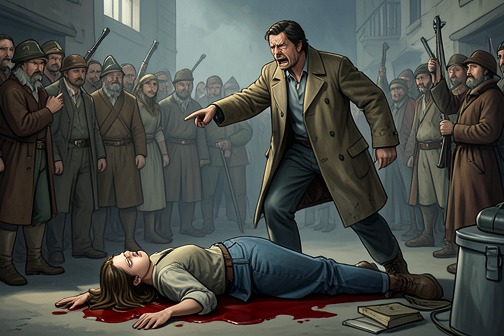
[Jenny Fields assassination](entity:event-recall-event-jenny-fields-assassinat-67350ee910b7) is the murder of [Jenny Fields](entity:character-recall-character-jenny-fields-641cf7c9f582) by [Kenny Truckenmiller](entity:character-recall-character-kenny-truckenmiller-f74d3b0fec89), a man whose wife had sought a divorce after years of abuse. The event links Jenny’s public influence to a private struggle for safety and independence, then returns as a test of Garp’s judgment about political extremism and violence.
## Causes and Background
Kenny Truckenmiller’s wife had endured repeated abuse by her husband and abuse of their three children. For years, she regarded the suffering as her own problem and lot in life. Reading Jenny’s autobiography, *A [Sexual Suspect](entity:expression-recall-expression-sexual-suspect-9fa68f68e443)*, helped her recognize that Kenny was responsible for the violence and consider what rights she might have. She obtained a divorce with the assistance of a New York divorce lawyer.
Kenny blamed the women’s movement for his wife’s self-education and divorce. He told friends that child support was financially crushing him and that women’s liberation had changed his wife. His resentment thus fell not only on his former wife but also on the ideas that had helped her understand her circumstances.
## The Murder and Its Aftermath
Kenny was the man who killed Jenny Fields. He was later shot by [New Hampshire](entity:location-recall-location-e37d39d166af) State Police and other armed hunters who had been cruising a parking lot. His death ended the child-support payments his former wife had depended on, leaving her responsible for supporting their three children, one of whom was in a reform school for preteens.
The practical consequences were immediate for the family Jenny’s influence had helped set on a new course. The former wife continued working as a hair stylist in [North Mountain, New Hampshire](entity:location-recall-location-north-mountain-new-h-d2998f366064), but found it difficult to support the family on that income alone. In an application to the board, she said she had been forced to compromise herself to make ends meet and did not want to repeat that compromise. Although she did not identify herself by a first name, she acknowledged that her hatred of Kenny might prejudice the board against her and said she would understand if it chose not to help.
## Meaning and Later Recollection
When Garp later considers Jenny’s murder, he describes it as the work of madness, extremism, self-righteousness, and monstrous self-pity. He calls Kenny a thug and a true believer: someone so absorbed in self-pity that he could make enemies of people who had contributed only ideas to his undoing. The murder, in this reading, arises from Kenny’s conversion of grievance into blame directed at others.
That judgment also sharpens Garp’s scrutiny of the Ellen Jamesians. He asks whether their gesture is similarly desperate and empty of an understanding of human complexity, then announces, nastily, that the motion will be withdrawn and that the Ellen Jamesians should live. He does not, in fact, withdraw it. [John Wolf](entity:character-recall-character-27a1f0511f5f) counters that they have not murdered anyone, distinguishing their actions from Kenny’s lethal violence. Jenny’s assassination therefore remains a point of comparison in Garp’s argument about fanaticism, but the scene also insists on a difference between a protest he condemns and a murder.
Event 21
Publication of “Why I’m Not an Ellen Jamesian” and the ensuing controversy
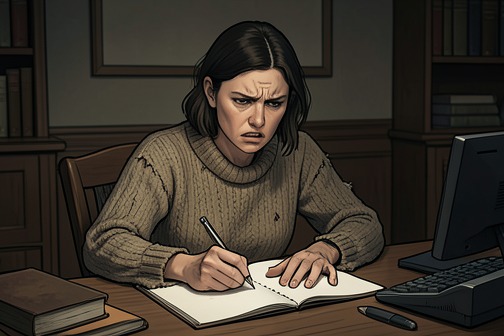
The publication of “Why I’m Not an Ellen Jamesian” and the ensuing controversy begins with Ellen James asserting that the movement organized around her experience does not speak for her. The essay, written by the survivor herself, challenges the public appropriation of her trauma; its reception then repeats that appropriation in a new form, as readers and activists recast her position as the product of [T. S. Garp](entity:character-recall-character-t-s-garp-24798a61a34d)’s influence. The episode turns publication into a struggle over who may interpret an injury, and whether telling a story publicly restores a survivor’s voice or makes her more exposed to other people’s claims.
## Background and the essay
Ellen’s history explains why the movement’s symbolic use of her mattered. At eleven, she was raped by two men who cut out her tongue to prevent her from identifying them. Unable to speak, she wrote a careful description; the men were caught, convicted, and later murdered in prison. The account makes clear that Ellen was not one of the women who had adopted her name: she was the child whose experience gave their protest its symbol.
The Ellen Jamesians’ response to that history was not presented as having a single motive. Some sought to publicize the danger faced by women and girls; for some, the act of identifying with Ellen was personal, including for women who had themselves been raped and felt silenced. At the same time, Ellen experienced the movement’s imitation as an extension of her anguish and as a transformation of a private trauma into a public identity. The tension is central to the event: solidarity could express genuine hurt, yet still fail to attend to the person whose story made that solidarity possible.
Helen sees Garp’s renewed interest in the essay as a possible return to writing and does not try to suppress his enthusiasm. The account of Ellen’s rape, her own difficulty living with it, and her parents’ difficulty moved him. It also sharpened his sense that the movement’s imitation could trivialize an experience it claimed to honor. But the essay’s force does not settle the question of whether publication will help Ellen; her testimony also risks becoming another public instrument in a dispute conducted by others.
## From private writing to publication
Garp wants Ellen’s position heard by the movement’s members and supports her in submitting the essay. Helen questions what publication would accomplish and asks whether Garp’s interest is really for Ellen’s benefit or partly a wish to humiliate the Ellen Jamesians. Garp acknowledges her challenge but insists that the women should hear the account from its original source. The disagreement exposes the difference between encouraging Ellen’s right to speak and treating publication as a means of winning an argument.
Ellen sends the essay directly to [John Wolf](entity:character-recall-character-27a1f0511f5f) without either Garp or Helen knowing. When Wolf contacts Garp about the manuscript, Helen would rather have it returned; Ellen, however, tells Wolf she wants it published. Helen argues that its publishability should rest on the writing, not on the controversy surrounding it. Garp initially refuses to intervene, though Helen points out that silence may still serve his wish to see the attack published. He then tries to dissuade Ellen, reasoning that the movement’s members are troubled people and that public criticism will not necessarily help her. The decision remains Ellen’s: she chooses publication despite the objections and calculations of those closest to her.
## The first reception
The essay initially appeared without provoking an immediate public dispute. Its publication did, however, bring Ellen personal letters of condolence and propositions from men whose responses were hostile to feminism but who imagined that she might share their position. The distinction between speaking for herself and being claimed by another side surfaced at once: even support could arrive as another attempt to assign her a place in a conflict she had tried to address in her own words.
No Ellen Jamesian wrote to her in response at first. That silence did not mean the essay had resolved the disagreement or that the movement had accepted her account. The delay before letters to magazine editors appeared left a brief interval between publication and organized reply, during which Ellen had to contend with individual responses while the larger public argument was still gathering.
## Backlash and public recasting
The magazine’s next issue carried an extended, letter-like essay by a group of Ellen Jamesians responding to Ellen’s declaration that she felt used by them and disliked their movement. The editor had apparently disclosed that Ellen now lived with T. S. Garp, giving the group a new basis for challenging her account: they portrayed her as a child brainwashed by a male adversary. Their letters called Garp “seductive,” “slimy,” and “underhanded,” turning Ellen’s disagreement into supposed evidence of his manipulation. The controversy thus displaced her own stated position with competing claims about who had shaped it.
Ellen felt betrayed by the editor and broke down in tears. Her distress reached the rest of the household: Helen came from the reading room, Duncan from the darkroom, and baby Jenny woke from her nap. Garp decided to answer the activists, despite the risk of making the dispute larger. In his published reply, he insisted that Ellen was a rape victim whose experience preceded her ability to make up her own mind about sex and men. The piece became his first published work since [The World According to Bensenhaver](entity:expression-recall-expression-the-world-accordin-cb2c3cb61c1d), though his return to publication came through a public argument about Ellen rather than through fiction.
The event’s central conflict is not simply whether the movement’s politics are right or wrong. The novel acknowledges that some members meant to draw attention to the danger confronting women and girls, and that some identified with Ellen through their own experiences of rape and silencing. Yet it also shows how a collective protest can claim authority over the person it invokes. Ellen’s essay challenged that claim; the response then recast her as manipulated, making her independence itself a reason to doubt her. Garp’s defense sought to restore her standing as the source of her own account, but his intervention also placed him at the center of the dispute and helped turn the publication into a larger spectacle.
## Aftermath and the cost of speaking
The essay’s initial reception did not end with the magazine’s first issue. The next issue’s collective reply converted Ellen’s own account into a new public dispute, while the editor’s disclosure of her household helped the Ellen Jamesians portray her as manipulated by Garp. Their accusation made her chosen position harder to hear on its own terms: disagreement with the movement was recast as evidence that she had been influenced by a man. Ellen’s distress showed the personal cost of that recasting, while the household’s response placed the controversy within the family life she shared with Garp, Helen, Duncan, and baby Jenny.
Garp’s reply made the episode his first published work since The World According to Bensenhaver, but the route back to print was neither a return to fiction nor a settled reconciliation. He had earlier argued for publication partly because he wanted the Ellen Jamesians to hear Ellen directly; after the backlash, he acknowledged in a letter that the need behind their identification with her had been genuine, even while he believed they had used her. He also described himself as at least partly responsible for the death of a woman whose violent attempt to kill him had followed the controversy, and apologized. The responses in print rejected the apology and interpreted it as fear, while the narrative says Garp wrote chiefly to clear his mind and resume serious writing, not to cleanse his conscience.
That aftermath leaves the event unresolved. Ellen’s publication asserted her right to describe her own experience, but neither publication nor Garp’s defense prevented others from claiming to know what her words meant. The essay’s controversy therefore turns on more than visibility: speaking publicly can challenge the appropriation of a survivor’s story, yet the publicity can also expose that story to further uses, including uses made in the name of solidarity or protection.
Event 22
Attempted assassination of T. S. Garp in a white Saab

The attempted assassination of [T. S. Garp](entity:character-recall-character-t-s-garp-24798a61a34d) in a white Saab occurs during a solitary run between [Steering](entity:location-recall-location-steering-9ec894147b9a) and [Dog’s Head Harbor](entity:location-recall-location-dog-s-head-harbor-e2368581f23a). A driver who had passed him once returns with the engine off and aims the car at him; Garp escapes over a stone wall, and the Saab crashes. The driver is killed, and evidence in her belongings identifies her as an Ellen Jamesian. The episode turns Garp’s sustained concern about cars and their threat to people into a direct attack, while leaving him to confront the lethal consequences of the conflict his public words have helped intensify.
## Background: Running Against the Car
Garp’s running has long been bound up with the danger posed by motorists. When a driver asks what he is training for, Garp says he is staying in shape to chase cars. The answer conceals a serious distinction: on open roads, he does not pursue motorists, but in his neighborhood he does chase drivers who speed. He trains on the open road, he explains, because the suburbs are what he is preparing to defend.
That vigilance has practical roots in a neighborhood where children play and cars must repeatedly slow for intersections. Garp believes he can catch a speeding car by cutting across lawns, porches, hedges, and children’s play areas, rather than stopping at the stop signs that constrain drivers. He confronts motorists in a beseeching voice, asking them not to speed where children live. In his view, a car’s dominance is conditional: it may rule the open road, but not yet his neighborhood. He also recognizes a limit to his campaign, and does not chase cars at night, when he believes the car is king even in the suburbs.
## The Run and the Attack
The encounter takes place on a road running from Steering toward Dog’s Head Harbor. Garp is alone, approaching the halfway point before turning back, when a dirty-white Saab passes him, seems to slow, and then continues out of sight. It has passed in its proper lane; at first, nothing about the movement seems plainly suspicious.
Garp’s recollection of that first pass becomes decisive. As the Saab approaches him again, he remembers that it had slowed and that the driver’s head seemed to be lining him up in the rearview mirror. He looks away from the cattle he has been watching and sees the Saab coasting silently toward him along the soft shoulder, its engine cut. The deliberate change in the car’s course transforms an apparently ordinary encounter on the road into an attack.
Garp reacts by bounding over a stone wall and an electric fence. The Saab strikes the wall, and the driver dies in the crash. Garp initially knows he has survived and approaches the wreck. He identifies the dead driver as an Ellen Jamesian by looking at her mouth, then searches her purse. It contains a notepad and pencil, along with used and unused notes. One note explains that the writer had never been raped and had never been with a man, but had devoted her life to sharing Ellen James’s suffering. The driver’s identity and stated purpose are thus established through the belongings she left behind, rather than through any conversation with Garp.
## Aftermath and the Ellen Jamesians
The crash leaves Garp with an aggravated old groin injury, but he is able to jog back toward town. A yogurt truck picks him up, and he and its driver go together to inform the police. By the time the truck passes the crash site, the [Angus cattle](entity:creature-recall-creature-angus-cattle-e01de79dc7f4) have escaped through the damaged stone wall and gathered around the Saab. The scene joins the consequences of the car’s violence to the rural landscape through which Garp had been running.
The attack also reverberates beyond the road. A spokesperson for the Ellen Jamesians calls it an isolated act, says it was not authorized by the group, and nevertheless claims it was provoked by Garp’s aggressive, supposedly rapist character. The statement disclaims responsibility without expressing surprise or particular sorrow. It does not establish that the group organized the attack; instead, it displays the hostile logic through which the movement’s representative addresses Garp and the violence committed in its name.
Helen experiences the event as a private shock. Awake beside Garp afterward, she wonders whether the dead Ellen Jamesian was the Under Toad, embraces him, and holds him so tightly that he wakes. She cannot put her fear into words; Garp holds her until she stops shivering. Her response makes the attempted assassination part of the family’s intimate life, not merely a confrontation between Garp and his attackers.
## Significance: A Threat Made Immediate
The episode brings Garp’s recurring concern about cars into sharp focus. Earlier, he has treated the speeding automobile as a danger that can be challenged through vigilance, physical effort, and appeals made for children’s safety. Here, a car is no longer only a neighborhood hazard or an emblem of modern power: it is deliberately used against him. The prior pass, remembered at the crucial moment, supplies the clue that allows him to escape.
The attack also places his public denunciation of the Ellen Jamesians beside its consequences without making the dead driver’s act representative of the movement as a whole. Her notes disclose a personal commitment to sharing Ellen James’s suffering; the spokesperson’s response, meanwhile, rejects formal responsibility while turning the accusation back on Garp. The scene’s outcome is starkly divided: Garp survives and reaches help, the driver dies, and Helen’s wordless embrace registers how close the violence has come to the people around him.
Event 23
Garp’s return to writing
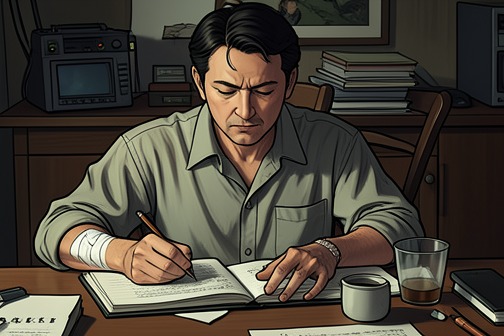
[Garp’s return to writing](entity:event-recall-event-12193e75d40a) begins after a sprained ankle sidelines him from running and redirects his energy toward fiction. In My Father’s Illusions, he turns from the accidents and traumas of daily life to invention: he imagines a father and an extended family, and feels himself becoming a novelist again. The episode marks a creative restart, but also presents that restart as an act of choosing what to make from experience rather than merely recording its wounds.
## The Injury and the Return
While running toward the sea with Roberta, Garp is knocked down an embankment when she mistakes a Volkswagen full of teenagers for a potential assassin’s car. He sprains an ankle; the teenagers take him to the [Jenny Fields Infirmary](entity:location-recall-location-jenny-fields-infirma-bab959082cba). The mishap keeps him off the road for two weeks. What begins as an interruption to his running becomes a practical opening for writing: his enforced time indoors steps up his work on the book he calls his father book.
The return follows a period in which Garp had felt led astray by what he called the mere accidents and casualties of daily life and the understandable trauma resulting from them. That history is not erased. Instead, the injury changes the balance of his days, giving him a stretch in which he can turn toward material he controls. The renewed writing is sudden, but the novel it produces answers a longer dissatisfaction with being too impressed by events as they happen.
## Inventing a Father and a Family
Garp names the project My Father’s Illusions. Its first sentence begins with a father who wants his children to have a better life, while remaining unsure what a better life would mean. The imagined father wants improvement without possessing a clear account of life itself. This opening makes uncertainty part of the book’s premise rather than a problem the narrator needs to resolve before writing.
As he had done in “The [Pension Grillparzer](entity:location-recall-location-pension-grillparzer-f9dfef5b6adc),” Garp makes up a family. He gives himself brothers, sisters, and aunts, along with an uncle who is eccentric and another who is evil. The invented kinship gives the new novel a structure beyond the father at its center. Garp takes pleasure in watching its plot thicken, a sign that invention has restored not simply the impulse to write but the sense of narrative possibility.
The contrast with daily life is explicit: because he is inventing a father, Garp feels closer to the spirit of pure imagination that he believes kindled “The Pension Grillparzer.” He becomes cocky again, feeling able to make anything up. The book therefore signals a change in method as well as renewed productivity: instead of allowing lived trauma to dictate his material, he builds a fictional family and follows the plot it opens.
## Reading Aloud and a Fresh Start
The return to writing takes place within a family circle. In the evenings Garp reads aloud to Helen and Ellen James; Duncan sometimes stays up to listen, and Roberta sometimes remains for supper and hears the pages too. The work is not presented only as private recovery. Its developing story becomes something shared with the people around him, heard in the ordinary setting of evening reading.
A related father-and-son project points toward another kind of beginning: Garp looks forward to publishing “The Pension Grillparzer” with illustrations by Duncan, a book intended for children as well as adults. He regards that collaboration as starting over, going back to the beginning and getting a fresh start. The idea of starting again carries its own illusions, however; the narrative treats the promise of a clean beginning with awareness of how readily it can blossom into fantasy.
## Writing Beyond the Novel
Garp’s renewed energy also affects his work with the [Fields Foundation](entity:organization-recall-organization-fields-foundatio-39c1ab9e576f). He becomes unusually generous, repeatedly arguing that applicants sound sincere or have had hard lives and asking whether the foundation has enough money to help them. The other board members, including Marcia Fox, are exasperated by his readiness to give every applicant something. This generosity accompanies his creative return, but it also creates a practical conflict over how the foundation’s resources should be spent.
The episode places renewed invention beside unresolved consequences rather than offering writing as a simple cure. Garp has been drawn back to fiction by a forced pause, and the imagined father and family give him a way to make a plot instead of remaining fixed on daily casualties. Yet the people and obligations around him persist: he reads to his household, anticipates a book with Duncan, and presses the foundation toward giving. His return is thus both artistic and relational, a new beginning that unfolds within the life he already has.
Event 24
Death of Walt Garp
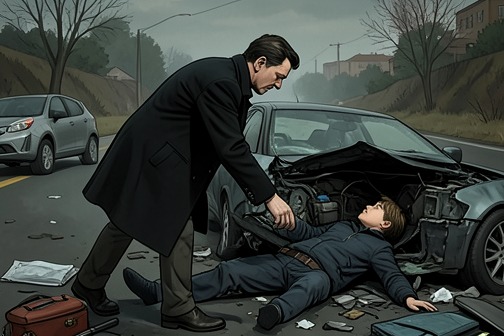
The death of [Walt Garp](entity:character-recall-character-walt-garp-9df1ba89475d) is the family tragedy around which later memories, images, and acts of care gather. Although the cited passages do not recount the fatal moment itself, they show its enduring consequences: Garp’s anxiety about children’s safety, Duncan’s imagined connection to his dead brother, and the family’s repeated work of remembering him without recovering what was lost.
## Background and Aftermath
Walt was killed in the collision between the family’s Volvo and a three-ton Buick. The impact also left Duncan with the loss of his right eye and Helen with serious injuries. Garp had reached toward Duncan, but could not prevent him from being thrown forward. The account’s precise contrast between the Volvo’s modest speed and the force of the collision makes the catastrophe more than a simple story of reckless driving: even at a speed estimated at no more than twenty-five to thirty-five miles per hour, the collision was devastating.
The family’s recovery took place at [Dog’s Head Harbor](entity:location-recall-location-dog-s-head-harbor-e2368581f23a), where [Jenny Fields](entity:character-recall-character-jenny-fields-641cf7c9f582) helped care for them. Helen devoted herself to nursing Duncan, while Jenny hoped to nurse Garp. The sea became inseparable from Duncan’s convalescence, and the household’s care for his wounds unfolded alongside the absence of Walt. In this account, healing does not undo the loss; it gives the survivors a way to live with its consequences.
## The Loss in the Family’s Memory
Duncan described his missing right eye as sometimes seeming not entirely gone: he could almost see through it, though what he saw felt like memory rather than reality. Garp suggested that it had become the eye with which Duncan saw his dreams. The exchange gives the accident’s consequences a language of absence and persistence: the lost eye remains present in Duncan’s imagination, just as Walt remains present in the family’s understanding of what it means to grow up.
Duncan’s later paintings made that memory visible. His series *Family Album* drew on photographs he had taken as a child after the accident, portraying [Roberta Muldoon](entity:character-recall-character-roberta-muldoon-a89d3285f960), Jenny Fields, Helen at Dog’s Head Harbor, and Garp running on the beach. Another series, twelve small paintings of a dirty-white Saab titled *The Colors of the World*, returned to the car associated with the family’s catastrophe. In larger group portraits, critics recognized Walt in a blank face or in a small repeated figure turned away from the viewer. The paintings preserve traces rather than restore a complete image: Walt’s presence is marked by what cannot be shown directly.
## Garp’s Vigilance and Care
After the loss, Garp’s concern for children’s safety became part of his daily life. He ran five miles and confronted speeding motorists in his neighborhood, telling them it was full of children and asking them not to speed there. He distinguished those residential streets from the open road, where he accepted that cars had greater freedom, but insisted that drivers slow down where children lived and played. The routine’s humor and persistence carry the force of a response to vulnerability: Garp could not protect his own family from catastrophe, but he tried to make the danger around other children harder to ignore.
His vigilance also shaped ordinary parenting. When rain disrupted his routine, Garp picked up Walt from day care, took him to wrestling practice, and checked whether Duncan was home. He reminded Duncan to be careful on his bicycle and quizzed him about emergency phone numbers, including what to do in a fire or other crisis. These repeated precautions show care as practice—specific, anxious, and built into daily schedules—rather than as an assurance that danger can be eliminated.
## Inheritance and Continuing Presence
Walt’s death affected Duncan’s sense of the future. Duncan later said he did not want children because they were too vulnerable and he could not bear watching them grow up; he clarified that he could not bear watching them fail to grow up. The statement links his choice to the family’s experience of sudden loss, while showing that grief continued to shape life long after the accident.
The novel’s later recollections keep Walt present through different forms: Duncan’s account of the imagined eye, the small turned-away figure in his paintings, and Garp’s protective habits. These acts of remembrance do not resolve the family’s loss. They show how the dead remain part of the living family’s daily conduct and creative work, not as a recovered past but as a continuing bond marked by absence.
Event 25
T. S. Garp’s assassination
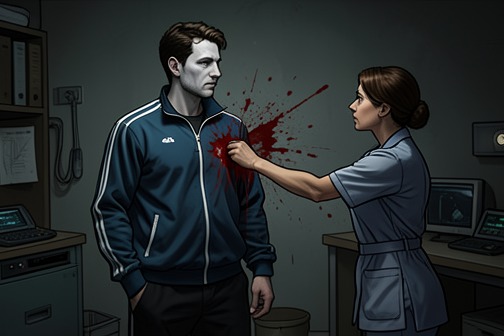
[T. S. Garp’s assassination](entity:event-recall-event-c2cbe535959b) occurs in the wrestling room at [Steering](entity:location-recall-location-steering-9ec894147b9a) School, where Bainbridge Percy enters disguised as a nurse and shoots him during practice. [Helen Holm](entity:character-recall-character-helen-holm-eb61f51fe38c) prevents a further attack, but Garp dies in the room before he can be moved. The event brings his life as a writer, husband, father, and public figure to an abrupt close, turning a familiar place of coaching and care into the setting of his death.
## Causes and Background
The immediate target is Garp, but the event follows a public dispute about how the trauma of Ellen James should be understood and represented. After reading Ellen’s account of her rape and the suffering it caused her and her parents, Garp was moved by its insistence that the Ellen Jamesians’ imitation of her injury had made her private trauma into a public cause. The essay also recognized that some members of the movement identified personally with women’s vulnerability and silencing. The conflict was therefore not simply between Garp and a political group: it concerned the difference between Ellen’s own testimony and other people’s claims to speak through her experience.
Garp’s response to the essay was intense. Helen knew that his excitement about it included a wish to humiliate the Ellen Jamesians publicly. The narrative preserves this tension rather than presenting his position as uncomplicated: he opposed an appropriation that had hurt Ellen, yet his own public attack risked turning the women into objects of condemnation. The later assassination follows this controversy, but the evidence does not establish a direct, specific motive for Bainbridge Percy’s act.
## The Disguise and Attack
The shooting takes place during a wrestling practice. The room is hot, the boys are already working hard on the mat, and Garp is watching the time clock while calling that one minute remains. When Helen walks past him, he has a whistle in his mouth, so she does not kiss him. This brief domestic gesture sits inside the routine of practice, just before that routine is broken.
The disguised attacker initially resembles a nurse Garp remembers from the First Feminist Funeral. He judges her by her iron-gray hair, braided and coiled around her head, and smiles back at her. The familiar appearance helps conceal the danger. When he notices the gun, he also recognizes that the clothing is not a real nurse’s uniform but a [Jenny Fields](entity:character-recall-character-jenny-fields-641cf7c9f582) Original, marked by its characteristic red heart. He then recognizes the family resemblance identifying the attacker as Bainbridge Percy.
The first shot knocks the whistle from Garp’s mouth and the time clock from his hands. He sits down as the bullet passes through his stomach and lodges in his spine. With fewer than five seconds left on the clock, Bainbridge fires again; the second shot strikes his chest and drives him back against the padded wall. The boys are stunned and initially unable to move, while the practice clock continues to mark the few seconds remaining.
## Helen and the Wrestlers Intervene
Helen acts before the boys recover from their shock. She tackles Bainbridge to the mat and prevents a third shot. Her screams rouse the wrestlers, who join in disarming the attacker. A second-string heavyweight pins Bainbridge down and pulls the gun hand free; another wrestler wrenches away the weapon. Helen is injured in the struggle, but remains focused on stopping the attack.
She then holds Garp steady as he begins to slide against the wall. The scene’s familiar roles have reversed: the coach who watches over the boys can no longer direct events, and Helen, the boys, and the nurse’s false image of care become central to what happens around him. The wrestlers’ intervention prevents further shooting, but it cannot save Garp.
## Death and Narrative Significance
As he is held by Helen, Garp understands that he cannot speak or feel. His awareness narrows to smell, brief sight, and vivid memory. He dies before anyone can move him from the wrestling room. The account gives his age as thirty-three, the same age as Helen; Ellen is just entering her twenties, Duncan is thirteen, and little Jenny is nearly three. Walt, who would have been eight, is already absent from the family’s future. These ages make the assassination not only an individual death but a rupture in the lives of those left behind.
The scene’s details bind violence to the ordinary patterns of Garp’s life: a practice clock, a whistle, a padded wall, and the protective labor of Helen and the boys. The nurse disguise makes apparent safety unreliable, while the stopped practice turns a timed contest into a final countdown. The assassination also closes the arc of Garp’s public argument about Ellen James. His later apology for the vehemence of his attack acknowledged that the movement’s need to use Ellen as a symbol had been genuine, and that he felt partly responsible for the death of a woman who had tried to kill him. The scene therefore leaves both political conviction and personal responsibility unresolved even as Garp’s life ends.
Event 26
Duncan Garp’s motorcycle crash

[Duncan Garp’s motorcycle crash](entity:event-recall-event-5828979988c2), caused by a drunk driver running a stoplight on a snowy road, leaves him severely injured and permanently changes his life. The accident recalls an earlier car collision that cost him an eye, but this time Duncan survives a prolonged recovery and goes on to become a serious painter and an innovative color photographer. The crash is at once a personal catastrophe and part of the novel’s recurring attention to how ordinary traffic can expose people to sudden, lasting harm.
## Causes and Circumstances
The crash occurs within a mile of a hospital in [Vermont](entity:location-recall-location-9a59ccc239ab). A drunk driver runs a stoplight, and Duncan sees the car too late. He tries to maneuver around it, but the snow prevents him from moving out of danger. The account identifies both the driver’s conduct and the road conditions as immediate causes; Duncan’s attempt to avoid the car cannot avert the collision.
[Roberta Muldoon](entity:character-recall-character-roberta-muldoon-a89d3285f960) reaches Duncan first. She has been skiing farther north, but [Helen Holm](entity:character-recall-character-helen-holm-eb61f51fe38c) has called her, and she gets to the hospital before Helen. Roberta’s alarmed reaction to his having ridden a motorcycle in the snow brings the family’s concern into the scene, while her question about what Duncan’s father would have said connects the injured man to his absent father.
## Injuries and Recovery
The crash leaves Duncan with extensive injuries. At first, every limb appears to be in traction, and doctors are also dealing with a complication involving his kidney. Roberta and Duncan do not yet know that one of his arms will have to be amputated. The delayed revelation makes the event’s consequences unfold beyond the moment of impact: survival begins a recovery whose full cost is not immediately apparent.
Duncan has experience with convalescence. After an earlier collision, he lost an eye; this second accident costs him an arm. The parallel does not make the injuries interchangeable: the motorcycle crash adds another permanent disability to a life already shaped by traumatic injury. The novel’s account follows the practical duration of recovery as well as the abrupt accident, showing how a single collision becomes a long period of dependence and adjustment.
## Family Care and Consequences
[Jenny Garp](entity:character-recall-character-jenny-garp-d528352a2ec5), still a freshman in college, leaves school to stay in Vermont with Duncan while he recovers. She had graduated from [Steering](entity:location-recall-location-steering-9ec894147b9a) School with the highest honors and expects to be able to return to college after his recovery. In the meantime, she volunteers as a nurse’s aide at the hospital and becomes a source of optimism for Duncan during the painful months ahead. Her choice gives the crash a consequence beyond Duncan’s body: it interrupts her education and redirects her daily life toward caring for her brother.
The family’s responses are distinct. Roberta is the first to reach the hospital; Helen has summoned her and also makes the journey; Jenny stays with Duncan and takes on practical work at the hospital. These actions frame recovery as a shared effort rather than a solitary test of endurance. The account also notes that Duncan already knows something of convalescence, linking the family’s present care to the history of his earlier accident without suggesting that prior experience makes the new crisis easy.
## Later Life and Significance
Duncan survives both accidents: the first costs him an eye, and the motorcycle crash costs him an arm. He becomes a good and serious painter and a pioneer in the artistically suspect field of color photography. His work draws on a painter’s sensitivity to color and his father’s habit of an insistent, personal vision. Its sensual, narrative realism leads some critics to call it too literal, a response that marks the tension between his distinctive approach and the standards by which his art is judged.
The crash thus does not end Duncan’s artistic life. It becomes part of a history in which injury and adaptation coexist with sustained creative work. It also belongs to the novel’s broader pattern of traffic danger: cars and roads recur as sources of risk, while the consequences fall on families who must live with what a collision changes. Duncan’s survival and later achievement do not undo the loss; they show what follows it.
Event 27
Death of Roberta Muldoon
[Roberta Muldoon](entity:character-recall-character-roberta-muldoon-a89d3285f960)’s sudden death at [Dog’s Head Harbor](entity:location-recall-location-dog-s-head-harbor-e2368581f23a) turns an ordinary glass of iced tea into a final, intimate scene: after wind sprints on the beach, she sits in a porch hammock, asks for tea, and dies before Ellen James can bring her another glass. The loss is at once personal and practical. Roberta had been a protector of the Garp family and the administrator of the [Fields Foundation](entity:organization-recall-organization-fields-foundatio-39c1ab9e576f); her death leaves Ellen to take over her work and [Duncan Garp](entity:character-recall-character-duncan-garp-0161b2a343bb), still hospitalized in traction, overwhelmed by grief.
## Circumstances and Final Hours
That spring, while Duncan was hospitalized in [Vermont](entity:location-recall-location-9a59ccc239ab), Roberta had been doing wind sprints on the beach at Dog’s Head Harbor. She stopped running and came up onto the porch complaining of popping sounds at the back of her head, or perhaps in her temples; she could not locate them precisely. The account does not name a diagnosis, but its sequence makes the warning bodily and immediate: the sounds interrupt her exercise, and she sits down in a hammock facing the ocean.
Roberta asked Ellen James to get her a glass of iced tea. Ellen sent a note out with one of the Fields Foundation fellows to ask whether Roberta wanted lemon. Roberta called back, “No, just sugar!” When Ellen brought the tea, Roberta drank the whole glass in a few gulps. She praised it as perfect and called for another, adding, “I want a whole life just like that one!” The wish gives the moment its force: it is both a joke about a glass of tea and a direct expression of appetite for continued life.
Ellen went to prepare another glass. When she returned, Roberta was dead in the hammock. The narration describes the cause only as something that had popped or burst, preserving the suddenness without specifying more. A small exchange about sugar, a drink taken quickly, and the request for another precede the abrupt discovery; the ordinary domestic scene offers no interval in which anyone can respond to the danger.
## Roberta’s Place in the Family and Foundation
The death matters beyond the porch because Roberta had made herself indispensable to people around her. Earlier, she became the in-residence administrator of the Fields Foundation at Dog’s Head Harbor, where the house served several purposes: a writers’ colony, a recovery center, and a birth-advisory clinic, with garret rooms for painters. Roberta and a small staff considered applications for aid, meeting with the Foundation’s board twice a month. Her role joined administrative work to sustained care for people seeking help.
Roberta had also repeatedly bailed out the Garp family, especially Duncan. The closeness is registered not through a general tribute but through the difference her absence makes: Duncan remembers the times she came through for them, and he takes her death harder than anyone else. The family’s dependence on her had accumulated through acts of support; her death reveals that history by leaving those who relied on her to manage the loss without her.
Her place in the Foundation was similarly personal. Ellen, whom Roberta had supported, is spared an overwhelming period of grief by being drawn into immediate responsibility: she takes over Roberta’s job. The succession keeps the work moving, but the description of the “big shoes” Ellen must fill also marks what cannot simply be transferred. Roberta’s office can be assumed; her particular combination of labor, loyalty, and presence cannot.
## The Family’s Grief and Its Consequences
Roberta’s death strikes Helen low, but Duncan’s hospitalization gives Helen a pressing concern to attend to. The practical demands around his recovery become a distraction from grief, while Ellen’s new duties likewise occupy her after the loss. These responses do not erase sorrow; they show how care and work can immediately gather around it, leaving little space for those most affected to stop.
Duncan, still in traction, cannot convert his grief into such a distraction. He cries so much that the cast on his chest has to be changed. The detail gives his mourning a physical consequence: grief interrupts the conditions of his recovery and requires medical adjustment. His reaction also gives measure to Roberta’s importance in his life, which is grounded in remembered help rather than a formal family title.
The loss also changes the Foundation’s immediate leadership. Ellen assumes Roberta’s position while the people she supported continue to need care. The transition therefore carries both continuity and rupture: the institution’s work goes on, but it does so in the wake of the death of the person who had administered it and supported Ellen herself.
## Memory and Narrative Significance
Roberta’s final words hold together the scene’s humor and pathos. Her demand for another glass and for a whole life like the one she has just enjoyed makes her appetite for living audible at the moment the narrative is about to take that life away. The line is not presented as a premonition; its force comes from the stark contrast between her exuberant request and Ellen’s return to find her dead.
The event also belongs to a wider pattern of care and remembrance. During an earlier family crisis, Helen had hoped [Jenny Fields](entity:character-recall-character-jenny-fields-641cf7c9f582) could nurse Garp while she nursed Duncan; Garp later understood his mother’s example through taking care of Ellen. After Roberta’s death, the same network of care appears in altered form: Ellen takes over Roberta’s work, Helen attends to Duncan, and Duncan’s remembered dependence on Roberta intensifies his mourning. Loss does not end these relationships, but shifts who must carry their practical obligations.
That memory persists in Duncan’s art. His series Family Album draws on childhood photographs and includes paintings of Roberta alongside Jenny Fields, his mother, and his father. The paintings make Roberta part of the family record he constructs from images, extending her place in his life beyond the moment of death. Her absence is not repaired by art, but the act of depicting her gives memory a durable form.
Event 28
Death of Ellen James

Ellen James’s death comes after a life shaped by the loss of speech, poetry, and chosen connections: in old age, she becomes a long-distance swimmer, but one cold fall day the undertow catches her when she is too tired to resist. The account links her death to the sea that had entered her poems and to the friendships and work she had built around speaking for herself and others.
## The Life Before Her Death
In the years after [Jenny Fields](entity:character-recall-character-jenny-fields-641cf7c9f582)’s death, Ellen seeks out and befriends other Ellen Jamesians. She regards this as something Jenny would have done. At poetry readings, she sits beside [Roberta Muldoon](entity:character-recall-character-roberta-muldoon-a89d3285f960), whose booming voice carries Ellen’s poems aloud. The arrangement gives a public voice to work Ellen cannot read herself and helps draw other self-silenced women out of hiding; a few become her friends.
Ellen never marries. The account allows that she may have known men, but describes those connections as grounded more in shared poetry than in their being men. She is both a good poet and an ardent feminist: she believes in living as Jenny Fields did and in writing with the energy and personal vision of [T. S. Garp](entity:character-recall-character-t-s-garp-24798a61a34d). The combination makes her, in the account’s terms, stubborn in holding personal opinions and kind to others. She also maintains a lifelong flirtation with [Duncan Garp](entity:character-recall-character-duncan-garp-0161b2a343bb), described as her younger brother, really.
## Swimming and the Sea in Her Poetry
In old age, around the time she succeeds Roberta as director of the [Fields Foundation](entity:organization-recall-organization-fields-foundatio-39c1ab9e576f), Ellen takes up long-distance swimming. She trains by swimming several times across the wide neck of [Dog’s Head Harbor](entity:location-recall-location-dog-s-head-harbor-e2368581f23a). Swimming becomes more than a physical pursuit: her last and best poems use it and the sea’s pull as metaphors.
A letter to Duncan makes that imagery intimate and playful. Ellen compares swimming to the strenuousness and gracefulness of arguing with his father, and imagines the sea eager to reach her landlocked heart. She then turns the thought into teasing banter, suggesting that Duncan would call swimming her substitute for sex. The letter shows her keeping a lively connection to Duncan and to Garp’s presence through argument remembered as something both difficult and graceful.
## The Fatal Swim
Ellen’s death occurs on a cold fall day when she is too tired and the undertow takes her. The narrative presents the outcome plainly: the long-distance swimmer who had repeatedly crossed the harbor does not overcome the water on this final occasion. Her death is not described as a deliberate act; it follows exhaustion and the sea’s pull.
The ending darkens the metaphor that had sustained her later poetry. Ellen had written of teasing with the sea, but she had never fully understood the undertow. The water that supplied her poems with images of attraction and resistance becomes an actual, irreversible danger.
## Consequences and Significance
Ellen’s death causes Duncan much sorrow. That consequence gives her final episode a personal measure beyond the circumstances of the swim: the loss is felt by someone with whom she had maintained a lifelong, affectionate flirtation and to whom she had written about both swimming and Garp.
The account closes Ellen’s life amid continuities rather than a simple resolution. Her work at the Fields Foundation follows her friendship with Roberta; her poems carry forward the sea imagery of her swimming; and her letter preserves a teasing voice and a family bond. The fatal undertow turns that recurring imagery into the condition of her death, while the sorrow it leaves behind underscores the cost of losing a person whose life had joined artistic independence with care for others.
Event 29
Death of Helen Holm
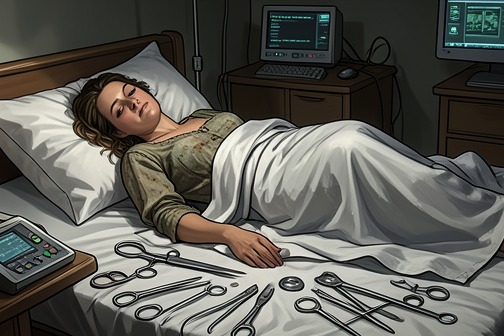
[Helen Holm](entity:character-recall-character-helen-holm-eb61f51fe38c)’s death comes late in a life marked by loss, enduring family bonds, and a determination to protect [T. S. Garp](entity:character-recall-character-t-s-garp-24798a61a34d)’s literary legacy. After telling Duncan that she had outlived all her favorite contemporaries, she is stricken by an illness affecting the body’s mucous membranes and dies in her sleep. Her family’s grief, and the papers she has kept safe, make her death both a private bereavement and a turning point in who will safeguard Garp’s memory.
## Circumstances of Her Death
Very late in life, Helen tells Duncan that she has survived all her favorite contemporaries. Soon afterward, she is suddenly stricken with an illness affecting the body’s mucous membranes. She dies in her sleep; the account gives no further details of the illness or her final hours.
The quietness of the death contrasts with the long history of violence and loss that has shaped the family. Helen had lived through Garp’s death and other departures among those closest to her, yet her own passing is described simply and without spectacle.
## Grief and Family
Helen understands herself as a widow left with three children: Duncan, baby Jenny, and Ellen James. All three outlive her and weep copiously when she dies. Their intense grief contrasts with their response to Garp’s death: they had been too young and too astonished then to weep as much.
This contrast makes Helen’s death a measure of how the family has changed. By the time she dies, the children can mourn her openly; she has remained a central figure in their lives after Garp’s death. Her self-description as a widow with three children also underscores that her family bonds extend beyond biological parenthood.
## The Guardian of Garp’s Work
Helen outlives biographers waiting for her death so they can claim access to Garp’s papers. She has protected his letters, the unfinished manuscript of *My Father’s Illusions*, and most of his journals and jottings. To would-be biographers, she gives the injunction, [“Read the work. Forget the life.”](entity:rule-recall-rule-read-the-work-forget-the-b7365481d208) The statement expresses the principle behind her stewardship: Garp’s writing should be read without treating his private life as the key to its meaning.
Helen is not only a custodian of Garp’s surviving work. She writes several respected articles in her own field, including “The Adventurer’s Instinct in Narration,” a comparative study of Joseph Conrad and Virginia Woolf. Her professional work and her protection of Garp’s papers establish distinct forms of literary commitment that continue until late in her life.
## Narrative Significance
Helen’s death closes a long arc of care and survival. Earlier, after the family’s car crash, she had helped nurse Duncan through recovery at [Dog’s Head Harbor](entity:location-recall-location-dog-s-head-harbor-e2368581f23a) and hoped Jenny could nurse Garp. In the years that followed, she remained a widow and mother to the family she names, while also defending Garp’s papers from those who would reduce his work to biography.
Her passing therefore brings both personal mourning and a change in the custody of memory: the woman who kept Garp’s letters and unfinished manuscript safe is gone, while the surviving children mourn the person who had outlived the generation she loved.