after ten years in the mountains
The Descent Begins
At thirty, [Zarathustra](entity:character-recall-character-zarathustra-e6c4746cdd2b) leaves his home and retreats into the mountains, where he spends ten years in solitude with his spirit. At last he feels his wisdom has grown too abundant to keep and resolves to descend among people and give it away.
Addressing the sun, he compares himself to a cup that must overflow before it can be emptied again. His departure begins [Zarathustra’s Down-going](entity:event-recall-event-zarathustra-s-down-goin-d6ccdcd5f577): the movement from solitary thought toward an attempt to transform human life.
during the descent
The Hermit in the Forest
On the way down, [Zarathustra](entity:character-recall-character-zarathustra-e6c4746cdd2b) meets an old saint who once knew him. The man has withdrawn from humanity to love [God](entity:character-recall-character-833766c1de3f) instead, and urges Zarathustra to stay among the animals rather than return to people.
Zarathustra says that he loves humanity and brings it a gift. After they part, he realizes the hermit has not heard that [God is dead](entity:expression-recall-expression-god-is-dead-e9948ca9fa46), a discovery that sharpens the distance between his new teaching and the old faith.
his first day among people
The Marketplace Sermon
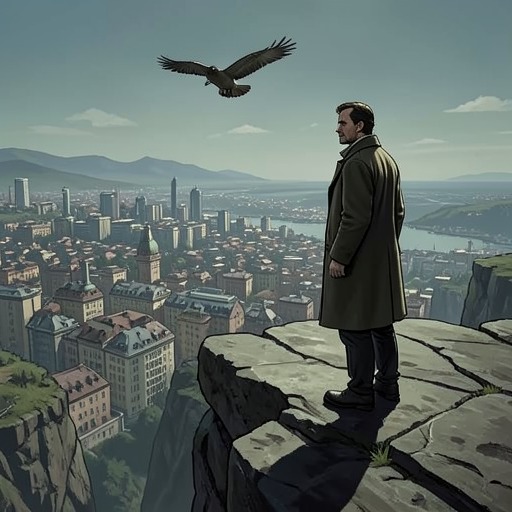
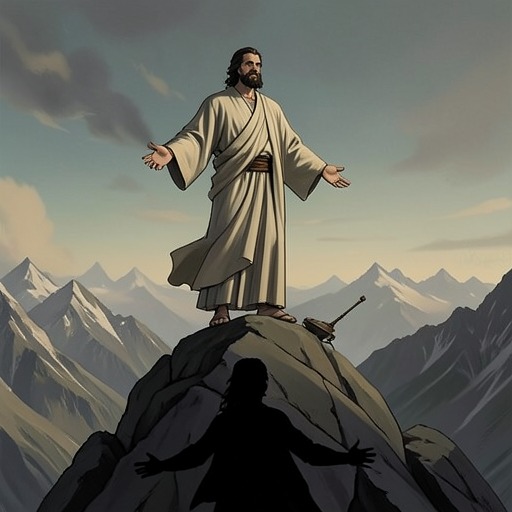
In the town’s marketplace, where a crowd has gathered to watch a tightrope walker, [Zarathustra](entity:character-recall-character-zarathustra-e6c4746cdd2b) announces that man must be overcome and that the [Superman](entity:expression-recall-expression-superman-4d2aac87959a) should become the meaning of the earth. He warns his listeners against fleeing into afterworlds and calls them to remain true to earthly life.
He describes man as a polluted river that must be received by a greater sea, and presents the Superman as the overcoming of humanity’s present limitations. The crowd fails to understand him and asks instead to see the tightrope walker.
during the marketplace address
The Ultimate Man
When the crowd dismisses his first teaching, [Zarathustra](entity:character-recall-character-zarathustra-e6c4746cdd2b) tries another approach: he portrays the Ultimate Man, content with comfort, safety, and small pleasures. This figure has abandoned difficult hopes and congratulates himself on having discovered happiness.
The people laugh and ask Zarathustra to make them into such men, preferring the diminished future to the [Superman](entity:expression-recall-expression-superman-4d2aac87959a). Their response shows that they do not want the risk or self-overcoming his vision demands.
as Zarathustra speaks in the marketplace
The Tightrope Walker’s Fall
The tightrope walker begins his crossing between two towers. A brightly dressed buffoon follows him, taunts him, and finally leaps over him; the walker loses his balance and falls near [Zarathustra](entity:character-recall-character-zarathustra-e6c4746cdd2b), fatally injured.
The dying man fears the Devil and Hell, but Zarathustra tells him that neither exists and promises to bury him. Rather than condemn him, Zarathustra honors the danger he made his vocation, while the fall makes human existence seem precarious and without an assured meaning.
that evening and the following dawn
The Last Companion
After the crowd disperses, [Zarathustra](entity:character-recall-character-zarathustra-e6c4746cdd2b) carries the dead tightrope walker through the dark streets. The buffoon warns him that the town’s good, just, and faithful people hate him, while gravediggers mock his burden.
Zarathustra shelters the corpse in a hollow tree and sleeps in the forest. On waking, he understands that he needs living companions who follow themselves, not dead companions or a herd; he will seek creators who can make new values.
after Zarathustra reaches Pied Cow Town
The Three Metamorphoses
Addressing his companions in [Pied Cow Town](entity:location-recall-location-d5db95265b91), [Zarathustra](entity:character-recall-character-zarathustra-e6c4746cdd2b) describes the spirit’s transformation into a camel, then a lion, and finally a child. The camel bears heavy inherited duties; the lion wins freedom by saying No to the dragon of established commands.
But the lion cannot create new values. That requires the child’s innocence, forgetfulness, and sacred Yes: the spirit must become capable of beginning again and making a world of its own.
early in Zarathustra’s teaching in Pied Cow Town
The Sleep Preacher
[Zarathustra](entity:character-recall-character-zarathustra-e6c4746cdd2b) listens to a celebrated teacher advise the young to practice virtues that ensure peaceful sleep: self-control, reconciliation, cheerfulness, obedience, and modest ambition. The lesson reduces virtue to a means of avoiding disturbance.
Zarathustra privately laughs at the teaching. It reveals why people seek conventional moral instruction, he concludes: they want security and dreamless rest, not a life that tests or enlarges them.
during the early discourses
The Rejection of Afterworlds
[Zarathustra](entity:character-recall-character-zarathustra-e6c4746cdd2b) recalls that he too once imagined the world as a dream of a suffering [God](entity:character-recall-character-833766c1de3f) and sought meaning beyond humanity. He now sees such beliefs as human creations born from suffering, bodily despair, and the wish to escape the earth.
He urges the sick and weary not to despise their bodies or invent a heavenly refuge from life. The body, he teaches, is the source from which the spirit and its meanings arise.
during the early discourses
The Body’s Hidden Self
[Zarathustra](entity:character-recall-character-zarathustra-e6c4746cdd2b) challenges those who despise the body, arguing that the conscious Ego is only a small instrument of a deeper bodily intelligence. The Self, rooted in the body, organizes thoughts and feelings in the service of its own purposes.
A person’s values and judgments are not detached truths but creations of this deeper Self. By turning away from the body, its despisers also turn away from life’s possibility of creating beyond itself.
during the early discourses
The Creator’s Virtue
[Zarathustra](entity:character-recall-character-zarathustra-e6c4746cdd2b) tells each person to recognize a virtue that is genuinely their own, rather than borrowing a public name or treating morality as a divine law. Passions once condemned as vices can be transformed into virtues when they are brought into a person’s own creative purpose.
Such virtues may also conflict and eventually demand to be overcome. Zarathustra’s teaching makes virtue a stage in becoming, not a settled code that protects a person from change.
during the early discourses
The Creator’s Solitude
[Zarathustra](entity:character-recall-character-zarathustra-e6c4746cdd2b) warns anyone seeking solitude that leaving the herd is not enough: the solitary must be able to make a law for himself and endure its judgment. The path to the creator passes through self-conflict, shame, and the destruction of what the seeker once was.
He tells the would-be creator to become ashes before becoming new. [Solitude](entity:state-recall-state-solitude-d1476512d31e) is therefore both refuge and ordeal, demanding the strength to create a self rather than merely escape society.
at the end of Part One
The Gift and the Farewell
Before leaving his disciples, [Zarathustra](entity:character-recall-character-zarathustra-e6c4746cdd2b) speaks of the bestowing virtue: abundance gathers strength in order to give, and the creator must bring earthly meaning back to life rather than send it toward heaven. He urges his followers to become creators in their own right.
He then warns them not to remain pupils or believers in him. They must lose their teacher and find themselves; only after they have denied him can he return to them for the great noontide, when humanity recognizes the [Superman](entity:expression-recall-expression-superman-4d2aac87959a) as its hope.
months after Zarathustra returns to solitude
The Mirror Dream
After withdrawing to his cave, [Zarathustra](entity:character-recall-character-zarathustra-e6c4746cdd2b) dreams that a child holds up a mirror. Instead of seeing himself, he sees a devilish grimace and understands the vision as a warning that enemies have distorted his teaching and turned its wheat into weeds.
The dream renews his longing to find his lost friends. His happiness returns with the decision to descend again and speak, even to those who oppose him.
during Zarathustra’s second descent
The Blissful Islands
Among his companions, [Zarathustra](entity:character-recall-character-zarathustra-e6c4746cdd2b) argues that people should not project their hopes into a [God](entity:character-recall-character-833766c1de3f) but should use their creative will to imagine and prepare for the [Superman](entity:expression-recall-expression-superman-4d2aac87959a). He declares that if gods existed, he could not endure not being one, and takes this as another reason to deny them.
He presents creation as a response to suffering: the creator must endure transformation and loss to bring a new form into being. Willing, he teaches, liberates because it creates rather than submits to a fixed world.
during the second part
The Lesson of Pity
[Zarathustra](entity:character-recall-character-zarathustra-e6c4746cdd2b) warned that mercy may harm the self-esteem of the suffering, trapping both the helper and the helped in weakness. He preferred to give help with caution and argued that people should learn to enjoy life more fully, rather than seeing suffering as the core of goodness. In his view
during the second part
The Tarantula’s Doctrine
In an ancient temple, [Zarathustra](entity:character-recall-character-zarathustra-e6c4746cdd2b) faces off against a wolf spider. The wolf spider proclaims equality, yet secretly harbors a desire for revenge against those it hates. It points out that their just words conceal a desire to punish others and a desire to bring all differences down to their own
near the end of Part Two
The Silent Turning Point
Zaratustra returned to his followers, and a mysterious silence spoke to him, saying that it knew a teaching yet to be spoken. It urged him to speak even if it would cause him to collapse, and accused him of refusing to bear the authority required by insight. At first Zaratustr
during the sea voyage in Part Three
The Vision of the Shepherd
After departing from the island of Fulu, [Zarathustra](entity:character-recall-character-zarathustra-e6c4746cdd2b) told the sailors a vision: he climbed the mountain path, his spiritual gravity pressing heavily on his steps. Before the gate named "Moment," he questioned whether the past and future might converge into a circle, making everything inevitably return. The
after the voyage and before reaching his cave
The Return to Solitude
After the sorrow had slightly subsided, [Zarathustra](entity:character-recall-character-zarathustra-e6c4746cdd2b) reflected on the companions he hoped to create and the necessity of testing them in solitude. He imagined them as trees strong enough to withstand storms, as co-creators rather than dependents. He struggled to awaken the deepest thought he had always
during Zarathustra’s return journey
The Blessing of Chance
Before sunrise, [Zarathustra](entity:character-recall-character-zarathustra-e6c4746cdd2b) spoke to the clear sky as a companion and learned to bless existence, rather than demanding existence to obey some eternal plan. He refused to believe that there is a rational will governing everything, and left room in the world for chance, accident, and generation
after Zarathustra reaches the settled lands
The Smaller People
Zaratustra returned to a place where people live, and found that people had made their home, aspirations, and virtues narrow. They value comfort, limited security, and avoiding harm, yet they regard these restrictions as goodness
on the road to his mountain
The Ape at the City Gate
At the gate of the Great City, a malicious imitator, known as the Ape of [Zarathustra](entity:character-recall-character-zarathustra-e6c4746cdd2b), advised him to avoid the Great City and looked down upon the residents of the city. Zarathustra condemned him for speaking out of hatred rather than love, and turned Zar
on the return through Pied Cow Town
The Apostates
In the town of Ban Niu, [Zarathustra](entity:character-recall-character-zarathustra-e6c4746cdd2b) found that some of his old followers had become weary and had once again begun to pray. Their former courage had faded, and they now longed for familiar comfort, gathering together to restore religious habits
after the journey through the towns
The Homecoming
Zaratustra returned to the cave, making solitude his home. He recalled that crowds made him more lonely than the wilderness, and he remembered trying to pour everything into the crowd, yet only leaving him with thirst and exposure. In solitude, speech and thought became clear again; while the continuous noise
after the homecoming
The Three Evil Things
In a dream, [Zarathustra](entity:character-recall-character-zarathustra-e6c4746cdd2b) re-evaluates the three long condemned evils: sensory pleasure, power desire, and selfishness. He re-evaluates them as the source of life force, provided they originate from a strong, creative life, not from fear or possessiveness
late in Part Three
The Old and New Tablets
[Zarathustra](entity:character-recall-character-zarathustra-e6c4746cdd2b) stands among broken and half-written laws, recalling the teachings he once imparted to the crowd. He calls upon the creators to shatter inherited moral codes, to create values that serve a future beyond the present herd. He teaches his followers to transform every "thus it was,"
after Zarathustra returns to his cave
The Convalescent
Zaratustra woke up in fear, summoning the abyssal thoughts he had always avoided: all things, including the smallest, most weary human life, will eternally recur. This realization weighed heavily on him; he then fell down and was sick for seven consecutive days
during the convalescence
The Great Longing
During his recovery, [Zarathustra](entity:character-recall-character-zarathustra-e6c4746cdd2b) spoke to his soul, saying that he had taught it to transcend the limitations of shame, obedience, and inheritance. He gave the soul various images and names, allowing it to express its abundance, until it became a vine laden with fruit, bearing the songs of
during the convalescence
The Song of Recurrence
The second dance song of [Zarathustra](entity:character-recall-character-zarathustra-e6c4746cdd2b), turning life into a seductive and elusive partner, invites him to dance and tests his fidelity. Their dialogue reveals how his love for life and wisdom splits, concluding with a closeness brought about by a secret neither can reveal. Following this, the midnight
months and years after Part Three
The Honey Offering
Much later, [Zarathustra](entity:character-recall-character-zarathustra-e6c4746cdd2b) sits outside his cave with white hair and tells his animals that happiness is no longer his aim; he is waiting for his work. He climbs a high mountain carrying honey, then admits that the proposed offering is a ruse.
He uses the honey as bait, hoping to draw human beings toward him and bring the strangest among them up from the depths. He waits for the sign that will make it time to descend among people again.
the day after the honey offering
The Cry of Distress
A cry of distress reaches [Zarathustra](entity:character-recall-character-zarathustra-e6c4746cdd2b) from the depths, and the Prophet of the [Great Weariness](entity:state-recall-state-great-weariness-ce3964f79261) appears beside him. [The Prophet](entity:character-recall-character-2284198530cc) says that waves of human suffering are rising toward the mountain and identifies pity as the ultimate sin that could seduce Zarathustra from his purpose.
The cry is said to come from the [Higher Man](entity:concept-recall-concept-higher-man-3a8c6ef7ebbb). Zarathustra is shaken by the name but goes to search for him, promising that his domain will protect the sufferer from harm.
during the search for the Higher Man
The Two Kings
On a forest path, [Zarathustra](entity:character-recall-character-zarathustra-e6c4746cdd2b) encounters the King on the Right and the King on the Left, travelling with a laden ass. The kings have abandoned their court and complain that royal authority has become mixed with the rabble’s appetite for power.
They are searching for a [Higher Man](entity:concept-recall-concept-higher-man-3a8c6ef7ebbb) whom they hope will restore the worth of earthly rule. Zarathustra welcomes them toward his cave but leaves them waiting while he continues to follow the cry.
later on the forest path
The Leech Expert
[Zarathustra](entity:character-recall-character-zarathustra-e6c4746cdd2b) accidentally steps on a man lying beside a swamp, whose arm is bleeding from leech bites. The man identifies himself as the Conscientious Man of the Spirit, devoted to studying the brain of the leech with absolute rigor.
He has rejected broad, half-understood knowledge in favor of one thoroughly examined subject. Zarathustra invites him to the cave, recognizing both the man’s discipline and the limits of a life narrowed to a single field.
during the search for the Higher Man
The Sorcerer’s Performance
[Zarathustra](entity:character-recall-character-zarathustra-e6c4746cdd2b) finds an old man sprawled on the ground, crying out as if tormented by a jealous, unknown [God](entity:character-recall-character-833766c1de3f). The display seems to express loneliness and a desperate hunger for love, and Zarathustra tries to comfort him.
The man soon admits that he is the Sorcerer and that the lament was an act meant to test Zarathustra. Zarathustra condemns his deception but recognizes that the Sorcerer’s performance springs from real disgust with his own false greatness.
after Zarathustra leaves the Sorcerer
The Last Pope
[Zarathustra](entity:character-recall-character-zarathustra-e6c4746cdd2b) meets an old priest who reveals that he is the last pope. He has served [God](entity:character-recall-character-833766c1de3f) until God’s death and now wanders without a master, seeking a final pious man in the wilderness.
The former pope speaks of God as a contradictory and imperfect creator, then admits that he may be more godless than Zarathustra because he knew God most intimately. Zarathustra invites him to the cave while continuing his search for the cry’s source.
later in the search
The Murderer of God
In [Serpent’s Death](entity:location-recall-location-serpent-s-death-e7829aa7ace7), [Zarathustra](entity:character-recall-character-zarathustra-e6c4746cdd2b) encounters a grotesque figure who asks him to solve the riddle of his identity. Zarathustra recognizes him as the murderer of [God](entity:character-recall-character-833766c1de3f): unable to endure God’s all-seeing gaze, the man killed the witness to his shame.
[The Ugliest Man](entity:character-recall-character-118b179de4fc) says he fears pity more than persecution, because pity exposes and humiliates him. Zarathustra offers him shelter in the cave, while recognizing that the man’s hatred of the divine witness is bound up with his own self-contempt.
after the encounter in Serpent’s Death
The Voluntary Beggar
Feeling cold and alone, [Zarathustra](entity:character-recall-character-zarathustra-e6c4746cdd2b) finds warmth among a herd of cows and discovers a man preaching to them. The man is the Voluntary Beggar, who once gave away great wealth but was rejected by the poor and now learns contentment and rumination from animals.
Zarathustra recognizes his former generosity but warns that giving well is harder than giving freely. He invites the Beggar to the cave and sends him toward his animals, continuing on to answer the distress call.
near the end of the search
The Shadow’s Despair
[The Shadow](entity:character-recall-character-8b78d08f9b68) catches up with [Zarathustra](entity:character-recall-character-zarathustra-e6c4746cdd2b) and describes a life of restless wandering, having abandoned old beliefs without finding a new home or goal. It has followed Zarathustra through forbidden thoughts but has become so depleted that nothing living seems worthy of love.
Zarathustra warns that the Shadow’s lost purpose may make it vulnerable to a narrow new belief. He invites it to rest in the cave, then runs on alone, trying to recover the solitude that the growing company of visitors has disturbed.
after the Shadow’s confession
The Noon Rest
Alone again, [Zarathustra](entity:character-recall-character-zarathustra-e6c4746cdd2b) lies beneath a tree at noon and falls into a light sleep. He experiences the world as momentarily perfect, finding happiness in small things and sensing himself falling into the well of eternity.
The vision gives him a brief, unforced experience of affirmation. It also links the serenity of the present moment to the larger demand of recurrence, where even a passing instant must be loved as part of the whole.
late that afternoon
The Guests Assemble
Returning to his cave, [Zarathustra](entity:character-recall-character-zarathustra-e6c4746cdd2b) finds all the figures he has met gathered inside: the two kings, the Sorcerer, the former pope, the Voluntary Beggar, the Shadow, the Conscientious Man of the Spirit, the Prophet, and the Ugliest Man. He understands that their cries and longings have drawn them together.
He welcomes them, offering his cave as refuge, but tells them they are not strong enough to be his true companions or warriors. They are signs that others may be coming, not the higher, laughing creators for whom he is waiting.
that evening
The Last Supper
[The Prophet](entity:character-recall-character-2284198530cc) interrupts [Zarathustra](entity:character-recall-character-zarathustra-e6c4746cdd2b)’s welcome to insist that the guests need food and wine more than speeches. The kings provide wine, and Zarathustra offers lamb, fruit, roots, and nuts, requiring the company to help prepare the meal.
At supper, the guests discuss the [Higher Man](entity:concept-recall-concept-higher-man-3a8c6ef7ebbb), revealing their hopes and inadequacies in turn. The meal becomes a fragile gathering of people who have lost their old certainties but have not yet become the creators Zarathustra seeks.
during the supper and the following teaching
The Higher Man’s Challenge
[Zarathustra](entity:character-recall-character-zarathustra-e6c4746cdd2b) tells the guests that the market-place believes there are no Higher Men, especially now that [God is dead](entity:expression-recall-expression-god-is-dead-e9948ca9fa46). He insists, however, that their task is not to preserve humanity in comfort but to overcome it and prepare the way for the [Superman](entity:expression-recall-expression-superman-4d2aac87959a).
He challenges them to abandon petty virtues, distrust easy answers, and create rather than act for the approval of neighbors. He also warns that they are still burdened by the past and too fragile for his hardest teaching; they are bridges, not the destination.
after the teaching on the Higher Man
The Laughter Lesson
[Zarathustra](entity:character-recall-character-zarathustra-e6c4746cdd2b)’s guests disclose their melancholy, vanity, fear, and longing, while the Sorcerer’s song draws them into a spell of self-pity. Zarathustra and the Conscientious Man of the Spirit break the mood, and the company begins to laugh at its own pretensions.
Zarathustra presents laughter and dance as ways to lighten the spirit without denying its burdens. The guests’ recovery is genuine but incomplete: they have learned to laugh, yet have not reached the strength or affirmation that Zarathustra expects.
later that night
The Ass Festival
While [Zarathustra](entity:character-recall-character-zarathustra-e6c4746cdd2b) is outside, the Higher Men begin worshipping the Ass in a parody of religious devotion. They praise its patience, obedience, and unquestioning assent, and the Ass answers each part of their litany with its bray.
Zarathustra returns and interrupts the worship, rebuking the guests for reviving belief in a godlike figure. Yet he recognizes their worship as a childish and temporary relapse, and tells them to celebrate the night as a festival of recovery rather than mistake it for a new faith.
near midnight
The Higher Men Affirm Life
In the night’s stillness, the Ugliest Man asks whether one day spent with [Zarathustra](entity:character-recall-character-zarathustra-e6c4746cdd2b) makes his whole life worth having lived. He says he can now answer death with a demand for the same life once more, and asks the others whether they can do likewise.
His words reveal that the guests have briefly learned to love the earth through the fellowship and joy of the day. Zarathustra is overwhelmed by the moment, but the affirmation belongs to the guests’ experience, not yet to the full teaching he has endured.
at midnight
The Midnight Song
A bell sounds, and [Zarathustra](entity:character-recall-character-zarathustra-e6c4746cdd2b) leads the guests into the night. He sings of the depth of the world, where joy lies deeper than pain and demands eternity, while the Higher Men listen without fully understanding.
The song states the heart of eternal recurrence as an emotional test: to want one moment again is to will the return of everything bound to it. Zarathustra’s teaching remains beyond his guests, who have shared the celebration but not yet borne its full weight.
the morning after the Ass Festival
The Lion’s Sign
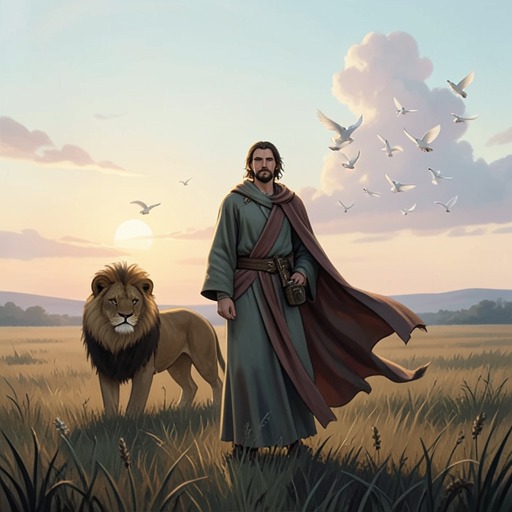
At dawn, [Zarathustra](entity:character-recall-character-zarathustra-e6c4746cdd2b) finds a lion and a cloud of doves at the entrance to his cave. The lion presses against him, and Zarathustra’s tears fall as he recognizes the sign that his children, the future creators he has awaited, are near.
The lion’s roar frightens the sleeping Higher Men away. Zarathustra understands that pity for them has been his final temptation and declares that his work must now begin; he leaves the cave, ready to descend toward the future rather than remain with the guests.