Dublin
TrespassesDublin is the southern destination of Cushla Lavery’s journey with Michael Agnew, a city encountered through crowded streets, personal memories, and the traces of political violence. For Cushla, it offers the unfamiliar texture of a place beyond Belfast, but not an escape from the conflict: flowers by Trinity College recall a bombing that killed eleven people nearby.
Arrival and the journey south
The approach to Dublin begins aboard a train. Cushla makes room for a mother and two children; the younger boy reaches for the drink she has brought, while his mother and sister tell him to put it down. His red crayon turns the face in his colouring book scarlet. At Dundalk, the family leaves the train. Cushla has read that border towns to the south are filling with families fleeing the north, so this small encounter sits within a larger movement of displacement.
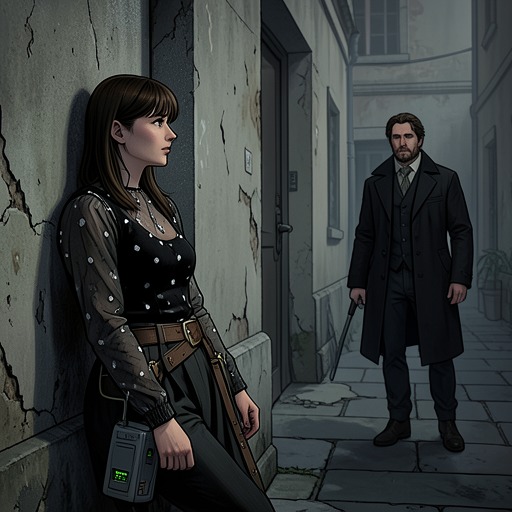
When the train reaches Connolly Station just after six, the arriving crowds surge along the platform: students with bags of dirty clothes, men carrying briefcases, and women clutching vanity cases. Dublin’s pavements seem choked with phlegm; after six years of carnage, Belfast appears cleaner by comparison. Carrying her suitcase, Cushla crosses the road and pauses outside the Abbey Theatre to change hands when her arm grows numb. A woman offers to say three Hail Marys for a few coins; Cushla says she has no money, and a curse follows her as she walks on. The city’s first impression is therefore not simply novelty, but a collision of crowds, grime, fatigue, and street-level encounter.
Streets of discovery
Dublin becomes more inviting as Cushla explores it with Michael. A draught from the river sweeps dust and litter along the pavement, and the light makes her narrow her eyes; Michael has brought sunglasses. The streets are broad, and the smell of coffee outside a café slows her step. He points out a Georgian building with blocked-up windows and explains that there was once a tax on glass. At Trinity College, he shows her places connected with his student life: where he attended lectures, ate cheap lunches, played cricket, and won a yard-of-ale contest. The city is not only scenery to him; its streets hold a personal history that he shares with her.
Their walk also brings them into contact with Dublin’s everyday street life. They pass a girl drawing a dragon in pastel chalk, and Michael drops coins into her hat before leading Cushla into a shop displaying pipes in glass-topped, green-baize-lined cabinets. Cushla buys him a blackthorn pipe and a tin of Mick McQuaid. On Grafton Street, buskers play guitars as groups of young people gather to watch. Cushla realizes that she is behaving differently from how she would at home: in the doorway of Switzers, she slides her handbag from her shoulder and holds it open. Michael laughs at the contrast between her habits in Dublin and Belfast. The city makes that contrast felt through a small, practical gesture rather than an abstract declaration.
Violence within the city
The pleasant movement through Dublin streets does not erase the political violence that has marked them. Michael leads Cushla past the parliament building and along Nassau Street, beside Trinity College. Bouquets wrapped in cellophane have been placed by a section of the railings. Cushla recognizes the spot from the news and connects it with the anniversary of the strike. Michael tells her that bombs exploded at three locations and that eleven people were killed on the street parallel to their hotel.
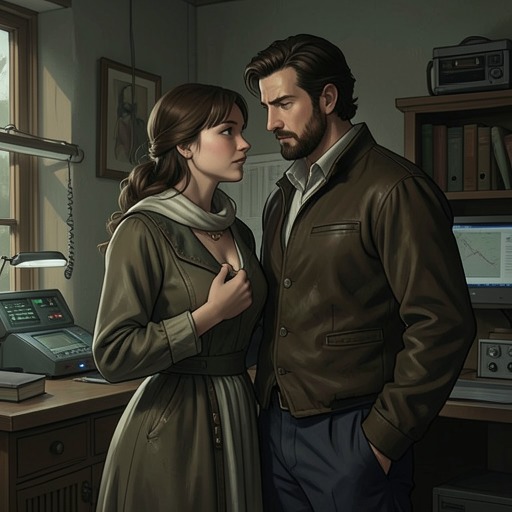
The memorial flowers turn the city’s open streets into evidence of recent loss. A moment later, beside an old bookshop, Cushla catches their reflection in the curved window: Michael’s face close to the glass, pointing something out, and her standing at his elbow. The image of the two together is intimate, but it is framed by a city where public memory and private life occupy the same streets. Dublin’s significance in their journey lies in that double exposure: a place of shared discovery, and a landscape whose ordinary routes remain inseparable from violence.