Long Kesh
TrespassesLong Kesh is identified as the prison where boys and men taught themselves Irish, linking the place to a language of resistance that they carry into the courtroom. Its significance in this passage lies not in a description of its buildings or daily life, but in the connection between confinement, self-education, and public refusal.
Language Learned in Prison
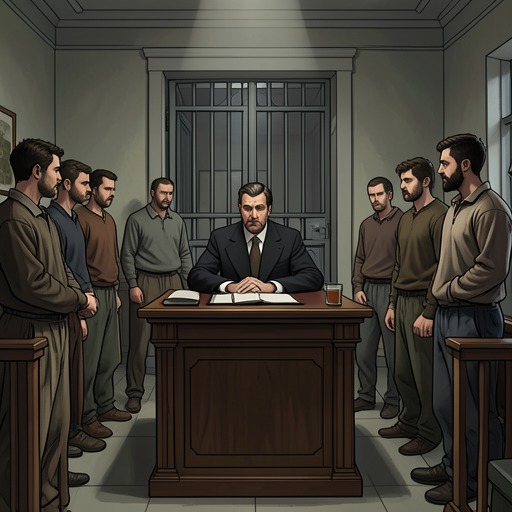
The men and boys before Michael Agnew have taught themselves Irish in Long Kesh. The detail gives the prison a specific narrative association: Irish is not merely a language they already possess, but one they have acquired within the place of their confinement. The passage offers no further account of how or under what conditions they learned it.
From Confinement to the Courtroom
In Michael’s courtroom, the men and boys refuse to recognise a British court and answer in Irish. Long Kesh thus enters the scene through the consequences of that self-education: a language learned in prison becomes the means by which they enact their refusal in court. The location’s brief mention connects imprisonment to a challenge to the authority of the proceedings, without supplying a fuller account of the prisoners’ cases or the prison itself.