Canterbury College (Oxford)
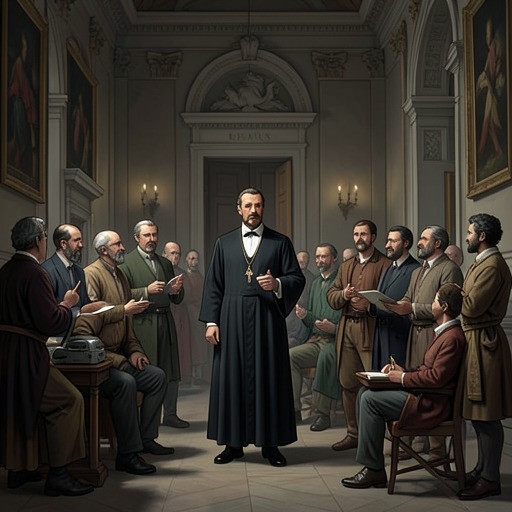
UtopiaCanterbury College (Oxford) is identified in Thomas More’s biography as the place where he studied Greek at about nineteen. Its significance in the account lies in this stage of his education: it connects his early studies in Oxford with the classical learning that later informed his work as a humanist writer.
More’s Studies at Oxford
Sent there by his patron, John Morton, More learned Greek from William Grocyn and Thomas Linacre. The account describes them as among the first to bring Greek studies from Italy to England, placing More’s instruction within the revival of Greek learning in England. It gives no further details about the college’s curriculum or organization.
More left Oxford in 1499 to study law in London at Lincoln’s Inn. The biography thus marks Canterbury College as a specific, earlier stage in his education, before his legal training and public career; it does not specify how long he studied there.
Classical Learning and Utopia
More’s later book Utopia was written in Latin and drew on classical reading. Its account of the work notes that More had read Plato’s Republic and that his imagination had been stimulated by Plutarch’s account of Spartan life under Lycurgus. These details establish the classical context of his writing, though the account does not say that he read these works at Canterbury College or attribute his later ideas directly to the institution.
The book also makes Greek learning part of its imagined society: Utopians, introduced to the language by Raphael and his companions, become able to read major Greek authors within three years. This episode echoes the broader importance of Greek studies in the book’s humanist setting, but it is a feature of Utopia, not evidence about teaching at Canterbury College.
Place in More’s Intellectual Background
The college’s documented role is concise but distinct: it provided the setting for More’s study of Greek under Grocyn and Linacre. The account offers no institutional history beyond that association. Its importance here is therefore biographical rather than administrative, locating one formative element of More’s classical education without making the college stand in for the full range of influences on Utopia.