More than 1,700 years before Raphael's visit
Utopus Conquers Abraxa
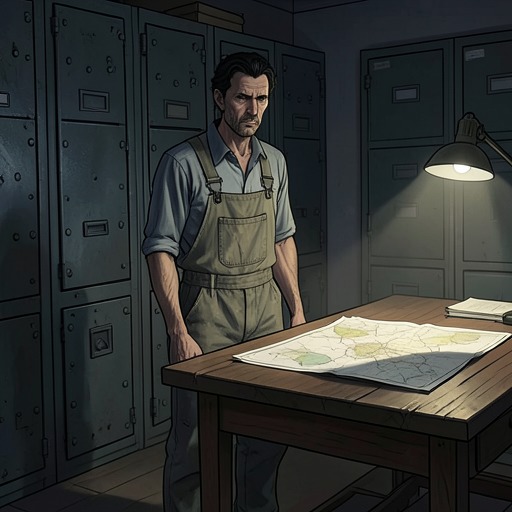
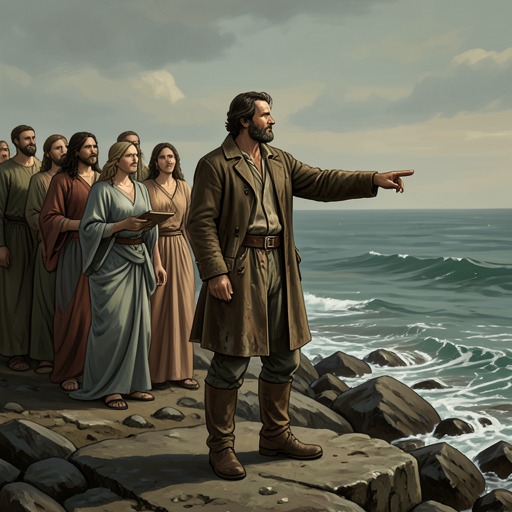
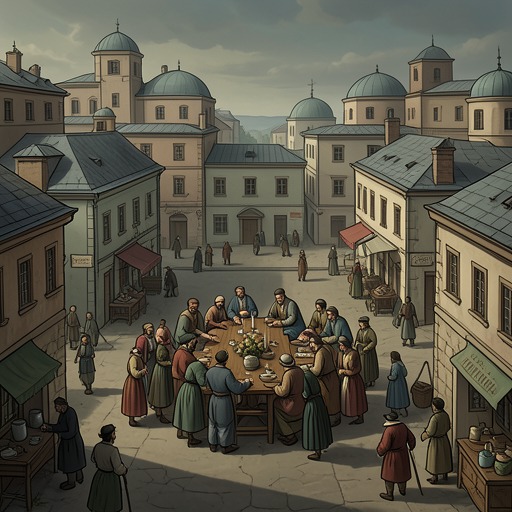
[Utopus](entity:character-recall-character-utopus-d9bb2f29ed1f) conquered Abraxa, whose people were described as rude and uncivilized, and reshaped their government and customs. To separate the conquered territory from the mainland, he ordered a channel cut through the land, making it an island; his own soldiers worked alongside the inhabitants, and the project was completed with startling speed.
The transformation became the founding story of [Utopia](entity:location-recall-location-utopia-0c2bea5a3aeb): the island took its name from its conqueror, and its inhabitants later credited their laws and prosperity to his design. His conquest also included a law allowing different religions, intended to prevent the kind of divisions that had made the population vulnerable to him.
1478
More Is Born In London
[Thomas More](entity:character-recall-character-thomas-more-20df2b111ad7) was born in Milk Street, [London](entity:location-recall-location-london-420923d4a60a), the son of John More, a justice of the [King’s Bench](entity:organization-recall-organization-9cf1b1bfaee9). His early education began at St. Anthony’s School, before he entered the household of [John Morton](entity:character-recall-character-john-morton-73cc87a342c5), Archbishop of Canterbury and Lord Chancellor, as a young client in his patron’s service.
John Morton admired the boy’s quick wit and predicted that he would become an exceptional man. The household offered More both a formative education in public life and a personal bond that would later shape the remembered dinner conversation in [Raphael Hythloday](entity:character-recall-character-raphael-hythloday-b3718cb2e65c)’s account.
Around 1497
More Studies Greek At Oxford
At about nineteen, [Thomas More](entity:character-recall-character-thomas-more-20df2b111ad7) went to Canterbury College at Oxford, where he studied Greek with William Grocyn and Thomas Linacre, scholars who had helped bring Greek learning from [Italy](entity:location-recall-location-italy-85c2492cd54b) to [England](entity:location-recall-location-england-b153c1f368ea). He left Oxford in 1499 to study law at [Lincoln’s Inn](entity:organization-recall-organization-9a4ca3a83308) in [London](entity:location-recall-location-london-420923d4a60a).
More’s legal training ran alongside a severe religious discipline: he wore a hair shirt, slept with a log for a pillow, and whipped himself on Fridays. His combination of humanist learning, public service, and ascetic practice would later complicate any simple account of his character.
Around 1499
More Enters Parliament
At twenty-one, [Thomas More](entity:character-recall-character-thomas-more-20df2b111ad7) entered Parliament, and after being called to the bar he became Under-Sheriff of [London](entity:location-recall-location-london-420923d4a60a). In 1503 he opposed Henry VII’s proposed subsidy for the marriage of his daughter Margaret, arguing against the measure with enough force that the [House of Commons](entity:organization-recall-organization-a955a446b098) refused it.
The king reportedly complained that a beardless boy had frustrated his expectations. More consequently fell under royal displeasure in the final years of Henry VII’s reign and considered leaving the country, an early encounter with the political power he would later criticize through [Raphael](entity:character-recall-character-35814a64f852)’s arguments.
The early years of Henry VIII's reign
More Builds A Legal Practice
After [Henry VIII](entity:character-recall-character-henry-viii-bebc59c40e44) succeeded to the throne in 1509, [Thomas More](entity:character-recall-character-thomas-more-20df2b111ad7) developed a large legal practice. He was said to refuse cases he considered unjust and to take no fees from widows, orphans, or poor clients, placing conscience ahead of profit in his professional life.
He also married into the Colt family, choosing the elder of John Colt’s two daughters after initially preferring the younger, because he did not want the younger sister to suffer the humiliation of being passed over. The decision reflects the social attentiveness attributed to him in the introduction.
1513
More Writes Richard's History
While serving as Under-Sheriff of [London](entity:location-recall-location-london-420923d4a60a), [Thomas More](entity:character-recall-character-thomas-more-20df2b111ad7) is said to have written a history of the life and death of Edward V and the usurpation of Richard III. The work drew, in part, on the knowledge and opinions of [John Morton](entity:character-recall-character-john-morton-73cc87a342c5), who had known the politics of that earlier period closely.
The manuscript, reportedly in More’s own hand, was not printed until 1557, long after his death. Its delayed publication illustrates how More’s writing could circulate separately from the public career that later made him famous.
May 1515
More Travels To Flanders
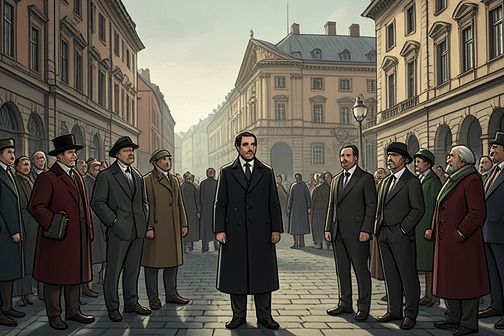
[Henry VIII](entity:character-recall-character-henry-viii-bebc59c40e44) sent [Thomas More](entity:character-recall-character-thomas-more-20df2b111ad7) to the [Low Countries](entity:location-recall-location-low-countries-c42b14d4b9c7) as part of a diplomatic commission to negotiate with representatives of [Charles V](entity:character-recall-character-charles-v-b6728d8ac171). More traveled with [Cuthbert Tunstal](entity:character-recall-character-cuthbert-tunstal-38a8c327e1f5) and other commissioners; the talks began at [Bruges](entity:location-recall-location-bruges-379e2475dedd), where the representatives met before returning to [Brussels](entity:location-recall-location-brussels-4d1364f23b86) for instructions.
The negotiations stalled, and More went on to [Antwerp](entity:location-recall-location-antwerp-8604af1d228e) while the diplomatic business continued. This mission supplied the factual frame for the book: an embassy and a city encounter that gradually give way to [Raphael Hythloday](entity:character-recall-character-raphael-hythloday-b3718cb2e65c)’s imagined account of distant peoples.
During More's 1515 mission
More Meets Peter Giles
In [Antwerp](entity:location-recall-location-antwerp-8604af1d228e), [Thomas More](entity:character-recall-character-thomas-more-20df2b111ad7) renewed his acquaintance with [Peter Giles](entity:character-recall-character-peter-giles-d2f89a664435), a learned and courteous municipal secretary. Giles’s company eased More’s longing for his wife and children, from whom he had been absent for four months.
One day, after mass at the city’s principal church, More saw Giles talking with a bearded stranger whose sun-darkened face and careless cloak suggested a sailor. Giles introduced the stranger as [Raphael Hythloday](entity:character-recall-character-raphael-hythloday-b3718cb2e65c), a traveler and philosopher with an unusually rich knowledge of unfamiliar countries.
Before his meeting with More
Raphael Leaves The Voyages
[Raphael Hythloday](entity:character-recall-character-raphael-hythloday-b3718cb2e65c), a Portuguese scholar devoted to Greek learning, had joined three of the published voyages of Amerigo Vespucci. Rather than return home with the expedition, he persuaded its commander to leave him among the settlers at [New Castile](entity:location-recall-location-new-castile-912a3fbc15ef), where his appetite for travel outweighed any wish to return to his own country.
After traveling with five Castilians through many regions, [Raphael](entity:character-recall-character-35814a64f852) reached [Ceylon](entity:location-recall-location-ceylon-42512ecf2447) and then [Calicut](entity:location-recall-location-calicut-983083ec8786), where he found Portuguese ships and eventually returned to Europe. His decision to keep exploring, despite the dangers of isolation and shipwreck, established the authority on which his later political reports depend.
During Raphael's travels before 1515
Raphael Discovers Distant Societies
After the expedition party was left in [New Castile](entity:location-recall-location-new-castile-912a3fbc15ef), its members gradually won the trust of local people. A prince supplied them with provisions, boats, wagons, and a guide, allowing [Raphael](entity:character-recall-character-35814a64f852) to travel onward and encounter cities and commonwealths whose governments he judged wiser than those of Europe.
Raphael described a progression from harsh deserts to fertile, populous lands linked by trade. He also showed local sailors the [Magnetic compass](entity:object-recall-object-magnetic-compass-71fc84ccc93e), enabling them to travel in more seasons than before; he worried that this useful discovery might expose them to dangers they did not yet understand.
After the suppression of the 1497 Cornish Rebellion
Raphael Visits England
[Raphael](entity:character-recall-character-35814a64f852) said he had spent several months in [England](entity:location-recall-location-england-b153c1f368ea) after the suppression of the Cornish Rebellion, an episode marked by heavy losses among the poor people who had taken part. He stayed with [John Morton](entity:character-recall-character-john-morton-73cc87a342c5), whom he remembered as a formidable statesman: learned in law, experienced in government, and skilled at testing the composure of people who came before him.
At a dinner in Morton’s household, an English lawyer praised the execution of thieves, claiming that so many were hanged that as many as twenty could sometimes be seen on one gallows. Raphael used the boast to challenge the assumption that severe penalties could cure theft when social conditions continually produced it.
At John Morton's dinner
Raphael Explains The Roots Of Theft
[Raphael](entity:character-recall-character-35814a64f852) argued that poverty and dispossession drove many people to steal. War disabled some workers, while idle retainers employed by the nobility were cast out when their masters died or fell ill; once trained to idleness and armed service, they often could not find ordinary work and turned to robbery.
He blamed the growth of pasture and the enclosure of land for a deeper crisis. Wealthy owners converted villages and farmland into sheep pasture, expelling families who lost their homes, livelihoods, and access to work; rising prices and luxury made their prospects worse. Raphael concluded that a society that first creates desperate conditions and then executes the desperate is making thieves before punishing them.
At John Morton's dinner
Raphael Proposes Another Penalty
[Raphael](entity:character-recall-character-35814a64f852) rejected death as the punishment for theft, arguing that taking a life for the loss of property was unjust and could encourage a robber to murder a witness if theft and murder carried the same penalty. He described the Polylerites, who required restitution where possible and sentenced thieves to public labor rather than execution.
The condemned worked without chains, received food from public provision, and could regain freedom through obedience and demonstrated reform. Raphael presented the system as both more humane and more useful than execution, since it repaired social harm while giving offenders a path back into society.
At John Morton's dinner
Morton Considers The Proposal
An English counselor dismissed [Raphael](entity:character-recall-character-35814a64f852)’s proposal as dangerous, but [John Morton](entity:character-recall-character-john-morton-73cc87a342c5) argued that its success could not be judged without trying it. He suggested reprieving a condemned thief and testing the alternative, and also endorsed applying similar measures to vagabonds.
The assembled guests had rejected Raphael’s idea but praised it when Morton adopted it, revealing how courtly opinion followed authority rather than argument. A jester then mocked the treatment of the poor and clergy; a friar grew angry, and Morton eventually ended the quarrel by changing the subject.
During More's conversation in Antwerp
Raphael Rejects Royal Service
Back in the [Antwerp](entity:location-recall-location-antwerp-8604af1d228e) conversation, [Peter Giles](entity:character-recall-character-peter-giles-d2f89a664435) urged [Raphael](entity:character-recall-character-35814a64f852) to serve a prince, believing his learning and experience could help both rulers and the public. Raphael refused: he had already distributed his property among his relatives and friends, and he would not surrender his freedom to a king’s court.
[Thomas More](entity:character-recall-character-thomas-more-20df2b111ad7) argued that a wise counselor could steer a ruler toward good policy, recalling the idea that nations would be happy if philosophers became kings or kings became philosophers. Raphael answered that court advisers generally served war, expansion, and self-interest, while courtiers protected their reputations by dismissing unfamiliar ideas.
During More's conversation in Antwerp
Raphael Exposes Court Schemes
To show why counsel failed in royal courts, [Raphael](entity:character-recall-character-35814a64f852) imagined advisers plotting how [France](entity:location-recall-location-france-f5cafc8a8ad4) might seize Italian territories and secure alliances only until those alliances ceased to be useful. He contrasted such expansionist schemes with the example of the Achorians, who asked their ruler to give up a conquered kingdom after its costs brought taxes, rebellion, and instability without benefit to the people.
He then described advisers who would manipulate currency, revive obsolete laws to collect fines, sell exemptions, and bend judges toward the king’s interests. Against these practices, Raphael argued that a ruler’s safety rested on the prosperity of the people, not their impoverishment, and that a king who ruled by oppression was a gaoler rather than a king.
During More's conversation in Antwerp
More Defends Practical Counsel
[Thomas More](entity:character-recall-character-thomas-more-20df2b111ad7) answered that a counselor should adapt good principles to the circumstances of the court, as an actor plays the role already on the stage. If evils could not be removed altogether, a prudent adviser might still make them less harmful rather than abandon public life.
[Raphael](entity:character-recall-character-35814a64f852) feared that such compromise required him either to endorse wrongdoing or to be blamed for it, while the court corrupted those who entered it. He maintained that as long as private property and money ruled, the best resources would pass to the worst people and the majority would remain poor; his praise of [Utopia](entity:location-recall-location-utopia-0c2bea5a3aeb) thus sharpened the conflict between ideal reform and cautious political participation.
After the debate about political counsel
Raphael Begins The Utopia Account
At [Thomas More](entity:character-recall-character-thomas-more-20df2b111ad7)’s request, [Raphael](entity:character-recall-character-35814a64f852) began a detailed account of the island whose institutions he had seen during five years of residence. He described [Utopia](entity:location-recall-location-utopia-0c2bea5a3aeb) as a crescent-shaped island with a broad sheltered bay, difficult approaches, and natural and artificial defenses that could frustrate an invading fleet.
The island contained fifty-four cities, alike in customs and laws, with [Amaurot](entity:location-recall-location-amaurot-d4c06045b579) as the central meeting place. Its inhabitants treated the land as a shared responsibility rather than private property, and the cities coordinated their common affairs through representatives.
In Raphael's account of Utopia
Utopia Organizes Its Countryside
The [Utopians](entity:character-recall-character-utopians-0cc0dcb2c3e5) maintained farmhouses across the countryside and rotated city residents through agricultural service. Each household included experienced workers who taught newcomers, ensuring that practical knowledge passed from one group to the next and that no one city depended on an untrained labor force.
The island deliberately produced more food and livestock than its people needed, sending surplus to neighboring communities. When harvests required extra hands, city magistrates supplied them promptly, linking rural production to a coordinated public system.
During Raphael's five-year residence
Amaurot Displays Its Design
[Raphael](entity:character-recall-character-35814a64f852) chose [Amaurot](entity:location-recall-location-amaurot-d4c06045b579) as his example of Utopian city life because he knew it best. The city stood beside the [Anider](entity:location-recall-location-anider-9bf7a2744a45), whose tides allowed ships to approach, while a smaller stream and protected springs secured its water supply; walls, towers, and a dry ditch strengthened its defenses.
The houses were uniform and carefully maintained, with gardens behind them. Because no house was privately owned, residents could enter freely, and every ten years households exchanged dwellings by lot. The city’s cultivated gardens made collective care visible in the everyday landscape.
During Raphael's account of Utopian institutions
Utopia Establishes Deliberate Government
Utopian households elected local magistrates, who in turn helped choose the island’s prince from candidates named by the people. The prince held office for life unless suspected of seeking tyranny, while other officials served limited terms and councils met regularly to handle public affairs.
The system slowed decisions on purpose. Important proposals had to be discussed on separate days, and public business passed through local consultation before reaching the island’s councils; private meetings to plot against the state were forbidden. These safeguards were intended to prevent rulers from conspiring together and to keep deliberation from becoming a contest of pride.
During Raphael's account of Utopian institutions
The Six-Hour Working Day
Every Utopian learned agriculture as well as a particular trade, and magistrates ensured that able people did not remain idle. Work occupied six hours a day, leaving time for meals, sleep, reading, lectures, and chosen recreation; people could also develop a second trade if they wished.
[Raphael](entity:character-recall-character-35814a64f852) argued that this short working day was possible because [Utopia](entity:location-recall-location-utopia-0c2bea5a3aeb) did not maintain large classes of idle courtiers, servants, or luxury producers. Useful work was distributed broadly, buildings and clothing were made to last, and public labor was reduced when the community’s needs had been met.
During Raphael's account of Utopian institutions
Goods Are Distributed By Need
In the cities, goods moved from family production to common storehouses, where household representatives took whatever their families needed without payment. The shared provision removed the fear of scarcity that [Raphael](entity:character-recall-character-35814a64f852) believed fueled greed, while communal dining halls organized meals and made provisions available across neighborhoods.
The cities cared especially for the sick, maintaining large hospitals where patients received expert attention. Across the island, towns exchanged surplus freely and kept stores against bad seasons, treating the whole country as one extended household rather than a collection of competing owners.
During Raphael's account of Utopian institutions
Travel Requires Permission And Work
[Utopians](entity:character-recall-character-utopians-0cc0dcb2c3e5) who wished to visit another city obtained permission and a passport limiting the time of their journey. Travelers were welcomed as members of the same community, but anyone who stayed longer than a night was expected to work at a familiar trade; unauthorized wandering brought punishment and could lead to enslavement.
The rules extended the island’s work discipline beyond the home city. Because people lived in public view and were expected to use their free time well, [Raphael](entity:character-recall-character-35814a64f852) presented the system as a way to prevent idleness and ensure that no one needed to beg.
During Raphael's account of Utopian institutions
Utopia Trades Its Surplus
After provisioning its towns and storing supplies for two years, [Utopia](entity:location-recall-location-utopia-0c2bea5a3aeb) exported its excess produce and manufactured goods. It gave a seventh of its exports to the poor of the countries receiving them and sold the rest at moderate prices, importing little beyond iron while accumulating large stores of precious metals abroad.
[Raphael](entity:character-recall-character-35814a64f852) explained that the [Utopians](entity:character-recall-character-utopians-0cc0dcb2c3e5) had little domestic use for gold and silver and deliberately made the metals objects of ridicule and shame. They fashioned chamber pots, chains, and slave ornaments from them, teaching children to discard pearls and gems as childish playthings once they had grown older.
During Raphael's residence in Amaurot
The Anemolian Ambassadors Misread Utopia
Ambassadors from the Anemolians arrived in rich clothing, assuming that the plainly dressed [Utopians](entity:character-recall-character-utopians-0cc0dcb2c3e5) were too poor to possess finery. Their silk, gold chains, and jewels instead resembled the Utopians’ badges of slavery or children’s ornaments, and onlookers mistook the visitors for servants and fools.
After seeing gold and silver used for ordinary vessels and fetters, the ambassadors recognized how completely their display had failed. [Raphael](entity:character-recall-character-35814a64f852) used the encounter to show that the value of wealth depended on custom, and that public admiration for riches could make people serve those who possessed them even when those owners lacked virtue.
During Raphael's account of Utopian institutions
Utopians Pursue Learning And Pleasure
Utopian education reached men and women alike, and many used their leisure for reading and public lectures. [Raphael](entity:character-recall-character-35814a64f852) described their interest in Greek learning, astronomy, medicine, and the natural world, as well as their development of printing and paper-making after receiving only basic explanations from visitors.
Their moral philosophy treated pleasure as a legitimate aim when it accorded with reason and did not harm others. They rejected vanity, empty status, and cruel entertainments, and valued health, knowledge, a clear conscience, and the hope of future happiness above ostentation or the pursuit of wealth.
During Raphael's account of Utopian institutions
Utopia Regulates Marriage And Punishment
[Raphael](entity:character-recall-character-35814a64f852) described strict rules for marriage, including minimum ages, penalties for premarital sex, and an unusual inspection before marriage so neither partner could conceal a bodily defect. Divorce was limited to particular circumstances, while adultery could bring enslavement; the account presents marriage as a public commitment governed by law as well as mutual affection.
Many serious crimes were punished by slavery rather than death, with the hope that labor and remorse might eventually restore some offenders to freedom. Raphael also reported that incurably ill people could be encouraged to choose death, though no one was forced to do so and those who declined continued to receive care.
During Raphael's account of Utopian institutions
Utopia Rejects Ambition And Legal Artifice
[Utopians](entity:character-recall-character-utopians-0cc0dcb2c3e5) kept few laws and had no lawyers, believing that legal rules should be short and plain enough for everyone to understand. Citizens pleaded their own cases before judges, who heard the facts without the distortions of professional advocacy; the system was intended to make justice accessible rather than dependent on wealth and expertise.
No one could secure public office by openly seeking it, and magistrates were expected to act as caretakers rather than masters. [Raphael](entity:character-recall-character-35814a64f852) contrasted this restraint with societies in which offices, elaborate laws, and legal maneuvers served the interests of the powerful.
During Raphael's account of Utopian institutions
Utopia Rejects Treaties And Alliances
The [Utopians](entity:character-recall-character-utopians-0cc0dcb2c3e5) avoided formal alliances because they believed that shared human obligations should matter more than carefully worded treaties. [Raphael](entity:character-recall-character-35814a64f852) contrasted their position with the European practice of exploiting loopholes in agreements while publicly condemning the same deceit in private dealings.
In their view, a neighboring people was not an enemy merely because it lived beyond a border. Kindness and the ties of human nature, they argued, could bind nations more firmly than promises that rulers were willing to evade when convenience changed.
During Raphael's account of Utopian institutions
Utopia Limits The Conduct Of War
The [Utopians](entity:character-recall-character-utopians-0cc0dcb2c3e5) called war brutal and dishonorable, though they trained men and women in military discipline. They fought to defend themselves or allies from aggression, to aid an oppressed people, or to obtain redress for serious injuries; they preferred victories won through planning and negotiation to bloody triumphs.
Their methods included bribing enemy officials, encouraging rival claimants, and hiring foreign soldiers, especially the Zapolets, so Utopian citizens would face less danger. In battle they avoided unnecessary killing, protected surrendered towns from plunder, and sought to make the costs of aggression too high for an enemy to repeat it.
Shortly before Raphael's account
Utopians Aid The Nephelogetes
[Raphael](entity:character-recall-character-35814a64f852) cited a recent war in which [Utopia](entity:location-recall-location-utopia-0c2bea5a3aeb) assisted the Nephelogetes against the Aleopolitans. The conflict began after the Nephelogetes’ merchants suffered what their people considered serious injustice, an injury Raphael described as especially troubling because it had been inflicted under the appearance of law.
The [Utopians](entity:character-recall-character-utopians-0cc0dcb2c3e5) helped secure the Nephelogetes’ victory but claimed no share of the conquered territory or spoils. Raphael used the episode to illustrate both their willingness to fight for allies and their stated opposition to making conquest itself the object of war.
During Raphael's account of Utopian institutions
Utopia Allows Religious Pluralism
The [Utopians](entity:character-recall-character-utopians-0cc0dcb2c3e5) followed several religions, though many worshiped one eternal and incomprehensible deity they called [Mithras](entity:character-recall-character-ede0efcee2b5). Their founder, [Utopus](entity:character-recall-character-utopus-d9bb2f29ed1f), had made religious choice lawful after recognizing that sectarian conflict had divided the island before his conquest; people could argue for their beliefs but were forbidden to use threats or violence.
The law did not extend to denying the soul’s survival or the existence of providence. Those who held such views could not hold public office or preach them publicly, although they were not forced to pretend belief and could debate privately with learned citizens and priests.
During Raphael's five-year residence
Utopians Hear Of Christianity
When [Raphael](entity:character-recall-character-35814a64f852) and his companions told the [Utopians](entity:character-recall-character-utopians-0cc0dcb2c3e5) about the teachings and life of [Christ](entity:character-recall-character-christ-2a525174a662), they found many listeners receptive. Raphael suggested that the islanders may have been drawn to Christianity partly because they recognized in the earliest Christian communities a shared way of life resembling their own communal practices.
Many Utopians accepted baptism, but Raphael and the surviving travelers were not priests and could not administer the other sacraments. The new converts longed for those rites, and some debated whether a priest chosen by their own people could perform them without authority from the [Papacy](entity:organization-recall-organization-a80ed3b5347d).
During Raphael's stay in Utopia
A Convert Is Sent Into Exile
One newly baptized man publicly condemned the island’s other religions and denounced their followers as impious. His repeated preaching grew heated enough to threaten civic peace, and the authorities tried him and sentenced him to banishment.
The judgment was not for his Christian belief or for criticizing other religions; it was for inflaming the people toward sedition. [Raphael](entity:character-recall-character-35814a64f852) presented the case as a test of [Utopia](entity:location-recall-location-utopia-0c2bea5a3aeb)’s toleration: religious disagreement was permitted, but coercive denunciation that endangered public order was not.
During Raphael's account of Utopian institutions
Utopians Share Public Worship
The [Utopians](entity:character-recall-character-utopians-0cc0dcb2c3e5) built spacious temples that could serve people of different persuasions without images or rites that contradicted one another’s faith. At seasonal festivals, families reconciled private grievances before worship, and congregations prayed in language that each person could apply to his or her own beliefs.
Their worship included incense, lights, music, and common prayers of gratitude. The prayers asked for guidance if the island’s institutions or religion were mistaken, and for greater unity if they were right; this ritual joined confidence in [Utopia](entity:location-recall-location-utopia-0c2bea5a3aeb) with an acknowledged openness to correction.
Near the end of Raphael's account
Raphael Condemns Property
Having completed his survey, [Raphael](entity:character-recall-character-35814a64f852) declared that [Utopia](entity:location-recall-location-utopia-0c2bea5a3aeb) was the only commonwealth deserving the name. He contrasted its shared stores and security with societies where laborers who sustained public life lived in fear of hunger, illness, and old age while the idle and wealthy enjoyed luxury.
He called other governments conspiracies of the rich, arguing that laws protected property accumulated by a few and compelled the poor to serve them cheaply. In his account, abolishing money would also remove many sources of theft, conflict, anxiety, and poverty; pride, however, kept people invested in inequality and in the suffering of those beneath them.
At the close of the Antwerp conversation
More Withholds His Objections
After [Raphael](entity:character-recall-character-35814a64f852) finished, [Thomas More](entity:character-recall-character-thomas-more-20df2b111ad7) privately recalled several features that troubled him, including [Utopia](entity:location-recall-location-utopia-0c2bea5a3aeb)’s war practices, religious ideas, and common ownership without money. He chose not to raise these objections immediately, believing Raphael was tired and might take criticism as an attack on his judgment.
More praised the account in general but did not accept every claim. He ended by saying that many Utopian institutions were things he would rather wish to see adopted than confidently expect to find in existing governments, leaving the debate between ideal society and political reality unresolved.
1516
Utopia Is Published In Europe
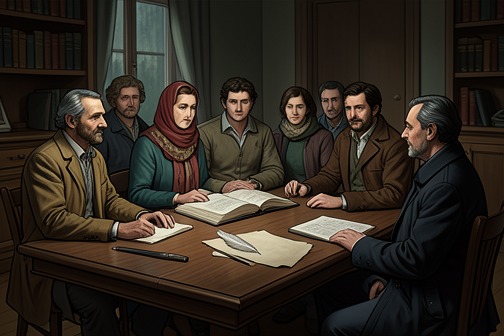
[Thomas More](entity:character-recall-character-thomas-more-20df2b111ad7) wrote [Utopia](entity:location-recall-location-utopia-0c2bea5a3aeb) in Latin in two parts: the description of the island was probably composed late in [1515](entity:time-recall-time-1515-d97c4c789e5b), and the introductory dialogue followed in early [1516](entity:time-recall-time-1516-1627eec13293). Erasmus, [Peter Giles](entity:character-recall-character-peter-giles-d2f89a664435), and other friends in [Flanders](entity:location-recall-location-flanders-67d09b61ddb4) helped edit the first edition, printed at Louvain late in 1516.
More revised the book before a new edition appeared at Basel in [1518](entity:time-recall-time-1518-fe3bdb745605). Its imagined commonwealth thus moved from the [Antwerp](entity:location-recall-location-antwerp-8604af1d228e) conversation into print, preserving the tension between [Raphael](entity:character-recall-character-35814a64f852)’s uncompromising criticism and More’s guarded response.