Sheep
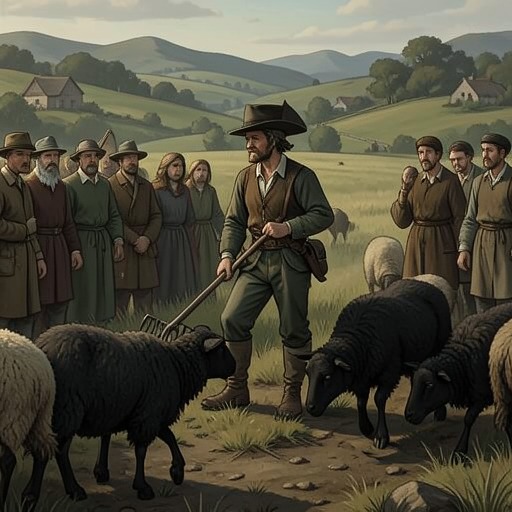
UtopiaSheep are both livestock and a pointed image of social upheaval in Utopia. In Raphael Hythloday’s account of England, the demand for fine wool encourages landholders to turn cultivated and inhabited country into pasture; the animals’ apparent mildness contrasts with the human displacement and hardship that follow. Their significance lies not in any independent action, but in the economic choices made around them.
Nature and Economic Value
Raphael describes Sheep as naturally mild and easily kept in order. Their value rises where a particular soil produces wool softer and richer than ordinary wool, making pasture attractive to nobles, gentry, and religious landholders seeking greater returns than the old rents from farms. The animal is thus presented as ordinary and manageable; it is the pursuit of profit, rather than any property of the Sheep themselves, that gives the pastoral expansion its force.
That expansion also alters the balance between kinds of production. Where many hands had been needed to plough and reap, one shepherd can tend a flock across the same extent of ground. Meanwhile, the price of wool rises until poor people who formerly made cloth can no longer afford the material. Raphael links this loss of access to wool with the idleness of people whose work depends on cloth production, while the conversion of arable land to pasture also raises the price of corn.
Enclosure and Rural Displacement
The pursuit of pasture is described as a process of enclosure and removal. Landholders destroy houses and towns, sometimes leaving only churches, and take in the best-inhabited places for Sheep. Owners and tenants lose their holdings through trickery or force, or are worn down by ill-treatment until they sell. Families of every age and marital condition are driven from their homes without knowing where to go.
Displaced households must sell their possessions for almost nothing because they cannot remain to wait for a buyer. The small sum soon runs out, leaving people who were trained for country work without land on which to do it. With little demand for agricultural labor, they face begging or theft; if they beg, Raphael says, they may be imprisoned as idle vagabonds despite their willingness to work. The Sheep pasture has therefore become part of a chain in which land-use change removes both homes and livelihoods, while the resulting poverty is treated as criminal conduct.
Market Effects and the Wider Livestock Economy
Raphael’s account does not present pasture as a simple increase in animal wealth. A rot among the Sheep destroys vast numbers, which he describes as a punishment for the owners’ avarice, though he pointedly suggests that the owners themselves would have been more fitting recipients. Even when flocks prosper, he argues, their price need not fall: ownership is concentrated in so few and such wealthy hands that sellers can wait until they choose to demand the highest price.
The same changes affect other cattle. Raphael connects the pulling down of villages and neglect of country labor with a decline in people breeding livestock. Wealthy landholders, he says, do not breed cattle as they do Sheep; they buy lean animals cheaply, fatten them on their land, and sell them at high prices. If cattle are consumed faster than the places that supply them can replace them, the stock must diminish and scarcity may follow. Sheep consequently stand at the beginning of an argument about interlocking changes in land, labor, food, and prices, not merely the fortunes of one kind of animal.
Political Meaning
At Cardinal John Morton’s dinner, Raphael uses the pasture economy to challenge the claim that severe punishment can solve theft. The displaced and unemployed, in his account, are driven toward stealing by conditions created by powerful landholders; hanging them afterward does not remedy the causes. He urges authorities to make those who have depopulated the land rebuild the villages they demolished or lease the ground to people who will do so, restrain the rich from engrossing land, restore agriculture, and regulate wool production so that work is available.
The Sheep image condenses this reversal: creatures naturally mild become the visible sign of a human order that consumes settlements and livelihoods for private gain. The episode belongs to Raphael’s critique of contemporary England, not to a claim that Sheep themselves cause social harm. Its force comes from the contrast between the harmlessness of the animals and the consequences of the system organized around their wool.