Anni Sessanta
VinelandAnni Sessanta names more than a decade in the novel: it is a remembered political world, reconstructed through films, family histories, and the later consequences of choices made amid protest. Its promise of collective liberation is real but fleeting; alongside it stand police violence, surveillance, and Brock Vond’s conviction that dissenters can be brought back into line. The period’s meaning emerges from the struggle over who gets to record events, interpret rebellion, and decide what becomes of the people caught in it.
Protest, revolution, and the street
Frenesi Gates’s account of her past leads Prairie Wheeler to a history that her father and grandmother have both told in similar form. In their version, Frenesi made films for the Revolution, was wanted by the Federal Bureau of Investigation, and had to hide; Zoyd Wheeler provided a cover, and she and Zoyd began a family before the authorities found her hiding place and she disappeared underground. That account gives Prairie a political framework for her mother’s absence, but it is not the whole story: DL Chastain knows that Brock Vond’s agents pursued pacifists and radical students and had brought at least one indictment against Frenesi.
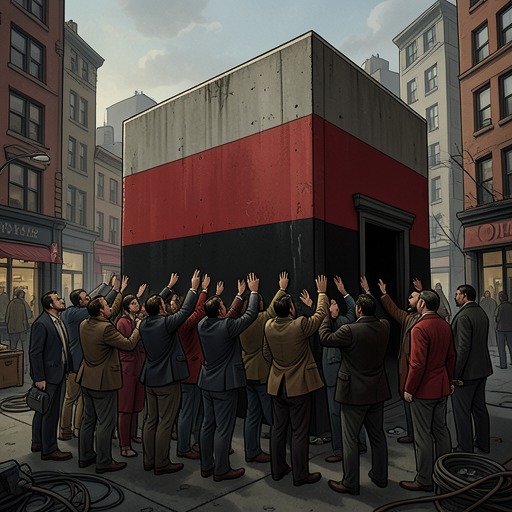
The street offers a more immediate picture of what political commitment meant. In Berkeley, Frenesi films a paramilitary line advancing along Telegraph Avenue while a crowd retreats from campus, damaging whatever it can as it goes. When her reel runs out, she finds herself stranded between demonstrators and police, with no side street to escape down. DL arrives on a red-and-silver motorcycle, wearing black, a helmet, and a visor, and pulls Frenesi away with her camera and bag. Their escape cuts through wreckage and broken glass as they flee toward the bay. The episode joins the camera to danger: filming records the confrontation, but it also places the filmmaker in its path.
For Frenesi, the Revolution also carries an ideal of sudden, almost miraculous unity. She believes she has seen people become a single presence in moments when they step between a victim and a baton, lie across railway tracks, or face a rifle without falling silent. DL is less given to idealization. What attracts her, she says in a later recollection, is the moment of fighting back, though she recognizes that action should follow an analysis of the situation. Their different emphases—Frenesi’s vision of collective transformation and DL’s insistence on understanding what action can accomplish—make the period’s politics a matter of both feeling and judgment.
The camera, the collective, and the archive
The 24fps collective preserves the past as footage rather than as a settled account. Its members do not function as a unified revolutionary ideal: DL and Sledge form a practical counterweight to the dreamier Mirage and Howie, while Frenesi and the Pisk sisters occupy a middle position. Krishna helps keep the group together, in part by adjusting film speed to match music with footage and by mediating disputes. The work of assembling images is therefore also social work: the archive depends on negotiation, selection, and the labor of making disparate materials intelligible to others.
Years later, Prairie watches the reels and encounters an America she knows mainly from television fragments and familiar sitcoms. The footage shows miniskirts, wire-rim glasses, hippies, rock bands, strikes against strikebreakers, police guarding an artichoke field, and officers beating people at a Texas commune. It also records women being assaulted, children thrown about, and animals killed. These scenes offer little comfort in their occasional sunsets and flowering fields; the camera does not let a beautiful landscape cancel the violence caught within it. Prairie has to steady herself to keep watching. For her, the archive makes the past visible not as a nostalgic style but as evidence of what happened to bodies, communities, and dissent.
One reel shows a late-night gathering that passes as a political assembly. Led Zeppelin blares, bottles and joints circulate, couples have sex amid overlapping speeches, and participants argue over whether to make war on the Nixon regime or negotiate with it. Prairie senses the room’s liberating conviction that anything might be possible. Then the crowd parts around Weed Atman, and students chant his name. Frenesi’s camera lingers on him and repeatedly zooms toward his crotch, a choice that makes her desire visible within the record even as the gathering presents itself as political action. The footage preserves a movement and the contradictions inside it: liberation and confusion, public conviction and private fascination, collective energy and the beginnings of a personality cult.
Dissent and the machinery of control
The College of the Surf was designed for wealthy Southern California interests as a compliant training ground, with courses in law, politics, business, and computer science. Its students were expected to accept prescribed clothes and haircuts. The campus’s sudden dissent therefore appears to its traveling movement coordinators as an unexpected contradiction. Yet the students do not begin with a clear analysis of their circumstances; instead, they develop a cult of personality around Weed, a mathematics professor whose fame comes about almost by accident. The contrast between the institution’s orderly purpose and the students’ improvised rebellion helps explain why dissent there can be both disruptive and politically unfocused.
Brock Vond reads the wider student revolt differently from television commentators who describe young people as rebelling against their parents. He sees in them a wish to remain children within a vast national family, protected by its authority. In his view, they have adopted the wrong music, drugs, and heroes, but can be reconditioned without great difficulty. This interpretation turns rebellion into a problem of administration: rather than treating it as a challenge to the existing order, the state can redirect its participants toward discipline and service. The plan Vond advances would send people detained for disturbing the peace to federal reservations, where those judged suitable could choose between prosecution and work as covert informants. After weapons training, they could be placed in universities and radical organizations under Federal Bureau of Investigation supervision.
The threat does not remain abstract. At the house of Ditzah Pisk, DL and Takeshi Fumimota encounter neutral-colored cars moving in formation, a roadblock, and a juvenile-authority bus filled with detainees. The house has been raided; film reels and typed pages burn in piles outside while workers push escaped fragments back into the flames. The destruction of an archive gives institutional force to the conflict already present in Prairie’s screenings: the same material that allows a later generation to see the past can be confiscated and destroyed by those seeking to control what is remembered. Surveillance also reaches into ordinary communications. At another point, DL suspects a Title III wiretap, and a radio sweep finds a crude listening device in a back-room laboratory. The means may be cheap, but the presumption of monitoring has become part of the characters’ political landscape.
Bodies, families, and the afterlife of the period
The period’s political conflicts enter private life as well as public space. Sent to Japan during the interval between Korea and Vietnam, Moody Chastain leaves his daughter alone while Norleen is frequently away. DL skips school, searches for instruction in unarmed fighting, and instead spends time in pachinko parlors before finding a path to martial-arts training. In a later interview, she describes that training with Inoshiro Sensei as recovering her own body from institutions and authorities that claim expertise over it. She continues to practice every day, even after her interest in ninjutsu fades. The period’s political question of who exercises control thus becomes, for DL, a concrete question of bodily responsibility.
The decade is also remembered through the formation and later disappointments of a family. Sasha Gates and Hub Gates arrive in Hollywood as young companions, with their daughter Frenesi between them in the car. They sing, share an inhaler of benzedrine, and spend evenings listening to bebop at the Finale Club in San Pedro. Hub’s later account describes work as an apprentice lighting technician, small repair jobs, and political solidarity with workers; he also recalls giving up his union allegiance and, eventually, what he calls his anger. The lively intimacy of the family’s early years sits beside a later history of compromise and estrangement, showing that political commitments were made within relationships and did not spare them from change.
Retrospection repeatedly unsettles any simple account of the era. Weed, once a proponent of a human-faced revolution, grows exhausted and short-tempered as his followers become more devoted, while the history of his relationship with Frenesi is marked by gaps that neither she nor the 24fps collective can explain to him. Zoyd later resists the government’s drug-war rationale by recalling how federal agents needed new work after Prohibition ended; his argument makes repression look less like a neutral response to danger than a system that produces its own targets. Across these memories, the sixties remain neither a completed triumph nor a safely distant failure. Their footage, stories, and absences continue to shape how Prairie understands her mother, how DL understands resistance, and how the present inherits—and contests—the records left behind.