early twentieth century
The Redwood Accident
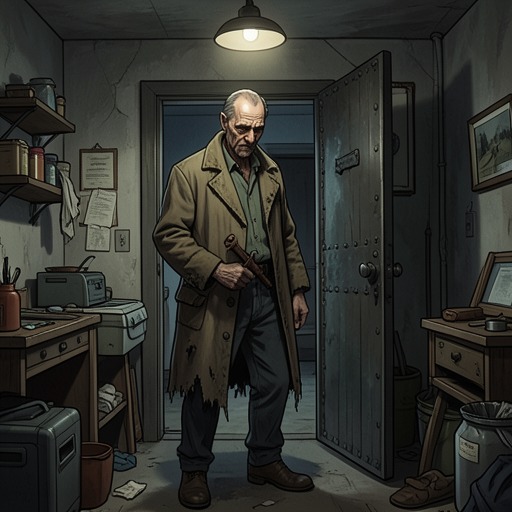
[Jess Traverse](entity:character-recall-character-jess-traverse-848a0b2b54e2) organized lumber workers in the northern [California](entity:location-recall-location-7255928c66a8) counties. During a baseball game, a redwood deliberately weakened by an anti-union operative fell on him, crushing his legs; compensation could not undo the injury or restore the family’s security.
early twentieth century
Eula Joins the Labor Struggle
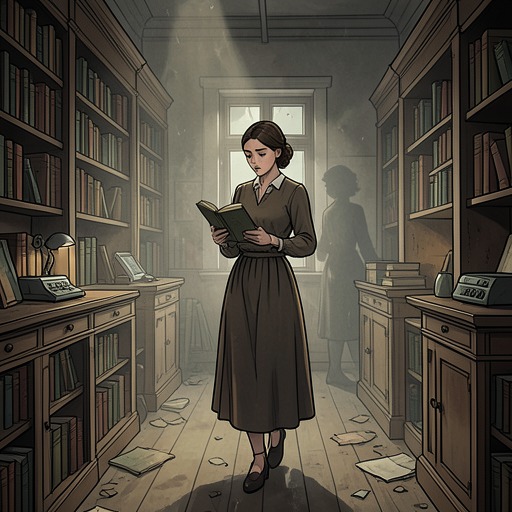
[Eula Becker](entity:character-recall-character-eula-becker-f6075bf64ace) met Jess through the labor movement and chose a life alongside him among timber workers, picket lines, arrests, and dangerous organizing. After his injury, she remained in [Vineland](entity:location-recall-location-vineland-a492de6877df) to keep the memory of the fallen tree—and the people responsible for it—alive.
1930s
Sasha’s Political Apprenticeship
[Sasha Gates](entity:character-recall-character-sasha-gates-ec89378ce342) left home for [Los Angeles](entity:location-recall-location-los-angeles-11eff639bdf5), where she joined working-class and labor circles and helped organize agricultural workers. Her political life brought her into contact with strikes, blacklist-era repression, and the risks faced by people who openly challenged employers and authorities.
during World War II
Sasha Meets Hubbell
During the war, Sasha worked in [San Francisco](entity:location-recall-location-d0db84fe8c04) nightlife and began singing with Eddie Enrico’s orchestra. She met the serviceman [Hubbell Gates](entity:character-recall-character-hubbell-gates-7f46945436c0), who listened to her political thoughts even though he had little political commitment of his own; they married and eventually had a daughter, Frenesi.
postwar Hollywood
The Blacklist Enters the Household
The Gates family lived amid labor disputes, blacklisting, and the fear of informants. Hubbell’s work as a set electrician and Sasha’s script-reading jobs exposed Frenesi to adult political conflict from childhood, while arguments over betrayal and survival taught her that public histories could be rewritten by those with power.
Darryl Louise’s childhood
Moody’s Violence at Home
[Darryl Louise](entity:character-recall-character-darryl-louise-7addbd172672) grew up watching her father, [Moody Chastain](entity:character-recall-character-moody-chastain-5c843e7181dc), abuse her mother, [Norleen](entity:character-recall-character-norleen-372fdf378b39). Moody’s military-police habits made the home feel governed by force, while Norleen’s resignation left Darryl Louise angry at both parents and determined to find a way to defend herself.
Darryl Louise’s adolescence
Training in Tokyo
While her family was stationed in Japan, [Darryl Louise](entity:character-recall-character-darryl-louise-7addbd172672) skipped school and encountered [Inoshiro Sensei](entity:character-recall-character-inoshiro-sensei-a2ff8902ad1c), who recruited her for martial-arts training. She learned discipline, concealment, and dangerous techniques, then left home to train with him after concluding that distance from her parents was the only place she felt safe.
after her Japanese training
Darryl Louise Returns Home
[Darryl Louise](entity:character-recall-character-darryl-louise-7addbd172672) returned to her parents after her training, but the family remained defined by secrecy and power struggles. Her father’s temper and her mother’s hidden relationship with an officer reinforced her sense that she had to build her own discipline and bodily autonomy.
Frenesi’s adolescence
Frenesi’s Attraction to Authority
Frenesi developed a powerful fascination with uniforms and authority even as she absorbed her family’s left-wing politics. Her mother suspected that the attraction was inherited or embedded in her nature, a contradiction that would later shape Frenesi’s political and intimate choices.
before the late 1960s
Zoyd’s Surf Band Years
[Zoyd Wheeler](entity:character-recall-character-zoyd-wheeler-43d0c53914c0) grew up in the [San Joaquin Valley](entity:location-recall-location-c58de7c96e03), drove with rowdy youth car clubs, and played keyboards in the surf band the Corvairs. He and his bandmates moved between construction work, local gigs, reckless driving, and a culture in which music and danger often seemed inseparable.
during the late 1960s
The Berkeley Rescue
At a [Berkeley](entity:location-recall-location-bfa6c84ffbc2) protest, Frenesi filmed police advancing on demonstrators and found herself trapped between them and the crowd. [Darryl Louise](entity:character-recall-character-darryl-louise-7addbd172672), then a motorcycle-riding activist, carried her out through the disorder; the rescue began a close friendship and brought Frenesi into a more militant political world.
late 1960s
The 24fps Collective Forms
Frenesi and [Darryl Louise](entity:character-recall-character-darryl-louise-7addbd172672) joined the [24fps](entity:character-recall-character-24fps-bea9d01f9fe5), a guerrilla film collective that documented protests, police violence, labor disputes, and other events neglected or distorted by mainstream television. The group believed close-up images could expose power, though members disagreed over risk, political theory, and whether the camera could truly function as a weapon.
late 1960s
The Surf College Revolt
At the [College of the Surf](entity:location-recall-location-college-of-the-surf-96c5cbe3f5df), a police assault helped turn a placid campus into a center of protest. [Weed Atman](entity:character-recall-character-weed-atman-e57182be25de), a tall mathematics professor, led students to safety and became an unlikely figurehead; the rebels eventually declared the campus an independent [People's Republic of Rock and Roll](entity:location-recall-location-rock-and-roll-141ecd01b63c).
during the PR3’s early period
Rex Gives Up His Porsche
[Rex Snuvvle](entity:character-recall-character-rex-snuvvle-f7afd8eae74c) tried to build alliances between the white campus radicals and the Black revolutionary delegation. When the visitors challenged his commitment, he gave them his beloved Porsche, which was renamed as a reconnaissance vehicle; the gesture won applause but did not resolve the deeper conflict between the groups.
during the PR3’s rise
Frenesi Begins Working for Vond
[Brock Vond](entity:character-recall-character-brock-vond-6a4e5995bb66) approached Frenesi through her work with the [24fps](entity:character-recall-character-24fps-bea9d01f9fe5), first accepting her footage and then shaping what she filmed. Their relationship became both sexual and political: Vond used intimacy to gain access to her, while she persuaded herself that she could remain an independent witness.
late 1960s
Vond Builds the PREP Program
[Brock Vond](entity:character-recall-character-brock-vond-6a4e5995bb66) developed the Political Re-Education Program as a way to detain protesters and recruit some of them as informants. He believed many young radicals wanted the security of a national family and could be redirected into government service through conditioning, coercion, and carefully staged opportunities.
during the PR3 crisis
Frenesi and Atman Become Lovers
As the campus rebellion grew, Frenesi became involved with [Weed Atman](entity:character-recall-character-weed-atman-e57182be25de). Her relationship with him overlapped with her secret work for Vond, who treated Atman as an obstacle to breaking the new republic apart and used Frenesi as a channel into the movement.
on the tornado night
Vond Orders Atman’s Removal
During a violent Oklahoma tornado, Vond told Frenesi that Atman had been turned into an informant and demanded that she help eliminate him. He framed the choice as a struggle between illusion and reality, exploiting her attraction to him and her doubts about the collective.
shortly before the PR3’s collapse
Frenesi and Rex Accuse Atman
Frenesi and [Rex](entity:character-recall-character-rex-63f19e2954a3) told [Howie](entity:character-recall-character-howie-9aa3373e0ae6) that Atman was an [FBI](entity:organization-recall-organization-c3b9c0848e8c) informant, claiming that Atman had confessed. They argued that the collective’s open-refuge principles made it vulnerable to infiltration, while Howie urged them to bring their suspicions before the group rather than act secretly.
the final night of the PR3
The Gun Reaches Rex
Vond gave Frenesi a loaded revolver and told her to place it in [Rex](entity:character-recall-character-rex-63f19e2954a3)’s home without explaining where it came from. She carried it into the house, where it became part of a crisis already shaped by suspicion, the cameras of the [24fps](entity:character-recall-character-24fps-bea9d01f9fe5), and the belief that Atman had betrayed the movement.
the final night of the PR3
Weed Atman Is Killed
[Rex](entity:character-recall-character-rex-63f19e2954a3) confronted Atman while Frenesi and the others filmed. During the confused confrontation, Rex shot Atman; Frenesi held a light on the body and on Rex, making the killing visible to the camera even as the group’s political world collapsed around them.
the night after Atman’s death
The PR3 Is Crushed
Military and police forces surrounded the [College of the Surf](entity:location-recall-location-college-of-the-surf-96c5cbe3f5df), cut utilities, and attacked the remaining community in scattered nighttime actions. The [24fps](entity:character-recall-character-24fps-bea9d01f9fe5) filmed as much as it could, but many students disappeared into a secret evacuation system while Vond publicly described them as fugitives who had gone underground.
after the PR3’s defeat
DL Enters the PREP Camp
[Darryl Louise](entity:character-recall-character-darryl-louise-7addbd172672) traced Frenesi to the remote [PREP](entity:organization-recall-organization-prep-4e43893644ae) camp and infiltrated it through the perimeter and underground facilities. She used her training to evade guards, learned that Frenesi had been moved to the administrative building, and refused to leave without her friend.
after the PR3’s defeat
DL Rescues Frenesi
[Darryl Louise](entity:character-recall-character-darryl-louise-7addbd172672) reached Frenesi in the camp’s underground offices and brought her out past the guards. She also encountered prisoners who chose to remain, then escaped with Frenesi and later returned the pair to ordinary roads and a precarious freedom.
shortly after the rescue
Frenesi and DL Separate in Mexico
In [Mexico](entity:location-recall-location-f1c6a91e03ea), Frenesi admitted that she had helped Vond and that rumors connected her to Atman’s death. The two women argued over betrayal and responsibility through the night; [DL](entity:character-recall-character-dl-c04d22425b46) eventually left Frenesi near [Las Suegras](entity:location-recall-location-las-suegras-daa727b56e64), and the friends did not meet again for many years.
in the years after the 24fps collapse
DL Joins Ralph’s Operation
Consumed by a desire for revenge against [Brock Vond](entity:character-recall-character-brock-vond-6a4e5995bb66), [Darryl Louise](entity:character-recall-character-darryl-louise-7addbd172672) accepted an approach from Ralph Wayvone, who offered her access to information and the chance to strike at Vond. She was drawn into Wayvone’s world of covert work, where personal vendettas and organized power were difficult to separate.
before 1978
DL Is Abducted in Tokyo
After escaping to [Columbus](entity:location-recall-location-2372eda3013f) and trying to disappear into an ordinary life, [Darryl Louise](entity:character-recall-character-darryl-louise-7addbd172672) was abducted by professional kidnappers and sold at a [Tokyo](entity:location-recall-location-tokyo-0b4edfa3fe2f) auction. Ralph Wayvone had arranged the purchase, bringing her back into his operation and promising access to Vond.
1978
The Mistaken Death Palm
At the [Haru no Depaato](entity:location-recall-location-5b3c84569163), [Darryl Louise](entity:character-recall-character-darryl-louise-7addbd172672) was disguised to resemble Frenesi and was sent to meet a man she believed was [Brock Vond](entity:character-recall-character-brock-vond-6a4e5995bb66). She used the Death Palm on [Takeshi Fumimota](entity:character-recall-character-takeshi-fumimota-7b938ed60646) instead, then fled when she realized the mistake and that she might have killed him.
after the Tokyo encounter
Takeshi’s Death and Return
Takeshi developed the symptoms of the Death Palm and feared that his organs were failing. He sought [Darryl Louise](entity:character-recall-character-darryl-louise-7addbd172672) at the mountain retreat, where [Sister Rochelle](entity:character-recall-character-sister-rochelle-a2a009d0ff76) arranged treatment with the [Puncutron](entity:object-recall-object-puncutron-f07a7a1b7259); the procedure restored him to life, but bound [DL](entity:character-recall-character-dl-c04d22425b46) to make amends for the harm she had caused.
after Takeshi’s resurrection
The Atonement Pact
[Sister Rochelle](entity:character-recall-character-sister-rochelle-a2a009d0ff76) ordered [Darryl Louise](entity:character-recall-character-darryl-louise-7addbd172672) to accompany Takeshi for a year and a day as restitution, while prohibiting sex between them. Takeshi and [DL](entity:character-recall-character-dl-c04d22425b46) began traveling together, first awkwardly and then as partners, eventually establishing a practice that repaired karmic grievances for people trapped between life and death.
years before 1984
The Thanatoids of Shade Creek
Takeshi and [DL](entity:character-recall-character-dl-c04d22425b46) discovered that [Shade Creek](entity:location-recall-location-shade-creek-0389e86067c3) and the nearby [Thanatoid Village](entity:location-recall-location-thanatoid-village-fe2f39ffbb4d) were inhabited by people who had died but remained caught in unresolved grievances. They developed a system of karmic accounting and repair, taking cases involving stolen property, violence, and betrayals whose effects persisted among the living and the dead.
after the Vietnam War
The Thanatoid Community Grows
The population of Thanatoids grew as veterans and others remained suspended between death and ordinary life. [Ortho Bob Dulang](entity:character-recall-character-ortho-bob-dulang-bb3a8a1b7476) became one of the community’s clients, seeking revenge for injuries suffered in Vietnam; Takeshi tried to convert such demands into karmic claims that could be settled without simply reproducing violence.
after May 1975
Vato and Blood’s Tow Business
[Vato](entity:character-recall-character-vato-fbe5d059b922) and [Blood](entity:character-recall-character-blood-725351f48a80) formed a towing business after their service in Vietnam and later became regular participants in karmic cases. They worked with [Thi Anh Tran](entity:character-recall-character-thi-anh-tran-e3f1e25a8f59), whose accounting and judgment made her an equal partner, while their own tangled wartime histories repeatedly resurfaced in [Shade Creek](entity:location-recall-location-shade-creek-0389e86067c3).
late 1960s
Zoyd Marries Frenesi
After Frenesi separated from the [24fps](entity:character-recall-character-24fps-bea9d01f9fe5), she met [Zoyd](entity:character-recall-character-zoyd-8df26de04c2b) at [Phil’s Cottonwood Oasis](entity:location-recall-location-phil-s-cottonwood-oa-9da65fc2d7c0), where his band was playing. Their attraction quickly became a marriage; they held a sunny, chaotic celebration that Zoyd later remembered as one of the happiest days of his life.
after the wedding
Prairie Is Born
Frenesi gave birth to [Prairie](entity:character-recall-character-prairie-8f170e296639) at Sasha’s home, with Sasha and Hubbell present and [Zoyd](entity:character-recall-character-zoyd-8df26de04c2b) nearby. The birth was followed by severe postpartum depression: Frenesi felt invaded by the baby and asked her mother to take the child away, while her family struggled to recognize how desperately she needed help.
soon after Prairie’s birth
Hubbell Comforts Frenesi
Hubbell arrived after learning that Frenesi was in crisis and tried to help by talking about his own compromises, political disappointments, and fear. His monologue steadied her enough to endure the immediate crisis, but it could not erase the secrets and conflicts that still separated her from her family.
after Prairie’s birth
Frenesi and Brock Resume Their Affair
[Brock Vond](entity:character-recall-character-brock-vond-6a4e5995bb66) returned to Frenesi’s life and resumed their sexual relationship. She hoped that being [Prairie](entity:character-recall-character-prairie-8f170e296639)’s mother and [Zoyd](entity:character-recall-character-zoyd-8df26de04c2b)’s wife could provide a stable cover, but Vond’s influence again pulled her into a secret life organized around power, surveillance, and political assignments.
about a year after Prairie’s birth
Frenesi Leaves Her Family
Frenesi left [Zoyd](entity:character-recall-character-zoyd-8df26de04c2b) and [Prairie](entity:character-recall-character-prairie-8f170e296639) and returned to the hidden federal world surrounding [Brock Vond](entity:character-recall-character-brock-vond-6a4e5995bb66). Zoyd was left to raise their daughter, while Frenesi became a protected informant whose successive assignments moved her from place to place and deepened her separation from Sasha and Prairie.
during the breakdown of his marriage
Zoyd’s Failed Hawaii Visit
[Zoyd](entity:character-recall-character-zoyd-8df26de04c2b) traveled to Hawaii hoping to repair his marriage, but Frenesi rejected the attempt and left without him. He found temporary work as a keyboard player aboard a dangerous [Kahuna Airlines](entity:organization-recall-organization-kahuna-airlines-83a9eb0859eb) flight, where armed intruders boarded the aircraft and searched for selected passengers.
during the Hawaii flight
Zoyd Meets Takeshi’s Card
On the Kahuna flight, [Zoyd](entity:character-recall-character-zoyd-8df26de04c2b) helped a disguised Takeshi evade the armed search by playing music that confused the intruders’ communications. Takeshi gave him an unusual business card and promised that it would matter someday; Zoyd kept it for years and eventually entrusted it to [Prairie](entity:character-recall-character-prairie-8f170e296639).
after Frenesi leaves Zoyd
Frenesi and Flash Build a New Life
Frenesi eventually lived with [Flash](entity:character-recall-character-flash-a9a2df49d949) under the Witness Protection Program, raising [Justin](entity:character-recall-character-justin-4c1e0d6656f2) while working on federal operations. The couple’s protection depended on government records and payments, but their life remained unstable, strained by Flash’s jealousy, infidelity, and fear that the state could erase their identities at any time.
1984
The Computer Records Disappear
[Flash](entity:character-recall-character-flash-a9a2df49d949) discovered that numerous protected informants had vanished from the federal computer database. Frenesi learned that her own government check had been blocked and realized that budget cuts could be more than paperwork: they might return her and her family to the danger from which the program had sheltered them.
summer 1984
Zoyd’s Annual Performance
To preserve his mental-disability benefits, [Zoyd](entity:character-recall-character-zoyd-8df26de04c2b) prepared to stage his annual public act of madness. A scheduling mix-up sent him to the [Cucumber Lounge](entity:location-recall-location-cucumber-lounge-b8d423d18a03) instead of the [Log Jam](entity:location-recall-location-log-jam-790607c4c5cf), where he discovered that the expected logging bar had been remade as an upscale venue.
summer 1984
The Fake Window Smash
At the [Cucumber Lounge](entity:location-recall-location-cucumber-lounge-b8d423d18a03), [Zoyd](entity:character-recall-character-zoyd-8df26de04c2b) charged through a pane that had been replaced with breakaway sugar glass. The stunt looked convincing on television, but [Hector Zuñiga](entity:character-recall-character-hector-zu-iga-72f74c69d352) appeared and bit into a shard to reveal the trick, leaving Zoyd uneasy about the agent’s renewed interest in him.
the day after Zoyd’s performance
Hector Reveals Frenesi’s File Is Gone
Hector told [Zoyd](entity:character-recall-character-zoyd-8df26de04c2b) that Frenesi’s Witness Protection file had been destroyed and that federal agents expected her to return to [Vineland](entity:location-recall-location-vineland-a492de6877df). He asked Zoyd to act as an informant, claiming that the arrangement might help him learn what was happening, but Zoyd refused to cooperate.
the day after the bowling-lane meeting
Hector’s Television Breakdown
Hector met [Zoyd](entity:character-recall-character-zoyd-8df26de04c2b) at [Vineland Lanes](entity:location-recall-location-vineland-lanes-8c99797ea720) and explained that he had once recruited Frenesi as a protected informant, but her file had disappeared. When a military-style team from a television-rehabilitation organization arrived to reclaim him, Hector fled, revealing that his obsession with television had become an illness.
shortly afterward
The Bodhi Dharma Standoff
Hector reappeared at [Bodhi Dharma Pizza](entity:location-recall-location-bodhi-dharma-pizza-11b165cd89fd) and claimed that [Brock Vond](entity:character-recall-character-brock-vond-6a4e5995bb66) had brought a Justice Department force into the county. He told [Zoyd](entity:character-recall-character-zoyd-8df26de04c2b) that the raid on his home was connected to an operation far larger than drug enforcement, while [Prairie](entity:character-recall-character-prairie-8f170e296639) heard competing claims about whether her mother wanted to see her.
the morning after the pizza-shop standoff
Prairie Leaves with the Band
[Prairie](entity:character-recall-character-prairie-8f170e296639) chose to leave with [Isaiah Due Quattro](entity:character-recall-character-isaiah-due-quattro-78f1a4eeda77) and the Vomitones for a wedding engagement, partly to get away from the danger around her father. [Zoyd](entity:character-recall-character-zoyd-8df26de04c2b) let her go despite his fears, gave her Takeshi’s old card, and watched the band’s van disappear up the road.
during Prairie’s trip south
The Wedding Band Deception
[The Vomitones](entity:organization-recall-organization-de4f4358fcc6) reached the [Wayvone estate](entity:location-recall-location-f69ff79d2904) disguised as an Italian wedding band. Their false identity nearly provoked a violent response when the hosts demanded traditional Italian music, but Isaiah and the others kept the reception from collapsing, and [Prairie](entity:character-recall-character-prairie-8f170e296639) encountered [Darryl Louise Chastain](entity:character-recall-character-darryl-louise-chast-fca36d0c5f85) there.
at the wedding
Prairie Meets DL
[Darryl Louise](entity:character-recall-character-darryl-louise-7addbd172672) recognized [Prairie](entity:character-recall-character-prairie-8f170e296639) as Frenesi’s daughter and confirmed that [Brock Vond](entity:character-recall-character-brock-vond-6a4e5995bb66) was active again. Prairie told her about the raid on [Zoyd](entity:character-recall-character-zoyd-8df26de04c2b)’s home and her own search for her mother; [DL](entity:character-recall-character-dl-c04d22425b46) agreed to take her to Takeshi and help her understand the history she had inherited.
after the wedding
Prairie Reaches the Retreat
[DL](entity:character-recall-character-dl-c04d22425b46) brought [Prairie](entity:character-recall-character-prairie-8f170e296639) to the [Kunoichi Attentives Sisterhood Mountain Retreat](entity:location-recall-location-a087808567e7). [Sister Rochelle](entity:character-recall-character-sister-rochelle-a2a009d0ff76) initially challenged Prairie to take responsibility for herself, then put her to work in the kitchen, where Prairie’s practical competence helped the dysfunctional cooks begin working as a team.
during her first weeks at the retreat
Prairie Opens Frenesi’s Dossier
[Sister Rochelle](entity:character-recall-character-sister-rochelle-a2a009d0ff76) showed [Prairie](entity:character-recall-character-prairie-8f170e296639) the extensive computer dossier on Frenesi. Prairie examined official files, underground newspapers, interviews, photographs, and [24fps](entity:character-recall-character-24fps-bea9d01f9fe5) footage, slowly recognizing that the family’s version of her mother’s disappearance concealed a far more complicated political history.
during Prairie’s research
The Archive Reveals the 24fps
[Ditzah](entity:character-recall-character-ditzah-4c11f9e78799) Pisk showed [Prairie](entity:character-recall-character-prairie-8f170e296639) films made by the [24fps](entity:character-recall-character-24fps-bea9d01f9fe5), including footage of protests, police violence, and Frenesi’s work behind the camera. The material made Prairie feel that she could share her mother’s eyes, but it also exposed the risks and compromises that the collective had tried to record.
during Prairie’s research
The Murder Footage Comes to Light
The archive showed how suspicion against [Weed Atman](entity:character-recall-character-weed-atman-e57182be25de) escalated into a filmed confrontation and killing. Frenesi had brought Vond’s gun into the house and helped make the event visible; the images left [Prairie](entity:character-recall-character-prairie-8f170e296639) with a painful, concrete picture of her mother beside the consequences of betrayal.
during Prairie’s stay at the retreat
DL’s History with Vond
[DL](entity:character-recall-character-dl-c04d22425b46) explained that her vendetta against Vond had led her to accept Ralph Wayvone’s offer and attempt the Death Palm in [Tokyo](entity:location-recall-location-tokyo-0b4edfa3fe2f). She had mistaken Takeshi for Vond, and the resulting mistake bound her to Takeshi’s recovery and to a long partnership she had never intended.
before the 1984 Vineland crisis
The Chipco Footprint
Takeshi investigated the destruction of a [Chipco](entity:organization-recall-organization-chipco-a58ddf2df058) laboratory that had left a vast footprint-shaped crater but no casualties. A deliberately planted trail, an apparent monster imprint, and the disappearance of his associate [Minoru](entity:character-recall-character-minoru-badefa0b597e) suggested that a much larger struggle was being hidden behind the incident.
before the 1984 crisis
Takeshi and DL Take the Thanatoid Cases
After Takeshi returned from the retreat, he and [DL](entity:character-recall-character-dl-c04d22425b46) made a living from karmic repair, taking cases from Thanatoids who could not settle old injuries through ordinary legal systems. Their practice connected local disputes to a wider network of political and corporate schemes.
summer 1984
The CAMP Campaign Intensifies
The Campaign Against Marijuana Production increased aerial surveillance and raids across [Vineland County](entity:location-recall-location-vineland-county-8868872eb764), threatening growers and the communities around them. [Karl Bopp](entity:character-recall-character-karl-bopp-db9a8af64fd6)’s aggressive operation and the prospect of a crackdown made the region increasingly tense before the main political force arrived.
summer 1984
Holytail Braces for the Raid
Growers in [Holytail](entity:location-recall-location-holytail-bb46ce82d42d) debated whether to harvest before the [CAMP](entity:organization-recall-organization-camp-fa6abb3d2ea6) could destroy their crops. Their warning network used spotters, radios, and converted marine radar, while [Zoyd](entity:character-recall-character-zoyd-8df26de04c2b) secretly helped move the harvest despite his lawyer’s advice to stay away.
1984, during the growers’ crisis
The Thanatoid Roast
At the annual [Thanatoid](entity:concept-recall-concept-thanatoid-3e1f4642d3e7) Roast in the [Blackstream Hotel](entity:location-recall-location-blackstream-hotel-7074aff104eb), [Van Meter](entity:character-recall-character-van-meter-f03d525e01af) played music while the dead celebrated a member whose unresolved grievances had become a community legend. The gathering turned the region’s buried histories into public performance, even as the living world around it approached another crisis.
1984, during the summer gathering
The Family Reunion Begins
The Becker and Traverse families assembled near the [Seventh River](entity:location-recall-location-seventh-river-6f9d0cc9bff8) for their annual reunion. Their ritual included food, games, stories, and [Jess Traverse](entity:character-recall-character-jess-traverse-848a0b2b54e2)’s recitation about justice, keeping the family’s labor history alive amid a changing county and new federal pressure.
during the 1984 family reunion
Frenesi Returns to Vineland
Frenesi arrived with [Flash](entity:character-recall-character-flash-a9a2df49d949) and [Justin](entity:character-recall-character-justin-4c1e0d6656f2), ending years of separation from her mother and daughter. The reunion was emotionally overwhelming: Sasha and Frenesi clung to one another, while [Prairie](entity:character-recall-character-prairie-8f170e296639) saw her mother in person and struggled to reconcile the woman before her with the archive’s evidence.
during the reunion
The Family Faces the Past
[Prairie](entity:character-recall-character-prairie-8f170e296639) questioned Frenesi about her work for Vond and her role in Atman’s death, while Sasha, Hubbell, and the others tried to explain the old political conflicts. Their conversation did not resolve the past, but it restored a fragile connection between mother, daughter, and grandmother.
1984
The Government’s REX Operation
A large federal operation descended on [Vineland](entity:location-recall-location-vineland-a492de6877df) under the cover of [REX 84](entity:rule-recall-rule-rex-84-f73d56582b0c), an emergency exercise. Military forces, aircraft, checkpoints, and raids transformed the county into an occupied zone, while [Zoyd](entity:character-recall-character-zoyd-8df26de04c2b)’s home was seized through civil forfeiture and his family’s safety became uncertain.
during the REX operation
Ditzah’s Archives Are Burned
Federal forces raided [Ditzah](entity:character-recall-character-ditzah-4c11f9e78799)’s house, destroyed her property, and burned the [24fps](entity:character-recall-character-24fps-bea9d01f9fe5) archive. [DL](entity:character-recall-character-dl-c04d22425b46), Takeshi, and [Prairie](entity:character-recall-character-prairie-8f170e296639) returned to find the evidence of the collective’s work being systematically erased, confirming that the renewed operation was targeting old political histories as well as current suspects.
during the retreat raid
Prairie and Her Allies Escape
With helicopters and armed forces closing in on the retreat, [DL](entity:character-recall-character-dl-c04d22425b46) and Takeshi led [Prairie](entity:character-recall-character-prairie-8f170e296639) through an underground passage and escaped in a disguised Trans-Am. Prairie left behind the retreat’s community and its illuminated kitchen, carrying only the questions and evidence she had gathered.
after the escape
The Family Reaches Shade Creek
[Prairie](entity:character-recall-character-prairie-8f170e296639), [DL](entity:character-recall-character-dl-c04d22425b46), and Takeshi reached [Shade Creek](entity:location-recall-location-shade-creek-0389e86067c3) and joined the investigation into the growing crisis. There, they learned that the Thanatoids were unusually agitated and that the community’s unresolved history was converging with the federal operation in [Vineland](entity:location-recall-location-vineland-a492de6877df).
during the REX operation
The Thanatoids Wake
A synchronized musical signal, [Wachet Auf](entity:expression-recall-expression-wachet-auf-e6e95f10a3ea), awakened the Thanatoids from their long emotional torpor. The collective response suggested that old grievances were shifting, and it gave the dead a rare sense of recognition and shared purpose.
during the REX operation
Hector’s Film Deal Takes Shape
Hector secured a lucrative film agreement with [Ernie Triggerman](entity:character-recall-character-ernie-triggerman-c881be2cff77) and [Sid Liftoff](entity:character-recall-character-sid-liftoff-b1502497d617), promising a sensational anti-drug story centered on Frenesi. His plan turned her life into a potential public spectacle and brought a film crew into the already militarized county.
during the 1984 crisis
The No-Sex Pact Ends
After years of restraint, [DL](entity:character-recall-character-dl-c04d22425b46) and Takeshi finally abandoned their no-sex clause and slept together. Their intimacy did not resolve their shared dangers, but it marked a change in the relationship that had begun as restitution and grown into attachment.
near the end of the REX operation
Vond Tries to Abduct Prairie
[Brock Vond](entity:character-recall-character-brock-vond-6a4e5995bb66) descended from a hovering helicopter and claimed to be [Prairie](entity:character-recall-character-prairie-8f170e296639)’s real father, attempting to carry her away. Prairie resisted him, and the operation was abruptly halted when the White House ended the REX exercise and revoked Vond’s authority.
after the REX operation ends
Vond Is Taken Across the River
Vond lost his transport and was picked up by [Vato](entity:character-recall-character-vato-fbe5d059b922) and [Blood](entity:character-recall-character-blood-725351f48a80). They drove him along the dark [Ghost Road](entity:expression-recall-expression-892204b49625) toward the river of the dead, where he was separated from his ordinary life and taken into the [Thanatoid](entity:concept-recall-concept-thanatoid-3e1f4642d3e7) world.
near the ending
Zoyd and Frenesi’s Reunion Remains Unsettled
Frenesi’s return did not restore her marriage to [Zoyd](entity:character-recall-character-zoyd-8df26de04c2b) or erase the years of betrayal and separation. She remained connected to [Flash](entity:character-recall-character-flash-a9a2df49d949) and to the federal world, while Zoyd continued to protect [Prairie](entity:character-recall-character-prairie-8f170e296639) and hoped that the family might find a way to live together without returning to the old arrangements.
the final morning
Desmond Finds Prairie
After [Prairie](entity:character-recall-character-prairie-8f170e296639) spent a night alone in the woods, [Desmond](entity:character-recall-character-desmond-a19aa7d0507b) appeared and licked her awake. His return offered a small, tangible reunion after the upheaval, leaving Prairie with an animal companion and the possibility that parts of her former home could still find their way back to her.