Hollywood blacklist era
VinelandThe Hollywood blacklist era is presented as both a system of political punishment and a disputed past: it reaches Frenesi Gates through her parents’ precarious work, the aliases and silences of family life, and Sasha Gates’s conviction that the history itself has been rewritten. Its decisive significance lies in how secrecy survives the era that produced it, shaping what Frenesi learns to fear and how later political conflicts echo older habits of surveillance and betrayal.
A childhood organized around secrecy
Frenesi was born shortly after the Second World War, as her parents, Sasha and Hub Gates, were falling in love. Her childhood, however, was shadowed by the blacklist and graylists that threatened their livelihoods. Sasha worked as a script reader, while Hub worked as an electrician on film sets; both lived with the possibility of political suspicion and professional exclusion. When Sasha was out of work or Hub was dismissed from a film, the strain appeared in the parents’ exchanged glances and their reluctance to explain. Frenesi learned that it was safer not to get in their way.
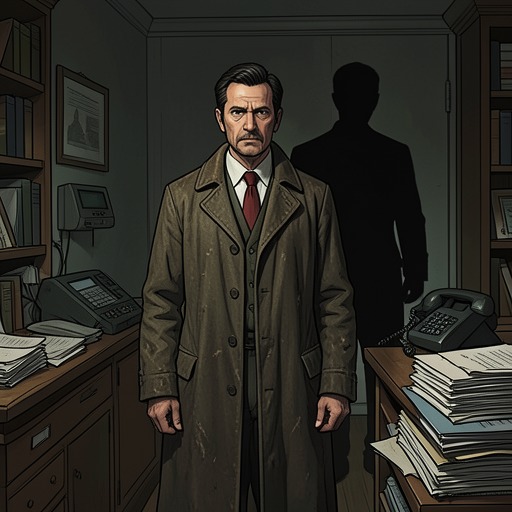
The secrecy reached even the household telephone. As the family’s switchboard operator, Frenesi had to remember a long roster of assumed names and know who used each name with whom. To a child, the adults’ conflict was difficult to understand: she could sense its consequences without knowing what the political words and identities meant. The blacklist era thus entered domestic life not only through lost work but through habits of guarded speech and concealed association.
Betrayal and the family’s arguments
As an adult, Frenesi hears her parents return to the 1950s and to the anti-Communist terror in Hollywood. Their arguments can erupt into shouting and the throwing of cutlery, household objects, vegetables, and other food. Beneath the disorder lies a history of reciprocal betrayal: friends of Hubbell had betrayed friends of Sasha, and each parent had personally suffered more than once because of the same powerful figure. Their recollections do not settle into a single family account; they pull the past back into the present, then give way to silence.
Sasha regards the blacklist period’s intricate exchanges of betrayers and betrayed as continuous with the ordinary workings of the film industry, now conducted in political form. In her view, people invented different versions of events to improve their own standing and discredit others. She compares Hollywood’s history to a screenplay repeatedly altered by outsiders: characters and events exchanged, sincere speeches flattened or removed, and the finished account left without a voice. Her image of a silent film gives the era’s secrecy a formal shape: the past is visible, but the people who might explain it have been edited out or have stopped speaking.
What Frenesi inherits
Frenesi’s early surroundings help explain why she distrusts the public performance of informing. When Flash openly defends informers and describes disclosure as part of an information revolution, Frenesi lets him talk; her own upbringing has taught her that one does not reveal another person’s affairs, least of all their political beliefs. Her childhood was marked by telephone surveillance, suspiciously parked cars, insults, and schoolyard fights. The contrast is not simply between secrecy and openness: for Frenesi, exposure has been associated with political danger and the damage done to families.
The novel later places that inheritance beside new political conflicts without treating them as identical to the blacklist years. During the occupation of the College of the Surf, Frenesi films the campus with a Scoopic and gives Brock Vond copies of what she records, initially telling herself that the footage is available to everyone. When Vond begins directing what she should film, his influence moves from receiving images toward shaping their production and enters further into her life. Later, Frenesi identifies Weed Atman as an FBI mole whose job is to lead the group astray. These episodes echo the blacklist era’s entanglement of political belief, surveillance, and betrayal, while showing those mechanisms operating in a different conflict.
A history that returns
The remembered blacklist years also sit within a wider fear of state repression. DL recalls that activists once used the idea of an ultimate roundup to frighten one another, imagining sudden arrests and confinement in camps where prisoners would officially cease to be treated as human beings. She says that Frenesi’s mother had been confined in such a prison. DL connects the fear to preparations for mass detention under Nixon and warns that the equipment is ready for use under Reagan in a future invasion of Nicaragua. The account does not erase the differences between Hollywood’s blacklist and later state power; it shows how the experience of political persecution supplies the language and memory through which later threats are recognized.
For Frenesi, then, the era is neither a closed chapter nor a reliable story handed down intact. It persists in the family’s silences, in Sasha’s anger at the rewriting of history, and in Frenesi’s uneasy position between political commitment and the systems that gather and use information. The past’s unresolved betrayals become a warning: records and images may reveal events, but the power to frame them—and to decide who is exposed—remains contested.