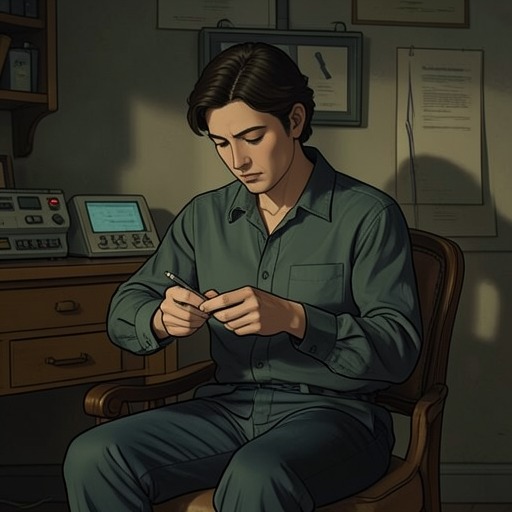
La verità a 24 fotogrammi per secondo
VinelandLa verità a 24 fotogrammi per secondo is the faith that filming can do more than record appearances: by choosing what to illuminate and how to frame it, the camera might disclose a deeper reality. In Frenesi Gates’s experience, that faith first tries to absorb a gun into its visual logic, then breaks against the consequences of armed violence. For Prairie Wheeler, the clearest image of her mother is not a film but a scene she witnesses herself: Frenesi holding a powerful reflector beside a dead man, illuminating both his killer and the weapon she had supplied.
The Camera as a Way of Knowing
When a gun enters the situation, Frenesi’s first impulse is to resist the simplified meaning attached to it. She tells herself that the truth at twenty-four frames per second in which she still believes can reach a more intense level of truth. Her imagined camera work is precise: illuminate the weapon, soften its glare, bring it into close-up, then pull back until it belongs to the larger gathering. The image might then open onto what cannot be seen directly—the invisible presences and underlying terms of which visible things are only traces.
That sequence makes cinematic truth both a method and a hope. The camera’s framing does not merely put an object on screen; it promises that a close look, followed by a wider view, can connect a particular thing to the forces surrounding it. Yet Frenesi’s imagined revelation also exposes the vulnerability of this belief: the gun is real, and its presence changes the terms of the scene before any act of filming can make it intelligible.
The Failure of Cinematic Power
Frenesi’s later judgment, shared with DL, is much harsher. In a subdued conversation, she compares the group’s old understanding of its cameras to children waging war with toy weapons: they had mistaken cinematic instruments for cannons and imagined that filming gave them a comparable kind of power. The death of Weed Atman and rumors that other people had been killed on campus, with the FBI suppressing what happened, make that mistake impossible for her to dismiss. Against guns, the group’s carefully filmic gestures have counted for nothing; she questions what difference they made and whom they saved.
The change is not simply a loss of confidence in images. It is a recognition that images cannot substitute for physical power or undo its consequences. The camera’s promise of access to reality persists, but its claim to agency has been exposed: filming may shape what can be seen, while leaving the filmed and the filmmaker unable to control what armed actors do. The phrase therefore marks a divide between seeing violence and possessing the means to stop it.
The Image Prairie Cannot Forget
The idea acquires its most painful form when Prairie Wheeler has watched footage made by Frenesi and other sequences, then encounters a scene outside the mediated world of film. At Ditzah’s kitchen, over reheated food and coffee, Prairie recalls seeing her mother beside the body of a man who had loved her. Frenesi holds a thousand-watt Mickey-Mole reflector, lighting the dead man, the man who has just killed him, and the murder weapon she herself had provided. Prairie imagines her mother as a bearer of light, exposing the killing rather than concealing it.
For Prairie, that scene is more exact and less merciful than the films. The hard illumination does not resolve her mother into an explanation; it makes Frenesi’s part in the violence unmistakable. The distinction is crucial: the films may organize images into a story, but Prairie’s direct sight of the reflector, the body, the killer, and the supplied weapon gives her an image that resists comforting interpretation. Her physical memory of having seen it outweighs the cinematic versions around it.
Meaning and Limits
Across Frenesi’s imagined framing, her later disillusionment, and Prairie’s recollection, La verità a 24 fotogrammi per secondo shifts from a principle of faith to a measure of its limits. The camera can isolate a detail and place it within a wider composition, but the act of making violence visible does not itself prevent violence, restore the dead, or absolve those who enabled it. Prairie’s unmediated encounter becomes the phrase’s grim counterpoint: sometimes the image that most clearly reveals the truth is not a film at all, but the scene its light cannot soften.