Postpartum depression of Frenci
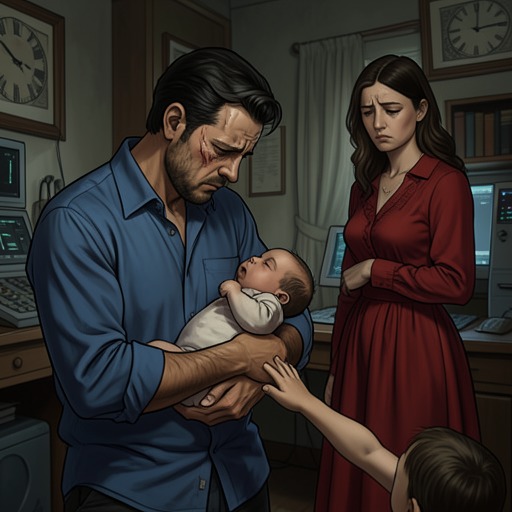
VinelandFrenesi Gates’s postpartum depression makes the birth of Prairie Wheeler a crisis of bodily estrangement rather than the promised passage into renewed adulthood. During the first day and the following weekend, Frenesi sinks into a despair so profound that those around her do not fully recognize it. The episode exposes the distance between the ideal of maternal transformation and her immediate experience of exhaustion, resentment, and isolation—and creates an opening through which Brock Vond becomes, to her, newly necessary.
The Birth and Its Aftermath
The depression is presented as a sustained condition, not a brief reaction: it occupies the day of Prairie’s arrival and continues through the weekend. Frenesi remembers her pregnancy as nine tedious months in which the child used her body, and now experiences the newborn as continuing to demand from her. Prairie takes her milk and sleep while accepting what Frenesi can provide as shelter. The asymmetry sharpens Frenesi’s sense that motherhood has not delivered the spiritual renewal or new adult reality she had expected. Instead, she feels betrayed and emptied.
The passage makes that estrangement physical. Frenesi’s breasts are painfully full; Prairie’s feeding and sleeping needs keep taking from her; and Frenesi imagines herself as a wounded animal enduring pain while waiting for everything to end. The animal image registers the extremity of her suffering, but it also becomes part of the language through which Brock Vond later interprets it. What Frenesi experiences first as bodily and emotional collapse is thus reframed in the scene as a struggle over what her condition means.
Isolation and the Crisis at Three in the Morning
No one intervenes during the depression’s early days. Zoyd Wheeler does not perceive how deeply Frenesi is depressed, while Sasha Gates may or may not recognize it. The account emphasizes the absence of public radio or television broadcasts, telephone support lines, and free numbers for information or help. Frenesi receives no assistance; more painfully, she does not know that she needs it. Her isolation is therefore not simply a matter of being left alone: she lacks both an available source of help and the recognition that help is needed.
The crisis becomes unmistakable at three in the morning, with the television on and Sasha holding the sleeping baby. Frenesi tells her mother that she should take Prairie away, then insists that she is serious. She staggers to the bathroom, where her inner turmoil breaks into violent sobbing. Sasha is paralyzed, still holding the child, and worries about whether Frenesi might hurt herself; she considers putting Prairie down and going to check on her daughter. The scene leaves that danger unresolved at first, making Sasha’s helpless watchfulness part of the crisis rather than a solution to it.
When Frenesi returns, she grips Sasha’s arm and orders her to take Prairie out of the house. Her fixed, wild gaze gives the command a force beyond an exhausted complaint: Sasha sees a daughter apparently rushing headlong toward a destination that is final and without shadow. Frenesi’s demand is directed at the immediate burden she cannot bear, while Sasha is left to protect the infant and fear for the woman asking that the child be removed. Neither can make the moment safe simply by naming what is happening.
Brock Vond and the Meaning of Suffering
At moments of hallucination and defeat, Frenesi feels Brock Vond closer and more necessary than ever. He comes to her in the dark, in an appearance the narration describes through the image of a predatory bird ornamenting fascist architecture. His consolation does not deny her humiliation; it gives it a political explanation. He tells her she is being reduced to an animal, a nursing body lying in the mud, stripped of expression and reduced to flesh and its smells. The comfort offered is inseparable from this bleak account of what has been done to her.
That language meets Frenesi where her own animal metaphor has already placed her, but it also directs the meaning of her pain toward Brock’s interpretation. She feels dragged back from the silver and light she once knew into ordinary time, where the body ages, fades, breaks, and becomes contaminated. The image of time claiming her and placing her under house arrest turns domestic life into confinement: the depression is registered not only as emotional suffering but as the loss of a former sense of freedom, invisibility, and control.
Narrative Significance
The episode’s force lies in the collision of two accounts of motherhood. The expected promise of a new adult reality gives way to a newborn’s concrete demands for milk and sleep, and Frenesi’s body becomes the site where that discrepancy is felt. The narrative does not present her collapse as something those around her can readily interpret or repair: Zoyd misses its depth, Sasha can only witness its sharpest manifestation, and Frenesi herself lacks the awareness that she needs help.
Brock Vond’s presence complicates the scene without making his consolation a cure. He recognizes and names Frenesi’s degradation, yet his imagery also folds her private crisis into a broader story of power and reduction. The account thus holds bodily distress, isolation, and political interpretation together without equating them. Its closing temporal metaphor is especially stark: Frenesi once imagined herself able to enter and leave time at will; now time has reclaimed her, taken away her passport, and confined her to the vulnerable life of the body.