When Joachim(Jocki) is seven
The Dead Man in the Garden
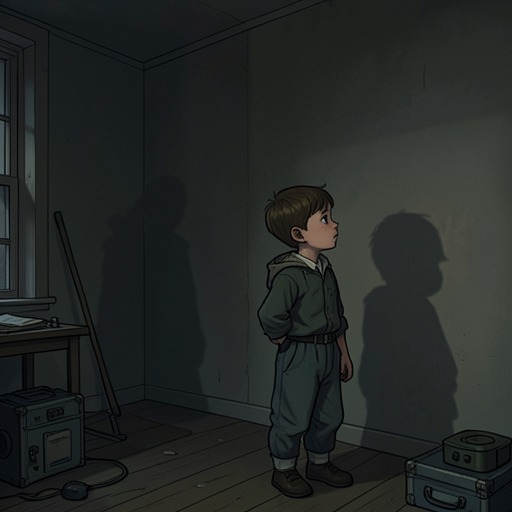
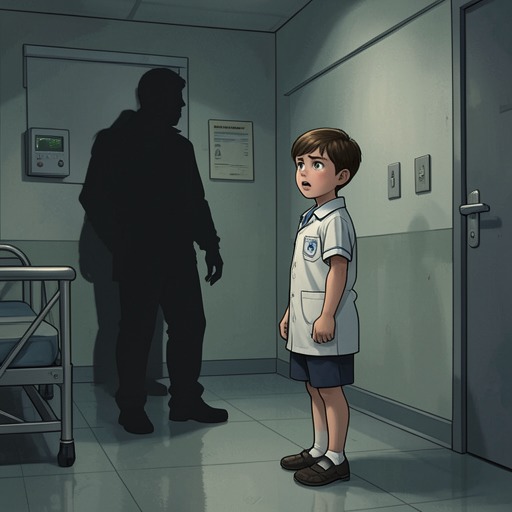
Newly allowed to walk to school alone, [Joachim(Jocki)](entity:character-recall-character-joachim-jocki-292c527c41da) takes a forbidden detour through the allotment gardens. He finds a well-dressed older man lying face-down among the flowers and immediately knows he is dead, but watches from the gate rather than seeking help.
He races to school and announces his discovery as a triumph. His teacher and the headmaster doubt him, and his classmates’ questions tempt him to embellish the body’s appearance throughout the day. The encounter begins his lasting entanglement with death, storytelling, and memory.
Later in the weeks after the discovery
The Ring Returns
As [Joachim(Jocki)](entity:character-recall-character-joachim-jocki-292c527c41da) retells the story, he invents ever more vivid details, eventually claiming that the dead man wore a ring. In the act of describing it, he is suddenly certain that the ring was real: the man had worn a gold wedding band.
The realization overturns his simple distinction between truth and fabrication. An invented detail has recovered something his memory had hidden, and he comes to understand that making things up can also be a way of remembering.
Joachim(Jocki)’s early childhood
Growing Up at Hesterberg
[Joachim(Jocki)](entity:character-recall-character-joachim-jocki-292c527c41da) grows up in the director’s house at [Hesterberg](entity:location-recall-location-hesterberg-2abe7acd3421), a vast psychiatric institution where patients, workshops, wards, and staff are part of his everyday world. His father [Hermann](entity:character-recall-character-hermann-6a1de77cfec3) directs the hospital, and the family home sits at the center of its grounds.
The children use cruel nicknames for patients, while also living in close contact with their routines, vulnerabilities, and particular ways of being. For Joachim(Jocki), the institution is not an alien place he visits but the home landscape through which he goes to school and grows up.
During Joachim(Jocki)’s early school years
The Patients on His Route
On his daily route across [Hesterberg](entity:location-recall-location-hesterberg-2abe7acd3421), [Joachim(Jocki)](entity:character-recall-character-joachim-jocki-292c527c41da) encounters patients whose habits become familiar landmarks: a boy who downs a cigarette in one drag, a girl who draws with her own blood, and a man who bends wire hangers into dangerous shapes. [Rudi](entity:character-recall-character-fac82c7dfabb), known for his toy revolver, stages mock threats that everyone around him recognizes as a game.
The grounds also contain heavily disabled patients, often secluded behind high fences, and groups of people who spend much of the day alone. Joachim(Jocki) absorbs this world in sharp sensory impressions, without yet understanding its institutional cruelty or the patients’ diagnoses.
When Joachim(Jocki) is learning to write
The Hospital’s Letter Wards
Because [Hesterberg](entity:location-recall-location-hesterberg-2abe7acd3421)’s wards are named by building letter and floor, [Joachim(Jocki)](entity:character-recall-character-joachim-jocki-292c527c41da) imagines that letters themselves have different heights and temperaments. He assigns words to the institution’s upper, middle, and lower levels, so a letter can make a word dangerous, fragile, or manageable.
In class, he writes according to this private system rather than ordinary spelling rules. His teacher sees a child who will not follow instructions, while he believes he is responding to the character and force of the letters themselves.
After four months in first grade
Sent Home from First Grade
[Joachim(Jocki)](entity:character-recall-character-joachim-jocki-292c527c41da) repeatedly erupts in anger at school, sometimes seemingly without warning. After only four months in first grade, he is sent home, to his surprise and embarrassment.
His parents spare him the humiliation of returning to kindergarten, and he spends the rest of the school year accompanying his mother on her work visits. The episode establishes the mismatch between his restless inner life and the demands of ordinary schooling.
During Joachim(Jocki)’s first year at school
The Boy Who Claimed to Be a Doctor
When two boys fight in the schoolyard, [Joachim(Jocki)](entity:character-recall-character-joachim-jocki-292c527c41da) cannot see through the crowd. He shouts that he is a doctor, and the children make way for him until his teacher catches him at the center of the scuffle.
In the staff room, he is forced to admit that he is not a doctor; his father is. The lie leaves his teacher wary of his later report that he has found a dead man, making the truth harder for her to accept.
At Hermann’s fortieth birthday
A Fortieth-Birthday Promise
Over a breakfast of smoked fish, [Hermann](entity:character-recall-character-hermann-6a1de77cfec3) announces that he wants to reach eighty. He vows to quit smoking, lose weight, and begin running, while joking that at eighty he will resume both smoking and eating without restraint.
His plans combine genuine fear for his health with comic bravado. [Joachim(Jocki)](entity:character-recall-character-joachim-jocki-292c527c41da) listens closely, attached to his father’s body and especially to the shared ritual of filling Hermann’s navel with seawater at the beach.
During the birthday breakfast
The Blackbird’s Funeral
A blackbird strikes the family’s glass doors just as [Hermann](entity:character-recall-character-hermann-6a1de77cfec3) takes his final cigarette. The family finds the bird apparently dead, and [Joachim(Jocki)](entity:character-recall-character-joachim-jocki-292c527c41da) watches his father quietly touch the glowing cigarette ash to his tongue before joining the others outside.
The brothers prepare a funeral in their garden cemetery. Although they first plan to cremate the bird, their mother forbids it, so they bury it instead; the ceremony’s improvised speeches and Joachim(Jocki)’s grief make the day’s joking birthday atmosphere suddenly solemn.
At the birthday lunch
The Desert Quiz Outburst
During the family’s quiz game, [Joachim(Jocki)](entity:character-recall-character-joachim-jocki-292c527c41da) is asked to name a dangerous desert animal. He cannot retrieve the answer, although he is fascinated by the desert, and repeatedly offers “crab” after his mother’s hand gestures suggest a scorpion.
His brothers turn the mistake into a joke about his answer and his earlier errors. The teasing tips him into a violent tantrum on the kitchen floor, while [Hermann](entity:character-recall-character-hermann-6a1de77cfec3) continues eating. The scene exposes both the family’s ease with mockery and the intensity of Joachim(Jocki)’s anger.
At the birthday afternoon gathering
Ludwig’s Attempt to Pet the Dog
The family’s invited psychiatric patients—Margret, [Ludwig](entity:character-recall-character-ludwig-5ca2ef6dec1e), [Dietmar](entity:character-recall-character-dietmar-62e07623837a), and [Kimberly](entity:character-recall-character-kimberly-b43defdee338)—arrive for the traditional birthday coffee. Ludwig is consumed by his annual desire to pet the family dog, even though his fear has repeatedly overwhelmed him before.
With the family watching, the dog barks once as Ludwig approaches, and Ludwig flees in terror. Years later, [Hermann](entity:character-recall-character-hermann-6a1de77cfec3) helps him overcome the fear by giving him a photograph placing him beside the dog; Ludwig keeps it until he can approach and stroke the real animal.
Two days before Hermann’s fortieth birthday
The Failed Marzipan Gift
[Joachim(Jocki)](entity:character-recall-character-joachim-jocki-292c527c41da) carefully makes forty marzipan potatoes, one for every year of his father’s life. He wants the gift to be his own work, especially the final act of rolling each ball in cocoa powder, a task through which he hopes to show painstaking care.
While he is away, his mother finishes the cocoa coating for him. Joachim(Jocki) feels that the most meaningful part of the present has been taken away, smashes the marzipan together, and washes the mass down the sink. Later, [Hermann](entity:character-recall-character-hermann-6a1de77cfec3) thanks him for the imagined gift, not knowing what happened.
Throughout Joachim(Jocki)’s childhood
The Nightly Chorus
At bedtime, [Hermann](entity:character-recall-character-hermann-6a1de77cfec3) opens [Joachim(Jocki)](entity:character-recall-character-joachim-jocki-292c527c41da)’s terrace door, reads the wind, and tells him stories about where it has traveled. From his room, the boy also hears the patients’ nightly cries rising from the wards and balconies across the grounds.
Far from frightening him, the cries become a familiar music that helps him sleep. Away from [Hesterberg](entity:location-recall-location-hesterberg-2abe7acd3421), he misses the voices and the open window; the sound of the institution is bound up with his sense of belonging and safety.
On the Sunday after his birthday
Hermann’s First Run
After buying books and running clothes, [Hermann](entity:character-recall-character-hermann-6a1de77cfec3) begins his promised training. [Joachim(Jocki)](entity:character-recall-character-joachim-jocki-292c527c41da) watches from home, then waits for his father to return from the woods.
The family eventually finds Hermann sitting injured on a bench after he twists his ankle during an attempted finishing sprint. He names the torn ligament a “sports injury,” studies rehabilitation plans, and never again wears the running shoes that had taken him only a few hundred meters.
When Joachim(Jocki) is a child
The Bell Ringer Befriends Joachim
[Joachim(Jocki)](entity:character-recall-character-joachim-jocki-292c527c41da) is frightened of the enormous, dark-bearded patient called the [Bell ringer](entity:character-recall-character-6d83e2f5f335), who walks the grounds swinging heavy bells around his head. One day the man stops near him, and the boy runs away in panic, briefly unable to catch his breath.
When the Bell ringer later returns a lost pen, Joachim(Jocki) approaches him despite his fear. Soon the man lifts him onto his shoulders and runs through the grounds; their startling friendship turns the once-terrifying bell sound into a source of excitement and trust.
About eight weeks after Hermann’s birthday
The New Clinic Opening
The family and hospital staff wait in the rain for [Gerhard Stoltenberg](entity:character-recall-character-gerhard-stoltenberg-9e397486ada5) to open the new psychiatric clinic. When he arrives, his immense height and official presence seem to change the scale of the scene, and [Hermann](entity:character-recall-character-hermann-6a1de77cfec3) leads him through a building intended to mark a shift from mere custody toward treatment.
The visit is carefully staged, with selected patients and quiet wards presented to the guest. The ceremony becomes a test of Hermann’s professional pride and of the institution’s public image.
At the end of the clinic opening
Rudi’s Toy-Gun Incident
As Stoltenberg prepares to leave, [Rudi](entity:character-recall-character-fac82c7dfabb) calls out a mock threat and points his toy revolver. His two security men throw the minister to the ground and draw real pistols, while [Hermann](entity:character-recall-character-hermann-6a1de77cfec3) urgently assures them that the patient is harmless.
Rudi relishes the extraordinary response before throwing his plastic gun away. The incident briefly turns a staged public event into a genuine crisis, then reveals how a familiar game can look terrifying to outsiders unfamiliar with the hospital’s patients.
After the clinic tour
A Private Moment with the Minister
At the family home, Stoltenberg changes into [Hermann](entity:character-recall-character-hermann-6a1de77cfec3)’s doctor’s coat after the rain and mud ruin his clothes. While [Joachim(Jocki)](entity:character-recall-character-joachim-jocki-292c527c41da) polishes the minister’s shoes, Stoltenberg speaks privately with Hermann about photographs of his fall and his political ambitions.
Before departing, Stoltenberg offers Hermann friendship and thanks him for his help. The encounter leaves the boy with a vivid impression of authority and its fragility, an impression sharpened years later when he sees the former minister at Hermann’s funeral without the force of office around him.
During the annual psychiatric hospital Christmas celebrations
The Christmas Gift Stampede
[Joachim(Jocki)](entity:character-recall-character-joachim-jocki-292c527c41da) accompanies [Hermann](entity:character-recall-character-hermann-6a1de77cfec3) from ward to ward for Christmas. On some wards, patients tear into gifts with overwhelming excitement, often breaking them within minutes and then grieving over the wreckage.
The celebrations range from quiet rooms for profoundly disabled patients to exuberant gatherings and improvised Nativity plays. Joachim(Jocki) finds the disorder compelling, but the scenes also make him more careful with his own gifts, which he experiences as things that invite destruction as much as delight.
One Christmas during Joachim(Jocki)’s childhood
The Christmas Electric-Knife Quarrel
After the family argues over gifts, [Hermann](entity:character-recall-character-hermann-6a1de77cfec3) sees the electric knife he gave his wife being used to cut raw dog food. In a sudden burst of anger, he carries it into the Christmas room and saws into the book set she had given him.
[Joachim(Jocki)](entity:character-recall-character-joachim-jocki-292c527c41da) watches from his chair, thrilled to see an adult enact the kind of destructive impulse he usually has to restrain. The family later reconciles and resumes the game, but the brief outburst exposes tensions beneath the festive routine.
After Joachim(Jocki) has become his riding companion
The Bell Ringer Disappears
The [Bell ringer](entity:character-recall-character-6d83e2f5f335) vanishes from the grounds. [Hermann](entity:character-recall-character-hermann-6a1de77cfec3) says only that the patient must remain on his ward, while rumors suggest he seriously injured an attendant with one of his bells.
[Joachim(Jocki)](entity:character-recall-character-joachim-jocki-292c527c41da) searches for an explanation and imagines the man’s violent capture or escape. Later, while fishing at [Spiegelteich](entity:location-recall-location-spiegelteich-8d9bd665dfc0), he sees a metallic glimmer on the bottom that looks like a bell. He never sees the Bell ringer again.
During Joachim(Jocki)’s childhood friendship with Ferdinand
The Cross-Section Cats
[Joachim(Jocki)](entity:character-recall-character-joachim-jocki-292c527c41da) plays in the cellar with [Ferdinand](entity:character-recall-character-ferdinand-e88c57ad784c), who shares elaborate suspicions about secret tunnels, missing corpses, and hidden identities. The boy believes Ferdinand and echoes his declaration that he is not the person everyone thinks he is.
Ferdinand gives him detailed drawings of cats cut open into intricate internal worlds, where tiny colored people pass through the body and one figure remains trapped inside. A later handmade creature made from parts of other toys carries the same strange intimacy of their friendship.
When Joachim(Jocki) is still a child
The Dog Blood Pact
Inspired by a film about blood brothers, [Joachim(Jocki)](entity:character-recall-character-joachim-jocki-292c527c41da) decides to bind himself to the family dog, [Aika](entity:character-recall-character-aika-5b31b4f4393c). He cuts the dog’s paw with a scalpel, then cuts his own hand and tries to tie their wounds together with a shoelace.
The frightened dog escapes through the house, leaving blood on the carpet. [Hermann](entity:character-recall-character-hermann-6a1de77cfec3) stitches both wounds, and the family secretly repairs the damaged floor; afterward, Aika avoids the cellar with Joachim(Jocki). The child’s wish for closeness has instead made the dog wary of him.
After the family acquires the East Coast cottage
Hermann’s Sailing Dream
A new interest in seafaring books becomes a plan when [Hermann](entity:character-recall-character-hermann-6a1de77cfec3) decides to buy a sailboat. Before he has sailed or passed the exam, he joins the [Schleswiger Schlei-Segel-Club](entity:organization-recall-organization-schleswiger-schl-07f410c6d9a1), rents a berth, buys sailing clothes, and orders a small supposedly unsinkable boat.
The family names it JoMaHe. Hermann studies knots and navigation with characteristic intensity, while his wife takes the practical sailing course more seriously. The dream grows through preparation long before it is tested against the water.
Two months after the boat arrives
The Sailing Exam Failure
[Hermann](entity:character-recall-character-hermann-6a1de77cfec3) and his wife take their practical sailing exam in strong wind. She manages the boat while Hermann repeatedly falls, is struck by the boom, and becomes sick; at one point she climbs the mast to recover a line.
She passes, but Hermann is the only candidate to fail. He later sails only when the water is calm and no sail needs to be raised, until an outing ends with him accidentally knocking [Joachim(Jocki)](entity:character-recall-character-joachim-jocki-292c527c41da) overboard with the starter cord. Hermann jumps in after him, but their boat drifts away and another couple rescues them both.
During a Sunday visit to the East Coast cottage
Building the Charcoal Kiln
After hearing about charcoal-making on television, [Joachim(Jocki)](entity:character-recall-character-joachim-jocki-292c527c41da) tells [Hermann](entity:character-recall-character-hermann-6a1de77cfec3) how a charcoal kiln is built. Hermann suggests they make a small one together, and for once the son directs the work: they chop wood, cut turf, cover the stack, and feed embers into its center.
They leave openings for air and light the kiln, but must drive home before it begins to smoke. The following week, Joachim(Jocki) finds the mound hot and sending up two steady columns of smoke. Weeks later, father and son open it together and recover light, glossy charcoal from the familiar wood.
During the family’s weekends at the cottage
Life Beside the Meisners
The neighboring Meisner family lives amid neglect and decay, in sharp contrast to [Hermann](entity:character-recall-character-hermann-6a1de77cfec3) and his wife’s increasingly elaborate self-sufficiency projects. [Joachim(Jocki)](entity:character-recall-character-joachim-jocki-292c527c41da) encounters the father’s rough dares, the mother’s declining health, and their daughter Michaela, whose diabetes shapes her precarious life.
The father and then the mother die, while Hermann tends the woman’s worsening wounds. The surviving brother and sister remain in the deteriorating house until they are eventually separated into different arrangements, leaving the children’s former contrast with the family’s rural idyll increasingly painful.
Around Christmas and New Year in 1978–1979
The Snow Disaster Begins
After an unusually mild Christmas, fierce winds drive fine, hard snow across northern Germany. Snowdrifts repeatedly erase cleared roads and entrances; transport stops, buildings and farms are isolated, and the authorities declare a disaster.
[Joachim(Jocki)](entity:character-recall-character-joachim-jocki-292c527c41da) is exhilarated by the extraordinary landscape, while [Hermann](entity:character-recall-character-hermann-6a1de77cfec3) worries about the hospital’s stranded patients and staff. The family’s home is nearly swallowed by snow, and the crisis turns the ordinary surroundings of [Schleswig](entity:location-recall-location-schleswig-f44c4ef73077) into a hazardous white wilderness.
During the 1978–1979 snow disaster
The Helicopter Insulin Rescue
A call from the Meisner household reveals that Michaela has run out of insulin and may be in immediate danger. With roads impassable, [Hermann](entity:character-recall-character-hermann-6a1de77cfec3) coordinates with the hospital and the [Bundeswehr](entity:organization-recall-organization-3708e60c265a) to join a helicopter already carrying supplies and a patient.
He flies to the isolated cottage and delivers the insulin while a television crew records the rescue. Watching the broadcast, [Joachim(Jocki)](entity:character-recall-character-joachim-jocki-292c527c41da) sees his father return not as the familiar sedentary reader but as a calm, decisive doctor willing to enter the storm.
When Joachim(Jocki) is a child, after the snow disaster
The Mother’s Newspaper Breakdown
[Joachim(Jocki)](entity:character-recall-character-joachim-jocki-292c527c41da) and his brothers hear a familiar voice crying out from the living room. Their mother is tearing newspapers to pieces and shouting that a pig must finally go away, while [Hermann](entity:character-recall-character-hermann-6a1de77cfec3) stands apart, tense and visibly irritated.
The eldest brother refuses Hermann’s order to leave the room and goes to comfort their mother. Joachim(Jocki) remains caught between his parents and, with a small shrug, sides with his father. The gesture troubles him afterward because he recognizes how quickly he has made himself an ally in their conflict.
Every summer during Joachim(Jocki)’s childhood
The Summer Fair
[Hesterberg](entity:location-recall-location-hesterberg-2abe7acd3421) holds a large summer fair for patients, staff, townspeople, and visitors. [Joachim(Jocki)](entity:character-recall-character-joachim-jocki-292c527c41da) works at stalls, watches patients perform and mingle, and sees [Hermann](entity:character-recall-character-hermann-6a1de77cfec3) move through the grounds with ease among the people he directs.
The fair briefly suspends ordinary separations: patients and staff dance together, and even Hermann joins the music. Its exuberant mixture becomes one of Joachim(Jocki)’s strongest memories of the institution as a living community.
When Joachim(Jocki) is about thirteen
Marlene Arrives
[Marlene](entity:character-recall-character-marlene-7bd79d7ae38e), a fourteen-year-old who has attempted suicide by swallowing pills, comes to stay with the family because her parents believe she is too sensitive for inpatient care. She moves slowly, eats from the unusual groceries prepared for her, and seems to drain the household’s ordinary energy.
[Joachim(Jocki)](entity:character-recall-character-joachim-jocki-292c527c41da) is drawn to her quiet, difficult-to-read presence. When he asks why she is there, she tells him about the attempt and says she does not know why she wanted to die; she hopes the answer may come later.
Several years after Marlene’s stay
Marlene’s Later Suicide
[Hermann](entity:character-recall-character-hermann-6a1de77cfec3) tells [Joachim(Jocki)](entity:character-recall-character-joachim-jocki-292c527c41da) that [Marlene](entity:character-recall-character-marlene-7bd79d7ae38e) has died by suicide. He explains that this was her fourth attempt and that she had remained under his care for years, though she and her parents had seemed to have a good relationship.
His grief is unusually unguarded: he had hoped they might still succeed in keeping her alive. The news gives retrospective weight to the quiet girl who once lived in their home and had been unable to explain her wish to die.
During Joachim(Jocki)’s later childhood
Feigning Illness for a Film
Unable to stay up for films that continue past his nine o’clock bedtime, [Joachim(Jocki)](entity:character-recall-character-joachim-jocki-292c527c41da) discovers that a favorite movie will be repeated the next morning. He plans to feign illness and uses a warming cream to redden his face before going to school.
His performance convinces his teacher, and a classmate escorts him home. Joachim(Jocki) watches the replay in secret, then spends the afternoon reliving scenes in his imagination. His deception is both a comic escape from family rules and a rare triumph of planning.
Across Joachim(Jocki)’s adolescence
The Parents’ Moving Beds
[Joachim(Jocki)](entity:character-recall-character-joachim-jocki-292c527c41da) reads his parents’ closeness from the changing arrangement of their beds. They begin side by side, then drift apart toward opposite walls, sometimes with books forming barriers between them, before [Hermann](entity:character-recall-character-hermann-6a1de77cfec3) moves to the basement guest room.
At times, his mother leaves for [Italy](entity:location-recall-location-125be658b0d0) to recover from the marriage, and the children remain with Hermann. The beds later move together again, making the room an intimate record of a marriage whose warmth and distance are visible even when its causes remain unspoken.
During Joachim(Jocki)’s adolescence
Susanna’s Call with Franco
When [Franco](entity:character-recall-character-franco-608fde243ea4) calls from [Italy](entity:location-recall-location-125be658b0d0), [Susanna](entity:character-recall-character-susanna-cf043f83c901)’s voice and bearing transform as she speaks with him. Her animation contrasts with the cold, sleepy life she describes at home, and [Hermann](entity:character-recall-character-hermann-6a1de77cfec3) sometimes leaves the room when he hears the calls.
She tells her sons stories of swimming, riding a scooter, and living vividly in Italy. Her longing for warmth and freedom reveals a self that has been muted by the family’s northern routine and by her husband’s emotional distance.
One year during Joachim(Jocki)’s adolescence
The Rotary Costume Disaster
[Hermann](entity:character-recall-character-hermann-6a1de77cfec3) and [Susanna](entity:character-recall-character-susanna-cf043f83c901) leave for a [Rotary Club](entity:organization-recall-organization-rotary-club-d1b9bc97304b) carnival in mismatched costumes, including Hermann’s self-described carnival salad. In the night, the family dog fails to recognize Hermann and attacks the glass door as he tries to get home.
The family struggles to bring him inside, eventually guiding him through a bedroom window while the dog tears at the costume. The absurd episode turns the household’s ordinary affection into a comic siege and exposes how completely a disguise can unsettle even a familiar animal.
At the end of Joachim(Jocki)’s adolescence
The Officers’ Club Outburst
After working through the night dismantling a fairground ride, [Joachim(Jocki)](entity:character-recall-character-joachim-jocki-292c527c41da) arrives exhausted at a birthday party in the officers’ club. He finds the celebration nearly over, sees vomit on the pavement, and drinks rapidly in a sudden surge of anger.
He smashes bottles, throws others across the room, strikes his head, and collapses in a military hospital room at [Hesterberg](entity:location-recall-location-hesterberg-2abe7acd3421). [Hermann](entity:character-recall-character-hermann-6a1de77cfec3) arrives distressed, but Joachim(Jocki) can only say that the episode happened out of nowhere, another frightening escalation of the anger that has long shaped his life.
After the officers’ club breakdown
A Year in Wyoming
Wanting to get away from [Schleswig](entity:location-recall-location-schleswig-f44c4ef73077), [Joachim(Jocki)](entity:character-recall-character-joachim-jocki-292c527c41da) leaves for an exchange year in [Laramie](entity:location-recall-location-laramie-44800cd75bb8), [Wyoming](entity:location-recall-location-be7e0c8dd13e). He joins a host family with three sons, attends school, climbs in the mountains, builds oversized birdhouses, and learns to live in a place that feels remote even from the town itself.
He finds relief in the prairie and in the wolves’ night calls, which recall the patients’ cries at home. The year gives him distance from his family and from his own reputation as a volatile, struggling student.
Several weeks into the exchange year
Martin’s Fatal Crash
While [Joachim(Jocki)](entity:character-recall-character-joachim-jocki-292c527c41da) is in [Laramie](entity:location-recall-location-laramie-44800cd75bb8), [Hermann](entity:character-recall-character-hermann-6a1de77cfec3) calls with the news that his second-oldest brother [Martin](entity:character-recall-character-martin-f5cb6653498c) has died in a car crash. Martin’s girlfriend is also killed; the driver, his friend, survives after the car slides beneath a truck stopped on a dark road.
Unable to find the English words for the news, Joachim(Jocki) uses a dictionary to tell his host family what has happened. He returns for the funeral, but after fourteen days chooses to fly back to [Wyoming](entity:location-recall-location-be7e0c8dd13e) rather than remain with his grieving parents.
After Joachim(Jocki) returns from his exchange year
Ferdinand’s Resurrection
Back at [Hesterberg](entity:location-recall-location-hesterberg-2abe7acd3421), [Joachim(Jocki)](entity:character-recall-character-joachim-jocki-292c527c41da) takes a walk through the grounds and finds [Ferdinand](entity:character-recall-character-ferdinand-e88c57ad784c) sitting on a familiar bench. Ferdinand stares at him in horror and can barely form the words “You’re alive.”
He has mistaken Joachim(Jocki) for his dead brother and believed both brothers were gone. Ferdinand embraces and celebrates him, giving Joachim(Jocki) an unexpected resurrection: for the first time, his own return is recognized as a life restored rather than a homecoming after absence.
After Joachim(Jocki) returns to live with his parents
Aika’s Cancer
The family discovers a large tumor beneath the family dog’s belly. The old dog struggles to stand and breathe, and a veterinarian warns that surgery may be too risky.
The illness forces [Joachim(Jocki)](entity:character-recall-character-joachim-jocki-292c527c41da) and his mother to recognize how much they have overlooked. Because the dog belonged to [Martin](entity:character-recall-character-martin-f5cb6653498c) and connects them to their former family life, deciding what to do feels like deciding how much of that lost household they can bear to release.
Shortly after the tumor is discovered
The Dog’s Euthanasia and Burial
[Joachim(Jocki)](entity:character-recall-character-joachim-jocki-292c527c41da) and his mother decide that the dog is suffering too much to take home again. Before returning to the clinic, he buys the dog a Bounty bar, a rare indulgence for the animal who once became his blood brother.
Joachim(Jocki) stays for the euthanasia, then drives the body to the family’s cottage and digs a grave alone. The dog’s body seems to shrink as he buries it, and the grave disappears beneath the earth; the act makes his grief physical and final.
On New Year’s Eve after Joachim(Jocki) gets his driver’s license
The Cat on New Year’s Eve
Driving home from a disappointing party in [Eggebek](entity:location-recall-location-88c64fc903b6), [Joachim(Jocki)](entity:character-recall-character-joachim-jocki-292c527c41da) hits a cat on a dark road. He finds it badly injured and tries to cover it with a towel while waiting for help.
A passing local man quickly declares that the cat will not survive and kills it with his boot. Joachim(Jocki) is left with the violence of the act and the man’s casual New Year’s greeting, an abrupt collision between his wish to help and the world’s indifference.
Several years after Joachim(Jocki) has left home
The Parents Separate
[Hermann](entity:character-recall-character-hermann-6a1de77cfec3) becomes ill and has a diseased kidney removed. He later suffers further cancerous growths, while his marriage to [Susanna](entity:character-recall-character-susanna-cf043f83c901) has become increasingly difficult to sustain.
Hermann moves to [Lübeck](entity:location-recall-location-bdf89c4f6304) to live with Karin and her two young children; Susanna leaves their home for work near [Lake Maggiore](entity:location-recall-location-2d6e051a1095) in [Italy](entity:location-recall-location-125be658b0d0). The house at [Hesterberg](entity:location-recall-location-hesterberg-2abe7acd3421) stands empty, and the family that once occupied it is scattered between separate lives.
After his illness worsens in Lübeck
Hermann Returns to the Family Home
[Hermann](entity:character-recall-character-hermann-6a1de77cfec3)’s cancer returns, first through pain in his leg and then through shadows on his lungs. He tries to work again but cannot continue, and the life he has found with Karin and her children begins to feel, to him, like an imposition on them.
He returns to the family home at [Hesterberg](entity:location-recall-location-hesterberg-2abe7acd3421), sick and alone. When [Josse](entity:character-recall-character-josse-92077156d5ce) visits, he finds his father weakened and the old household altered: the dog’s leash still hangs by the door, but the home is no longer arranged for the family that once lived there.
During one of Josse’s visits after Hermann returns
Black and Decker
[Hermann](entity:character-recall-character-hermann-6a1de77cfec3) shows [Josse](entity:character-recall-character-josse-92077156d5ce) two rabbits in a newly built hutch, calling them Black and Decker. For a moment, his old pleasure in naming and tending small creatures returns, and the sick man’s familiar humor briefly breaks through his exhaustion.
The visit also reveals how much he now depends on meals delivered from the hospital and on small projects to fill the day. Josse sees the difference between the father’s grand ideas and the narrowed practical life illness has left him.
After Josse visits his seriously ill father
The Parents Reconcile
[Hermann](entity:character-recall-character-hermann-6a1de77cfec3)’s health continues to decline, and [Susanna](entity:character-recall-character-susanna-cf043f83c901) returns from [Italy](entity:location-recall-location-125be658b0d0) to care for him. [Josse](entity:character-recall-character-josse-92077156d5ce) arrives at the house and unexpectedly finds his parents asleep together in one bed, his mother’s head resting on his father’s chest.
He realizes he has known them separately as father and mother but has rarely seen them as a couple. Their quiet closeness becomes the most beautiful moment he remembers with them, even as the future of their reconciliation remains uncertain.
During Hermann’s final months
The Pain Finally Stops
[Hermann](entity:character-recall-character-hermann-6a1de77cfec3)’s cancer pain spreads through his body and home, becoming an exhausting presence that seems to dictate every movement. Morphine eventually becomes necessary in enormous doses, but it also brings hallucinations and threatens his breathing.
One night, pain surges through his legs and back as he cries out that he is burning. Then it abruptly disappears below his chest: he is paralyzed. For the first time in nearly two years, he wakes without pain, and the family’s relief is inseparable from the knowledge of what the paralysis means.
Several months after the paralysis
Hermann’s Death
As [Hermann](entity:character-recall-character-hermann-6a1de77cfec3)’s breathing deteriorates, he is taken to hospital after a near-fatal attack. [Susanna](entity:character-recall-character-susanna-cf043f83c901) stays with him through the final weeks, caring for him through the practical labor of dying while he alternates between wanting death and fighting to remain alive.
After a night of terrible pain and fear, Hermann dies. [Josse](entity:character-recall-character-josse-92077156d5ce) spends the night beside his still-warm body on a pressure-relief mattress, only to discover that the warmth comes from the machine; when he switches it off, his father becomes cold and irreversibly unfamiliar.
During Hermann’s funeral day
The Funeral Burglary
After leaving the funeral service, [Josse](entity:character-recall-character-josse-92077156d5ce) returns to the family house and finds it broken into and ransacked. Someone has defecated on the kitchen table and thrown the prepared fish dishes against the walls.
Before the mourners return, he cleans the mess and hides the excrement, then calls the police only after the first guests arrive. His frantic effort to spare his mother adds a grotesque, practical task to the family’s day of mourning.
Shortly after Hermann’s death
The Secret Apartment in Kiel
[Josse](entity:character-recall-character-josse-92077156d5ce)’s eldest brother discovers that [Hermann](entity:character-recall-character-hermann-6a1de77cfec3) had been sending money every month for years to a property company in [Kiel](entity:location-recall-location-7b7735cfe1f3). He and Josse use a key and their father’s death certificate to find the rented apartment.
Inside, they discover photographs of a dark-haired woman and evidence of a separate, carefully furnished life Hermann had kept private. The brothers play a record, drink whiskey, and dance while a brightly lit ferry leaves the harbor, turning the revelation into an unsettled mixture of intimacy, secrecy, and grief.
Years after Hermann’s death
The Ruined Hesterberg
On a return visit to [Schleswig](entity:location-recall-location-schleswig-f44c4ef73077), [Josse](entity:character-recall-character-josse-92077156d5ce) finds [Hesterberg](entity:location-recall-location-hesterberg-2abe7acd3421) transformed: sections of the old grounds are empty or demolished, the hospital is nearly deserted, and opaque fencing hides many of the remaining patients. The once-familiar routes no longer carry the sounds and encounters that defined his childhood.
He understands that the old institution was overcrowded and cruel, yet grieves for the intensity and clarity of the world that has disappeared. His longing is not for the injustice of the past but for the patients’ unfiltered joy, anger, embraces, and nighttime cries.
At the end of Josse’s return visit
The Boy Behind the Glass
[Josse](entity:character-recall-character-josse-92077156d5ce) comes to the house where he grew up, now used as a supervised residence. On the old terrace door, a patch of breath pulses against the glass, and the vague outline of a face appears and disappears.
He climbs over the fence and sees a boy no older than seven sitting in his former bedroom, exhausted and breathing against the window. The child looks through him into a peaceful emptiness; Josse finds, at the end of his journey through memory, an image of his own childhood still alive in the place that once contained it.