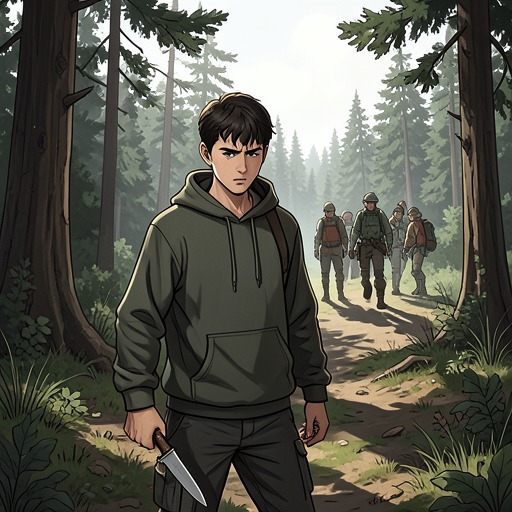
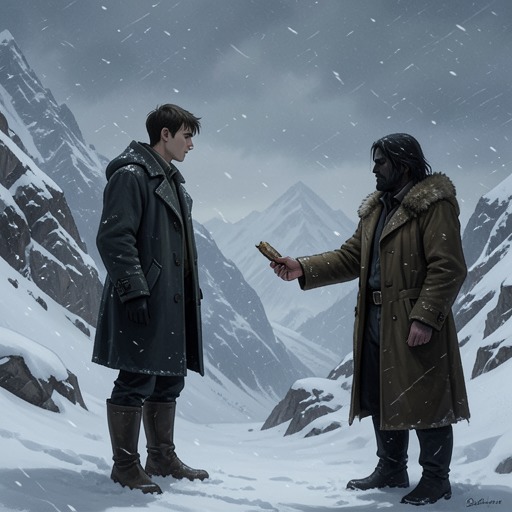
Devi scegliere da che parte stare, Carag. Non puoi essere entrambe le cose.
WoodwalkersDevi scegliere da che parte stare, Carag. Non puoi essere entrambe le cose. is the defining expression of a conflict between identities that Carag’s life repeatedly makes difficult to resolve. His father presents belonging as a choice between the human and puma worlds; later, Carag must move through both, learning that each has rules and dangers the other cannot erase.
Origin and Meaning
The expression comes from a conversation in Carag’s childhood. After remembering the city as a place full of wonders, he asks his mother why shapeshifters cannot live in both ways, as humans and as pumas. She explains that a human life requires documents identifying who someone is, and that the family does not have them. His father then looks at Carag with golden feline eyes and insists that he must choose a side.
The advice frames an emotional and practical divide. Carag misses the city’s glittering lights, which seem brighter than the stars, and returns there alone six months later while his parents are hunting. He wanders its streets, encounters unfamiliar smells, and longs to travel by car. Two years later, on turning eleven, he makes a decision his family would not have wanted. The expression therefore stands beside a sequence of acts that show his attraction to human life persisting despite the family’s preference that he remain with them.
The Choice in School
At Clearwater High, the division between predator and prey becomes a matter of conduct as well as identity. When Jeffrey calls Nimble a rodent, Nimble protests that the school’s third rule forbids predators from mistreating prey. Jeffrey answers by partially transforming to display his fangs, and Nimble retreats. Carag recognizes Jeffrey and his companions as wolves; their bullying awakens the same anger he feels when Marlon torments him.
The school’s rules do not abolish difference, but regulate how students are to live with it. When Carag appears ready to transform during the confrontation, Bridger holds him by the shoulder and asks whether he was about to break the rule requiring a teacher’s permission to transform during school hours. Bridger also points out that student fights are permitted only in Combat and Survival class. These encounters give the father’s stark either-or advice a more complicated setting: at school, distinct animal identities remain real, yet students are expected to share a community governed by rules.
Human Institutions and Physical Risk
The same tension appears when Carag’s foster family encounters the school. Donald objects to finding a bison in the building and worries that Jay is unsafe there. Carag tries to reassure him, while the director explains the animal away as part of stimulating biology lessons using live animals. In this scene, Carag is caught between the human family asking for an intelligible account and a school protecting the secrecy of its shapeshifting students.
Outside school, the choice is not simply a question of affiliation: Carag’s puma body can expose him to immediate danger. Hearing hunting dogs in the forest, he recalls that puma hunting season lasts from October through March and that a hunter needs only an easily obtained license to kill one. He also realizes he has wandered far from the school’s safe territory and may have left Grand Teton National Park. Changing into human form would leave him without clothes or shoes in the snow, so the alternatives carry bodily risks as well as questions of belonging.
Recurring Significance
The expression remains powerful because Carag’s circumstances keep putting its certainty under pressure. His father speaks as though human and puma life require a single allegiance; Carag’s memories, his choice to return to the city, and his daily life at Clearwater High instead show him repeatedly confronting both worlds. The school’s rules make coexistence possible only through boundaries and restraint, while the human cover story and hunting regulations reveal how vulnerable shapeshifters can be when their identity is hidden or exposed. The advice is thus more than a family maxim: it names the problem Carag must navigate, without making the choice itself simple.