Timbuctù
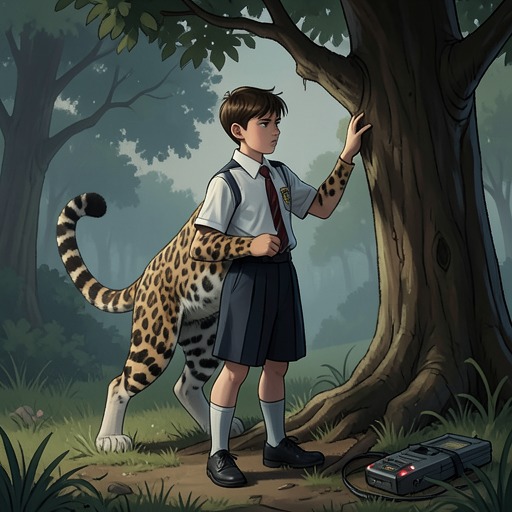
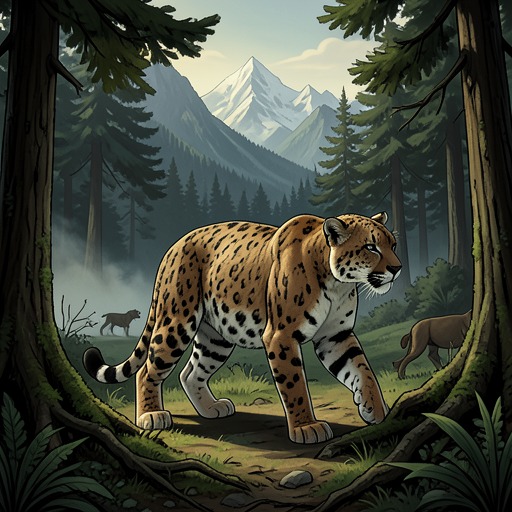
WoodwalkersTimbuctù is Carag’s chosen transformation cue, a word he uses to focus his thoughts as he shifts between human and puma forms. Its importance lies not in any known meaning—Carag does not know what it means—but in the uneven control it helps him gain: it makes ordinary transformations easier, yet proves unreliable when danger overwhelms him. Its eventual success comes amid a concrete sensory scene, as Carag, wounded and pursued, finds a juniper and imagines himself back in class as a human.
Choice and Purpose
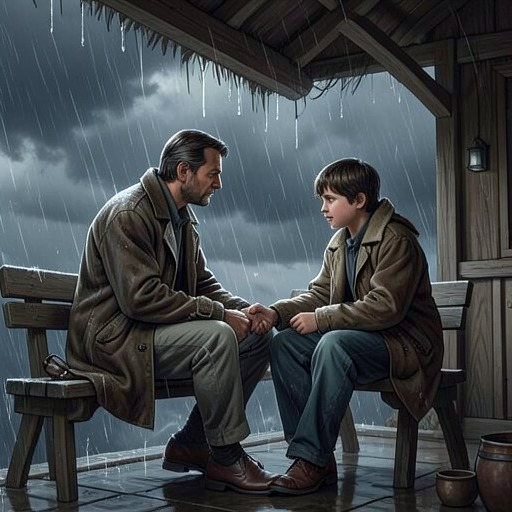
During a lesson with Bridger, Carag explains that Mia is his sister and that he has not seen her for a long time. Bridger warns him against choosing her name as his cue: if Carag were to call out Mia’s name when they met again, he might transform before she could recognize him. The caution ties the practical problem of shifting to a future encounter with someone important to him; a transformation cue must be usable without accidentally changing his appearance in front of his sister.
Carag settles on Timbuctù instead. He has heard the word once, does not know its meaning, and chooses it because its sound strikes him as attractive, mysterious, and exotic. The choice is therefore personal rather than semantic: the word gives him a distinct sound to associate with changing shape, without borrowing his sister’s name. In the lessons that follow, he begins to get used to it. Saying it or thinking it helps his transformations work better, although Bridger makes clear that Carag has not yet reached a sufficient level of control.
Practice and the Midyear Exam
The cue first functions as a deliberate aid. During the midyear exam, Carag faces the prospect of failing and being sent out of his class to start again with new arrivals. He also fears disappointing Andrew Milling, Lissa Clearwater, Bridger, Theo, and his friends. When Lissa calls for him to act, he murmurs Timbuctù and pictures himself as a puma, imagining the fur; his body changes, and he becomes the animal.
The scene shows the word working in concert with a specific mental image. Carag does not merely repeat a sound: he pictures the form he wants, and the transformation follows. That success, however, does not establish that the cue will work under every condition. Bridger has already distinguished practice from genuine fear and danger, warning that the latter would be a different test. The exam supplies evidence of progress, not mastery.
Repetition and Loss of Control
Later, with Andrew Milling nearby and Bridger two chairs away, Carag draws confidence from Bridger’s presence and remembers their lessons in the mist-covered woods. He tries to reach the puma that had recently brought Bill Brighteye down. At the same time, an inward voice rebukes him for not losing and warns that he is now at Milling’s mercy. Against that pressure, Carag whispers Timbuctù, then repeats the word. The puma remains buried so deep inside him that he cannot find it.
The repetition sharpens the limits of the cue. It is not an automatic command that overrides every other state of mind: in this moment, Carag can say it more than once and still fail to reach the shape he wants. The word’s earlier usefulness and this failure coexist. Its effect depends on more than its utterance, and the narrative contrasts the controlled image-making of practice with the mental interference that prevents Carag from accessing his animal form.
The Juniper and the Emergency Transformation
The most severe test comes when Carag is exhausted, wounded, and being pursued by hunting dogs. Too far from the national park to rely on reaching it, he concludes that he must transform into a human and drive the dogs away. He imagines himself as a blond boy with green-gold eyes and tries Timbuctù, but nothing happens. Panic follows: he is still a puma, and Bridger’s warning about fear has become immediate experience rather than instruction.
Carag later follows Shadow’s directions toward a juniper bush. He limps to it, searches, and finally sees its blue berries. As he plunges into the thorny bush, breaking branches with his weight, the spicy aroma rises into his nose. This time, he thinks Timbuctù while imagining himself seated in class in human form. The tingling begins almost at once. He changes back, sobbing with relief; the gunshot wound still burns, but he can examine his human hands and touch his face again.
The contrast makes the word’s operation clearest without making it infallible. Repeating it in terror, while imagining a boy, had brought no change; in the juniper, Carag combines the cue with a different image and a sharply perceived smell, and the transformation follows. The dogs’ response confirms the practical consequence: they had been tracking a puma and its blood, but now confront a human instead, leaving them confused. Timbuctù thus marks both Carag’s incomplete command of transformation and the moment that command, joined to a vivid self-image, helps him escape immediate danger.