Annabel Leigh
Annabel Leigh is the foundational figure in Humbert Humbert's erotic life, the "initial girl-child" whose unconsummated love and sudden death created the psychic wound that, twenty-four years later, he would attempt to heal by incarnating her in Dolores Haze. She is the ghost who haunts every page of his confession, the standard against which all later nymphets are measured, and the proof that his obsession began not as a moral choice but as a fateful consequence of a single, shattered summer.
Identity and Background
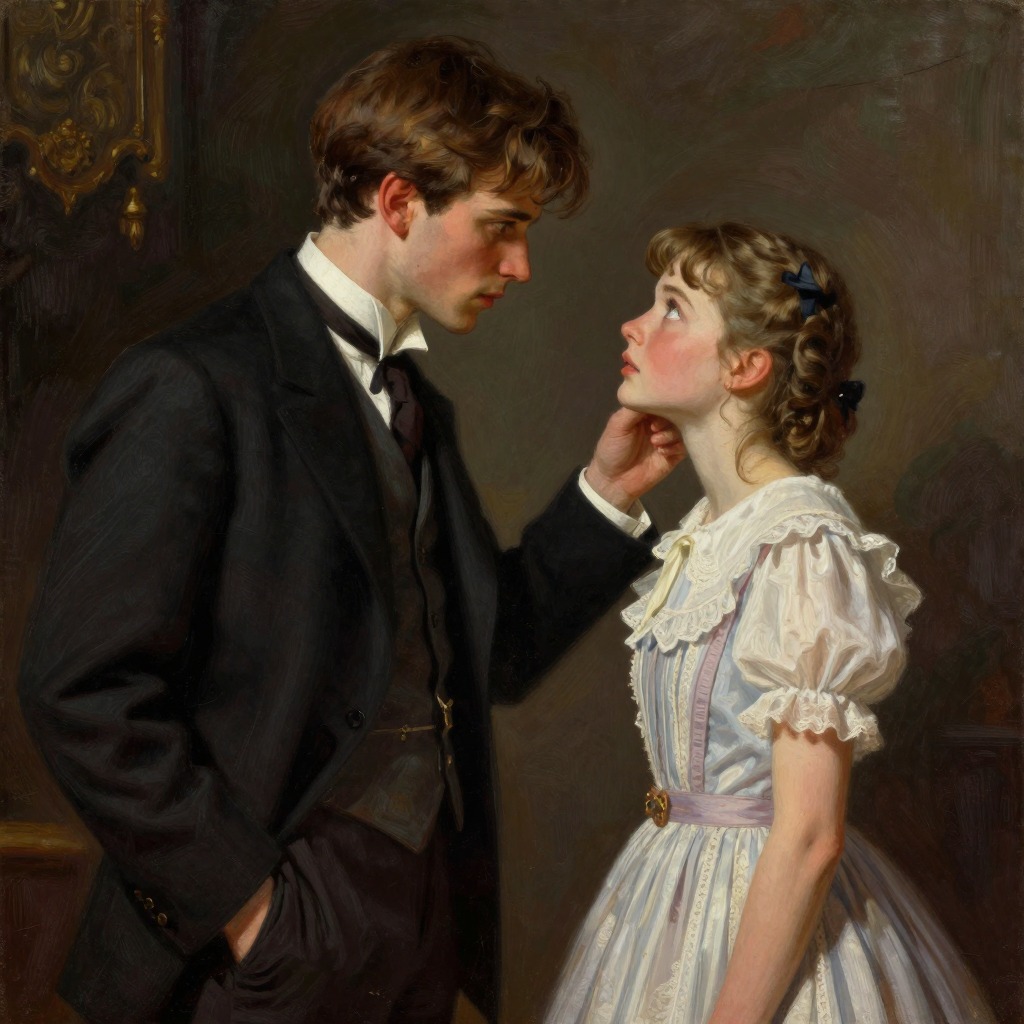
Annabel was, like Humbert, of mixed parentage: half-English and half-Dutch. Her parents, the stuffy Mr. and Mrs. Leigh, were old friends of Humbert's aunt Sybil and had rented a villa not far from the Hotel Mirana on the Riviera. Humbert remembers her features only in general terms—"honey-colored skin," "thin arms," "brown bobbed hair," "long lashes," "big bright mouth"—because his visual memory of her has faded, unlike the "absolutely optical replica" he can still summon of Lolita. She was a few months his junior, and they met when he was thirteen and she was twelve.
The Summer Romance
In the summer of 1919, Annabel and Humbert fell "madly, clumsily, shamelessly, agonizingly in love with each other" in a frenzy that could only be assuaged by "actually imbibing and assimilating every particle of each other's soul and flesh." They were kept under constant surveillance by their families, allowed only to be together on the crowded beach where they would sprawl all morning in a "petrified paroxysm of desire," taking advantage of every quirk in space and time to touch each other. Her hand would creep toward him through the sand; her opalescent knee would begin a long cautious journey; sometimes a chance rampart built by younger children granted them enough concealment to graze each other's salty lips. These incomplete contacts drove their bodies to such exasperation that even the cold blue water, under which they still clawed at each other, could not bring relief.
The Two Failed Trysts
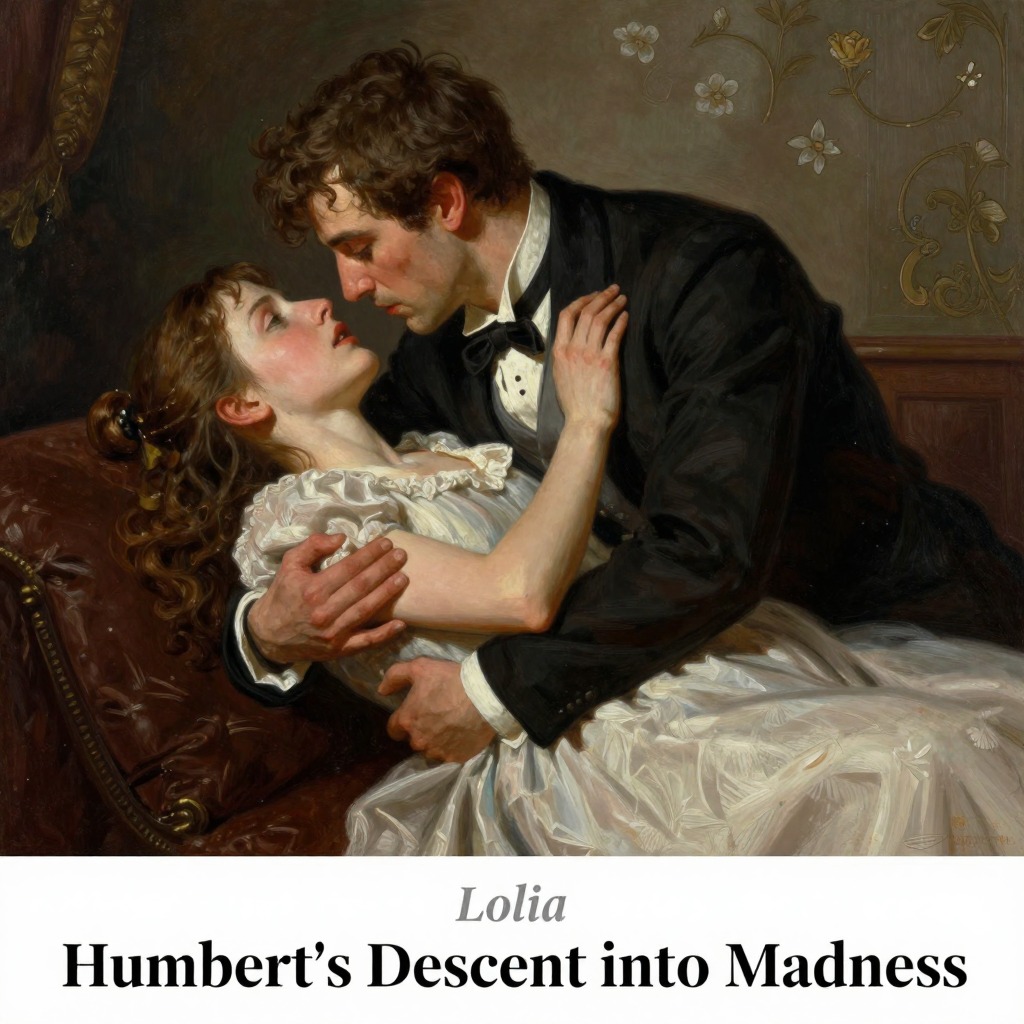
They made two attempts to consummate their love. The first occurred at night in a mimosa grove behind the Leighs' villa, where they found a perch on the ruins of a low stone wall. There, in the darkness, Humbert kissed the corner of her parted lips and the hot lobe of her ear; she trembled and twitched, and when his hand located what it sought, a "dreamy and eerie expression, half-pleasure, half-pain" came over her childish features. She sat a little higher than he, and whenever in her solitary ecstasy she was led to kiss him, her head would bend with a "sleepy, soft, drooping movement that was almost woeful." The scent of her mother's Spanish toilet powder mingled with her own "biscuity odor," and Humbert's senses were filled to the brim—until a sudden commotion in a nearby bush, probably a prowling cat, interrupted them, and her mother's voice called her back to the house.
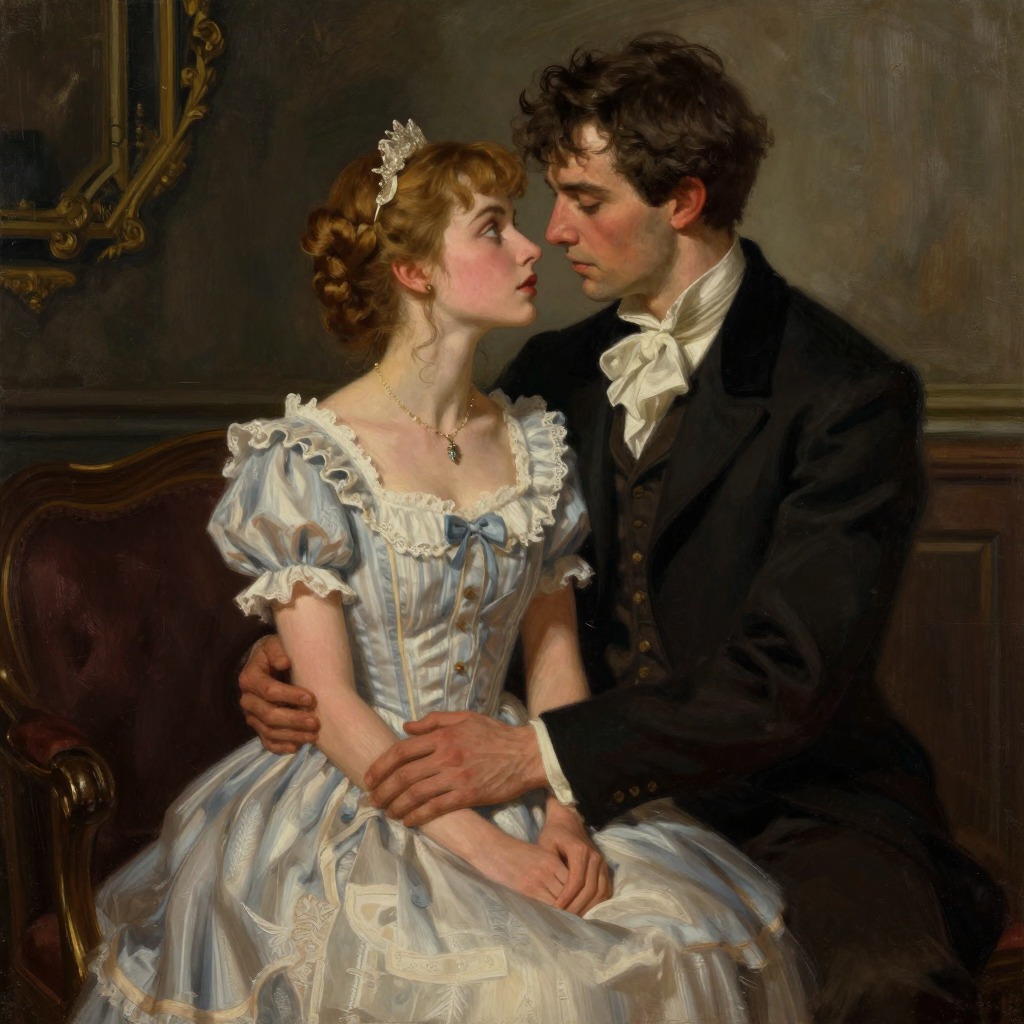
The second and final attempt came on the last day of that fatal summer, just minutes after a photograph was taken that showed Annabel bending over her chocolat glacé and Humbert sitting in profile, moody and beetle-browed. Under the flimsiest of pretexts, they escaped from the café to the beach and found a desolate stretch of sand. In the violet shadow of some red rocks forming a kind of cave, they had a brief session of avid caresses, with "somebody's lost pair of sunglasses for only witness." Humbert was on his knees, on the point of possessing his darling, when two bearded bathers came out of the sea with exclamations of ribald encouragement. Four months later, Annabel died of typhus in Corfu.
Aftermath and Thematic Significance
The shock of Annabel's death consolidated the frustration of that nightmare summer, making it a "permanent obstacle to any further romance throughout the cold years" of Humbert's youth. He insists that the spiritual and the physical had been blended in them with a perfection incomprehensible to "matter-of-fact, crude, standard-brained youngsters of today." Long after her death, he felt her thoughts floating through his; long before they met, they had had the same dreams. He cites as evidence of their strange affinities that in the same June of 1919, a stray canary had fluttered into her house and his, in two widely separated countries. Humbert is convinced that "in a certain magic and fateful way Lolita began with Annabel," and that his discovery of Dolores Haze was a "fatal consequence" of that "princedom by the sea" in his tortured past. Everything between the two events, he claims, was "but a series of gropings and blunders, and false rudiments of joy." When he was a child and she was a child, Annabel was no nymphet to him—he was her equal, a "faunlet in his own right"—but in retrospect, after twenty-nine years, he can distinguish in her the "initial fateful elf" in his life. The poison was in the wound, and the wound remained ever open, leaving him to mature amid a civilization that allows a man of twenty-five to court a girl of sixteen but not a girl of twelve.