Miss Gold
Miss Gold is a teacher at Beardsley School, the private day school Dolores Haze attends during the Humberts' year-long stay in Beardsley. She is one of the few faculty members who seems to find Dolly manageable, a fact that distinguishes her from colleagues like Miss Redcock and Miss Cormorant, who report the girl as defiant and rude. Miss Gold's primary role is as the conductor of the school's dramatic group, and it is through this activity that she becomes a pivotal figure in the narrative.
Role as Drama Coach and Institutional Mediator
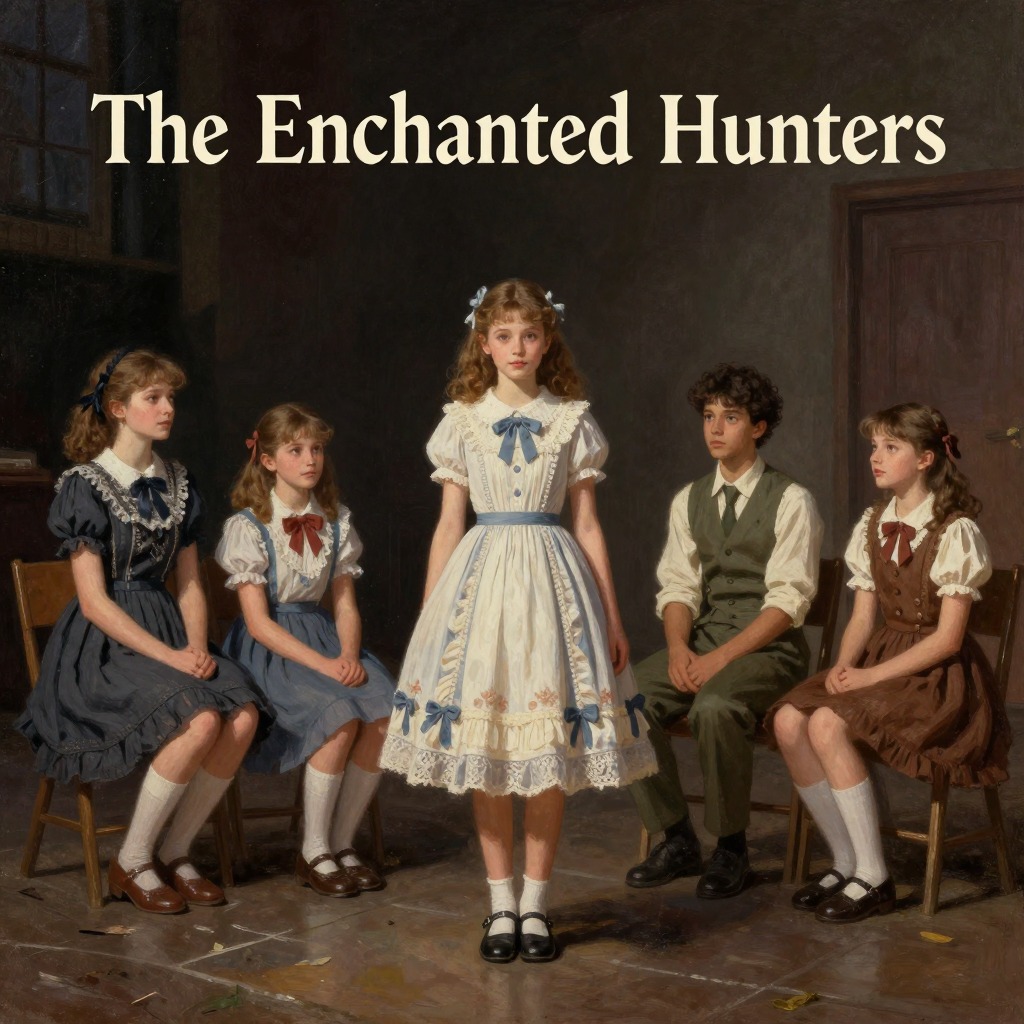
Miss Gold is the teacher in charge of the play "The Enchanted Hunters," in which Dolores Haze is cast as a farmer's daughter who imagines herself a woodland witch. When Humbert Humbert is summoned to a conference with headmistress Miss Pratt, it is Miss Gold who is described as being "overjoyed" at the prospect of Dolly's participation, after Humbert reluctantly lifts his veto. This places Miss Gold in direct opposition to Humbert's controlling regime, as the play becomes the vehicle through which Lolita gains the independence and social contact he has denied her. Miss Gold's positive assessment of Dolly's theatrical talent—she notes that the author of the play, Clare Quilty, "raved about her after that rehearsal"—directly facilitates the relationship between Lolita and her eventual seducer.
Reports on Dolores Haze's Character
Miss Gold contributes to the school's formal assessment of Dolly, providing a report that is read aloud by Miss Pratt during the parent-teacher conference. She notes that Dolly's tennis form is "excellent to superb, even better than Linda Hall's," but that her concentration and point-accumulation are just "poor to fair." This observation captures the essence of Lolita's character as seen by the school: a girl of remarkable natural ability who lacks the competitive drive or focus to excel, a pattern that mirrors her broader disengagement from the life Humbert has constructed for her. Miss Gold's report, combined with those of other teachers, paints a picture of a student who is bright but distracted, capable but unmotivated, and increasingly resistant to authority.
Connection to the Play's Author
Miss Gold's significance extends beyond her classroom duties. On the morning the Humberts leave Beardsley for their second cross-country journey, a woman identified as Edusa Gold—likely Miss Gold herself, given the similarity of name and role—pulls up alongside their car at a traffic light. She greets Lolita with a ringing "Hi!" and then addresses Humbert, effusively stressing certain words: "What a shame to tear Dolly away from the play—you should have heard the author raving about her after that rehearsal." This moment confirms that Miss Gold has been in direct contact with Clare Quilty, the playwright, and that she has been an unwitting accomplice in his scheme to meet and eventually abduct Lolita. Her enthusiastic praise of the author's admiration for Dolly's performance serves as the final link in the chain of events that leads to Lolita's escape from the hospital in Elphinstone with Quilty.
Narrative Significance
Miss Gold functions as a representative of the institutional forces that both constrain and enable Lolita's actions. Her drama program provides the legitimate social outlet that Humbert has tried to suppress, and her connection to Quilty makes her the unwitting conduit through which the novel's central antagonist re-enters Lolita's life. Unlike the more overtly hostile teachers like Miss Redcock or the bureaucratic Miss Pratt, Miss Gold is portrayed as genuinely supportive of Dolly's talents, yet this very support contributes to the tragedy. Her role underscores the theme of how well-meaning adults, operating within conventional structures, can inadvertently facilitate the exploitation of a child.