Admiral Luis Ávila
Admiral Luis Ávila is a retired Spanish naval officer whose life is shattered by the Cathedral of Seville bombing and who is subsequently radicalized by the Palmarian Church into becoming the assassin of Edmond Kirsch. His trajectory from decorated commander to suicidal recluse to religiously motivated killer forms the violent engine of the novel's central conspiracy, transforming personal trauma into a weapon aimed at silencing a scientific revelation that threatens the foundations of faith.
Identity and Background
Ávila is a sixty-three-year-old former admiral of the Spanish Navy, a man whose lean, toned physique and tailored uniform once commanded respect. He is one of those Mediterranean men for whom aging seems an asset: his salt-and-pepper beard, serene dark eyes, and sun-drenched, creased skin give him the aura of a man permanently squinting out to sea. He lives by a code, and he respects those who do. The horrific event that all but destroyed his life occurred five years before the novel's present: a single deafening instant in which the earth opened up and swallowed him whole. On Easter morning in the Cathedral of Seville, as Ávila knelt at the Communion rail, a deafening explosion ripped through the pristine cathedral. The blast wave drove him violently forward into the Communion rail, his body crushed by the scalding surge of debris and human body parts. When he regained consciousness, he staggered back through the smoke-filled cathedral, clambering past moaning and mutilated victims, stumbling in desperation to the approximate area where his wife, María, and their three-year-old son, Pepe, had been smiling only moments ago. There was nothing there—no pews, no people, only bloody debris on the charred stone floor.
Descent into Darkness and Radicalization
For weeks after the attack, Ávila did not leave his home. He lay trembling on his couch, consumed by an endless waking nightmare of fiery demons that dragged him into a dark abyss, shrouding him in blackness, rage, and suffocating guilt. A grief counselor nun whispered beside him that absolution was the only escape, that he must find a way to forgive the people who did this, or his rage would consume him whole. "Forgiveness is your only salvation," she said. But Ávila found the nun's words hollow; he had witnessed evil for which there was no absolution. Within weeks, he fell into a haze, anesthetizing himself with a potent blend of alcohol and prescription drugs. His yearning for the numbing effects of chemicals occupied every waking hour, diminishing him to a hostile recluse. Within months, the Spanish navy quietly forced him to retire. A once powerful battleship now stuck in dry dock, he knew he would never sail again. On his fifty-ninth birthday, staring at an empty bottle of vodka and an eviction warning, Ávila mustered the courage to take down his navy service pistol, load it, and put the barrel to his temple. He whispered "Perdóname" and squeezed the trigger. The gun failed to fire—years in a dusty closet without being cleaned had taken a toll on the cheap ceremonial pistol. Enraged, he hurled the gun at the wall, and this time an explosion rocked the room, sending a searing heat through his calf. He fell to the floor screaming and clutching his bleeding leg. The next morning, as he lay in the recovery room, broken and humiliated, he received a visitor: a young physical therapist named Marco, who had also been in the cathedral that Sunday morning and had lost a leg in the attack. Marco told Ávila that a great man had helped bring him back to God—the pope—and that he could arrange an audience. The following day, Ávila found himself face-to-face with the Palmarian pope, Innocent XIV, a man who taught him the most empowering religious lesson of his life: forgiveness is not the only path to salvation. The pope declared that Ávila's ongoing rage, his righteous desire for vengeance, could not be quelled by turning the other cheek, and that his pain would be the catalyst for his own salvation. From that day on, Ávila began his long climb out of the bottomless pit of despair, rediscovering his faith through the lens of righteous violence.
The Assassination and Its Aftermath
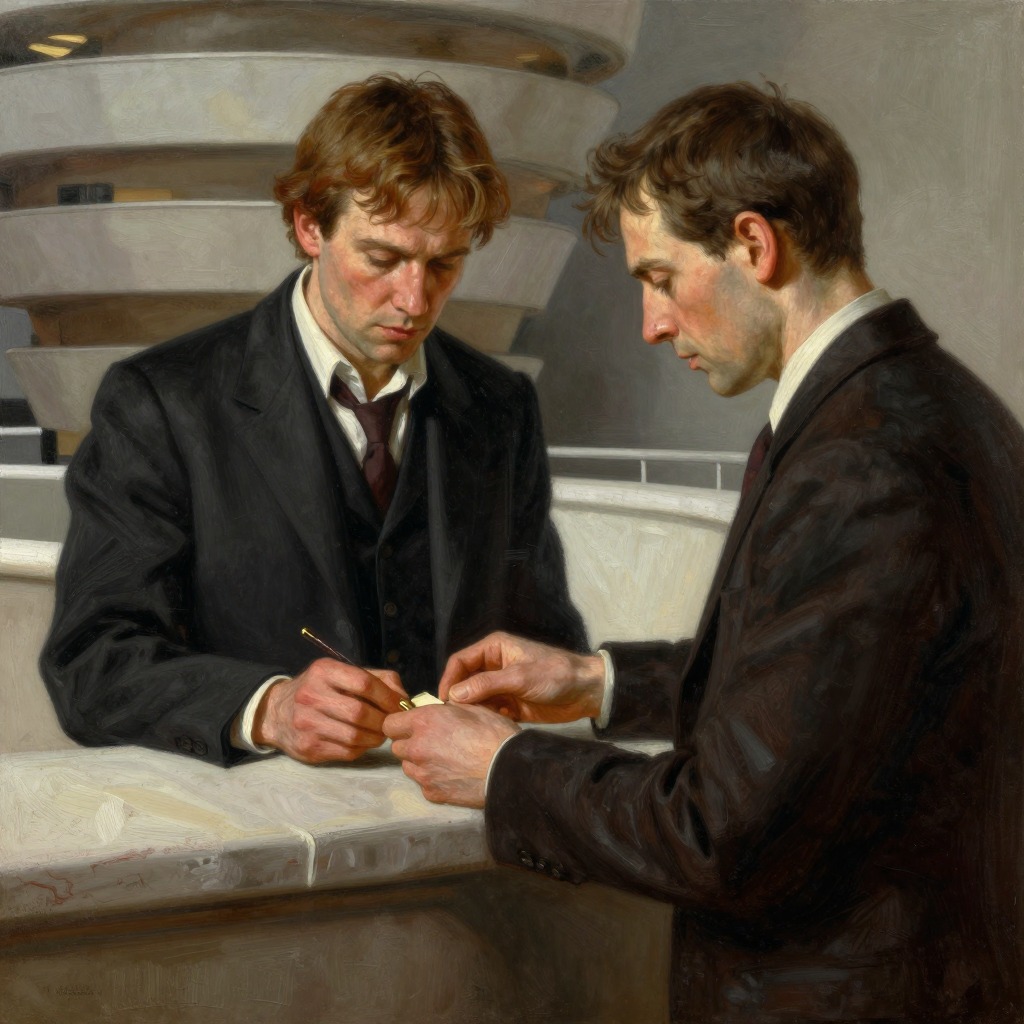
Five nights before the assassination, Ávila was awoken by a text message instructing him to check his bank balance. He found that an anonymous deposit of a hundred thousand euros had been wired into his account. A voice on the phone, calling himself the Regent, told Ávila that he represented his brethren in the church he had faithfully attended for two years, and that the pope had proposed a series of missions—tasks sent to him by God. The Regent told Ávila that the man he would target in this mission was the man who murdered his family: Edmond Kirsch. The Regent explained that Kirsch had waged a brutal war against the Palmarian Church for over a decade, and that the bombing that killed Ávila's family was intended as an act of war against the Palmarians. Ávila was shown a copy of a typed letter to the Palmarians from a man claiming to be the Seville bomber, who called himself a "disciple of Edmond Kirsch." This was all Ávila needed to see. On the night of the event, Ávila, dressed in his full-dress navy whites, smuggles a ceramic pistol and a rosary weapon into the Guggenheim Museum Bilbao. He jettisons the audio headset, finds a private place to contact the Regent, and positions himself outside the fabric wall of the domed theater. Using a razor blade hidden in the stem of the crucifix, he cuts a slit in the fabric wall and, at the critical moment, fires a short-range bullet that strikes Edmond Kirsch in the forehead, killing him instantly. He escapes through an emergency exit, binding the outer door handles with a loop of Vectran-fiber rosary beads to delay pursuit, and flees in an Uber car. Later, redirected to Barcelona, he pursues Robert Langdon and Ambra Vidal to Sagrada Família, where he kills two Guardia Real agents—Agent Díaz and Agent Fonseca—before confronting Langdon on the church's spiral staircase. In the struggle, Ávila falls to his death down the central shaft of the staircase.
Thematic Significance
Ávila embodies the novel's exploration of how trauma can be manipulated by ideological forces to produce violence. His personal tragedy—the loss of his family in a terrorist attack—is weaponized by the Palmarian Church, which reframes his desire for vengeance as a holy mission. The tattoo on his palm, the Francoist "VICTOR" symbol, marks him as a soldier in a culture war that predates and transcends his individual suffering. His arc demonstrates the novel's central argument about the dangers of absolutist belief: the same religious framework that offers him a path out of despair also provides the justification for murder. Ávila is not a monster but a broken man who has been convinced that killing is the only way to serve God, country, and king. His final confrontation with Langdon on the spiral staircase—where he declares "I settled a score. Your friend Edmond Kirsch killed my family"—reveals the tragic irony at the heart of the conspiracy: the assassin believes himself to be a victim seeking justice, not a pawn in a larger game of information control.