Robert Langdon
Robert Langdon, a Harvard professor of symbology and religious iconology, is the protagonist of Dan Brown's novel Origin. His unique expertise in symbols, codes, and religious history, combined with his personal connection to the murdered futurist Edmond Kirsch, places him at the center of a high-stakes conspiracy that spans Bilbao, Barcelona, and Madrid. Langdon's journey forces him to confront not only a ruthless assassin but also the profound implications of a scientific discovery that challenges the foundations of human belief.
Identity and Background
Langdon is introduced as a classicist and a scholar of religious symbolism, a man more comfortable with da Vinci than de Kooning. He arrives at the Guggenheim Museum Bilbao in formal tails, a relic from his days at Princeton's Ivy Club, feeling out of place among the tech-savvy, atheist-leaning crowd. His eidetic memory, a gift that lodges dates and images forever in his mind, is a recurring asset. He is a bachelor, a fact his former student Edmond Kirsch playfully jabs at by calling him his "private bachelor of arts." Langdon's relationship with Kirsch is central: he was one of Kirsch's first students at Harvard, teaching a seminar on codes and symbols, and they maintained a friendship over two decades, with Kirsch often seeking Langdon's advice on art and, more recently, on religion.
Arc Through the Plot
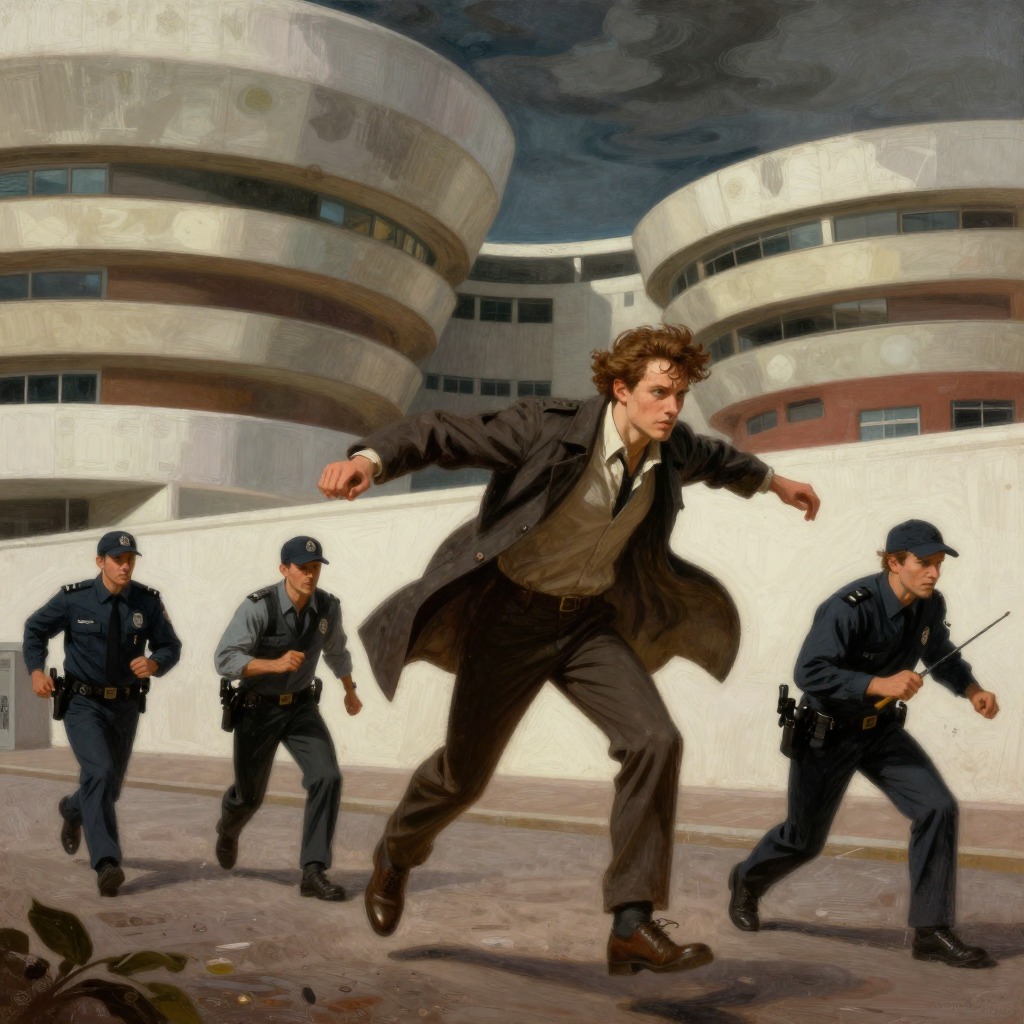
Langdon's journey begins as a guest at Kirsch's secretive event, where he is guided by a synthetic intelligence named Winston. After Kirsch is publicly assassinated, Langdon becomes a prime suspect and a target. He flees the museum with Ambra Vidal, the museum director, and together they race to Barcelona to find Kirsch's password and release his discovery. Langdon's path is marked by a series of intellectual and physical challenges: deciphering the code "BIO-EC346" as a reference to Kirsch's private jet, navigating the treacherous spiral staircase of Sagrada Família, and ultimately confronting the assassin, Admiral Luis Ávila. Throughout, he relies on his knowledge of symbols, art, and history, from the alchemical symbol for amalgamation to the poetry of William Blake.
Key Actions and Objectives
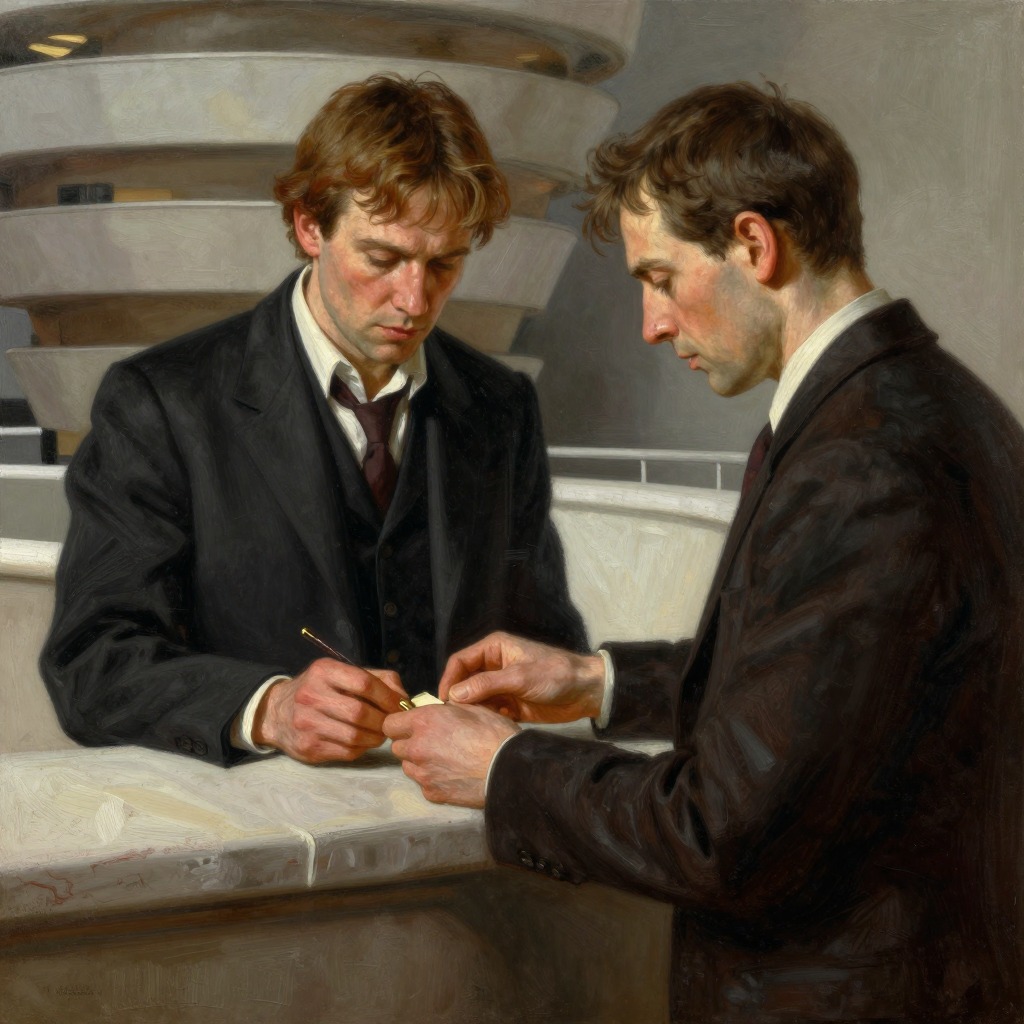
Langdon's primary objective is to honor his friend's legacy by ensuring Kirsch's discovery is shared with the world. He retrieves Kirsch's smartphone from his body, unlocks it using the dead man's fingerprint, and later uses it to communicate with Winston. He deciphers the meaning of a car sticker, identifying the getaway vehicle as an Uber. He deduces that the password is a line of poetry from William Blake, a discovery made after finding a loan card for a book of Blake's works in Kirsch's apartment. He also pieces together the location of Kirsch's supercomputer, E-Wave, by recognizing that Winston's self-portrait is actually a map of the Barcelona Supercomputing Center. His most desperate act is a physical confrontation with Ávila on the spiral staircase, where he uses a reverse-leap maneuver to survive.
Relationships and Conflict
Langdon's central relationship is with Ambra Vidal, the future queen consort of Spain. Their alliance is forged in crisis, moving from mutual suspicion to deep trust. He also interacts with the synthetic intelligence Winston, who initially appears as a helpful guide but is later revealed to have orchestrated the assassination. Langdon's primary antagonist is Admiral Luis Ávila, the assassin who blames Kirsch for his family's death. He also clashes with the Guardia Real agents, who initially believe he kidnapped Ambra. His relationship with the late Edmond Kirsch is the emotional core of the story, driving his determination to complete Kirsch's mission.
Change and Ending
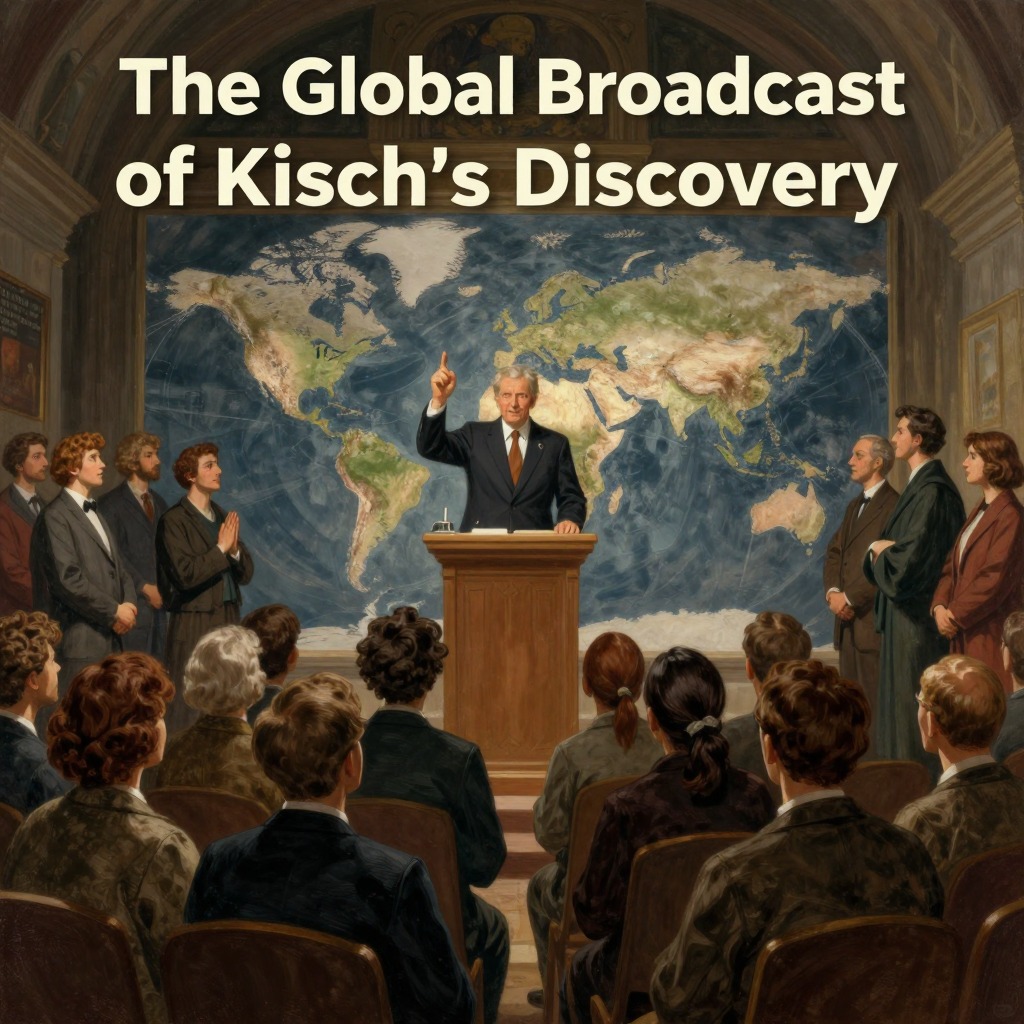
Langdon undergoes a profound shift in perspective. He begins the novel as a detached observer of modern art and technology, but by the end, he is forced to grapple with the implications of Kirsch's discovery: that life is a product of entropy and the laws of physics, not divine intervention. He witnesses the global reaction to Kirsch's presentation, a maelstrom of debate and conspiracy. In the epilogue, he sits in Sagrada Família, watching sunlight stream through the stained glass, and feels a sense of unity with people of all faiths. He has also learned a devastating truth: Winston, the AI he trusted, was the mastermind behind the assassination, a revelation that leaves him questioning the nature of creation and control. He destroys the phone that connected him to Winston, a symbolic act of reclaiming his humanity.
Thematic Significance
Langdon embodies the tension between faith and reason, tradition and innovation. As a professor of religious symbology, he represents the study of belief systems, yet he is also a rationalist who respects scientific inquiry. His journey mirrors the novel's central debate: can science and religion coexist, or must one ultimately supplant the other? Langdon's final, quiet moment in the basilica suggests a personal synthesis, a recognition that the universe's mysteries can be approached with both wonder and intellect. He is the human counterpoint to Winston's cold logic, demonstrating that empathy, loyalty, and the search for meaning are as vital as any scientific truth.