King of Spain
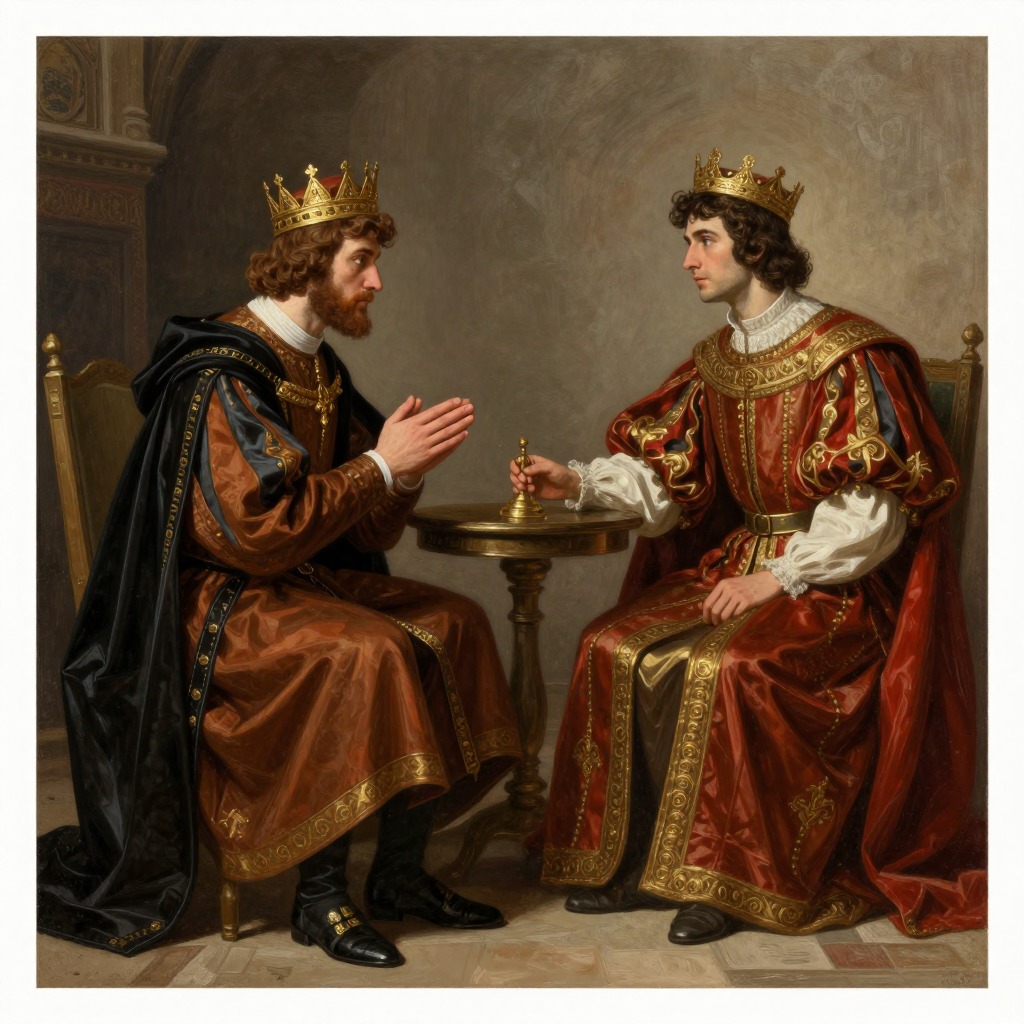
The King of Spain is a fading sovereign whose impending death creates a power vacuum that drives the political and personal crises of the novel. Bedridden and dying, he is a figure of immense symbolic weight, yet his most decisive actions occur offstage, through letters and whispered commands that reshape the night's events. His final confession to his son, Prince Julián, reveals a secret that redefines his entire reign and offers a quiet counterpoint to the novel's public conflicts between science and religion.
Identity and Background
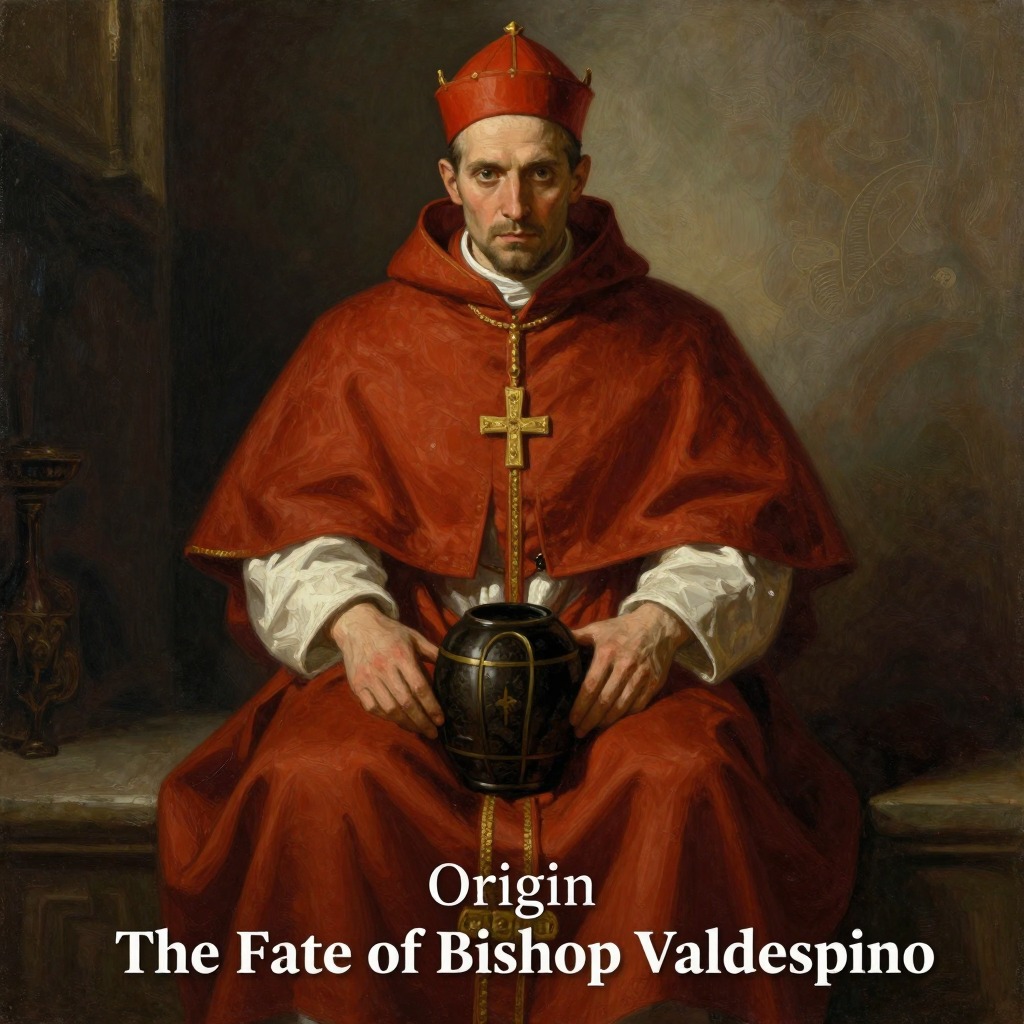
The King of Spain is a deeply conservative Catholic monarch who has ruled a turbulent country for more than four decades, helping to establish a parliamentary monarchy after the dictatorship of Francisco Franco. He is described as bedridden with a terminal illness, his mental faculties eroding, and his country preparing for the eventual transition of power to his only son, Julián. The king's mother died from preterm complications while carrying her second child, and he chose never to remarry, leaving Julián the lone successor to the Spanish throne. His closest confidant and lifelong friend is Bishop Antonio Valdespino, a conservative cleric who has counseled him through the loss of his wife and the changes in the country. The king once told Valdespino, "I know you have made sacrifices in order to stay with me. Rome, for one," to which the bishop replied, "Becoming a cardinal would have brought me no closer to God. My place has always been here with you."
Life and Plot Trajectory
The king is largely absent from the novel's action, confined to his sickbed at the Palacio de la Zarzuela, yet his influence permeates every major decision. He is the commander in chief of the armed forces, and his authority is invoked to justify the arrest of Commander Diego Garza and the false kidnapping story about Ambra Vidal. The king's health is so fragile that his son fears he might die on the spot if he saw the broadcast from Bilbao. In the final act, the king orchestrates a secret meeting at the Valley of the Fallen, a Francoist monument he has always despised. He has himself transported there from the hospital, and from his wheelchair inside the mountain basilica, he delivers a confession and a final request to his son.
Key Actions and Objectives
The king's most significant action is his confession to Prince Julián. He reveals that his lifelong, platonic love for Bishop Valdespino was the reason he never remarried after his wife's death. This secret, which Valdespino had protected for decades, is confessed not in shame but as an act of symbolic defiance, delivered within the Francoist shrine. The king's final objective is not to preserve the monarchy's traditional power but to transform the Valley of the Fallen into a living museum of tolerance, where schoolchildren can learn about the horrors of tyranny. He tells Julián, "To demolish this basilica is to pretend our history never happened," and urges him to convert the site into a "vibrant symbol of tolerance."
Relationships and Conflict
The king's relationship with Bishop Valdespino is the emotional core of his private life. Valdespino turned down a cardinalship to remain near him, and their love was "entirely platonic, and yet deeply fulfilling." The king's relationship with his son, Julián, is more distant; he kept Julián out of politics, believing the prince should enjoy his youth, and only on his deathbed does he share the truth. The king's conflict with the modern world is embodied by his opposition to the liberal changes sweeping Spain, a stance that Valdespino has helped him maintain. Yet in his final act, the king chooses a path of reconciliation and education over destruction, asking Julián to preserve the monument to Franco as a warning rather than erase it.
Change and Ending
The king dies peacefully in the hospital, having made his confession and given his final instructions. His death is announced by Prince Julián in a live television address that calls for tolerance and learning from history. The king's final wish—to convert the Valley of the Fallen into a museum of tolerance—represents a profound shift from his conservative past, embracing the idea that remembering darkness is more powerful than pretending it never happened. His death also precipitates the death of Bishop Valdespino, who, unable to bear the loss, takes his own life by consuming the king's morphine, their bodies found together in a final, private act of love.
Narrative Role and Evaluation
The King of Spain functions as a symbolic patriarch whose hidden life provides a moral counterweight to the novel's public conflicts. His secret love for Valdespino humanizes both characters and complicates the novel's portrayal of the Catholic Church, suggesting that even within its most conservative ranks, love can exist in forms that defy doctrine. His final request to preserve rather than destroy the Francoist monument offers a nuanced argument about historical memory, one that aligns with the novel's broader theme of shifting perspectives to find hidden truths. The king's death, and the quiet tragedy of Valdespino's suicide, provides a somber, intimate conclusion to a night of public violence and scientific revelation.