Prince Julián
Prince Julián, the forty-two-year-old crown prince of Spain and only son of the ailing king, is a figure caught between tradition and transformation. As the novel opens, he is preparing to ascend a throne his father has occupied for decades, yet he remains an unknown quantity to his country—a discreet and cautious child who has borne the weight of his eventual sovereignty since boyhood. His mother died from preterm complications while carrying a second child, and the king never remarried, leaving Julián the lone successor to the Spanish throne, a fact the UK tabloids coldly called "an heir with no spare." For most of his life, Julián has performed bland ceremonial duties, deferring to his father on matters of politics and never tipping his hand as to his personal beliefs. The country wonders what kind of ruler he will turn out to be: a continuation of the deeply conservative Catholic tradition, or a bold, progressive, secular leader willing to abolish the monarchy entirely.
Identity and Background
Prince Julián matured under the wing of his deeply conservative father, and most traditionalist Spaniards believed he would continue the kings' austere tradition of preserving the dignity of the Spanish crown through maintaining established conventions, celebrating ritual, and remaining ever reverential to Spain's rich Catholic history. His first forty years—endlessly chronicled in the Spanish press—were a life of private schools, horseback riding, ribbon cuttings, fund-raisers, and world travel. Despite having accomplished little of note, he was, without a doubt, Spain's most eligible bachelor. The prince had publicly dated countless eligible women and had a reputation for being a hopeless romantic, but nobody had ever quite stolen his heart until he met Ambra Vidal at a fund-raiser at the Reina Sofía Museum of Modern Art. There, he boldly approached her, correctly recited her age, education, career, and even her opinion on a controversial artist, and asked her on a date. The courtship was swift and intense; after only a very short time, Julián proposed to her in a most unexpected and romantic way—on live national television during her appearance on the morning show Telediario.
The Public Proposal and Its Aftermath
Julián's proposal, while romantic in intention, trapped Ambra in an impossible position. On live television, with millions watching, he knelt before her and asked her to marry him. Ambra, who had not been warned, felt paralyzed; she knew that refusing would shame the future king of Spain on national television. She accepted, but immediately afterward, in the privacy of his limousine, she revealed a devastating truth: a childhood infection had left her infertile, and she could not give him an heir. Julián's reaction was not the reassurance she hoped for; he shifted away from her ever so slightly, and in that instant, Ambra knew the relationship was fundamentally altered. The engagement, which had been rushed, became a source of strain. Julián's handlers wanted Ambra to be more visible and conservative, but she remained fiercely independent, refusing to let the Guardia Real interfere with her schedule and making a public joke out of suggestions she wear more conservative clothing. The liberal magazines hailed her as "Spain's Beautiful Future," while conservative magazines derided her as a power-hungry opportunist.
Jealousy and the Kirsch Connection
A significant source of tension in Julián and Ambra's relationship was her work with Edmond Kirsch. For weeks, Ambra had been sighted repeatedly in Bilbao, having lunch near the museum with the outspoken atheist American technologist. Despite her insistence that the lunches were simply planning meetings with one of the museum's major donors, sources inside the palace suggested that Julián's blood was beginning to boil. The stunning fiancée—only weeks after their engagement—had been choosing to spend most of her time with another man. This jealousy, combined with his deep Catholic convictions, made Julián a figure of suspicion when Kirsch was assassinated. The fact that the killer, Admiral Luis Ávila, was added to the guest list via a phone call from the Royal Palace, and that Ambra herself had added the name at the request of someone claiming to be Julián's assistant, placed the prince under a cloud of conspiracy. Ambra initially believed Julián might be involved, a suspicion that drove her to flee with Robert Langdon rather than return to the palace.
The King's Confession and Julián's Transformation
The climax of Julián's personal journey occurs when he is secretly taken by Bishop Valdespino to the Valley of the Fallen, a massive monument built by Franco. There, he finds his dying father, who reveals a secret he has kept for decades: the king's lifelong, platonic love for Bishop Valdespino. The king confesses that he never remarried because he already loved someone else, and that Valdespino, by taking a vow of celibacy, was able to love him deeply while remaining pure in the eyes of God. This revelation shatters Julián's understanding of his family and his faith. He learns that his father, whom he believed to be a lonely widower, was never alone, and that the bishop, whom he had always considered a trusted uncle, was his father's true partner. The king's final wish is not for Julián to destroy the Valley of the Fallen, but to convert it into a living museum of tolerance, a place where schoolchildren can learn about the horrors of tyranny. This request, combined with his father's confession, forces Julián to confront the possibility of a very different kind of reign.
Change and Ending
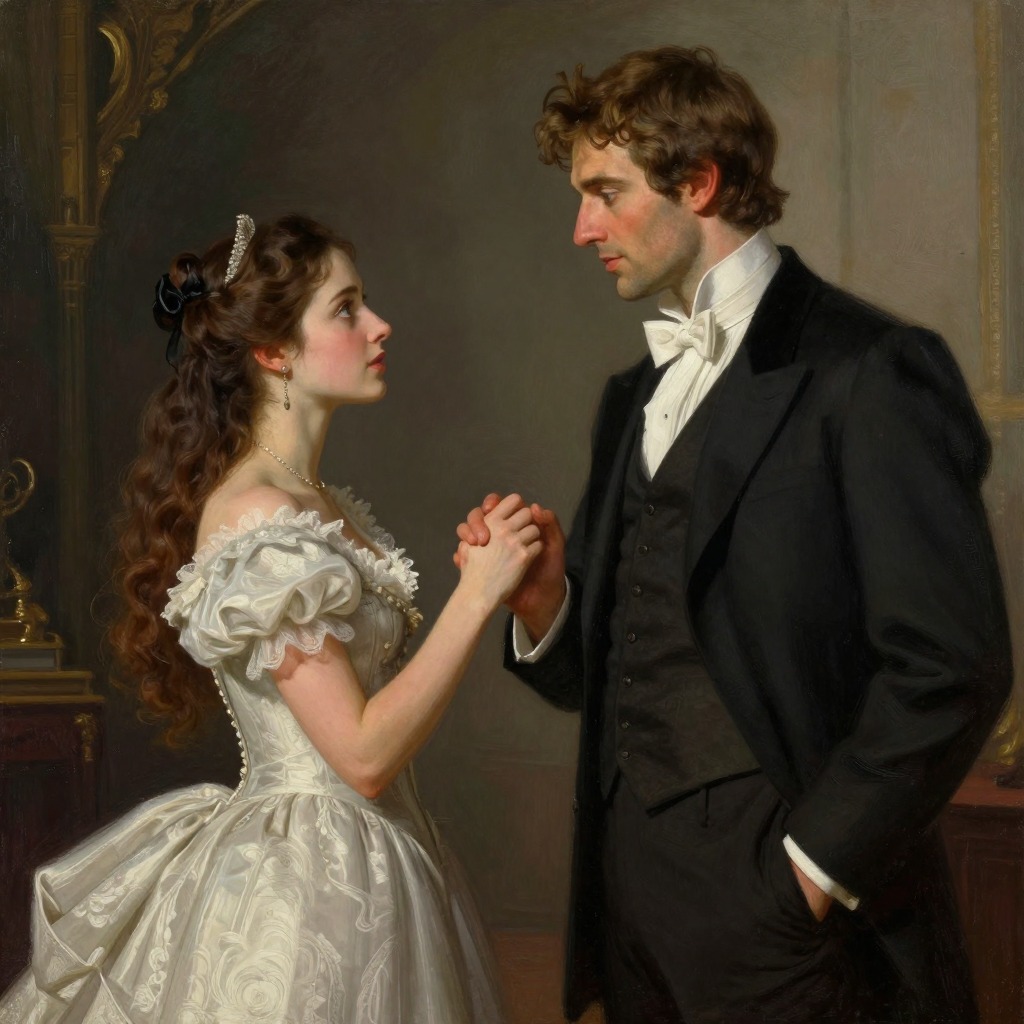
After the king's death, Julián delivers a moving speech on live television, calling for tolerance and promising to learn from history. He also learns that Bishop Valdespino has died, apparently of heart failure, though Julián finds an empty bottle of morphine beside the bishop's body and quietly pockets it, understanding that the old man chose to follow his beloved king into death. In his final conversation with Ambra, Julián apologizes for his rushed proposal and offers to call off their engagement and start over, in private, giving her the space she needs. He also reveals that he is considering a radical step: abolishing the monarchy. The novel ends with Julián poised on the cusp of a new era, having shed the weight of his father's shadow and the expectations of a conservative past, ready to embrace a future defined by his own choices and his love for a woman who will not be controlled.