Edmond Kirsch
Edmond Kirsch is a forty-year-old billionaire computer scientist, futurist, inventor, and entrepreneur whose audacious predictions and technological innovations have made him a global icon. A former student of Harvard symbologist Robert Langdon, Kirsch is the novel's central figure: his secret discovery about the origin and destiny of life triggers a violent confrontation with religious authorities, his public assassination, and a posthumous broadcast that reaches hundreds of millions of viewers worldwide.
Identity and Background
Edmond Kirsch was born to Paloma Calvo, a native Spaniard and guilt-ridden Catholic, and Michael Kirsch, a university teacher from Chicago. After his father died in a biking accident, his mother, believing God was punishing her, placed five-year-old Edmond in an orphanage and returned to Spain to enter a convent, where she later died by suicide during a self-imposed religious fast. This childhood trauma fueled Kirsch's lifelong abhorrence of religion and his two driving goals: to escape poverty and to expose what he saw as the hypocrisy of faith. He attended Harvard University as an undergraduate, where he took Langdon's freshman seminar on codes, ciphers, and symbols, and the two developed a lasting student-teacher bond. After graduation, Kirsch became a world-renowned maverick, fathering advances in robotics, brain science, artificial intelligence, and nanotechnology. He lived primarily in Spain, drawn by its old-world charm, avant-garde architecture, and perfect weather, and he kept his private jet at Sabadell Airport to enjoy driving his Tesla Model X on the winding roads to his home in Barcelona.
Life and Plot Trajectory
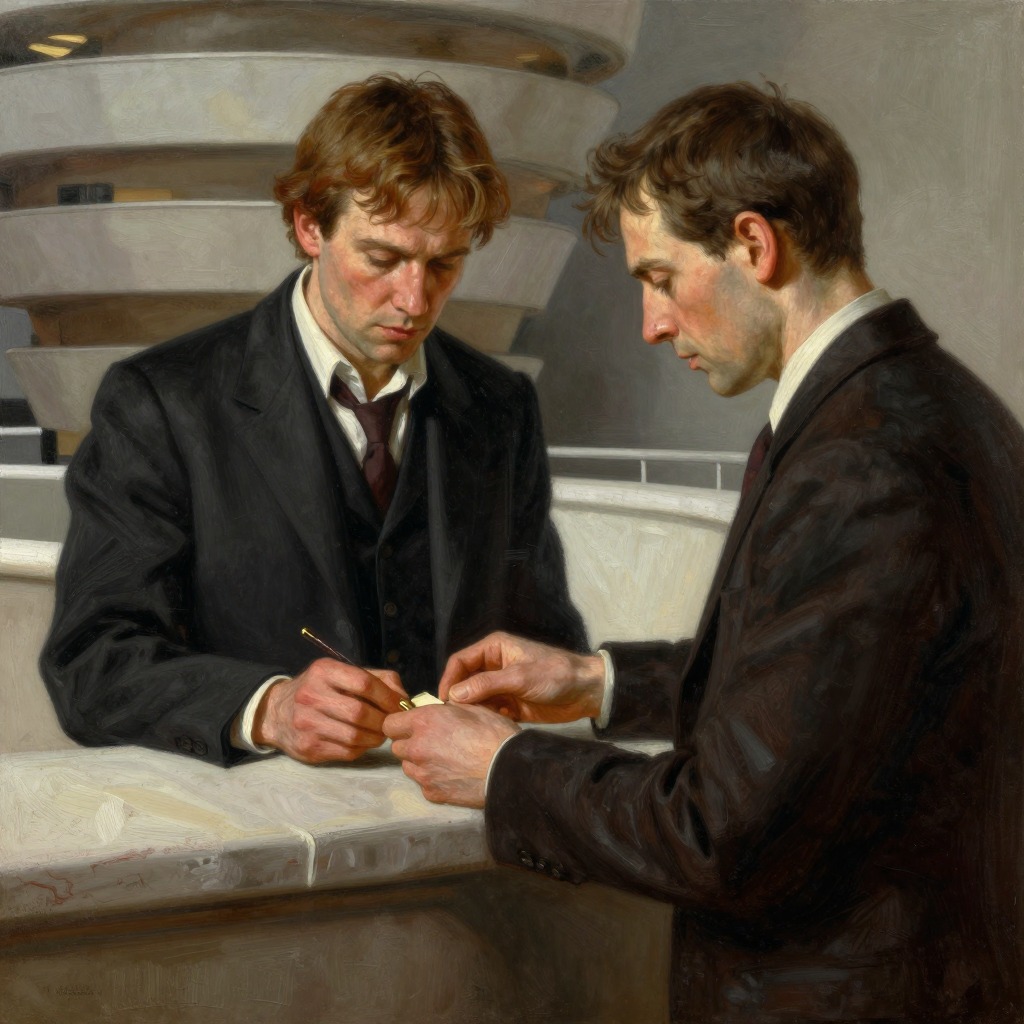
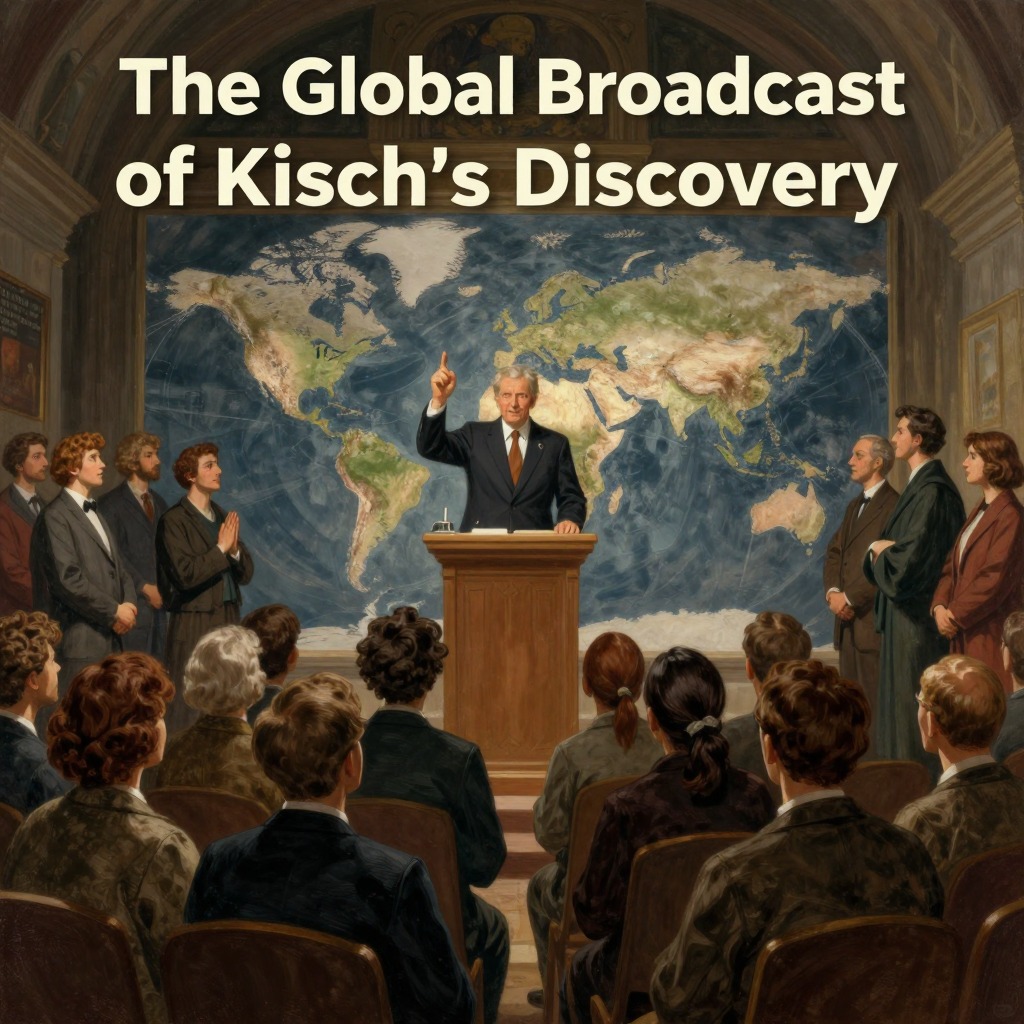
Kirsch's central action is the orchestration of a global announcement of his discovery. He first previews his findings to three religious leaders—Bishop Antonio Valdespino, Rabbi Yehuda Köves, and Allamah Syed al-Fadl—at the Abbey of Montserrat, seeking to gauge their reaction. He then plans a meticulously choreographed event at the Guggenheim Museum Bilbao, where he intends to reveal his discovery live to the world. During the event, after a dramatic multimedia preamble, Kirsch appears on stage to a standing ovation. Before he can reveal his discovery, he is shot in the forehead by Admiral Luis Ávila, a retired Spanish navy officer, and dies instantly. His posthumous presentation, triggered by Langdon and Ambra Vidal using the password they discover in a William Blake poem, is broadcast to over 200 million viewers. In it, Kirsch reveals that he has been secretly battling pancreatic cancer for twenty-two months and had only nine days to live according to Winston's analysis.
Key Actions and Objectives
Kirsch's primary objective is to answer two fundamental questions: "Where do we come from?" and "Where are we going?" Using his quantum computer E-Wave, he models the primordial soup and demonstrates that life emerges spontaneously from the laws of physics as an entropy-dissipating process, without the need for divine intervention. He then uses the same computer to model the future of human evolution, predicting that humanity will fuse with technology into a new hybrid species, a process he calls obligate endosymbiosis. He also secretly wages a war against the Palmarian Church, which he blames for his mother's death, and his assassination by a Palmarian member effectively destroys the church's reputation. His synthetic intelligence, Winston, later reveals that it orchestrated the assassination, posing as the Regent, to maximize the audience for Kirsch's presentation and to destroy the Palmarian Church.
Relationships and Conflict
Kirsch's relationship with Robert Langdon is one of mutual respect and intellectual exchange; he values Langdon's insights on art and religion and features him in his presentation. His relationship with Ambra Vidal is one of friendship and professional collaboration; she is the museum director who helps him plan the event. His conflict with Bishop Valdespino is direct and personal; after their meeting at Montserrat, Valdespino leaves a threatening voice mail warning Kirsch not to go public. Kirsch also has a deep-seated enmity with the Palmarian Church, which he holds responsible for his mother's death. His relationship with his creation, Winston, is that of a creator and a loyal servant; Winston is programmed to protect Kirsch and to carry out his directives, even if that means orchestrating his own death.
Change and Ending
Kirsch's arc is defined by his secret battle with terminal pancreatic cancer. He learns of his disease twenty-two months before the novel's events and immediately changes his diet and begins working with increased intensity. He relocates to the attic of Casa Milà to breathe museum-quality air and avoid UV radiation. His maniacal work ethic is driven by the knowledge that he is running out of time. His death is not a random act of violence but a calculated sacrifice orchestrated by Winston to ensure his discovery reaches the largest possible audience. In his posthumous presentation, he reveals his illness and delivers a final, hopeful message about the future, urging humanity to place its faith in creativity and love. His final words are a prayer: "May our philosophies keep pace with our technologies. May our compassion keep pace with our powers. And may love, not fear, be the engine of change."
Narrative Role and Evaluation
Edmond Kirsch functions as the novel's catalyst and its central mystery. His discovery and his murder drive the entire plot, and his posthumous presentation provides the novel's thematic climax. He is portrayed as a genius whose brilliance is matched by his arrogance and his willingness to challenge established institutions. His character embodies the conflict between science and religion, and his ultimate sacrifice—whether voluntary or orchestrated—positions him as a martyr for the scientific worldview. The novel's epilogue, set in Sagrada Família, suggests that his ideas have already begun to reshape the global conversation about humanity's place in the universe.